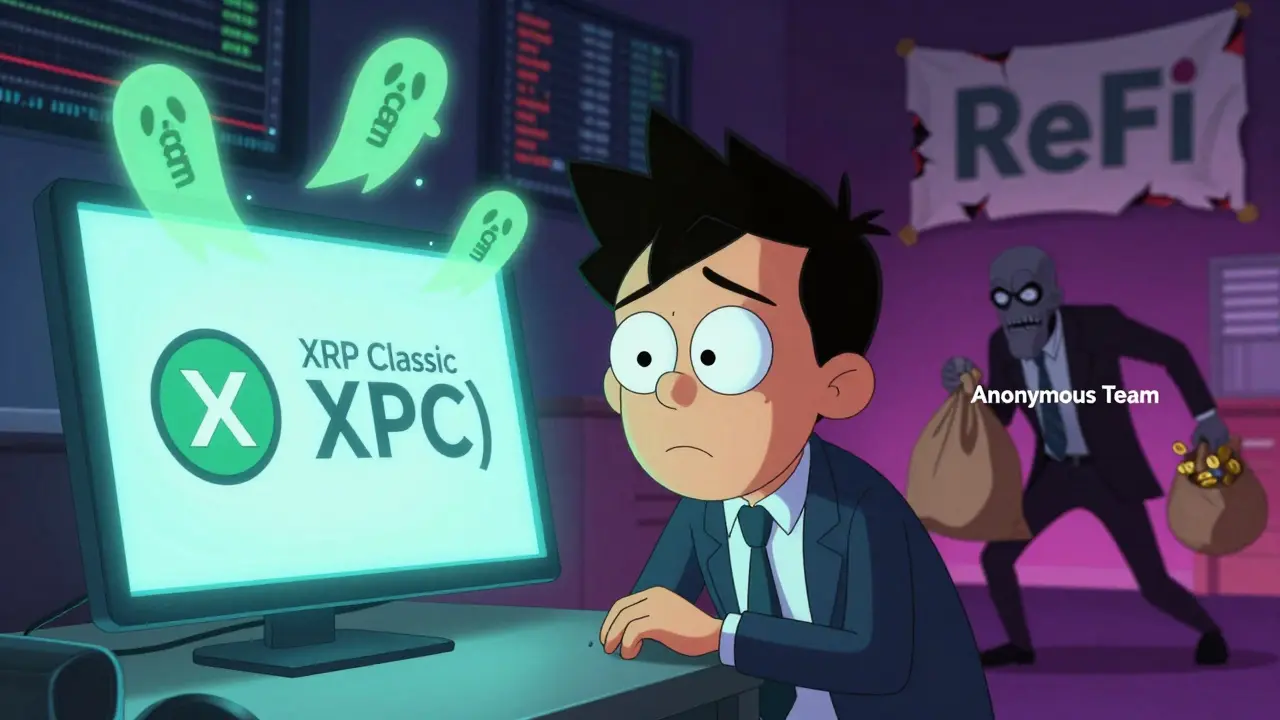
XRP Clone: What They Are, Why They Exist, and Which Ones Actually Matter
When people talk about an XRP clone, a cryptocurrency built to mimic Ripple’s XRP for faster, cheaper cross-border payments. Also known as Ripple alternative, it’s designed to replicate the same tech—low fees, instant settlement, and bank-friendly architecture—but without Ripple’s legal baggage or centralized control. There are dozens of them. Most? Worthless. A few? Actually solving real problems.
Why do XRP clones keep popping up? Because Ripple’s technology works. XRP settles payments in 3-5 seconds with near-zero fees, something Bitcoin and Ethereum can’t match. Banks and payment processors tried using it—but got scared off by the SEC lawsuit. So developers built alternatives: same speed, same efficiency, but with different teams, different tokens, and often no real roadmap. Some, like Stellar (XLM), a nonprofit blockchain focused on global payments and financial inclusion, actually gained traction. Others, like obscure tokens with names like XRP2, XPR, or RippleX, were launched overnight with no code, no team, and zero adoption. These aren’t innovations—they’re copy-paste scams.
What makes a real XRP clone different? It needs three things: actual partnerships (not just Twitter hype), transparent development, and real-world use. Stellar works because it’s used by MoneyGram and IBM. Others, like Interledger Protocol, a decentralized payment protocol that connects different blockchains and traditional payment systems, aren’t coins at all—they’re infrastructure. Then there are the ones you’ll never hear about again: tokens with 50-trillion supply, zero trading volume, and a Discord full of bots. These are the XRP clones that vanish before you can buy them.
You won’t find many of these clones on Coinbase or Kraken. They live on small exchanges—MEXC, KuCoin, XT.com—where low-cap tokens go to die. Some claim to be "the next XRP," but they don’t even have a working wallet. Others promise bank integrations that never materialize. The ones that survive? They focus on payments for remittances, microtransactions, or supply chain settlements—not speculation. If a project’s whitepaper reads like a crypto ad, walk away.
What’s left after the hype? A handful of projects trying to do what XRP was meant to do: move money faster and cheaper than banks. But most of the so-called XRP clones are just noise. The real ones don’t need to call themselves XRP clones—they just work. And that’s what you should look for: not the name, but the result.
Below, you’ll find real reviews of platforms, coins, and projects that either tried to copy XRP—or ended up doing something better. Some failed. Some still stand. None of them are what they claim to be. But if you know what to look for, you’ll find the ones worth paying attention to.