

Imagine you have a gift card for a specific coffee shop, but you're in a city where that shop doesn't exist. To get your coffee, you'd need to trade that gift card for local currency or a voucher that the local shops actually accept. In the blockchain world, this is exactly why we have wrapped tokens. While some assets are born and bred on one network, the modern crypto landscape is a collection of isolated islands. Wrapping is the bridge that lets your assets travel between them.
Whether you are looking to earn interest on your Bitcoin within an Ethereum-based app or just trying to trade on a decentralized exchange, you'll likely run into the choice between native and wrapped versions of your favorite coins. The right choice depends on whether you prioritize absolute security or the ability to actually use your funds in DeFi.
What exactly are native tokens?
A Native Token is the original cryptocurrency that operates on its own dedicated blockchain . Think of Bitcoin (BTC) on the Bitcoin network or Ether (ETH) on the Ethereum network. These assets are the heartbeat of their respective systems.
Native tokens have a few critical jobs. First, they pay for transaction fees (gas) to keep the network running. Second, they secure the network-either through mining or staking. Finally, they often grant governance rights, letting holders vote on the future of the protocol. Because they are native, they are secured by the blockchain's own consensus mechanism, meaning as long as the network is safe, your tokens are safe.
The bridge to other chains: Wrapped tokens
A Wrapped Token is a digital asset that represents a cryptocurrency on a non-native blockchain . Because different blockchains speak different languages, a native Bitcoin token cannot simply "move" to Ethereum. It's technically impossible for the Ethereum network to recognize a Bitcoin transaction.
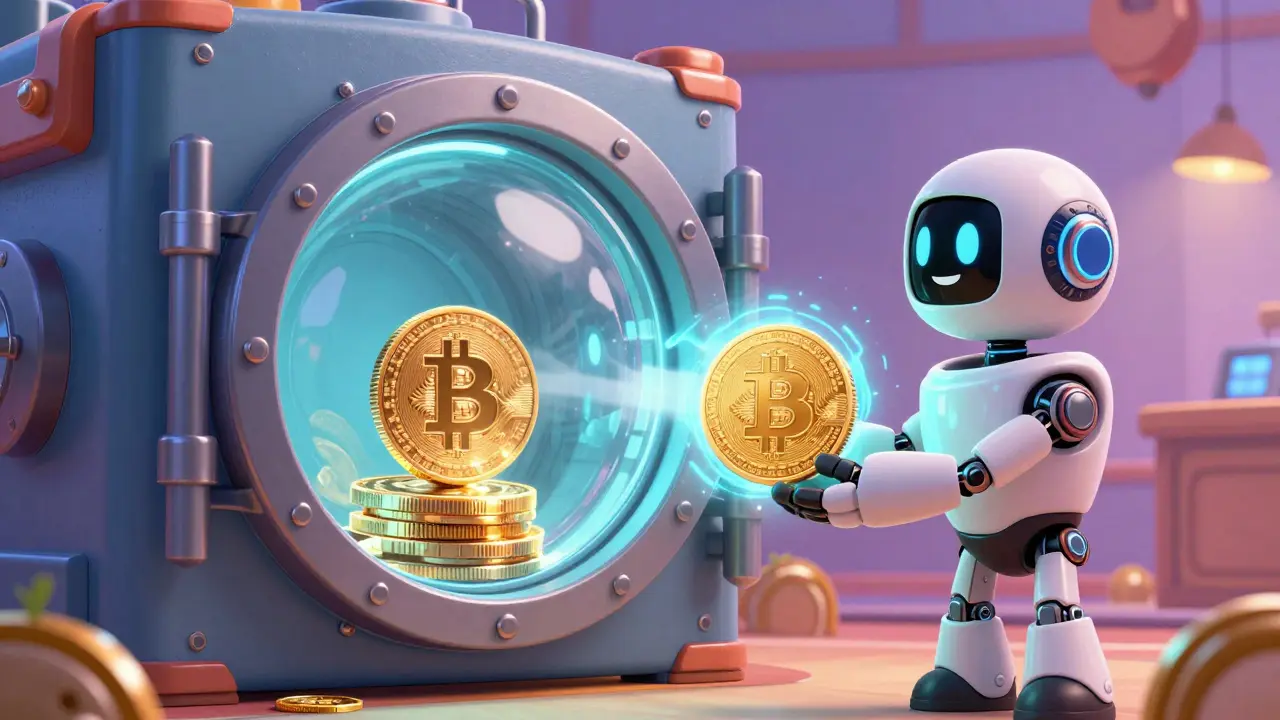
To solve this, we use a wrapping process. A custodian (like a company or a smart contract) locks your native BTC in a vault and mints an equivalent amount of Wrapped Bitcoin (WBTC) on the Ethereum chain. Since WBTC follows the ERC-20 token standard, it can interact with any app on Ethereum, from lending platforms to automated market makers.
You'll see this most often with
Wrapped Ether (WETH)
. Even though ETH is native to Ethereum, many DeFi protocols require the ERC-20 standard to "pull" tokens using a function called transferFrom(). Native ETH doesn't support this, so users wrap their ETH into WETH to make it compatible with the software.
| Feature | Native Tokens | Wrapped Tokens |
|---|---|---|
| Blockchain Location | Strictly on origin chain | Cross-chain (on target chain) |
| Security Model | Consensus mechanism (Decentralized) | Custodian or Smart Contract (Trust-based) |
| Primary Use Case | Gas fees, Network security | DeFi, Cross-chain trading |
| Liquidity | Limited to home ecosystem | High interoperability across chains |
| Intermediaries | None | Requires a custodian or bridge |
How the wrapping process actually works
Wrapping isn't magic; it's a custodial agreement. If you want to wrap your assets, the process generally follows these steps:
- You choose the asset (e.g., BTC) and the target chain (e.g., Ethereum).
- You transfer your assets to a designated custodian.
- The custodian locks your original asset in a secure vault.
- An equal amount of wrapped tokens is minted on the target blockchain (a 1:1 ratio).
- The wrapped tokens are sent to your wallet.
When you want your native coins back, you "unwrap." The custodian burns the wrapped tokens to remove them from circulation and releases the original native assets from the vault back to you.
The trade-off: Utility vs Security
Why would anyone give up the security of a native token? It comes down to capital efficiency. If you hold $10,000 in native Bitcoin, it just sits there. But if you use WBTC , you can deposit that Bitcoin into a protocol like Aave to earn interest or use it as collateral for a loan without selling your actual Bitcoin. According to Dune Analytics, billions of dollars in Bitcoin market cap are locked in Ethereum DeFi specifically because of this utility.
However, this introduces a "trust assumption." When you hold native BTC, you only trust the Bitcoin network. When you hold WBTC, you trust the Bitcoin network and the custodian managing the vault. If the custodian is dishonest or gets hacked, your wrapped tokens could become worthless. We saw this risk play out with the Nomad Bridge hack in 2022, where $190 million in wrapped assets were lost because the bridge's security failed.
Common pitfalls and practical tips
If you're new to wrapping, be careful. The learning curve can be steep, and a few mistakes can be costly. Here are some things to keep in mind:
- Slippage: When wrapping or unwrapping through a decentralized bridge, price fluctuations can lead to slippage. About 18% of Ethereum-based wrapping transactions face this issue.
- Gas Fees: Wrapping requires transactions on the target chain. On the Ethereum mainnet, this can cost a few dollars per transaction, depending on network congestion.
- Verification Delays: Don't expect instant transfers. Depending on the service, it can take 20 minutes or more for a custodian to verify and mint your tokens.
- Token Selection: Always double-check the token address. Using the wrong "wrapped" version of a coin can lead to permanent loss of funds.
The future of cross-chain assets
The industry is trying to move away from centralized custodians. The goal is decentralized custody, where no single entity holds the keys to the vault. Chainlink is leading this charge with its Cross-Chain Interoperability Protocol (CCIP) , which aims to standardize how tokens move between chains without relying on a single point of failure.
We may also see a decreased need for wrapping. Ethereum is working on improvements (like EIP-3668) that could allow native ETH to work more seamlessly with smart contracts, potentially making WETH obsolete in a few years. As native cross-chain communication protocols mature, the "bridge" will become invisible, and we'll move assets between chains as easily as we move files between folders on a computer.
Are wrapped tokens as valuable as native tokens?
Yes, they are designed to maintain a 1:1 value parity. For every 1 Wrapped Bitcoin (WBTC) in existence, there is 1 real Bitcoin (BTC) locked in a vault. However, if the custodian fails or the bridge is hacked, the wrapped token can lose its value because the underlying asset is no longer guaranteed.
Why do I need WETH instead of just ETH?
Native ETH does not follow the ERC-20 standard. Most DeFi applications use a function called transferFrom() to move tokens, which requires the ERC-20 standard. By wrapping ETH into WETH, you make your funds compatible with the smart contracts used by the majority of decentralized exchanges and lending platforms.
Can I wrap any cryptocurrency?
Technically, yes, as long as there is a service or bridge that supports that specific asset and a target blockchain. Common examples include Bitcoin wrapped on Ethereum (WBTC) or AVAX wrapped on Ethereum (WAVAX).
What happens if the wrapping service goes bankrupt?
This is the primary risk of wrapped tokens. If a centralized custodian goes bankrupt or loses the keys to the vault, the wrapped tokens on the target chain may become unbacked and lose their value, as there is no native asset left to redeem them for.
How long does it take to wrap tokens?
It varies. Some decentralized bridges are nearly instant, while centralized custodians may take 20 to 30 minutes to verify the deposit of the native asset before minting the wrapped version.
Next steps for users
If you're considering wrapping your assets, start by identifying your goal. If you just want to hold an asset for the long term (HODL), keep it as a native token in a hardware wallet for maximum security. There is no benefit to wrapping a coin you don't plan on using in DeFi.
If you want to explore DeFi, start with small amounts. Use a well-known Web3 wallet like MetaMask and stick to established wrapping services. Before you commit, check the current gas prices on your target network to ensure you aren't paying more in fees than you'll earn in interest. If you're an advanced user, look into decentralized wrapping mechanisms like those provided by Chainlink's CCIP to reduce your reliance on centralized custodians.
Ian Chait
April 14, 2026 AT 20:45Typical mainstream narrative igoring the real reason for these bridges. Its all about the centralization trap. You think a "custodian" just holds your coins? Nah, they're probably minting unbacked assets and manipulating the float while we sleep. The whole cross-chain game is just a way for the elites to create honeypots for the retail sheep who dont understand l1 security. Total scam if u ask me.
John and Lauren Busch
April 15, 2026 AT 03:49Oh joy, another way to lose money via a middleman. Fantastic.
Sandeep Bhoir
April 15, 2026 AT 10:27The distinction between ERC-20 and native ETH is a common stumbling block for beginners. It is quite amusing how people expect things to just work without understanding the underlying standard. If you want the utility of DeFi, you pay the "tax" of wrapping. Simple as that.
Luke George
April 15, 2026 AT 23:34Basically just a centralized database with extra steps. The whole idea of
Adam Mann
April 16, 2026 AT 08:08I really think it's wonderful that there are so many ways for people to get started with their crypto journey regardless of where they are in the world! Even though it seems complicated at first, the community is always here to help and the bridge technology is just a stepping stone toward a much more connected and inclusive financial future where we can all share resources and grow together without these big banks getting in the way of our progress as a global society and I'm just so excited to see where the CCIP takes us in the next few years because the potential for cross-chain fluidity is honestly mind-blowing for everyone involved!
Sean Mitchell
April 17, 2026 AT 15:46The absolute audacity of suggesting that a trust-based security model is an acceptable trade-off for "capital efficiency" is nothing short of a tragedy. We are witnessing the systemic erosion of the very principle of decentralization in exchange for the meager pittance of interest rates on Aave. It is a catastrophic failure of logic that borders on the theatrical.
Shantal Sanjur
April 19, 2026 AT 09:22Wow, so we're just pretending the Nomad hack was an "accident" and not a planned liquidity drain? Cute. I love how this post makes wrapping sound like a helpful feature instead of a giant red flag waving in our faces. But sure, trust the "established" services, because that always works out so well for everyone involved, right?
nikki krinkin
April 20, 2026 AT 11:46I appreciate the breakdown of the risks. It's a good reminder to keep the bulk of holdings in cold storage.
Michael Harms
April 21, 2026 AT 00:06Great stuff here! For anyone feeling overwhelmed, just remember that it's okay to take it slow and double-check everything before you hit send.
Keri Pommerenk
April 21, 2026 AT 21:17good explanation for those just starting out... keep it simple and stay safe everyone
Thomas Jewett
April 22, 2026 AT 20:04It is an absolute disgrace that we have to rely on these foreign protocols and sketchy bridges when we should be focusing on a strong American led standard for digital assets that puts our national security first and foremost because the current state of cross-chain movement is basically a free-for-all for hackers from every corner of the globe who have no respect for the law or the hardworking people of this country who just want to invest their money without it vanishing into a void of code and bad actors!
Alex Long
April 23, 2026 AT 07:47Too long didn't read. Just use a CEX and stop overcomplicating things.
Anna Grealis
April 24, 2026 AT 14:35The math on the slippage is probably skewed anyway. Most bridges just steal the difference and call it a "fee". I've seen too many tokens vanish into thin air to trust a smart contract that was written by a twenty year old in a basement somewhere.
Ankit Sindhu
April 25, 2026 AT 21:27It's really important to remember that the goal is the journey of learning. If you're confused about the WETH part, just take it one step at a time and maybe try with a very small amount first to see how it feels.
Mark Pfeifer
April 27, 2026 AT 04:29The trust assumption is the core issue here. If we are moving toward a future of decentralized custody, we need to see more transparent audits of these vaults before it's considered a viable long-term solution for the average user.