

If you tried logging into your favorite trading app recently and found a "site cannot be reached" error, you aren't alone. The Philippine government has shifted from gentle warnings to hard blocks. In a massive regulatory sweep, the Securities and Exchange Commission (SEC) targeted several high-profile platforms, leading to the technical blackout of 20 unlicensed exchanges. This isn't just a glitch; it is a calculated move to force global giants to play by local rules.
The core of the problem is simple: many global platforms were operating in the Philippines without a license. While these apps are popular worldwide, the Philippine government decided that "global reputation" isn't a substitute for legal registration. By coordinating with the National Telecommunications Commission (NTC), the state effectively cut the digital umbilical cord between Filipino users and platforms like OKX and Bybit.
The New Rules of the Game
To understand why this happened, we have to look at Memorandum Circular No. 4 and Memorandum Circular No. 5. These aren't just boring legal documents; they are a complete rewrite of how Crypto Asset Service Providers (CASPs) must behave in the Philippines. Starting July 5, 2025, the bar for entry was raised significantly.
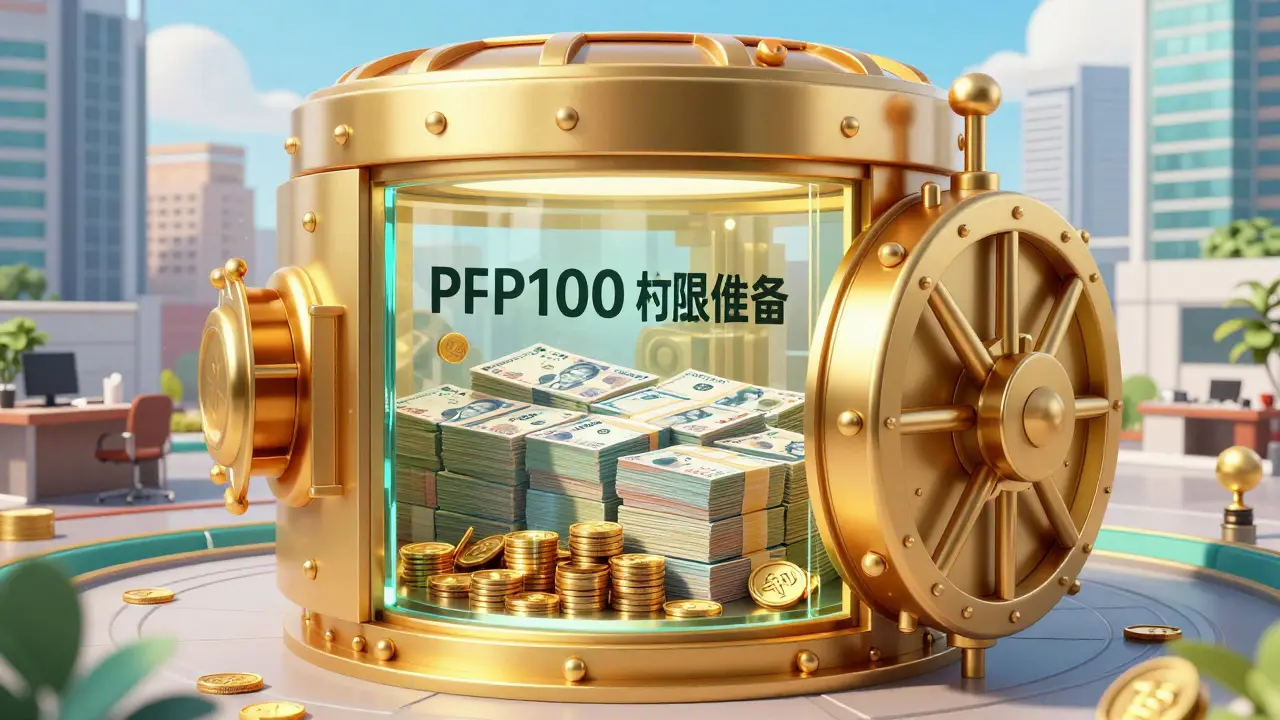
If an exchange wants to serve Filipino users now, they can't just run a server in the cloud from another continent. They must meet three non-negotiable criteria: first, they need a formal SEC license. Second, they must physically incorporate a business entity within the Philippines. Third, they have to prove they have skin in the game by maintaining minimum capital reserves of PHP 100 million (roughly $1.76 million). This ensures that if a company disappears, there is a legal entity and a pool of money that the government can actually hold accountable.
Perhaps the most critical change is the rule on fund segregation. After seeing international exchanges collapse and take user funds with them, the SEC now mandates a strict wall between customer deposits and company operating funds. No more using client money for corporate bets. This is a direct response to the volatility and failures of the global crypto market, aiming to prevent the same tragedies from happening to local investors.
Who Got Hit and How?
The crackdown didn't just target small, unknown sites. It went after the big players. Platforms like KuCoin, Bitget, Kraken, and BitMart were all flagged for non-compliance. The government didn't just send a cease-and-desist letter; they contacted the internet service providers (ISPs).
Companies like PLDT Inc. and Smart Communications were ordered to block these domains. By August 12, 2025, the network-level block was live. For the average user, this meant the websites simply stopped loading. This method is far more effective than a legal warning because it physically prevents the transaction from happening over the national network.
| Requirement | Specific Value / Detail | Purpose |
|---|---|---|
| Minimum Capital | PHP 100 Million | Financial stability & accountability |
| Legal Presence | Physical incorporation in PH | Jurisdictional authority |
| Fund Handling | Strict segregation of assets | Consumer protection against insolvency |
| Reporting | Regular SEC and AML Council audits | Fighting money laundering |
A Heavier Tax Burden on Crypto
The blocks are only one part of the story. The government is also making crypto a formal part of the tax system. If you're trading in the Philippines, the unlicensed crypto platforms issue is compounded by new fiscal obligations. It's no longer a "gray area" where you can ignore the Bureau of Internal Revenue.
Now, if you sell your crypto for cash (fiat) or use it to buy goods, you're looking at a 15 percent capital gains tax. If you're a miner, a staker, or you get paid in crypto for a service, that income is now taxed under the standard income tax regime. On top of that, if you buy a physical product using cryptocurrency, a 12 percent Value Added Tax (VAT) applies. The government is effectively treating crypto like any other financial asset, removing the tax-free anonymity that once defined the space.
The Broader Regional Trend
The Philippines isn't acting in a vacuum. There is a clear wave of "regulatory tightening" across Southeast Asia. For example, Thailand's SEC took similar steps in May 2025, blocking platforms like Bybit and OKX to combat illegal money laundering. Indonesia has also cranked up the heat, significantly raising taxes on offshore platform trades-increasing them fivefold from 0.2 percent to 1 percent.
This regional shift shows a move toward "sovereign control." Governments realize that while blockchain is decentralized, the entry and exit points (the exchanges) are very central. By controlling the exchanges, they control the flow of money and the collection of taxes. The previous era of "wild west" trading is being replaced by a structured, licensed, and taxed environment.
What Happens to Your Funds?
The biggest fear for most users is: "Is my money gone?" In most cases, the funds are still on the exchange's servers, but your path to get to them is blocked. The SEC's warnings usually advise users to move their assets to licensed platforms before a total shutdown occurs. However, since the network block is already in place, many users are finding themselves locked out.
While some people use Virtual Private Networks (VPNs) to bypass these blocks, this comes with its own risks. Using a VPN to access a banned exchange doesn't make the exchange legal, and it doesn't protect you if the platform goes bankrupt. Without a local license, you have zero legal recourse in a Philippine court if the exchange freezes your account or disappears.
The Impact on Local Marketing
The SEC is also cleaning up how crypto is sold to the public. It is now illegal for individuals to promote specific unlicensed platforms without a corporate license. This means the "crypto influencers" who were paid to push specific exchanges are now in the crosshairs. Educators and content creators are required to be transparent about their affiliations, and those who promote unlicensed products risk facing legal action themselves.
This move is designed to stop the cycle of "pump and dump" schemes where a promoter encourages followers to use a specific platform, only for that platform to be revealed as a scam or an unregulated entity. By requiring promoters to be registered corporations, the SEC is trying to put a professional standard on crypto marketing.
Can I still use a VPN to access blocked exchanges?
Technically, yes, a VPN can bypass the NTC's network block. However, this does not make the exchange legal. You remain unprotected by Philippine laws, and you may still be liable for taxes on any gains you make, regardless of how you accessed the site.
Which exchanges are currently blocked in the Philippines?
The primary list includes OKX, Bybit, Mexc, KuCoin, Bitget, Phemex, CoinEx, BitMart, Poloniex, and Kraken, along with others that failed to comply with SEC Memorandum Circulars 4 and 5.
What is the minimum capital requirement for a crypto exchange to be legal in the PH?
Under the new regulations, a Crypto Asset Service Provider (CASP) must maintain a minimum capital reserve of PHP 100 million to be eligible for a license.
How does the new crypto tax work?
There is a 15% capital gains tax when selling crypto for fiat or goods. Additionally, a 12% VAT applies to the sale of goods exchanged for cryptocurrency, and income from mining or staking is taxed as regular income.
Why did the government block these sites instead of just fining them?
Fines are often seen as a "cost of doing business" for multi-billion dollar global exchanges. Network-level blocking by the NTC and ISPs is a far more effective deterrent that immediately protects citizens from accessing unregulated services.
Next Steps for Traders
If you are still using a blocked platform, your first priority should be securing your assets. Moving your funds to a hardware wallet (cold storage) is the safest bet, as it removes the risk of having your money trapped behind a government firewall or a platform collapse.
If you prefer using an exchange, look for those that have explicitly announced their compliance with Philippine laws and hold a valid SEC license. Be wary of "clone" sites or platforms claiming to be a "legal alternative" without providing a verifiable SEC registration number. In this new era of regulation, the safest move is to trade only on platforms that are willing to be physically present and legally accountable within the country.
Prachi Bhadarge
April 17, 2026 AT 08:46Oh great, another government thinking they can just 'delete' the internet because they're scared of a ledger. Imagine actually believing a network block stops anything in 2025. 🙄
Trudy Morse
April 19, 2026 AT 07:30Control is just an illusion anyway. The more they tighten the grip, the more the spirit of decentralization escapes through the cracks. It's poetic, really.
Shantal Sanjur
April 20, 2026 AT 09:46Wake up people!! This isn't about 'consumer protection' or some fake SEC rule. It's a blatant power grab to monitor every single cent we move. They want us on licensed platforms so they can flip a switch and freeze your life savings the moment you disagree with the regime. First it's crypto, then it's your bank account, then it's your digital ID. It's all part of the same playbook to create a total surveillance state. Why do you think they're coordinating with the NTC? Because they want a kill-switch for financial freedom. Absolute joke that anyone thinks this is for 'stability'.
Chintu Parikh
April 21, 2026 AT 00:04I believe we should approach this with an open mind. While the restrictions are firm, the intent to provide a legal safety net for citizens is a commendable step toward a more sustainable financial ecosystem for all stakeholders involved.
Yuhan Mo
April 21, 2026 AT 13:52The liquidity constraints and the requirement for local incorporation create a significant barrier to entry, essentially forcing a shift toward centralized gateways with high regulatory overhead.
Sean Mitchell
April 22, 2026 AT 16:08This is absolutely catastrophic! To think that the state can just arbitrarily sever access to one's own assets is a tragedy of the highest order!
Thomas Jewett
April 23, 2026 AT 00:35I dont see why anyone is complainin about this. If you want to do business in a country you gotta follow their laws it aint that hard!! These big companies think they can just swoop in and take money without paying taxes and now they get a taste of real justice. We need more of this in the world where governments actually put their own people and laws first instead of letting some silicon valley bro run the show with fake coins. Its about time they stopped the bleeding and made these platforms pay up or get out!
Luke George
April 23, 2026 AT 17:52Exactly. It's a coordinated effort. They're just clearing the field for their own state-approved coins. Don't trust the 'licensed' ones either.
Michael Harms
April 25, 2026 AT 08:49Hey everyone, let's just remember to keep it positive! If you're feeling stuck, maybe look into those hardware wallets mentioned. It's a great learning opportunity to take full ownership of your keys!
Anna Grealis
April 26, 2026 AT 07:47prolly just a front for some deeper agenda... govments always lie lol
Karen Mogollon Gutierrez
April 28, 2026 AT 07:30The sheer audacity of the SEC to implement such sweeping measures without an exhaustive public consultation process is, quite frankly, an affront to the principles of a transparent democracy!
Andrew Southgate
April 29, 2026 AT 16:49I can definitely help clarify a few things here for those who are feeling overwhelmed by the new rules. First off, if you're using a VPN, you're essentially flying blind without any legal protection, which is a huge risk if the exchange itself fails. The 100 million PHP capital requirement is actually a very standard way for regulators to ensure a company isn't just a shell entity that can vanish overnight with your funds. I've seen this happen in other jurisdictions, and believe me, having a local office to sue or a reserve fund to claim from is infinitely better than having a 'global reputation' that means nothing when the website goes 404. Just take a breath, move your stuff to a cold wallet, and then slowly transition to a licensed provider if you still want the convenience of an exchange.
Shannon Kelly Smith
April 30, 2026 AT 04:51Keep learning, keep growing! 🚀 Just a heads up that the rules are changing for everyone, so let's help each other stay compliant and safe! 🛡️💎
Gillian Kent
May 1, 2026 AT 22:56i think its lauding a new era of respect between tech and law but the taxes seem a bit high for the litte guys
Joshua Salwen
May 3, 2026 AT 09:14Are you kidding me?! 100 million pesos?? The SEC is just playing games to make sure only the ultra-rich can run exchanges! This is a total disaster for the little trader!!
Saurav Bhattarai
May 3, 2026 AT 23:38Imagine thinking these 'global giants' actually cared about the Filipino people. The government is finally treating them like the parasites they are. Absolutely hilarious that some people think a VPN is a 'solution'.
John and Lauren Busch
May 4, 2026 AT 08:11Whatever happens happens. 🤷♂️
Michelle Stanish
May 4, 2026 AT 08:31I don't think it's that bad.
Jeff Barlett
May 6, 2026 AT 06:22Oh, please! The 'regulatory tightening' is just a fancy way of saying they want to steal more through taxes. 15% capital gains? Pure robbery!
Adedamola Oyebo
May 6, 2026 AT 17:14Cold storage is a must!!
Kaitlyn Wu
May 6, 2026 AT 19:02We need to hold these influencers accountable. Promoting unregulated platforms to people who don't understand the risk is predatory behavior, plain and simple.
Kevin Lư
May 8, 2026 AT 09:22Honestly, the people complaining are just mad they can't gamble on shitcoins without the government watching. Just follow the rules and it's fine.
Prachi Bhadarge
May 10, 2026 AT 06:51Sarcasm noted, but the irony of calling a government 'protection' when they block your access to your own money is just chef's kiss. 🤌