

When Pakistan banned cryptocurrency in 2018, few expected it to become one of the world’s top three adopters just seven years later. Yet by 2025, the country was ranked 3rd globally in crypto adoption by Chainalysis - behind only India and the United States. How did a nation that once shut down all crypto exchanges rise to such a position? The answer isn’t speculation. It’s survival.
From Ban to Breakthrough
In 2018, the State Bank of Pakistan told banks and financial firms: no crypto transactions. Any company offering Bitcoin or Ethereum services was shut down. The message was clear: digital currencies were illegal, dangerous, and unregulated. People didn’t stop using them - they just went underground. Mobile apps, peer-to-peer trades, and offshore wallets became the new normal. By 2024, things started shifting. Inflation hit 38%. The Pakistani rupee lost nearly half its value against the dollar in five years. People saw their savings evaporate. Banks offered 12% interest rates, but inflation ate it all. Meanwhile, USDT (Tether), a stablecoin pegged to the dollar, started appearing on WhatsApp groups, local marketplaces, and even small shopkeepers’ QR codes. By mid-2025, the government didn’t just reverse its stance - it rebuilt the system. The Pakistan Virtual Assets Regulatory Authority (PVARA) was launched in July 2025. It wasn’t a token effort. PVARA required all exchanges to register, follow KYC rules, report suspicious activity, and hold reserves. For the first time, crypto businesses had legal protection. And users? They had trust.How Pakistan Became a Crypto Powerhouse
Chainalysis didn’t rank Pakistan based on how many people owned Bitcoin. They measured real usage: how much value flowed in, how often it moved, and who was using it. Pakistan scored high because people weren’t gambling. They were paying bills, sending money home, and protecting savings. About 20 million Pakistanis - nearly 9% of the population - now hold crypto. That’s more than double the global average of 6.9%. Most of them use stablecoins, not volatile coins like Bitcoin. Why? Because stablecoins act like digital dollars. A factory worker in Lahore can get paid in USDT. His cousin in Dubai can send him rent in USDT. He uses it to buy groceries from a local vendor who accepts it. No bank. No fees. No delays. Remittances are the biggest driver. Pakistan receives over $30 billion in remittances every year - mostly from workers in the Gulf and Europe. Traditional services like Western Union charge 5-10%. Crypto cuts that to under 1%. A worker in Saudi Arabia sends $500 in USDT. It arrives in 12 minutes. His family cashes out via a local exchange in Faisalabad. That’s not speculation. That’s daily life.Who’s Behind the Surge?
The Pakistan Crypto Council, led by CEO Bin Saqib, became the bridge between government and industry. It didn’t lobby for tax breaks. It pushed for clear rules. Exchanges now need licenses. Wallet providers must store user data securely. Audits are mandatory. This isn’t Silicon Valley-style libertarianism. It’s Singapore-style regulation: strict, transparent, and practical. International players took notice. In August 2025, World Liberty Financial - linked to the Trump family’s private blockchain initiative - signed a partnership with PVARA. They’re not investing billions. They’re helping set up compliance tools, training local regulators, and connecting Pakistani exchanges to global liquidity networks. The goal? Make crypto work for ordinary people, not just traders. Meanwhile, Bitcoin advocates like Michael Saylor and MicroStrategy quietly increased their exposure to Pakistan’s market. They don’t own Pakistani exchanges. They’re investing in infrastructure - cloud servers, data centers, and blockchain education programs. Their interest isn’t charity. It’s opportunity. Pakistan’s young, tech-savvy population is a goldmine for decentralized finance.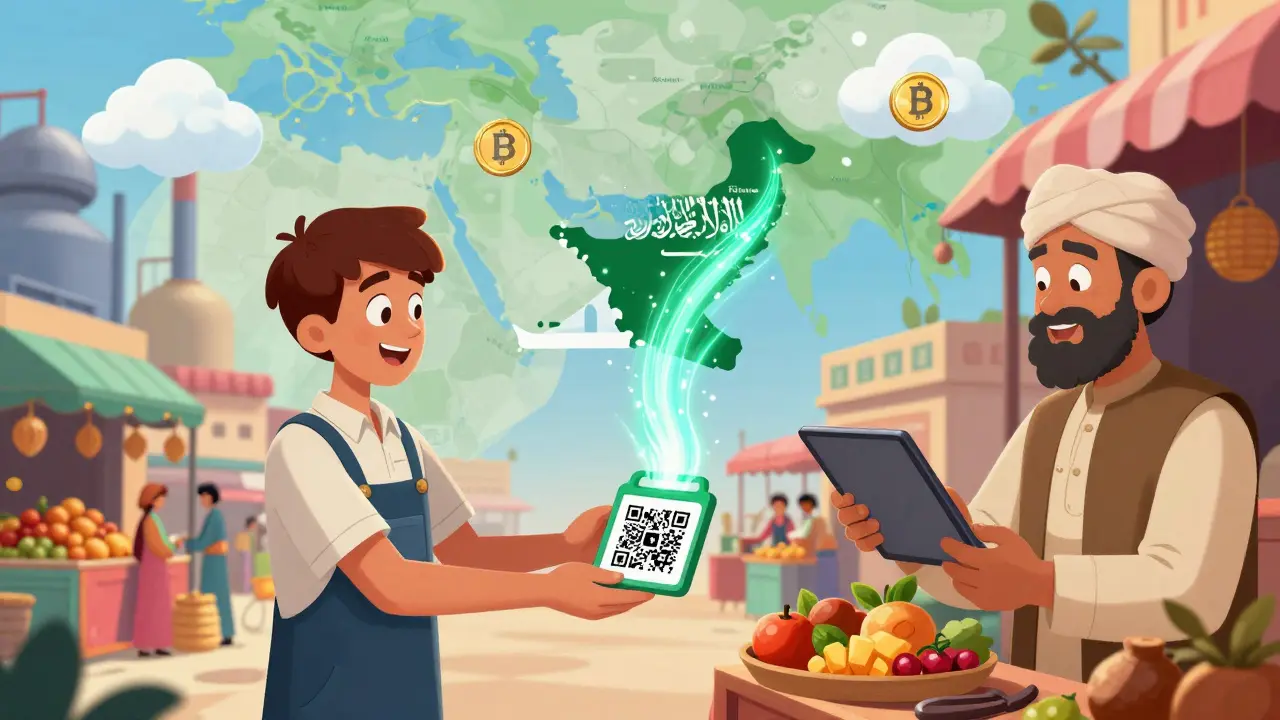
Why Other Rankings Show Pakistan at 9th
Not every report agrees Pakistan is 3rd. Some list it at 9th. Why the difference? It comes down to what’s being measured. Chainalysis looks at transaction volume adjusted for economic size. Other rankings count how many people own crypto, regardless of how much they use it. Nigeria, for example, has high ownership rates - but low transaction activity. Many Nigerians hold crypto as a savings tool, but rarely spend it. Pakistanis use it like cash. Vietnam and India also rank high. But India’s adoption is driven by retail investors betting on Bitcoin. Pakistan’s is driven by necessity. That’s the difference between a bubble and a backbone.What’s Next for Pakistan’s Crypto Scene?
The government is now talking about launching a national blockchain for land records and tax collection. Banks are testing crypto-backed loans. Small businesses are starting to accept USDT as payment. Even street vendors in Karachi have QR codes for crypto payments. But risks remain. If the political situation shifts - say, if the military’s influence over economic policy grows - crypto could become a tool for geopolitical leverage. The partnership with World Liberty Financial, while useful, raises questions about who really controls the direction of this growth. Still, the foundation is solid. People aren’t using crypto because it’s trendy. They’re using it because it works. When your savings vanish in a year, and banks won’t let you send money abroad, crypto isn’t a gamble. It’s a lifeline.
Can Other Countries Copy This?
Yes - but only if they’re willing to admit their systems are broken. Countries with high inflation, weak banking, and heavy remittance flows - like Egypt, Bangladesh, or Turkey - are watching Pakistan closely. They see what happens when you stop fighting innovation and start using it. The lesson isn’t to legalize crypto. It’s to recognize when people are already using it - and then give them rules that protect them, not punish them.What This Means for You
If you’re from Pakistan: you’re not an outlier. You’re ahead of the curve. Crypto isn’t something you need to learn about. It’s something you’re already living. If you’re from another country: don’t assume crypto adoption means speculation. In places like Pakistan, it means survival. And that’s a far more powerful force than any market hype.Why did Pakistan ban crypto in 2018, and why did it change its mind?
In 2018, Pakistan’s central bank banned crypto because it feared loss of control over the financial system and potential money laundering. But by 2024, inflation had destroyed savings, remittance costs were crippling families, and millions were already using crypto anyway. The government realized banning it wasn’t working - so it shifted to regulation. The creation of the Pakistan Virtual Assets Regulatory Authority in 2025 marked the official end of the ban and the start of a structured, legal crypto ecosystem.
Is crypto legal in Pakistan today?
Yes. While crypto isn’t legal tender, it is fully legal to buy, sell, trade, and hold digital assets. The Pakistan Virtual Assets Regulatory Authority (PVARA) licenses and oversees all crypto businesses. Exchanges must follow strict KYC and AML rules. Using crypto for payments or remittances is not only allowed - it’s encouraged as a tool for financial inclusion.
What role do stablecoins play in Pakistan’s crypto adoption?
Stablecoins, especially USDT, are the backbone of crypto use in Pakistan. They’re used to protect savings from inflation, send remittances cheaply, and pay for goods and services. Unlike Bitcoin, which swings wildly in value, USDT holds a steady $1 value. This makes it practical for everyday use - not just speculation. Over 80% of crypto transactions in Pakistan involve stablecoins.
How many people in Pakistan use cryptocurrency?
Approximately 20 million Pakistanis - about 9% of the population - hold cryptocurrency as of 2025. This is significantly higher than the global average of 6.9%. Most users are young, urban, and tech-savvy, but adoption is spreading quickly into rural areas through mobile apps and local exchange agents.
Why is Pakistan ranked higher than Nigeria in some crypto reports?
Nigeria has more crypto owners, but Pakistan has higher transaction volume and more consistent usage. Chainalysis ranks countries by how much value flows through crypto networks, not just how many people own it. Pakistanis use crypto daily for payments and remittances. Many Nigerians hold crypto as a long-term savings tool but rarely spend it. Usage beats ownership in adoption rankings.
Is Pakistan’s crypto growth sustainable?
Yes - because it’s built on real needs, not hype. The government has created clear rules. Businesses have legal protection. People use crypto for daily survival: sending money, saving against inflation, paying bills. As long as inflation stays high and banking services remain unreliable, crypto will remain essential. The real test will be whether the system stays independent of political influence and continues to prioritize user protection over profit.
Stephen Gaskell
January 18, 2026 AT 17:42Crypto in Pakistan? Sure, if you ignore the fact that it’s just a workaround for a broken state. The US doesn’t need this chaos. We have the dollar, the Fed, and real institutions. Don’t glorify desperation as innovation.
Shaun Beckford
January 20, 2026 AT 09:11Let’s be real - Pakistan didn’t ‘adopt’ crypto, it got cornered by hyperinflation and turned to digital lifelines like a drowning man grabbing driftwood. The real story? When your currency is toilet paper, even Tether looks like a godsend. Not a triumph. A tragedy with a blockchain veneer.
Pat G
January 20, 2026 AT 09:55So now we’re celebrating a country that got forced into crypto because its government failed? Next they’ll be giving out medals for people who use duct tape to fix their car’s transmission. This isn’t innovation - it’s collapse with a QR code.
Alexandra Heller
January 20, 2026 AT 11:36There’s a profound irony here - the same people who scream about ‘financial sovereignty’ in the West now point to Pakistan as proof that crypto is the future. But sovereignty isn’t about bypassing banks - it’s about having the political will to build systems that don’t require citizens to gamble with their survival. Pakistan didn’t choose crypto. It was abandoned by its own institutions, and crypto filled the vacuum. That’s not progress. That’s mourning dressed as a whitepaper.
The real question isn’t how Pakistan adopted crypto - it’s how many other nations are one hyperinflationary crisis away from doing the same.
Bryan Muñoz
January 21, 2026 AT 23:05WLF = Trump’s crypto front? LOL they’re not helping - they’re setting up a backdoor for US control. PVARA? More like PVARA (Pakistani Virtual Asset Regime Authority) - a puppet agency for foreign interests. You think the military doesn’t know who’s really pulling the strings? They’re using crypto to launder influence. Mark my words - this ends in sanctions or a coup. 🤫
Rod Petrik
January 22, 2026 AT 07:16Chainalysis is owned by the same people who run SWIFT and the Fed. They ranked Pakistan 3rd because they want to normalize crypto as a tool for global capital flow - not because it’s good for the people. The real adoption? 90% of those 20 million users are just using it to avoid government surveillance. And guess who’s logging all those transactions? The same firms that gave PVARA its tech. You’re not free. You’re being tracked. And you’re paying for it with your data.
Sarah Baker
January 23, 2026 AT 04:01This is one of the most inspiring stories I’ve read in years. People turned a broken system into something that actually works for them. No handouts. No waiting. Just ingenuity. If you’re reading this and thinking ‘this is chaos’ - maybe you’re the one who needs to catch up. The future isn’t about regulation. It’s about resilience. And Pakistan? They’re building it, one USDT transfer at a time. 💪
nathan yeung
January 24, 2026 AT 21:40India and Pakistan both use crypto heavily - but for different reasons. In India, it’s speculation and FOMO. In Pakistan, it’s survival. That’s the real difference. I’ve seen cousins in Lahore use USDT to pay for medicine. No bank involved. No 10-day wait. Just scan, send, done. That’s not crypto hype. That’s human necessity.
Christina Shrader
January 25, 2026 AT 21:10It’s not about the tech. It’s about the people. When banks fail, when inflation steals your salary, when your family needs help from abroad - crypto doesn’t ask for paperwork. It just works. That’s power. And it’s beautiful.
Tony Loneman
January 27, 2026 AT 00:023rd? Please. Chainalysis is biased. They’re funded by crypto exchanges. Nigeria has 50 million users. Bangladesh has 40 million. Pakistan’s population is smaller. Their ‘usage’ is just remittance laundering disguised as innovation. And don’t get me started on Trump’s shadowy ‘World Liberty Financial’ - that’s not partnership. That’s colonization with a blockchain logo. 🤡
Callan Burdett
January 28, 2026 AT 15:17Man, this is the kind of story that gives me hope. People in Lahore using crypto to pay for groceries? That’s not a trend. That’s a revolution. No one asked permission. No one waited for a law. They just made it work. And now the government had to catch up. That’s how real change happens - from the ground up. Keep going, Pakistan.
Anthony Ventresque
January 28, 2026 AT 16:59I’ve been tracking this for months. The real breakthrough isn’t the regulatory body - it’s the grassroots adoption. People aren’t buying Bitcoin to flip it. They’re using USDT like cash. That’s a massive shift. And the fact that small vendors accept it? That’s the moment crypto stops being a ‘crypto thing’ and becomes part of daily life. This is the model other countries should study - not copy, but understand.
Nishakar Rath
January 30, 2026 AT 05:36Everyone’s acting like Pakistan invented crypto. Nah. They just used it because their government was too lazy to fix inflation. Meanwhile, the US and EU are building CBDCs to control every transaction. Pakistan’s crypto boom? It’s not freedom - it’s a glitch in the system. And glitches get patched. Wait till PVARA starts freezing wallets. Then we’ll see who’s really in charge
Jason Zhang
January 31, 2026 AT 02:02So they banned it. Then they didn’t. Then they regulated it. Then they partnered with Trump’s crypto crew. Sounds like a sitcom. I’m not impressed. It’s still just people using tech to survive a failed economy. That’s not a victory. That’s a warning label.
Katherine Melgarejo
February 1, 2026 AT 08:13So Pakistan’s crypto scene is basically WhatsApp meets Walmart meets Wall Street? Cute. I’m just here for the part where street vendors in Karachi have QR codes. That’s the future. And it’s weird. And kind of amazing.
Patricia Chakeres
February 1, 2026 AT 19:55Let’s not pretend this is organic. The US corporate interests behind PVARA and World Liberty Financial are using Pakistan as a testing ground for surveillance capitalism. Crypto here isn’t liberation - it’s a Trojan horse for data extraction. The government’s ‘regulation’ is just a way to monitor every digital transaction. You think you’re free? You’re being profiled. And you’re paying for it with your financial privacy.
kristina tina
February 3, 2026 AT 01:30This is exactly why I believe in crypto - not as a speculative asset, but as a tool for human dignity. When your savings vanish overnight, when you can’t send money to your mother without paying 8% in fees, when banks refuse to help - crypto doesn’t judge. It just works. Pakistan didn’t ‘get lucky.’ They chose survival over bureaucracy. And that’s the most powerful form of innovation I’ve ever seen. Keep going. You’re not just using crypto. You’re rewriting the rules.