
Remember the summer of 2021 when every new blockchain game promised you a life-changing income just for clicking buttons? If you were scrolling through Twitter or Reddit back then, you likely saw TaleCraft (CRAFT) hyped as the next big thing in play-to-earn. It was built on the Avalanche blockchain, featuring alchemy-themed NFTs and a promise of deflationary economics. Fast forward to August 2026, and the hype has long since evaporated. But what exactly happened to this project, and is there still any value left in the CRAFT token today?
This isn't just a story about one failed startup. TaleCraft serves as a perfect case study for the boom-and-bust cycle of early GameFi projects. Understanding its mechanics, its collapse, and its current status helps you spot similar red flags in today's market. Let's break down what TaleCraft actually is, how it worked, and why most investors walked away with empty wallets.
The Core Concept: Alchemy Meets Blockchain
At its heart, TaleCraft was designed as an "economy metaverse" focused on card and board games. The central entity here is the CRAFT token, which acted as the fuel for the entire ecosystem. The project team described it as a "Philosopher’s Stone," a clever branding choice that tied into the game’s magical alchemy theme.
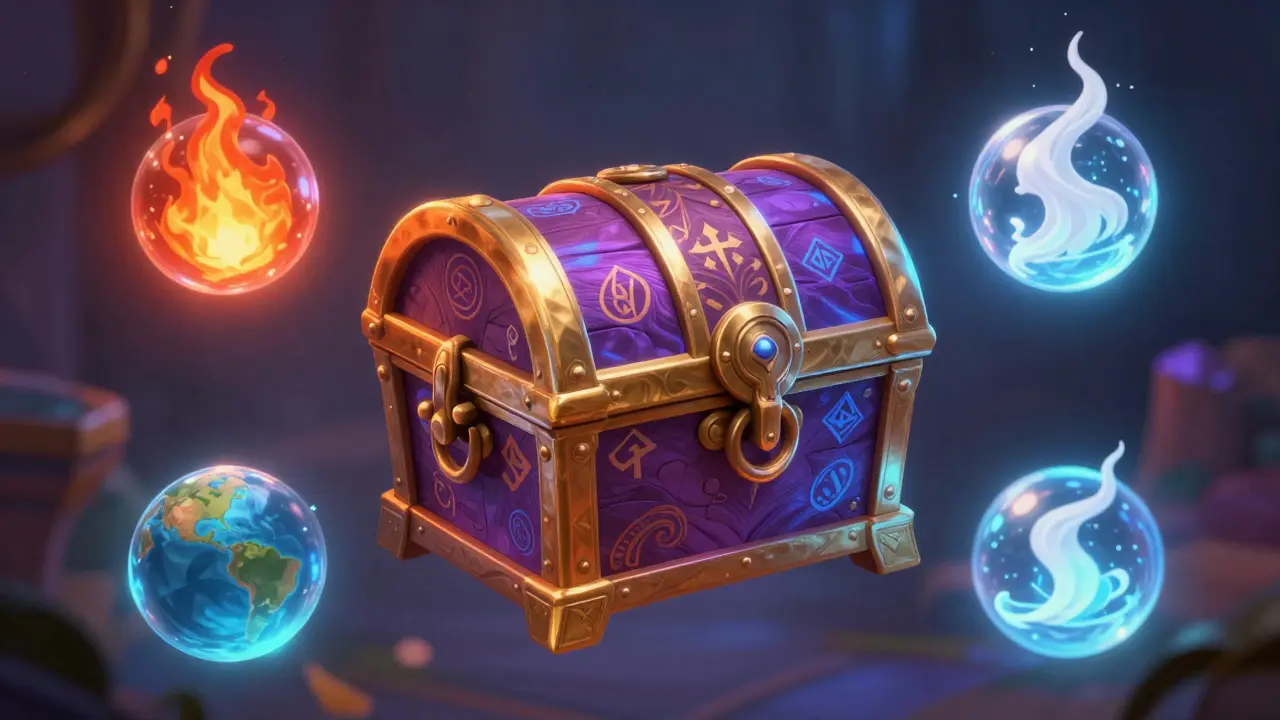
The gameplay loop was straightforward but ambitious. Players used CRAFT tokens to open "Alchemist Chests." Each chest required 10 CRAFT plus a small fee in AVAX (the native currency of the Avalanche network). Inside these chests, players found elemental NFTs representing Fire, Water, Earth, and Air. The twist wasn't just collecting them; it was combining them. By burning lower-tier NFTs along with more CRAFT tokens, players could craft higher-tier, rarer cards. This mechanic was supposed to create a deflationary pressure on the token supply, theoretically driving up the price as demand outstripped the fixed 30 million maximum supply.
On paper, this sounded like a sustainable economic model. In practice, it relied heavily on constant new user acquisition to keep the burning mechanism active. Without fresh blood entering the system to buy chests, the engine stalled.
Tokenomics and Supply Dynamics
To understand where TaleCraft stands today, we need to look at the numbers. The whitepaper explicitly stated a hard cap on the token supply:
- Total Max Supply: 30,000,000 CRAFT
- Circulating Supply (approx.): ~7,000,000 CRAFT
- Burn Mechanism: Tokens spent on chests and crafting fees are permanently removed from circulation.
This fixed supply was meant to be a bullish indicator. Unlike inflationary tokens that print new coins endlessly, CRAFT was designed to shrink. However, scarcity only matters if people want the item. As trading volume dried up, the low circulating supply didn't translate to high prices. Instead, it resulted in extreme volatility and slippage. Trying to sell even a modest amount of CRAFT on decentralized exchanges often crashed the local pool price by 30% to 50% because there simply weren't enough buyers waiting on the other side.
| Attribute | Value / Detail |
|---|---|
| Blockchain Network | Avalanche C-Chain |
| Token Standard | ARC-20 (ERC-20 compatible) |
| Max Supply | 30,000,000 |
| Primary Utility | Opening chests, crafting fees, staking |
| Launch Date | November 2021 |
| Current Status (2026) | Dormant / Low Liquidity |
The Rise and Fall: A Timeline of Disappointment
TaleCraft launched during the peak of the NFT mania in late 2021. It raised funds through an Initial DEX Offering (IDO) on Avalaunch, generating significant buzz within the Avalanche community. Early adopters were excited by the unique "alchemy" narrative and the potential for weekly burn events to reward holders.
However, the cracks began to show almost immediately. By mid-2022, several critical issues emerged:
- Delayed Roadmap Features: The whitepaper promised three distinct game modes: Crafting, Board Game, and Achievement modes. While the crafting aspect was functional, the board game and achievement modes were repeatedly delayed or never fully delivered.
- Declining Development Activity: Social media channels, particularly Telegram and Twitter, went quiet. Updates that once came weekly stretched to monthly, then sporadic. The anonymous development team stopped communicating effectively with the community.
- Liquidity Crisis: As users tried to exit their positions, the lack of deep liquidity pools on exchanges like Trader Joe and Pangolin caused massive price slippage. Many users reported losing half their value just by trying to sell a few hundred dollars' worth of tokens.
By 2023, TaleCraft had become a ghost town. On-chain metrics showed near-zero daily active wallets. The token price collapsed from initial peaks of over $1.00 to fractions of a cent. Today, in 2026, it sits as a micro-cap asset with negligible trading volume, serving more as a historical artifact than a viable investment.
Comparing TaleCraft to Successful GameFi Projects
Why did TaleCraft fail while others survived? Comparing it to contemporaries like Crabada or DeFi Kingdoms reveals stark differences in execution and community management.
Crabada, also launching on Avalanche in late 2021, maintained consistent communication, delivered regular updates, and built a robust guild system that kept players engaged. DeFi Kingdoms successfully transitioned to its own subnet, creating a sticky ecosystem with real utility beyond just token speculation. TaleCraft lacked this depth. Its economy was too fragile, relying entirely on the speculative hope that the token price would rise due to burns. When the broader crypto market turned bearish in 2022, that speculative demand vanished, taking the game's economy with it.
How to Interact with CRAFT Today (If You Must)
If you hold leftover CRAFT tokens or are curious about the technical setup, here is how the process works. Note that this is for educational purposes, given the current state of the project.
- Set Up a Wallet: You need an Avalanche-compatible wallet like MetaMask or the official Avalanche Wallet. Configure it to connect to the Avalanche C-Chain.
- Acquire AVAX: Buy AVAX on a major exchange and transfer it to your wallet. You will need this for gas fees.
- Swap for CRAFT: Use a decentralized exchange (DEX) like Trader Joe. Search for the CRAFT/AVAX pair. Be prepared for high slippage settings (often 10-20%) to ensure the transaction goes through.
- Connect to DApp: Visit the TaleCraft website and connect your wallet. Import the CRAFT token contract address manually if it doesn't appear automatically.
Keep in mind that interacting with the smart contracts may still incur gas fees, even if the activity on the platform is minimal. Always verify contract addresses from multiple sources to avoid phishing scams targeting dormant projects.
Is There Any Future for TaleCraft?
The consensus among crypto analysts and former community members is skeptical. Reviving a dead GameFi project requires more than just a cool idea; it needs capital, active development, and marketing. None of these are currently visible for TaleCraft.
While the deflationary mechanism remains technically intact-meaning the supply continues to decrease slightly with any remaining transactions-there is no demand to drive the price up. Without a renewed roadmap or a public statement from the developers outlining a new direction, CRAFT is likely to remain a niche, illiquid asset. For most investors, it represents a lesson in due diligence: always check for active development teams and sustainable tokenomics before diving into the next big play-to-earn trend.
What is the current price of CRAFT token?
As of 2026, the CRAFT token trades at a fraction of a cent (approximately $0.0001). Due to extremely low liquidity, the price can fluctuate wildly based on very small trades. Most aggregators list it with negligible market capitalization.
Is TaleCraft safe to invest in?
Investing in TaleCraft is considered high-risk. The project has shown little to no development activity since 2022, and liquidity is extremely shallow. There is a significant risk of losing value due to slippage or total abandonment of the project.
How does the CRAFT burn mechanism work?
The burn mechanism reduces the total supply of CRAFT tokens. Every time a player opens an Alchemist Chest or crafts a new NFT, a portion of the CRAFT tokens and the input NFTs are permanently destroyed. This was designed to create scarcity, but without active users, the burn rate is negligible.
Which blockchain is TaleCraft built on?
TaleCraft is built on the Avalanche C-Chain. This allows for fast transactions and low fees compared to Ethereum, making it suitable for frequent in-game interactions like opening chests and crafting NFTs.
Can I still play the TaleCraft game?
Technically, yes, if you have the necessary tokens and NFTs. However, the experience may be limited as some features like the board game mode were never fully completed. Additionally, finding other players for PVP matches is nearly impossible due to the lack of active users.