
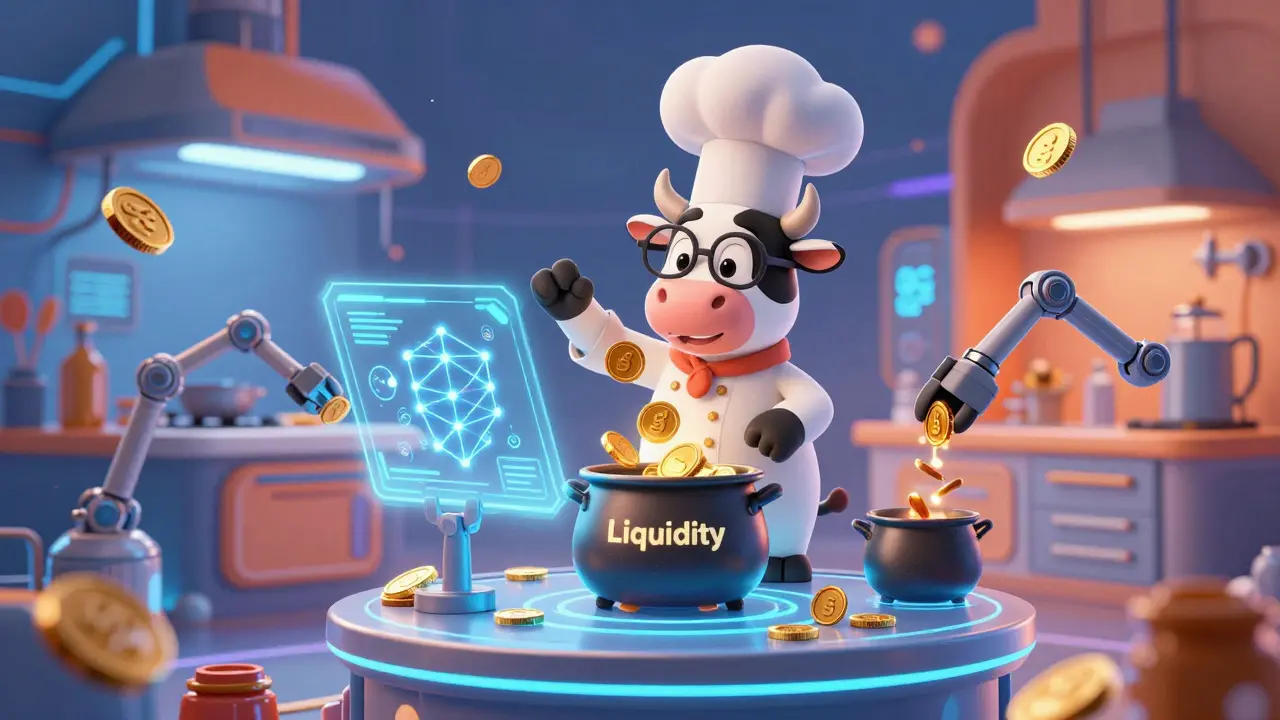
Ever stumbled upon a crypto token with a catchy name like SteakHut Finance and wondered if it’s the next big thing or just another fleeting meme? You aren’t alone. In the crowded world of decentralized finance (DeFi), projects pop up daily, promising high yields and automated profits. But before you connect your wallet, you need to know exactly what you are dealing with.
SteakHut Finance isn’t a restaurant chain, nor is it a simple trading platform. It is a specialized protocol built on the Avalanche blockchain, designed to automate liquidity provision for decentralized exchanges. If you have ever provided liquidity to a pool but hated the hassle of constantly rebalancing or claiming rewards, that is the problem SteakHut tries to solve. However, like many niche DeFi tools, it comes with significant data inconsistencies and high risk. Let’s break down what this project actually does, how the STEAK token works, and why you should proceed with extreme caution.
The Core Concept: Automated Liquidity Management
At its heart, SteakHut Finance positions itself as a "multilayered liquidity primitive." That sounds fancy, but in plain English, it means the protocol manages money for you. Specifically, it focuses on optimizing capital efficiency for liquidity providers on decentralized exchanges (DEXes), particularly Trader Joe, which is one of the largest DEXs on the Avalanche network.
Here is how it typically works in theory:
- Deposit Assets: Users send tokens or liquidity provider (LP) tokens to the SteakHut protocol.
- Automated Strategy: Instead of sitting idle, the protocol automatically allocates these assets into various pools on Trader Joe. It aims to capture trading fees and incentive rewards.
- Yield Optimization: The system claims rewards (like JOE tokens) and reinvests them or redistributes them to users, effectively compounding returns without manual intervention.
- Governance via STEAK: The native STEAK token acts as the governance key. Holding or staking STEAK may give users voting rights on strategy changes or access to higher yield tiers.
The goal is to simplify the messy process of liquidity mining. For active traders, managing multiple pools across different chains can be exhausting. SteakHut attempts to turn this into a passive income stream, often referring to its user base as "the Herd." This branding suggests a community-driven approach where collective participation boosts the overall efficiency of the liquidity pools.
Tokenomics and Market Data: A Messy Picture
If you look up the STEAK token on major tracking sites, you will immediately notice something odd: the data doesn’t match. This is a red flag worth paying attention to. In the crypto world, inconsistent data usually points to low liquidity, poor reporting, or a lack of mainstream adoption.
| Metric | CoinMarketCap | Bitget | Crypto.com | ICOAnalytics |
|---|---|---|---|---|
| Total Supply | 3.22 Million | 3.22 Million | N/A | 4.99 Million |
| Circulating Supply | 0 (Reported) | 0 (Reported) | 2.09 Million | Not Specified |
| Price Snapshot | $0.00 | $0.00 | $0.01688 | ~$0.60 (Historical) |
| Market Cap | $0 | $0 | N/A | ~$1.1 Million |
As you can see, some platforms report zero price and zero volume, while others show small but non-zero values. ICOAnalytics provides historical context, noting an Initial Coin Offering (ICO) price of $0.369 in November 2023. At its peak, the token reportedly reached an all-time high (ATH) of around $2.35, offering a massive return on investment for early buyers. However, current data suggests the token has crashed significantly from those highs.
This volatility is typical for micro-cap tokens. With a fully diluted valuation (FDV) estimated between $1.4 million and $3 million, SteakHut Finance is not a blue-chip asset. It is a speculative play. The discrepancy in circulating supply-ranging from zero to millions-indicates that either the token is not widely traded on centralized exchanges, or the aggregators are failing to pull accurate on-chain data. Always verify prices directly on decentralized exchanges like Trader Joe rather than relying solely on aggregator snapshots.

Technical Architecture: Built on Avalanche
SteakHut Finance operates exclusively on the Avalanche C-Chain. Why Avalanche? Because it offers high throughput and low transaction fees compared to Ethereum. This makes it ideal for frequent rebalancing strategies that require moving assets in and out of pools regularly. If gas fees were high, the cost of automation would eat up all the profits.
To use the protocol, you need a Web3 wallet compatible with Avalanche, such as MetaMask configured for the Avalanche network. You will also need AVAX tokens to pay for gas fees. Once connected, the interface allows you to deposit assets into specific "vaults" or strategies managed by SteakHut Labs, the development entity behind the project.
Unlike some transparent protocols that publish detailed smart contract audits from top-tier firms, public sources do not highlight formal security reviews for SteakHut Finance. This absence is concerning. In DeFi, smart contracts hold your funds. If there is a bug or a vulnerability, hackers can drain the pool. Without independent audit badges from firms like CertiK or Hacken, you are trusting the code based on faith rather than verified security.

Risks and Red Flags
Before investing any real money, consider these critical risks:
- Liquidity Risk: Many trackers show near-zero trading volume. This means if you want to sell your STEAK tokens quickly, you might not find a buyer, or you will suffer massive slippage (getting a much worse price than expected).
- Data Reliability: Conflicting supply and price data across major platforms suggests the token lacks deep market integration. Major exchanges like Coinbase track the token but do not list it for trading, signaling it hasn’t met their listing standards.
- Smart Contract Risk: No public evidence of comprehensive third-party audits increases the chance of exploits.
- Project Longevity: The team operates under the pseudonymous brand "SteakHut Labs." There are no public biographies or corporate registrations linked to the founders. Pseudonymous teams are common in crypto, but they offer less accountability if things go wrong.
- Confusion with Other Tokens: Be careful not to confuse SteakHut Finance (STEAK) with other unrelated tokens using similar names, such as "Steaks.finance," which has a completely different price history and utility.
The combination of low market cap, thin liquidity, and limited transparency places SteakHut Finance in the "high-risk" category. It is suitable only for experienced DeFi users who understand impermanent loss, smart contract risks, and the potential for total loss of capital.
How It Compares to Alternatives
SteakHut is not the only yield optimizer on Avalanche. Larger, more established protocols like Benqi (for lending/borrowing) or Pangolin (another DEX) offer similar services with deeper liquidity and more extensive security histories. While SteakHut aims to specialize in automating Trader Joe pools, its smaller size means it may offer higher theoretical yields to attract users, but at the cost of stability.
If you are looking for passive income on Avalanche, it is often safer to start with larger protocols that have proven track records and audited code. Use SteakHut only if you specifically believe in its unique "multilayered" strategy and are comfortable with the associated risks.
Is SteakHut Finance safe to use?
Safety in DeFi is relative. SteakHut Finance operates on the secure Avalanche blockchain, but the protocol's smart contracts themselves have not been highlighted as having public, third-party audits. This introduces smart contract risk. Additionally, the token has very low liquidity, meaning selling your assets could be difficult. Always do your own research and never invest more than you can afford to lose.
Where can I buy STEAK tokens?
STEAK is primarily traded on decentralized exchanges (DEXes) like Trader Joe on the Avalanche network. Some centralized platforms like Bitget may list it, but availability varies. Due to low liquidity, expect high slippage when buying or selling large amounts. Check live charts on CoinGecko or DexScreener for the most current trading pairs.
What is the purpose of the STEAK token?
The STEAK token serves as the governance and utility asset for the SteakHut Finance ecosystem. Holders can stake STEAK to earn rewards from the protocol's yield generation activities. It may also grant voting rights on future protocol upgrades and strategy decisions, aligning incentives between the developers and the "Herd" of users.
Why do different websites show different prices for STEAK?
The discrepancies arise because STEAK is a micro-cap token with very low trading volume. Different aggregators pull data from different sources and update at different speeds. Some may show stale data, while others reflect recent trades on specific DEXes. Always cross-reference multiple sources and check the actual DEX pool for the most accurate price.
Is SteakHut Finance the same as Steaks.finance?
No, they are distinct projects. SteakHut Finance (associated with the STEAK ticker on Avalanche) is a liquidity management protocol. Steaks.finance is a separate entity with its own token and price history. Confusing the two can lead to significant financial errors, so always verify the contract address and official website before interacting.
Terry Hyland
June 16, 2026 AT 17:54People are so greedy they will put their life savings into a project called SteakHut without reading the code. It is morally bankrupt to chase yields like this when you could be helping real people. The whole crypto industry is built on lies and I hope it all collapses soon so everyone learns a lesson about honesty.
Monica Pathammavong
June 17, 2026 AT 00:35u can see right away dat the data is all messed up lol why r u even trusting coinmarketcap? its obvious they r hiding stuff from u. i checked the contract myself and its full of red flags. dont be a sheep and follow the herd into a rug pull. ur wallet is next if u keep ignoring the signs
Tim Lefebvre
June 18, 2026 AT 05:49i mean honestly just stick to benqi or pangolin if u want safe yields on avax. steak hut seems too risky with no audits. i tried looking at the vaults and the slippage would kill any profit anyway. better to park ur avax in lending protocols where u know what u r getting into. no point gambling on micro caps unless u have money to burn
Mekz Wheoki
June 18, 2026 AT 19:32Another automated yield optimizer promising moonshots while the team stays anonymous. How original. The fact that major aggregators show zero price tells you everything you need to know about the liquidity depth here. Save your time and keep your funds in cold storage instead of feeding these grifters.
Skm Shubham
June 20, 2026 AT 09:58The tokenomics are fundamentally flawed because there is no clear utility beyond governance which is worthless without active development. The discrepancy in circulating supply indicates poor reporting or intentional obfuscation by the team. This is a classic pump and dump structure designed to exploit retail investors who do not understand smart contract risks. Avoid at all costs.
Rob Aronson
June 21, 2026 AT 07:05From a DeFi analytics perspective, the FDV is incredibly low but the risk-adjusted return is non-existent due to lack of audit trails 📉. The integration with Trader Joe is interesting theoretically but without CertiK verification, the impermanent loss combined with smart contract vulnerability makes this a negative EV play for most participants 🚫🔐.
Kwon Bill
June 23, 2026 AT 03:41In my experience with cross-chain protocols, the Avalanche ecosystem often suffers from fragmented liquidity compared to Ethereum L2s. While SteakHut attempts to solve rebalancing friction, the absence of institutional-grade security reviews suggests this is merely a speculative vehicle rather than a robust financial primitive. The market inefficiencies highlighted in the post are symptomatic of broader adoption hurdles in niche DeFi sectors.
Kenneth Riley
June 24, 2026 AT 15:07I cant believe people still fall for this garbage! The article says its high risk and yet everyone wants to buy in. Its a total scam waiting to happen. The devs are probably already planning to drain the pool and run away with our money. Wake up sheeple! This is exactly how you lose everything overnight. Do not touch this trash
ravi mahla
June 25, 2026 AT 20:55Hey guys just a friendly reminder that DYOR is key! But seriously if the audits are missing then maybe skip it. There are plenty of other projects on Avax that are doing great things. Stay positive and keep learning about blockchain tech instead of chasing quick riches in shady protocols. You got this!
Mark Brunschwiler
June 26, 2026 AT 10:58It is funny how we trust code written by strangers more than banks. Maybe we should question our own judgment instead of blaming the protocol. The emptiness of the void stares back at us through every transaction hash. Are we really just feeding the machine or is the machine feeding us? I feel nothing when I look at the charts.
Sonya O'Brien
June 27, 2026 AT 19:12I completely agree with the points raised about the data inconsistencies because it really does make one wonder about the transparency of the project overall, and while I appreciate the detailed breakdown of the technical architecture, I think it is important to consider that many users might not fully understand the implications of pseudonymous teams until it is too late, so perhaps we should advocate for stricter regulatory frameworks that require identity verification for any protocol handling significant user funds, which would ultimately benefit the entire ecosystem by fostering greater trust and accountability among developers and investors alike.
Filbert Reeves
June 28, 2026 AT 00:28You guys are all blind to the real truth behind this. The government wants you to think crypto is risky so they can control your money. SteakHut is actually a front for something bigger. The discrepancies in data are planted by agencies to scare you away. I have seen documents that prove the team is working with shadowy figures to manipulate the market. Dont let them fool you into thinking this is just another scam. It is part of a larger plan to destroy decentralized finance. Wake up before it is too late and join the resistance against the digital enslavement they are pushing on us all
Nick Rice
June 28, 2026 AT 12:43Listen up everyone. If you are going to interact with this protocol you need to understand the absolute risks involved. This is not a place for beginners. The lack of audits means you are playing Russian roulette with your capital. I advise anyone serious about DeFi to stick to battle-tested platforms. Do not be reckless with your assets. Protect yourself first and foremost.