

You’ve probably seen the ticker OGD, which stands for OLYMPIC GAMES DOGE, a high-risk cryptocurrency token built on the Binance Smart Chain that promises aggressive supply burning and a future metaverse platform called OGDVerse. It sits somewhere between a standard meme coin and a speculative utility project. But before you swap your hard-earned stablecoins for it, you need to know exactly what you are getting into. This isn't Bitcoin or Ethereum; this is a micro-cap asset with massive supply numbers and thin liquidity.
I’m going to break down the reality of OGD-how its math works, where you can actually buy it, and why most traders treat tokens like this with extreme caution. We’ll look at the 9% transaction fee, the anonymous team, and whether that "metaverse" vision has any legs in 2026.
The Quick Reality Check: What Is OGD?
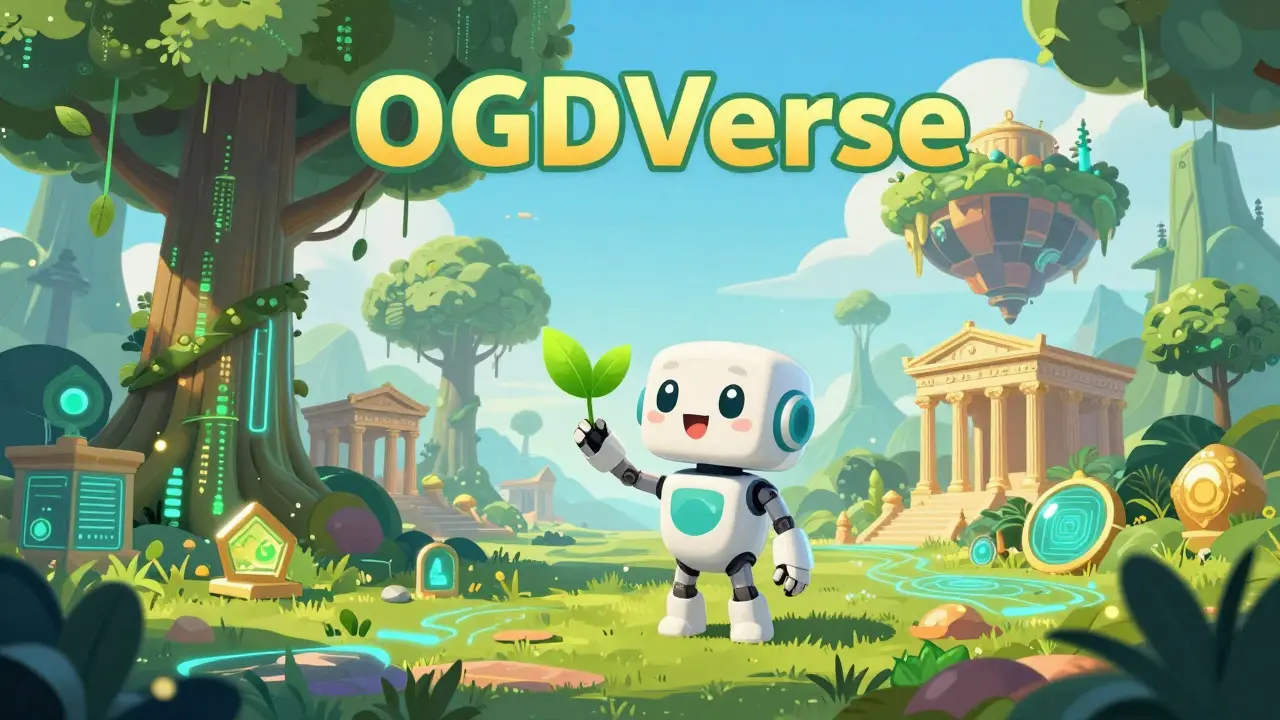
OLYMPIC GAMES DOGE launched on September 6, 2023, riding the wave of post-bear market speculation on Binance Smart Chain. The core promise is simple: it’s a deflationary token designed to reduce its own supply over time while generating income for its ecosystem. The project claims it wants to build an environment called OGDVerse, a metaverse-style space that supposedly helps reduce carbon footprints in virtual provinces.
Here is the cold, hard data from major trackers like CoinMarketCap and LiveCoinWatch:
- Ranking: Somewhere between #6,600 and #7,900 by market cap. That puts it deep in the "long tail" of crypto assets.
- Price: Fractions of a cent. We are talking about prices around $0.00000000001 USD. You need billions of tokens to equal a single dollar.
- Liquidity: Very low. Many platforms list the price but show zero or "N/A" for trading volume, meaning there aren’t many buyers or sellers active at any given moment.
- Team: Anonymous. There are no named founders, no public LinkedIn profiles, and no registered foundation listed on major aggregators.
If you are looking for a blue-chip investment with institutional backing, this is not it. If you are hunting for high-risk, high-reward lottery tickets, OGD fits that profile perfectly.
How the Math Works: Tokenomics & The 9% Tax
The engine behind OGD is its fee structure. Every time you send or receive OGD, the protocol takes a cut. According to the project's whitepaper summaries found on data sites, every transfer incurs a total fee of 9%. Here is how that 9% gets split:
| Fee Component | Percentage | Purpose |
|---|---|---|
| Automatic Burn | 2% | Tokens are permanently removed from circulation to increase scarcity. |
| Liquidity Pool Burn | 1% | Additional burn taken from the liquidity pool to further reduce supply. |
| Marketing Wallet | 3% | Funds used for promotion; partially hedged into yield-bearing assets. |
| Buyback Operations | 3% | Used to purchase OGD from the open market, theoretically supporting price. |
This creates a "deflationary" effect. As people trade, the total supply shrinks. The marketing wallet is interesting because the project claims it invests those funds to generate extra income, which could eventually be used to reward holders. However, without independent audits or transparent reporting on where that money goes, it remains a promise rather than a proven mechanism.
The supply number is also staggering. The total supply is listed as 1 Peta OGD (1 quadrillion). With a circulating supply hovering near 994 trillion, the sheer volume of tokens means the price per unit will likely stay microscopic unless demand explodes exponentially. This is typical for meme coins, but it makes tracking value difficult for beginners.
The Vision: OGDVerse and Carbon Footprints?
Why "Olympic Games"? Why "Dog"? And what is the point? The project pitches itself as more than just a dog-themed meme coin. The long-term goal is the OGDVerse.
The stated ambition is to dominate a specific niche in the metaverse ecosystem. They claim this virtual world will allow users to manage geographic areas on a global map and actively reduce their carbon footprint within that digital space. While environmental themes are trendy in tech right now, there is currently no evidence of partnerships with real-world environmental organizations, nor are there verified metrics showing actual carbon reduction. It is a roadmap item, not a current feature.
For now, OGD functions primarily as a speculative asset. The "utility" exists only in concept, waiting for development resources that may or may not materialize given the anonymous nature of the team.
Where Can You Actually Buy OGD?
Forget about buying this on Coinbase or Crypto.com. These major centralized exchanges do not list OGD. In fact, Crypto.com explicitly states that OGD is not tradable on their platform. If you see a listing for OGD on a major exchange, double-check the ticker symbol-you might be looking at a different coin entirely.
To get your hands on OGD, you have to go decentralized. Here is the practical path:
- Get a BSC-Compatible Wallet: Download a wallet like Trust Wallet or MetaMask. Make sure it supports the Binance Smart Chain network.
- Buy BNB: Purchase Binance Coin (BNB) on a major exchange like Binance or Kraken. You need BNB to pay for gas fees on the BSC network and to swap for OGD.
- Transfer BNB to Your Wallet: Send your BNB from the exchange to your personal wallet address. Ensure you select the BEP-20 network.
- Connect to a DEX: Go to a decentralized exchange that runs on BSC, such as PancakeSwap. Connect your wallet.
- Find the Contract Address: This is critical. Do not search for "OGD" by name alone, as scammers often create fake tokens with similar names. Find the official smart contract address from a trusted source like CoinMarketCap’s markets tab.
- Swap: Paste the contract address into the DEX interface. Swap your BNB for OGD. Be prepared for slippage settings adjustments due to the high transaction tax.
Notice how much work this is compared to clicking "Buy" on an app? That friction is intentional. It filters out casual investors and leaves mostly speculators and degens in the pool.
Risks You Cannot Ignore
Let’s talk about why you could lose everything. High reward always comes with high risk, and OGD checks almost every red flag box for a risky crypto asset.
1. Illiquidity Traps
Because trading volume is often reported as zero or N/A, selling large amounts of OGD can be impossible without crashing the price. If you buy $1,000 worth, you might find that when you try to sell, there are no buyers waiting at your desired price. You end up accepting a much lower price or not being able to exit at all.
2. The Anonymous Team Factor
There is no one to hold accountable. If the developers decide to pull the rug-by draining the liquidity pool or exploiting a bug in the smart contract-there is no CEO to sue and no legal entity to contact. In the world of anonymous meme coins, "trust" is based entirely on code, and even code can have holes.
3. Extreme Volatility
Tokens ranked below #5,000 can drop 90% in a day on bad news or simply because a few large holders decided to cash out. A 9% tax on every transaction eats into your profits significantly if you are trying to day-trade. You need the price to move up well beyond 9% just to break even on a single round-trip trade.
4. Lack of Independent Audits
Major data aggregators do not link to third-party security audits for OGD. Without a reputable firm like CertiK or Hacken verifying the smart contract, you are trusting the code blindly. One hidden function could allow the creators to mint new tokens or freeze your wallet.
Is OGD Worth It in 2026?
If you are asking this question, you are likely weighing the potential of the OGDVerse against the stark reality of its current market position. Right now, OGD is a micro-cap experiment. It has survived since late 2023, which is more than many meme coins can say, but survival isn't success.
For the average investor, OGD offers little fundamental value. It doesn't power a widely used blockchain, it isn't accepted as payment, and its metaverse plans are unproven. It is purely a speculative play on community hype and deflationary mechanics.
If you decide to participate, treat it like buying a lottery ticket. Only allocate money you are fully prepared to set on fire. Never invest rent money, savings, or borrowed funds into assets with anonymous teams and zero liquidity depth. Keep your expectations grounded: the odds favor the house, and in crypto, the house is often the early whales who bought in when the price was even lower.
Is OLYMPIC GAMES DOGE (OGD) available on Binance?
No, OGD is not listed as a direct trading pair on the Binance centralized exchange. However, you can use Binance to buy BNB, which you then transfer to a decentralized exchange (DEX) like PancakeSwap to trade for OGD. Binance provides educational guides on how to perform this process safely.
Who created the OGD token?
The team behind OLYMPIC GAMES DOGE is anonymous. Major cryptocurrency data aggregators like CoinMarketCap and LiveCoinWatch do not list any named founders, registered companies, or public development teams associated with the project.
What happens to the 9% transaction fee on OGD?
The 9% fee is split into four parts: 2% is automatically burned (destroyed), 1% is burned from the liquidity pool, 3% goes to a marketing wallet, and 3% is allocated for buyback operations intended to support the token's price.
Is OGD a good investment for beginners?
Generally, no. OGD is a high-risk, micro-cap asset with low liquidity and an anonymous team. Beginners should typically stick to established cryptocurrencies with clear use cases, transparent teams, and high trading volumes before exploring speculative meme tokens.
What is OGDVerse?
OGDVerse is the proposed long-term vision for the OLYMPIC GAMES DOGE ecosystem. It aims to be a metaverse-style environment where users can interact with a global map and engage in activities related to reducing carbon footprints. As of 2026, this remains a conceptual roadmap rather than a fully realized product.