
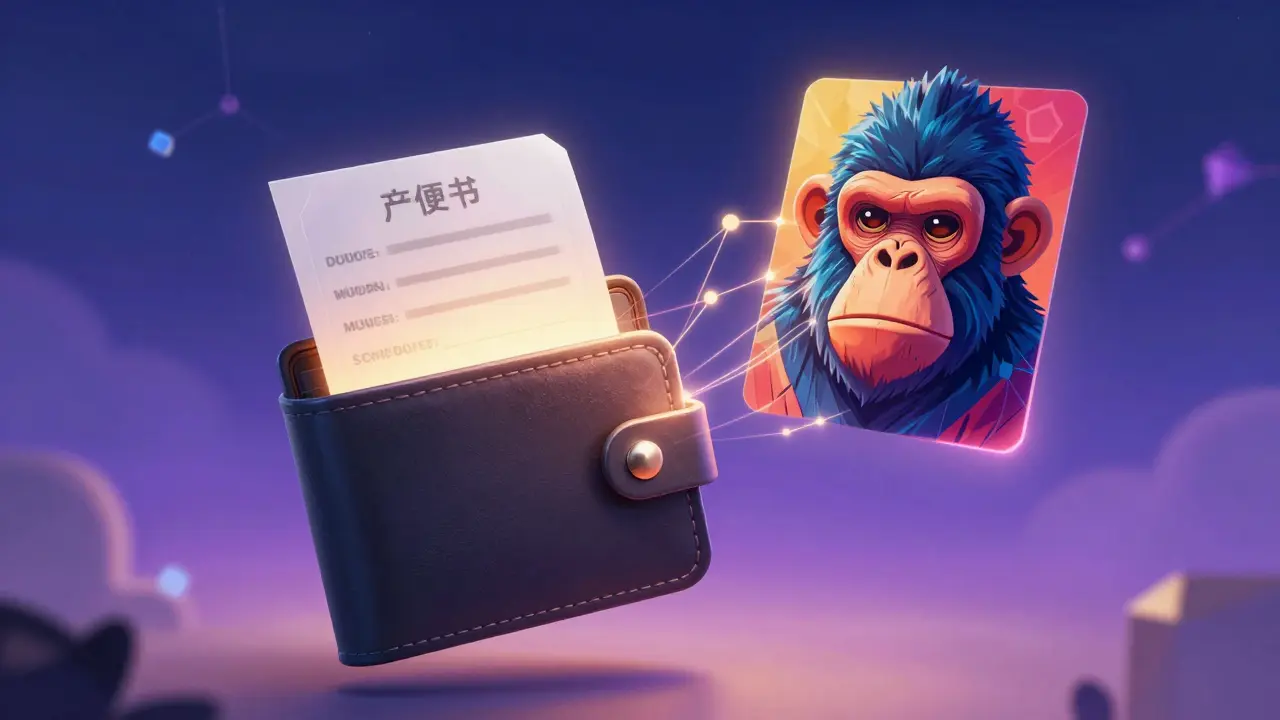
You bought that digital artwork. You see the image on your screen. You feel like you own it. But here is the uncomfortable truth: the blockchain doesn’t actually hold the picture. It holds a receipt. And attached to that receipt is a small file of text called NFT metadata. Without this invisible layer of data, your NFT is just a random number on a ledger with no name, no description, and no link to the art itself.
Think of an NFT like a house deed. The deed proves you own the property, but the deed itself isn’t the house. It’s a piece of paper describing the address, the square footage, and the legal boundaries. In the world of crypto, NFT metadata is that description. It tells wallets and marketplaces what the token is, who created it, and where to find the actual digital file (the JPEG, MP4, or audio track).
How NFT Metadata Works Under the Hood
To understand why metadata matters, you have to look at how blockchains are built. Blockchains like Ethereum are designed for security and immutability, not for storing large files. They are incredibly expensive to write to. Storing a high-resolution image directly on the Ethereum blockchain would cost thousands of dollars in gas fees and bloat the network. Most blockchains can only handle tiny amounts of data per transaction-often less than 256 bytes.
So, developers use a shortcut. The smart contract on the blockchain stores a unique ID for the token and a pointer called tokenURI. This pointer acts like a URL. When you view your NFT in a wallet, the wallet reads that URI, fetches the metadata file from wherever it is hosted, and displays the information.
This metadata file is almost always written in JSON (JavaScript Object Notation). It looks something like this:
{
  "name": "Bored Ape #3749",
  "description": "A unique primate with laser eyes.",
  "image": "ipfs://QmXyZ.../ape.png",
  "attributes": [
    {"trait_type": "Background", "value": "Blue"},
    {"trait_type": "Eyes", "value": "Laser"}
  ]
}
The JSON format is universal. Whether you are using Ethereum, Solana, or Polygon, the structure remains similar. The ERC-721 standard, which defined the first non-fungible tokens on Ethereum, established this pattern. It ensures that any wallet or marketplace that understands ERC-721 can read your NFT’s details correctly.
The Critical Choice: On-Chain vs. Off-Chain Storage
Here is where things get risky. Where does that JSON file live? This is the single most important decision for any NFT project. There are two main paths, and they lead to very different outcomes for longevity.
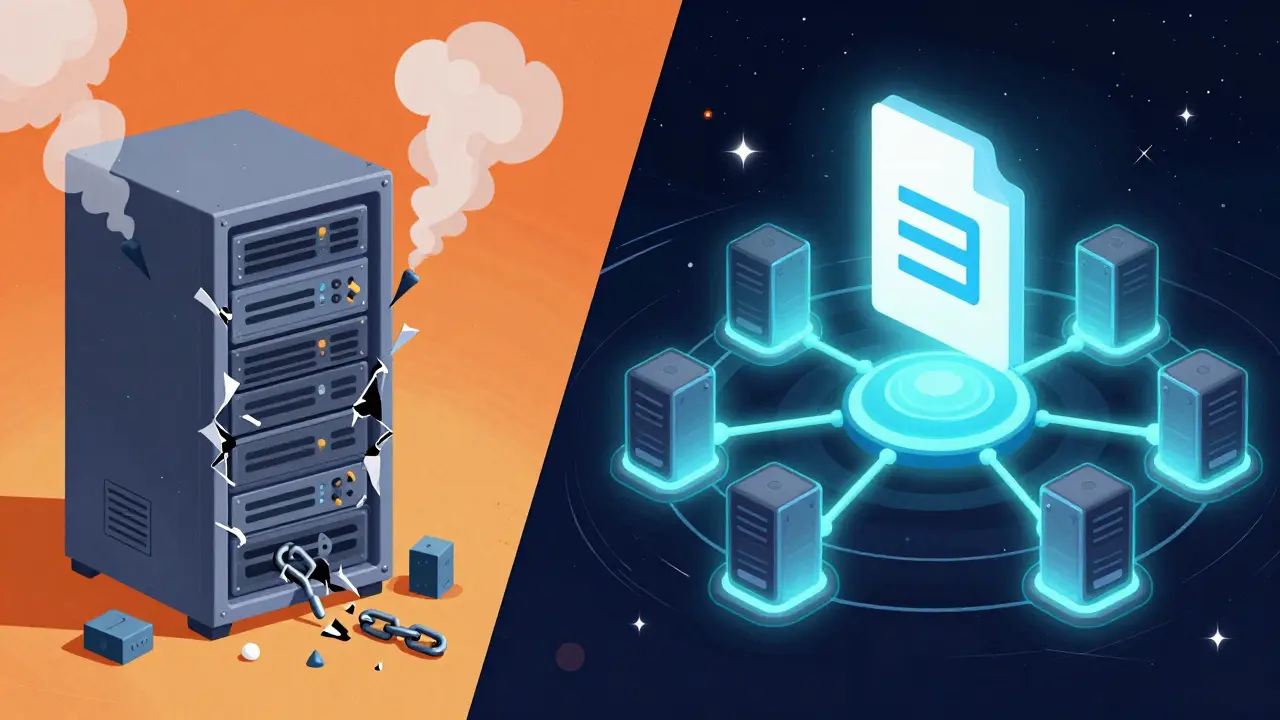
Centralized Servers (Off-Chain): Many early projects stored their metadata on traditional web servers like Amazon Web Services (AWS) or Google Cloud. This is cheap and easy. However, if the server goes offline, the domain expires, or the company shuts down, the link breaks. We call this "link rot." If the link breaks, your NFT still exists on the blockchain, but it will show up as a blank box with no image or name. In 2022, when the marketplace Nifty Gateway had issues, thousands of NFTs became temporarily inaccessible because their metadata was hosted on centralized infrastructure that went down.
Decentralized Storage (IPFS): The industry standard for permanence is IPFS (InterPlanetary File System). Instead of pointing to a specific server location (like www.example.com), IPFS uses content addressing. It creates a cryptographic hash-a unique fingerprint-for the file. As long as one computer in the IPFS network is pinning (hosting) that file, it is accessible forever. Projects like CryptoPunks and Bored Ape Yacht Club used IPFS from day one. Even after multiple marketplace transitions and years of volatility, every single asset remains viewable because the data is distributed across thousands of nodes globally.
In 2025, the trend has shifted heavily toward decentralization. According to recent market analysis, over 65% of high-value NFTs now utilize decentralized metadata storage. Buyers are smarter now; they check where the metadata lives before they buy.
Key Components of NFT Metadata
Not all metadata is created equal. While the basic structure is simple, the depth of the data determines the utility and value of the token. Here are the essential elements you should look for:
- Name: The title of the asset. For collections, this often includes the series name and the unique ID (e.g., "Azuki #42").
- Description: A short text explaining the concept, artist intent, or utility associated with the token.
- Image/Media Link: The pointer to the visual or audio file. This is usually another IPFS hash.
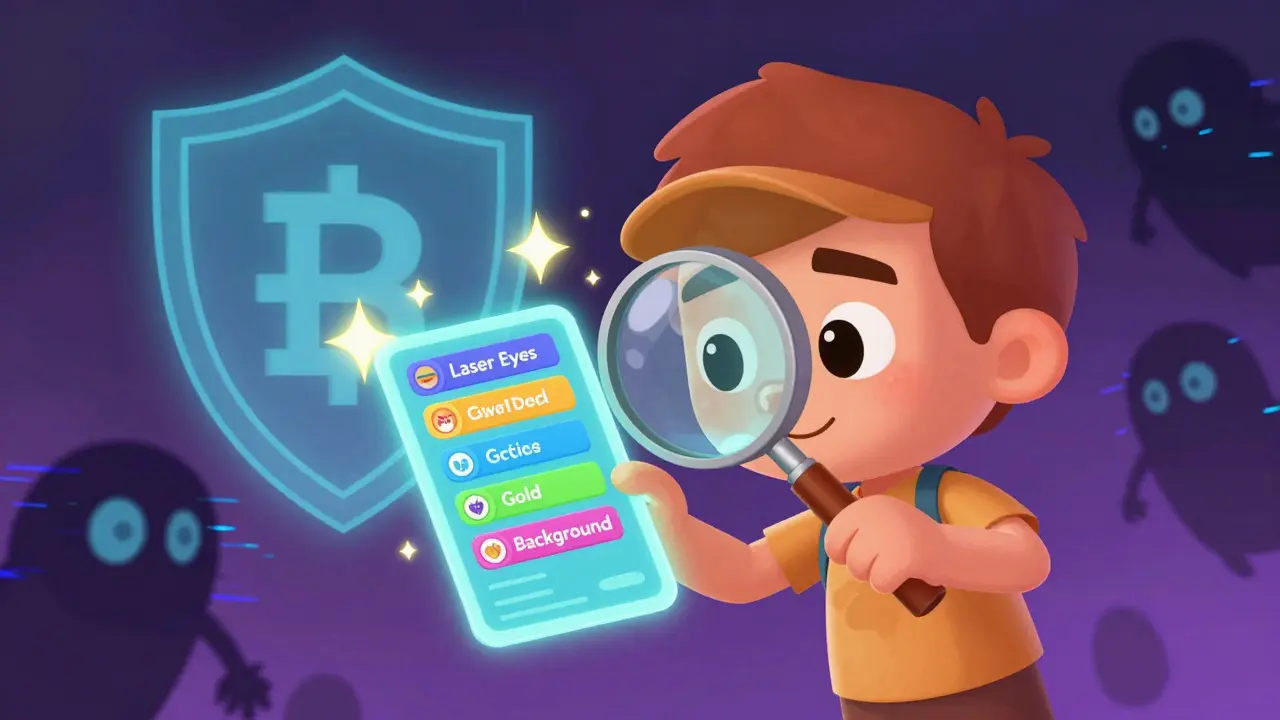
- Attributes (Traits): These are key for collectibles. They define characteristics like "Rare," "Gold Background," or "Level 5." Marketplaces use these attributes to allow filtering and sorting. Rare traits drive up secondary market prices.
- External URL: A link to the project’s website, documentation, or community Discord. This connects the digital asset to its real-world ecosystem.
For gaming or utility-focused NFTs, metadata might also include dynamic data. For example, a character in a game might have metadata that updates to reflect its level or inventory. However, updating metadata is complex. Most ERC-721 contracts are immutable, meaning the metadata cannot be changed once minted. Newer standards like ERC-1155 offer more flexibility for mutable data, allowing developers to update token properties without deploying new contracts.
Why Metadata Quality Affects Value
You might think metadata is just technical boilerplate. It’s not. It directly impacts price and trust. A study by NonFungible.com analyzing over a million transactions found that NFTs with complete, decentralized metadata fetched 22.7% higher prices on average compared to those with incomplete or centralized links.
Why? Because buyers fear loss. If an NFT’s image disappears, the perceived value drops to near zero, even if the token ID remains. Institutional investors and serious collectors perform due diligence. They inspect the smart contract code and verify that the metadata is pinned on IPFS or stored on-chain via solutions like Arweave.
Furthermore, poor metadata implementation leads to spoofing vulnerabilities. Security researchers have warned that nearly 80% of early NFT implementations failed to properly authenticate content origins. This allowed bad actors to create fake versions of popular collections with identical names but broken links. Proper metadata verification helps wallets flag these fakes.
Comparison: Centralized vs. Decentralized Metadata
| Feature | Centralized (AWS/S3) | Decentralized (IPFS/Arweave) |
|---|---|---|
| Cost | Low initial cost, recurring fees | Higher upfront pinning/storage fees |
| Permanence | Fragile; depends on company survival | High; survives server failures |
| Censorship Resistance | Low; provider can delete files | High; distributed across nodes |
| Speed | Fast retrieval via CDNs | Variable; improving with gateways |
| Buyer Trust | Low risk perception | High premium value |
Future Trends: Dynamic and Verifiable Metadata
The technology isn't standing still. By 2026, we are seeing a shift toward more sophisticated metadata systems. One major development is the integration of zero-knowledge proofs (ZKPs) into metadata verification. This allows users to prove ownership or authenticity without revealing sensitive underlying data, enhancing privacy for high-value assets.
Another trend is interoperability. Standards like EIP-7617 aim to create unified metadata schemas that work across different blockchains. Currently, moving an NFT from Ethereum to Solana requires wrapping it, which can complicate metadata handling. Unified standards will make cross-chain transfers seamless, ensuring the metadata travels with the token intact.
Additionally, AI-generated art is pushing metadata to evolve. AI tools need to store generation parameters (prompts, seed numbers, model versions) within the metadata to ensure reproducibility and provenance. This adds layers of complexity but also increases the historical value of the asset.
Practical Tips for Creators and Collectors
If you are creating an NFT collection, do not treat metadata as an afterthought. Follow these steps:
- Use IPFS: Pin your JSON files and images to IPFS immediately. Use services like Pinata or Filecoin for redundancy.
- Validate JSON: Ensure your JSON syntax is perfect. A single missing comma can break the entire collection's display on marketplaces.
- Include Rich Attributes: Define clear trait types. This helps algorithms rank rarity and helps collectors filter searches.
- Test Before Minting: Deploy to a testnet first. Check how the metadata renders in popular wallets like MetaMask or Phantom.
If you are buying, ask questions. Look at the project’s documentation. Do they mention IPFS? Can you find the raw JSON file online? If the project relies solely on a centralized website for its assets, consider it a higher-risk investment. The best NFTs are those where the data is as permanent as the blockchain itself.
Can NFT metadata be changed after minting?
Generally, no. Most standard ERC-721 contracts are immutable, meaning the metadata URI cannot be altered once set. However, some advanced contracts use proxy patterns or off-chain databases that allow updates. If mutability is required, look for ERC-1155 standards or specific upgradeable contract designs. Always verify if a project claims to update metadata, as this can introduce centralization risks.
What happens if my NFT metadata link breaks?
The token itself remains on the blockchain, but the visual representation and descriptive data disappear. Your wallet will likely show a blank space or an error message. The financial value typically plummets because the asset loses its identity and verifiability. This is known as "link rot" and is common with centralized hosting solutions.
Is IPFS free to use?
IPFS itself is a protocol, so there is no fee to use the network. However, to ensure your files stay available permanently, you need them "pinned" by nodes. Free pinning services exist but may remove files if demand is low. For professional projects, paid pinning services like Pinata or Infura provide guaranteed uptime and redundancy for a monthly fee.
How do I check if an NFT uses decentralized metadata?
You can inspect the token URI on a block explorer like Etherscan. Click on the token's contract address, go to the "Read Contract" tab, and call the tokenURI function with the specific token ID. If the resulting URL starts with ipfs:// or ar://, it is decentralized. If it points to a standard HTTP website (e.g., www.project.com/metadata.json), it is likely centralized.
Does metadata affect gas fees?
Indirectly, yes. Storing large amounts of data on-chain increases gas costs significantly. By keeping metadata off-chain (via IPFS) and only storing the hash on-chain, projects keep transaction fees low. However, fetching metadata from slow gateways can impact user experience, though it does not change the blockchain transaction cost.