

Most people know Dogecoin and Shiba Inu. They’ve seen the memes, heard the hype, maybe even bought a few tokens. But have you heard of Ishi Go? It’s not just another dog-themed crypto. It claims to be the original Shiba Inu - the one that started it all. Born in 1930 in Shimane, Japan. Real dog. Real bloodline. And now, it’s a token on Ethereum.
At first glance, Ishi Go (ISHI) sounds like a joke. A crypto based on a 95-year-old dog? But that’s exactly the point. While Dogecoin picked up a meme in 2013 and Shiba Inu rode the wave in 2020, ISHI says it’s not copying the meme - it’s the source. The coin’s whole story is built on lineage. It’s not about a funny picture of a dog. It’s about claiming the real, historical origin of the breed that inspired every dog coin that came after it.
What makes Ishi Go different from other dog coins?
Let’s clear this up: Ishi Go isn’t trying to be faster, cheaper, or smarter than Bitcoin or Ethereum. It doesn’t have a new consensus algorithm, a DeFi protocol, or a utility token. It doesn’t even have a whitepaper. What it has is a story.
According to its backers, Ishi was a real Shiba Inu born in 1930 in Japan. That dog, they say, is the genetic and cultural ancestor of every Shiba Inu you’ve ever seen in a meme - from Dogecoin’s Shiba to Shiba Inu’s logo. The coin’s creators argue that as people learn more about the breed’s true history, interest in ISHI will grow. It’s not speculation on hype. It’s speculation on heritage.
Compare that to Dogecoin ($DOGE), which started as a parody. Or Shiba Inu ($SHIB), which copied Dogecoin’s model and added a burn mechanism. ISHI doesn’t try to fix anything. It doesn’t need to. Its value, as they claim, is in being the first. The original. The root.
Technical details: Is Ishi Go even real?
Technically, ISHI is an ERC-20 token on the Ethereum blockchain. Its contract address is 0x0007...72e327 - verified on Etherscan. That means you can store it in MetaMask, send it to other wallets, and trade it on decentralized exchanges like Uniswap. It has a fixed supply: 1 billion tokens. No more will ever be created.
But here’s where things get messy. Some sites say ISHI runs on Solana. Others say Ethereum. CoinGecko and CoinMarketCap both list it as Ethereum-based. Solana claims? Likely misinformation. No official project website or GitHub repo confirms Solana integration. That contradiction alone should raise red flags.
The token has no roadmap. No team behind it. No development updates. No social media presence worth mentioning. On Twitter, there were only 17 mentions in the last 30 days. No Telegram group. No Discord. No Reddit threads with more than a handful of comments. You won’t find a single official blog post. The entire project exists only on crypto tracking sites - and even there, the data is thin.
Price and market performance: Is anyone even trading it?
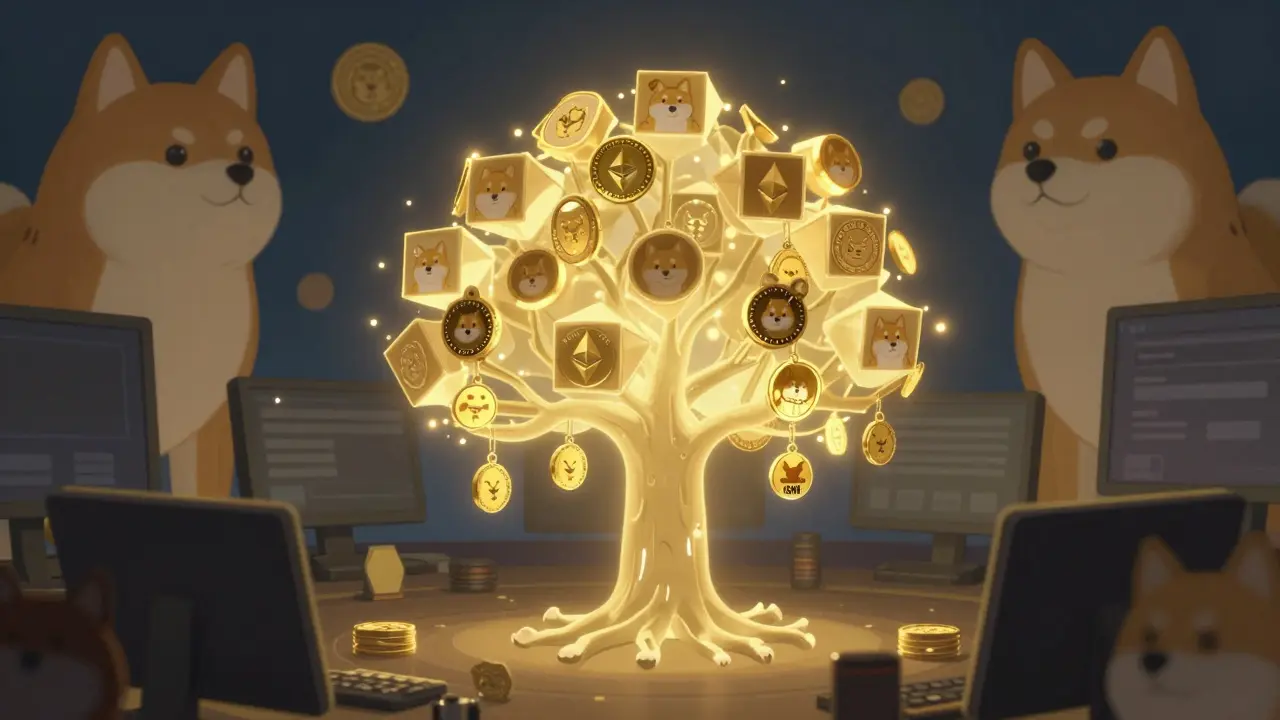
As of December 11, 2025, ISHI trades between $0.0000307 and $0.00003849. That’s less than half a cent. Its market cap? Around $38,490. That’s less than the cost of a used bicycle. For context, Dogecoin’s market cap is over $22 billion. Shiba Inu’s is over $10 billion. ISHI doesn’t even make the top 1,000 coins by market cap on CoinMarketCap - it’s ranked #9,198.
Trading volume? Barely existent. CoinGecko reports $2.94 in 24-hour volume. CoinMarketCap says $0. CoinCodex says $1.49. That’s not a market. That’s a ghost town. You can’t buy or sell ISHI without waiting hours - or days - for someone to take your order. One Reddit user tried to sell 10 million ISHI tokens. The order never filled after 24 hours.
It’s down 94% from its all-time high of $0.001797 in June 2025. That’s not a dip. That’s a collapse. And it’s not because the market turned. It’s because nobody cared enough to buy it in the first place.
Who’s buying Ishi Go - and why?
There’s no institutional interest. No hedge funds. No major exchanges listing it. No analyst reports. No news coverage outside of crypto tracking sites.
The only people who seem to care are a handful of speculative traders who believe in the “undervalued history” narrative. They’re not betting on technology. They’re betting on folklore. They think that someday, someone will look back and say, “Oh, that’s where it all started,” and rush to buy ISHI.
It’s like buying a 1930s photograph of a famous actor before they became famous - except there’s no proof the photo is real, no one remembers the actor, and no one knows where to find the original.
Blockspot.io calls it an “opportunity.” CoinGecko’s analysts call it a “zombie token” - a low-volume, low-market-cap asset that typically dies within 18 months. CryptoRank gives it a “critical risk” rating. Zero innovation. Zero community. Zero liquidity.
Can you buy Ishi Go? Should you?
You can buy ISHI - if you’re willing to hunt for it. You’ll need an Ethereum wallet like MetaMask. You’ll need to connect to a decentralized exchange like Uniswap or PancakeSwap. You’ll need to search for the contract address manually. There’s no “Buy ISHI” button on Coinbase or Binance. You won’t find it on any mainstream app.
And even if you do buy it - good luck selling it. With less than $3 in daily trading volume, you’re not investing. You’re holding a digital collectible with no market. If you need to cash out tomorrow, you probably can’t.
There’s no customer support. No help center. No FAQ. If something goes wrong, you’re on your own. No one’s watching your money. No one’s responsible for it.
So should you buy it? Only if you’re okay losing money for the fun of it. If you’re looking for a serious investment, ISHI is not it. It’s not a currency. It’s not a project. It’s a story with no audience.
The bigger picture: Are meme coins dying?
Back in 2021, meme coins were everywhere. Dogecoin surged because of Elon Musk tweets. Shiba Inu exploded because of FOMO. But things have changed.
In 2025, meme coins make up just 8.7% of the total crypto market cap - down from 12.3% in 2024. Investors are tired of tokens with no utility. They’re looking for real use cases: DeFi, AI, real-world asset tokenization. Not dog pictures.
Ishi Go is the extreme end of that trend. It’s not just a meme coin. It’s a meme about a meme. A coin that’s trying to be the origin of a story that never really needed a coin to begin with.
It’s possible that someday, someone will revive ISHI. Maybe a new meme cycle hits. Maybe a celebrity tweets about the 1930 Shiba Inu. Maybe a documentary gets made. But right now? It’s a digital relic - a curiosity in a graveyard of failed crypto projects.
For now, Ishi Go remains a footnote. A quiet, almost forgotten token. A story that’s too niche to matter - and too strange to ignore.
Sean Kerr
December 17, 2025 AT 20:42Cheyenne Cotter
December 18, 2025 AT 04:02George Cheetham
December 18, 2025 AT 12:28Patricia Amarante
December 20, 2025 AT 08:38Greg Knapp
December 21, 2025 AT 21:07Shruti Sinha
December 23, 2025 AT 16:58Terrance Alan
December 23, 2025 AT 17:12Sally Valdez
December 24, 2025 AT 08:27Sammy Tam
December 26, 2025 AT 03:56Jonny Cena
December 26, 2025 AT 19:58Kayla Murphy
December 27, 2025 AT 20:17Florence Maail
December 28, 2025 AT 10:51Chevy Guy
December 30, 2025 AT 06:53Amy Copeland
December 31, 2025 AT 13:07Abby Daguindal
January 1, 2026 AT 05:06Timothy Slazyk
January 1, 2026 AT 05:24Madhavi Shyam
January 2, 2026 AT 20:29Mark Cook
January 2, 2026 AT 21:52Donna Goines
January 4, 2026 AT 03:49Heather Turnbow
January 5, 2026 AT 23:06Jesse Messiah
January 7, 2026 AT 09:48Rebecca Kotnik
January 7, 2026 AT 20:42Jack Daniels
January 8, 2026 AT 16:39Bradley Cassidy
January 10, 2026 AT 00:19Samantha West
January 10, 2026 AT 03:33