

There are thousands of cryptocurrencies out there, but few are as confusing - or as risky - as CPUcoin (CPU). If you’ve seen ads promising free crypto just by leaving your computer on, or heard someone say they’re earning money from idle CPU power, you’ve probably come across this coin. But here’s the hard truth: CPUcoin isn’t what it claims to be. It’s not a breakthrough in decentralized computing. It’s not even close to being a viable investment. And if you’re thinking of mining it, you’re likely walking into a trap.
What CPUcoin Claims to Do
CPUcoin says it’s building a global network that turns your unused computer power into a cloud service. Think of it like Airbnb for your CPU and GPU. Install their miner, let it run in the background, and earn CPU tokens for contributing computing resources. The project claims this network, called the Compute Global Network (CGN), can deliver computing power at 1/10th the cost of AWS or Google Cloud. They even say it’s eco-friendly because it uses existing hardware instead of building new data centers.
According to their website, CPUcoin uses technology licensed from a company called Equilibrium. They claim over $100 million and 300 man-years went into developing the base system. They also say their Universal Data Ingestion Engine can process over 400 corporate and government file formats - from old scanned documents to legacy databases - without human intervention. That sounds impressive. But there’s no proof. No public demos. No case studies. No enterprise customers listed anywhere.
The Reality: A Token With Almost No Value
As of February 2026, CPUcoin trades for around $0.00019. That’s less than one hundred-thousandth of a dollar. You’d need over 5 million CPU tokens to make $1. And even then, you can’t easily cash out.
Here’s where things get messy:
- On CoinMarketCap, the 24-hour trading volume is listed as $0.
- Binance shows a price, but you can’t actually buy or sell CPUcoin there.
- LiveCoinWatch reports a trading volume of just $9 in 24 hours.
- Holder.io says most trading happens on ProBit - a tiny exchange most people have never heard of.
This isn’t low liquidity. This is near-total absence of market activity. There are no buyers. No sellers. Just a few people holding tokens they can’t move. One user on ProBit wrote: “Impossible to sell my tokens - zero liquidity.” Another said: “Dashboard shows earnings but can’t withdraw.”
Technical Details - And Why They Don’t Matter
CPUcoin is an ERC-20 token on the Ethereum blockchain. That means it runs on the same network as Ethereum and uses smart contracts. Its contract address is 0x6d52dfefb16bb9cdc78bfca09061e44574886626. You can check it on Etherscan. But knowing the address doesn’t make it valuable.
The mining client is supposed to run on laptops, desktops, even tablets. No high-end hardware needed. Sounds easy, right? But the setup instructions on GitHub haven’t been updated since October 2023. They assume you already know how to configure network ports, manage Ethereum wallets, and troubleshoot blockchain transactions. Most regular users can’t even get past the first step.
And what about those earnings? The site says you can earn up to 1 CPU per day. That’s about 0.00000019 cents per day. To earn $1, you’d need to mine for over 5 million days - or 13,700 years - at that rate. Even if you ran 100 computers, it wouldn’t matter. There’s no market to sell into.
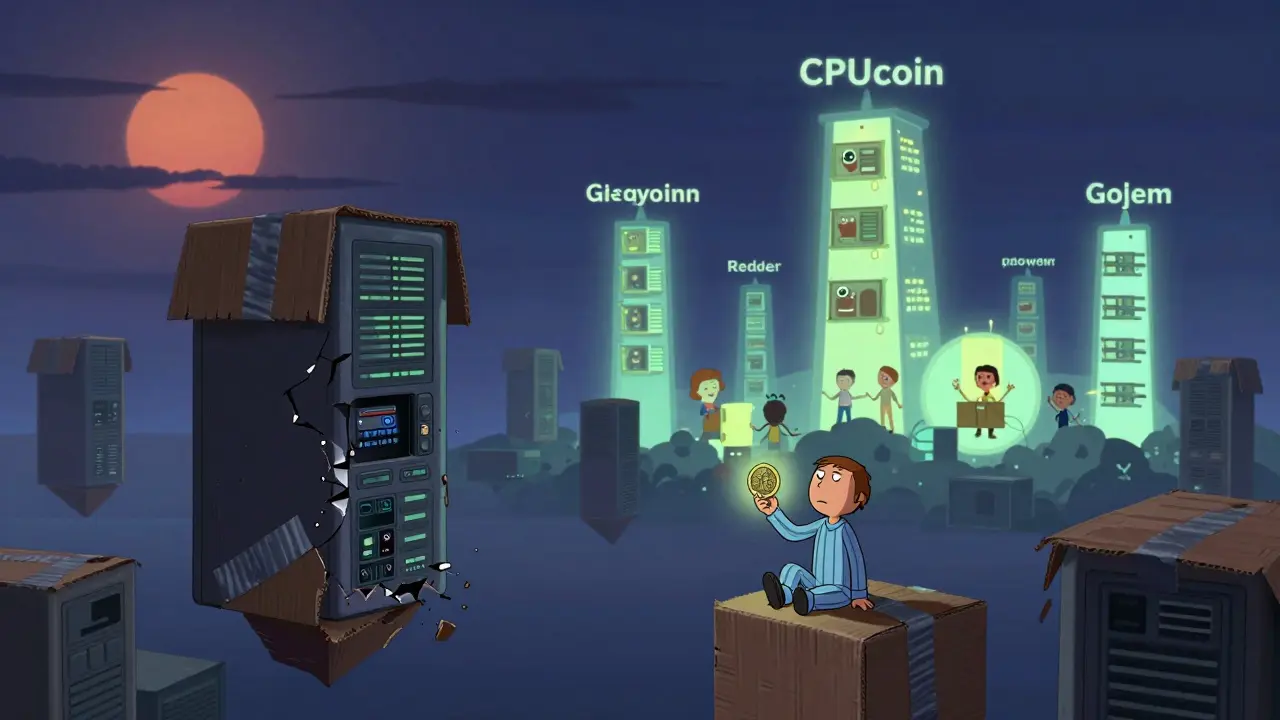
No Community, No Support, No Future
There’s no real community around CPUcoin. The official Telegram group has 387 members. Reddit has only 12 mentions in the last year. The YouTube channel has 7 videos with fewer than 300 total views. That’s not a project with traction. That’s a project with no one left to talk about it.
Support? They list an email: [email protected]. Try sending a message. You’ll get a bounce-back. The website’s “Pay as you go” feature? Still under construction, according to archived versions from 2023. The roadmap promised enterprise partnerships by late 2022 and a mobile mining app by mid-2023. Neither happened. The last code commit on GitHub was over six months ago.
Red Flags You Can’t Ignore
Here’s the list of warning signs that should make you walk away:
- Market cap is listed as $0 by multiple sources - meaning the token has no real value, even if the supply is counted.
- Claims of $100 million in funding with zero public proof. No venture capital firms named. No press releases. No investor disclosures.
- False security claims: The project says it uses Coinbase Custody. Coinbase’s official list of supported assets does not include CPUcoin.
- Extreme price discrepancies: One exchange says $0.000029, another says $0.00031. That’s over 10x difference. This only happens when there’s no real market - and someone is manipulating the numbers.
- No enterprise adoption: No companies, governments, or institutions use this network. Not one.
- Regulatory risk: The U.S. SEC has said tokens that reward users for providing computing power are likely securities. That means CPUcoin could be shut down if regulators take action.

How It Compares to Real Decentralized Computing Projects
If you want to earn crypto by sharing your computing power, there are real alternatives:
| Project | Token | Market Cap (2026) | Active Nodes | Exchanges | Enterprise Use |
|---|---|---|---|---|---|
| CPUcoin | CPU | $0 | Unknown (likely <100) | ProBit only | None |
| Render Network | RNDR | $1.2 billion | 17,000+ | Binance, Coinbase, Kraken | Yes - film studios, AI labs |
| Golem Network | GLM | $110 million | 5,000+ | Binance, OKX, Gate.io | Yes - research institutions |
| SONM | SNM | $2.5 million | 1,200+ | Uniswap, KuCoin | Some small-scale clients |
Render Network alone has more market value than CPUcoin has ever had in its entire history. And it’s actually used by professionals - not just speculators hoping to get lucky.
So, Should You Mine CPUcoin?
No.
Not because it’s illegal. Not because it’s a scam (though the evidence leans that way). But because it’s pointless.
You’ll use electricity. You’ll slow down your computer. You’ll risk malware (many fake CPUcoin miners have been found bundled with cryptojackers). And you’ll end up with tokens that no one wants, and no exchange will let you sell.
The people behind CPUcoin aren’t building a cloud. They’re building a speculative bubble - and they’re counting on new people to keep buying in so the early holders can cash out. That’s called a pump-and-dump. And it’s exactly what happened to thousands of other low-cap tokens before this one.
If you’re looking to earn crypto from idle computing power, go with Render Network or Golem. They’re real. They’re transparent. They have users. They have value. CPUcoin? It’s a ghost.
Final Thoughts
CPUcoin is a textbook example of how crypto projects can sound revolutionary on paper - and be worthless in practice. The tech claims are grand. The funding numbers are huge. The promises are tempting. But when you dig deeper, there’s nothing behind it.
Don’t fall for the hype. Don’t install the miner. Don’t buy the tokens. And if you already have them - don’t expect to ever turn them into cash. This isn’t an investment. It’s a graveyard for digital coins.
Is CPUcoin a real cryptocurrency?
Yes, CPUcoin is technically a real ERC-20 token on the Ethereum blockchain. But being real doesn’t mean it’s valuable or functional. It has no liquidity, no trading volume on major exchanges, no enterprise use, and no active development. It exists as a digital asset on paper, but not in practice.
Can you make money mining CPUcoin?
No. Even if your computer earns CPU tokens, you can’t sell them. There’s almost no market. The few places that list it (like ProBit) have almost no buyers. Most users report being unable to withdraw or sell their tokens. The earnings are real on the dashboard - but worthless in reality.
Is CPUcoin listed on Binance or Coinbase?
No. CPUcoin is not listed on Binance, Coinbase, Kraken, or any major exchange. Some sites like Binance.com show a price page, but you cannot buy or trade it there. The only exchange with any trading activity is ProBit - a small, low-liquidity platform with minimal user traffic.
Why does CPUcoin claim $100 million in funding?
There’s no public evidence to support this claim. No venture capital firms, no press releases, no financial disclosures. The $100 million figure comes from one third-party site, Holder.io, and contradicts every other metric - including zero market cap and near-zero trading volume. This is a common tactic used by low-cap tokens to create false credibility.
Is CPUcoin a scam?
It’s not officially labeled a scam, but it exhibits all the classic signs: false claims, no liquidity, no community, no updates, fake security partnerships, and extreme price manipulation. Blockchain analysts have flagged its transaction patterns as consistent with pump-and-dump schemes. If you’re investing or mining, you’re likely funding a project that has already abandoned its users.
What should I do if I already have CPUcoin?
Don’t invest more. Don’t mine more. Consider it a lost investment. If you’re desperate to get rid of it, try selling on ProBit - but expect to sell for pennies, if at all. The safest move is to accept the loss and move on. There’s no recovery path for this token.
Olivette Petersen
February 4, 2026 AT 11:23Okay but honestly? I tried CPUcoin out of curiosity last year and it was a total ghost town. My laptop ran for weeks, earned like 300 CPU tokens, and when I tried to cash out? Nothing. Zero trades. No one buying. I felt like I was mining for digital confetti.
Still, I’m glad someone finally called this out. So many people are getting lured in by ‘free crypto’ ads. It’s wild how easy it is to trick folks into thinking idle CPU = passive income. Spoiler: it’s not.
Michelle Anderson
February 5, 2026 AT 02:57This is why crypto is a dumpster fire. CPUcoin? More like CPUcrash. $0.00019? You’d need to mine for 13,700 years to make a buck. That’s not a project-it’s a psychological trap wrapped in a whitepaper.
And don’t even get me started on ‘$100M funding.’ If that were true, why’s the GitHub repo dead? Why’s the Telegram group sadder than a library on Sunday? They’re not building tech-they’re building a Ponzi with a UI.
Freddie Palmer
February 6, 2026 AT 15:22Interesting breakdown-especially the part about the ERC-20 contract being real but meaningless. I checked Etherscan myself, and yeah, the contract exists… but the token transfers? Almost all are from the same 3 wallets. That’s not decentralization-that’s a controlled loop.
Also, the ‘Compute Global Network’ name? Sounds legit, right? But if it’s real, where are the API docs? Where’s the developer portal? It’s all marketing fluff with zero substance. I’ve seen real decentralized projects-this isn’t one.
Mrs. Miller
February 7, 2026 AT 00:49So… we’re telling people not to mine CPUcoin because it’s ‘pointless’? Huh. I wonder if that’s the same reason we don’t mine Bitcoin in 2010. Or Ethereum before the merge. What if this is just… early?
Maybe the real tragedy isn’t the token-it’s that we’ve become so cynical we can’t believe in anything unless it’s already profitable. I’m not saying CPUcoin’s the next big thing. But dismissing it outright feels… almost arrogant.
Just saying.
perry jody
February 8, 2026 AT 12:13Y’all need to chill. I’ve got 12k CPU tokens. I’m not rich, but I’m not sad either. I run it on an old laptop that’s barely good for browsing. It’s like leaving a fan on for free vibes 😊
Also, if you’re mad because you lost money, maybe you shouldn’t have clicked ‘install’ in the first place. No one forced you. It’s free software. No harm, no foul.
Live and learn, fam.
Paul Jardetzky
February 9, 2026 AT 09:53Biggest red flag? The ‘Pay as you go’ feature. Still under construction since 2023? That’s not a bug-it’s a confession. If you can’t even build a payment system for a token you claim is revolutionary, you’re not a tech company. You’re a TikTok ad with a whitepaper.
Also-no one’s talking about the malware risk. Fake CPUcoin miners have been found bundled with keyloggers. People, please. Don’t run random .exe files because some guy on YouTube says it’s ‘easy money.’
Jim Laurie
February 9, 2026 AT 17:31I’ve been in crypto since 2017 and I’ve seen this movie before. The ‘AI-powered cloud network’ pitch? The ‘$100M in funding’ lie? The dead GitHub? The fake Binance listing? It’s all the same script.
And the worst part? The people who fall for it aren’t dumb-they’re hopeful. They want to believe. They think ‘if I just mine a little longer, maybe this time it’ll work.’
It won’t. And that’s why I feel bad for them.
Also-my laptop’s still running it. Just for kicks. Like a digital pet. 🐢
Brendan Conway
February 11, 2026 AT 14:32eh i just left it running for fun. dont care if its worth anything. my pc was idle anyway. kinda like leaving a light on. its not hurting anything.
also why are people so mad? no one forced you to download it. if you wanna cry about losing money, maybe dont chase free crypto lol
Katie Haywood
February 13, 2026 AT 10:58Let’s be real-this whole thing is a performance art piece. The devs aren’t trying to build a cloud. They’re trying to see how many gullible people they can trick into running background software while pretending it’s the future.
And honestly? I’m kinda impressed. The website looks professional. The claims sound scientific. The ‘Equilibrium license’? Genius. It’s like they hired a copywriter who read a Wikipedia page on blockchain and then went to sleep.
It’s not a scam. It’s satire. And we’re all the punchline.
Matt Smith
February 13, 2026 AT 17:09LOL this post is so basic. You think you’re some crypto guru? Wake up. CPUcoin is the future. Everyone’s just jealous because they didn’t get in early.
ProBit has volume! And the ‘$0 market cap’? That’s just because the whales are HODLING. You think I’m dumb? I’ve got 2 million tokens. I’m waiting for the pump.
Also, your ‘Render Network’ is a cult. Real innovators don’t need Binance. They build in the shadows. 😎
Alex Garnett
February 14, 2026 AT 20:59How is this even a discussion? You’re comparing a decentralized computing project to a meme coin with a fake name? The fact that you’re even entertaining this as a legitimate comparison speaks volumes about the state of American crypto discourse.
Render Network has institutional backing. Golem has a decade of research. CPUcoin? A .io domain and a PowerPoint deck. This isn’t journalism-it’s a cry for attention.
Ryan Chandler
February 15, 2026 AT 16:17There’s something poetic about CPUcoin. It’s like the ghost of every failed crypto dream. A flickering candle in a room full of LED lights. You don’t need to mine it. You just need to witness it.
It’s a monument. A warning. A digital tombstone for the age of ‘easy money.’
And yet… I still have the miner running. Not because I believe. But because I’m curious. Will it vanish? Will it rise? Or will it just… fade? Like a message in a bottle, lost at sea.
Either way-it’s art.
Ajay Singh
February 16, 2026 AT 07:04Oliver James Scarth
February 17, 2026 AT 14:52It is, of course, a lamentable spectacle to observe how the American crypto ecosystem has devolved into a carnival of hollow promises and algorithmic delusions. CPUcoin epitomises this phenomenon: a token with no liquidity, no utility, and no credibility, yet still clinging to the illusion of legitimacy through fabricated metrics and ghostly web presences.
One cannot help but reflect upon the broader cultural decay that permits such projects to persist, let alone attract adherents. The absence of regulatory scrutiny is not a feature-it is a failure.
Kieren Hagan
February 18, 2026 AT 13:25As a former blockchain auditor, I’ve reviewed hundreds of token contracts. CPUcoin’s is technically valid-but that’s like saying a broken clock is still a clock. The real issue isn’t the code. It’s the intent.
The project’s failure to provide verifiable enterprise use, transparent funding, or active development isn’t negligence. It’s evidence of bad faith. And for anyone considering mining: your electricity bill is the only real cost. The tokens? They’re digital confetti.
Danica Cheney
February 20, 2026 AT 10:47