
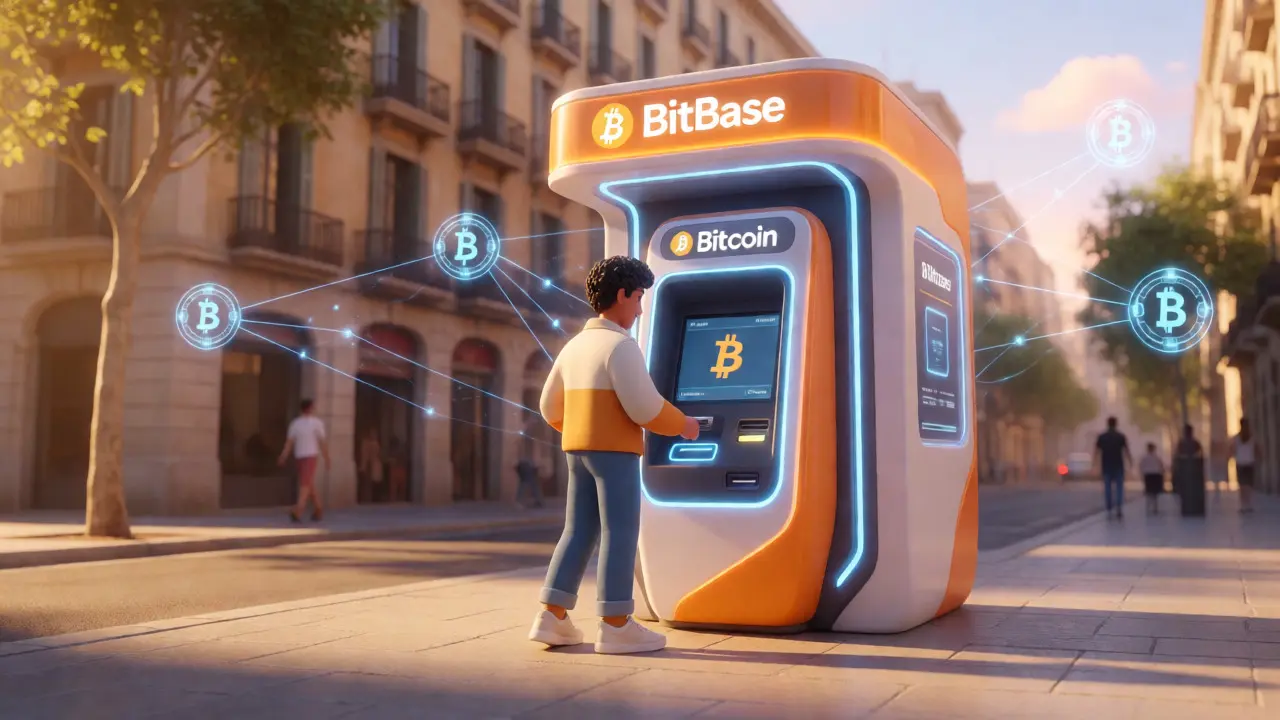
You might have seen BitBase Token popping up in your wallet or on a niche exchange screen, wondering what it actually does. It’s not just another meme coin chasing hype cycles. BTBS is the operational heartbeat of BitBase S.L., a Spanish company trying to bridge the gap between physical crypto shops and digital blockchain tools. If you’ve ever wanted to buy Bitcoin at a kiosk but wished for better fees or rewards, this token is designed to be that missing link.
Think of BTBS as the "key" to a specific club. It launched in July 2021 with a clear mission: connect BitBase’s physical points of sale and ATMs with their digital apps. But here’s the catch-while the technology looks solid, the market data tells a more complicated story about liquidity and supply reporting. Let’s break down exactly what you’re holding if you own BTBS, how it works technically, and whether its value proposition holds water in today’s crypto landscape.
The Core Mission: Bridging Physical and Digital Crypto
Most cryptocurrencies exist purely online. You trade them, hold them, maybe use them for DeFi. BitBase took a different route. They operate brick-and-mortar stores and crypto ATMs across Spain and expanding into Europe. Before BTBS, these were separate silos. The physical store didn’t talk to the digital app seamlessly. BTBS was created to fix that disconnect.
It serves as a loyalty and access token. If you want to open a BitBase franchise, you need to buy and hold BTBS. Want to operate one of their Bitcoin ATMs? Same requirement. This isn’t just theoretical; it’s baked into their business model. The idea is simple: by requiring stakeholders to hold the token, BitBase aligns everyone’s incentives. Franchise owners, ATM operators, and customers all have a reason to keep the ecosystem healthy because their own holdings are tied to its success.
This approach contrasts sharply with generic utility tokens that promise vague "future use cases." Here, the use cases are immediate and contractual. You get preferential trading conditions, refunds, and governance voting rights within the BitBase community. It’s a closed-loop economy where the token acts as both currency and membership card.
Technical Backbone: ERC-20, BEP-20, and EIP-2612
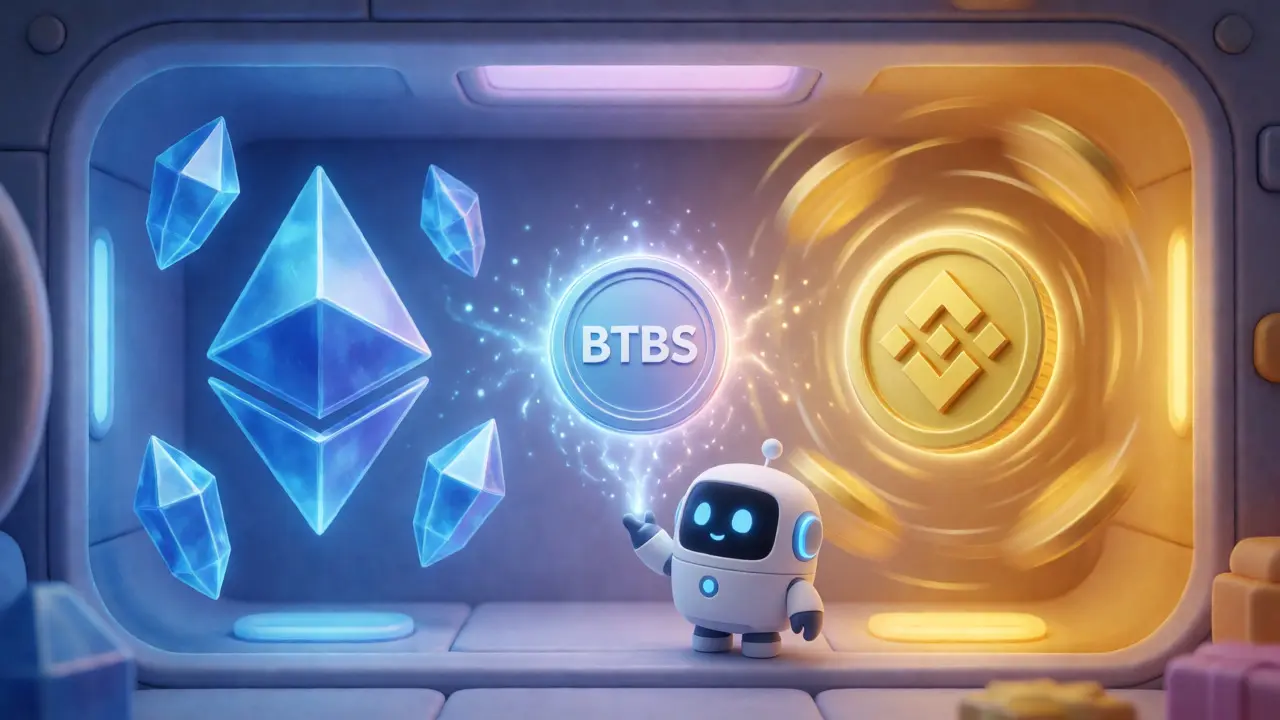
Under the hood, BTBS is a standard ERC-20 token on Ethereum and a BEP-20 token on Binance Smart Chain. This dual-chain deployment is smart. It gives users flexibility. You can hold BTBS on Ethereum for higher security standards or on BSC for lower transaction fees. Both versions coexist natively, leveraging the liquidity and user base of each network.
The technical implementation relies on OpenZeppelin libraries, which are the industry standard for secure smart contracts. But BitBase added a twist: they integrated EIP-2612 "Permit" functionality. Originally popularized by Uniswap, this feature allows users to authorize transactions via signed messages instead of expensive on-chain approval transactions. More importantly, it enables gas fees to be paid directly in BTBS rather than ETH or BNB. For a retail-focused project, this is a huge usability win. Imagine paying your transaction fee in the same token you’re using for discounts-it removes friction for non-crypto-natives walking into a BitBase store.
Tokenomics: Fixed Supply and Planned Burns
BitBase has set a hard cap of 100,000,000 BTBS. The whitepaper explicitly states this number will never increase. This fixed supply model appeals to investors who fear inflationary pressure from endless minting. Additionally, the team plans regular token burns to reduce circulating supply over time, aiming for deflationary dynamics as adoption grows.
However, there’s a discrepancy worth noting. While the maximum supply is defined, major price trackers like CoinMarketCap and Binance often report a circulating supply of zero. This doesn’t mean no tokens exist; it usually indicates incomplete on-chain reporting or that tokens are locked in vesting schedules not yet reflected in public APIs. During the private sale in 2021, BitBase sold 5,000,000 BTBS and raised over €1,000,000, implying an initial price above €0.20 per token. Current prices hover around $0.08-$0.085, suggesting early investors are underwater unless they factor in ecosystem benefits beyond pure price appreciation.
| Attribute | Details |
|---|---|
| Issuer | BitBase S.L. (Barcelona, Spain) |
| Launch Date | July 2021 |
| Max Supply | 100,000,000 BTBS |
| Blockchain Standards | ERC-20 (Ethereum), BEP-20 (Binance Smart Chain) |
| Key Feature | EIP-2612 Permit (Gas payment in BTBS) |
| Primary Use Cases | Loyalty, Franchise Access, ATM Operations, Governance |
Real-World Utility: Who Actually Needs BTBS?
If you’re a day trader looking for volatility, BTBS might feel sluggish. Its volume is modest, often reported under $40 daily on some aggregators. But if you interact with BitBase services, the utility becomes tangible.
- Franchise Owners: Must hold BTBS to qualify for opening a new BitBase shop.
- ATM Operators: Need to purchase and hold BTBS to deploy and manage crypto ATMs.
- Lenders: Interest payments on BitCredit products are distributed in BTBS.
- App Users: Holders receive commission discounts when buying or selling crypto via the BitBase mobile app.
- Project Listings: New projects wanting visibility on BitBase infrastructure must buy and hold BTBS.
This creates organic demand. Every new ATM installation requires token purchases. Every new franchise adds to the buy pressure. It’s a circular economy model similar to airline miles, but on-chain. The risk? If BitBase fails to expand its physical footprint, the demand driver weakens significantly.
Market Performance and Liquidity Risks
As of September 2026, BTBS trades around $0.084. Compared to its mid-2025 peak near $0.13, that’s a decline of roughly 35%. This mirrors broader market corrections but also reflects low liquidity. With rankings hovering near #5950 on CoinMarketCap, BTBS is a micro-cap asset. You won’t find deep order books here. Large sell orders could slip the price significantly.
Some platforms list BTBS on seven active markets, including Uniswap and PancakeSwap. Peer-to-peer offers exist on platforms like Symlix, indicating a small but dedicated community willing to trade OTC. However, the lack of consistent circulating supply data on major exchanges makes valuation tricky. Is the market cap truly zero because no tokens are circulating? Or is it a data feed error? Until on-chain verification clarifies this, treat market cap figures with skepticism.
Is BTBS Right for Your Portfolio?
BTBS isn’t a speculative moonshot. It’s a bet on BitBase’s ability to scale physical crypto infrastructure in Europe. If you believe face-to-face crypto services will grow alongside digital wallets, BTBS offers exposure to that thesis. The technical foundation is robust, thanks to OpenZeppelin and EIP-2612 integration. The utility is concrete, not hypothetical.
But consider the downsides. Dependence on a single company’s execution is risky. If BitBase struggles to attract customers to their ATMs, token demand drops. Low liquidity means exiting large positions can be difficult without impacting price. And the supply data inconsistencies require due diligence before investing heavily.
For now, BTBS remains a niche player. It’s best suited for users already engaged with BitBase services or those speculating on the growth of hybrid crypto-retail models. Keep an eye on their expansion announcements and any updates to on-chain supply metrics. Those will be the real signals of long-term viability.
What is the main purpose of BitBase Token (BTBS)?
BTBS serves as a utility and loyalty token for the BitBase ecosystem. It connects physical crypto shops and ATMs with digital services, offering holders preferential trading conditions, fee discounts, and governance rights. It is also required for franchise owners and ATM operators to participate in the network.
On which blockchains is BTBS available?
BTBS exists on two main networks: Ethereum as an ERC-20 token and Binance Smart Chain as a BEP-20 token. This dual deployment allows users to choose between Ethereum's security and BSC's lower transaction costs.
Does BTBS have a fixed supply?
Yes, the maximum supply of BTBS is capped at 100,000,000 tokens. The whitepaper states this cap cannot be increased. Additionally, BitBase plans to implement token burns to gradually reduce the circulating supply, aiming for deflationary effects over time.
Why do some sites show BTBS circulating supply as zero?
Discrepancies in circulating supply data often stem from incomplete on-chain reporting or tokens being locked in vesting schedules that aren't fully indexed by aggregators like CoinMarketCap or Binance. Always verify against official BitBase communications and direct on-chain explorers for the most accurate current state.
Can I pay gas fees with BTBS?
Yes, thanks to the integration of EIP-2612 "Permit" functionality, certain interactions allow gas fees to be paid in BTBS rather than the native chain currency (ETH or BNB). This simplifies the user experience for those deeply integrated into the BitBase ecosystem.