

Ever come across a crypto project that promises 100x leverage and a seamless decentralized trading experience, but when you look at the numbers, something feels off? That is the case with Banus.Finance is a dual-component project featuring a decentralized exchange (DEX) and a native utility token. Also known as BANUS, it launched in 2023 as a BEP-20 token on the BNB Smart Chain. While it aims to compete in the crowded DeFi space, a closer look at its liquidity and transparency reveals a very different story than the one on its landing page.
How the Banus.Finance Platform Works
At its core, Banus.Finance wants to be a non-custodial trading hub. This means you don't create an account or hand over your private keys to a company. Instead, you connect your wallet-like Trust Wallet or MetaMask-and trade directly. The platform allows users to trade spot and perpetual contracts for heavy hitters like Bitcoin, Ethereum, and Avalanche.
The project claims to support high-leverage trading, offering up to 100x leverage. To make this happen, the platform processes transactions on the Arbitrum and Avalanche networks. In a perfect world, this would provide fast speeds and low fees, but for a DEX to actually function, it needs deep liquidity-something Banus.Finance severely lacks.
Analyzing the BANUS Tokenomics
The BANUS token is a BEP-20 utility token operating on the BNB Smart Chain with a fixed total supply of 500 million tokens. However, the actual distribution of these tokens is a mystery. Some market reports have shown zero tokens in circulation despite the coin being traded on exchanges. This is a massive red flag in the crypto world; usually, if there is no circulating supply, there is no real market price, just speculation.
When you look at the price, the data is a mess. Depending on which tracker you use, the price of BANUS fluctuates wildly. For example, in late 2025, CoinGecko reported a price around $0.000166, while CoinMarketCap showed it as low as $0.000068. In a healthy market, prices across different exchanges usually stay within 0.5% of each other. When you see gaps this large, it often points to a lack of liquidity or market manipulation.
| Feature | Banus.Finance (BANUS) | Uniswap (UNI) / PancakeSwap (CAKE) |
|---|---|---|
| Daily Trading Volume | ~$31.47 | $1 Billion+ |
| Price Consistency | Very Low (High Variance) | Very High (<0.5% difference) |
| User Base | ~127 Unique Wallets | Millions of Users |
| Team Transparency | Anonymous | Public/Verified |
The Red Flags: Why Experts are Worried
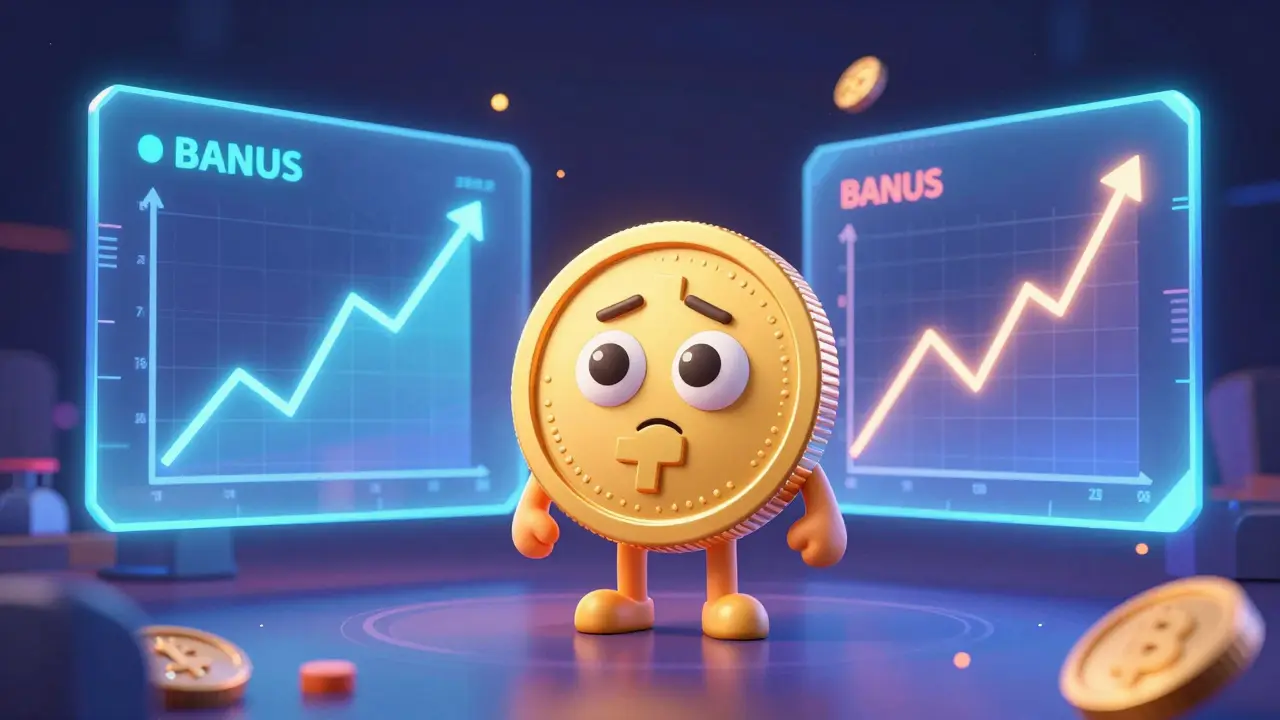
If you're thinking about putting money into Banus.Finance, you should know that professional analysts have given it a dismal rating. Blockchain Insights Group has pointed out that claiming zero circulating supply while trading on exchanges is a classic sign of low-cap token scams. Furthermore, CryptoSlate gave the project a 1.2/10 rating, citing the total absence of verifiable team information.
The liquidity problem is the biggest hurdle. Imagine trying to sell a house in a town where no one is buying; that is what trading BANUS is like. Users on Reddit and Trustpilot have reported "slippage errors," which happen when there aren't enough tokens available in the pool to complete a trade. Some users even reported losing money on gas fees just trying to interact with the platform, only for the transaction to fail.
From a technical standpoint, the project is what analysts call a "zombie project." There is almost no activity on GitHub, no updated roadmap, and the official website has remained virtually unchanged since 2023. When a project stops developing, it usually doesn't take long before it disappears from the market entirely.
Is it Safe to Buy BANUS?
Buying this token requires an "Expert" level of knowledge, not because it's a sophisticated piece of tech, but because you have to manually fight with smart contracts and slippage settings just to make a trade work. You would need to download a wallet, buy BNB, find the specific smart contract address, and pray the liquidity pool hasn't evaporated.
Beyond the technical headache, there's the regulatory risk. Because the project doesn't clearly define what the BANUS token actually *does* (its utility), it could easily be flagged by the SEC as an unregistered security. If a token has no clear purpose other than "hope the price goes up," it fails the basic tests for a legitimate utility project.
Summary of Risks and Realities
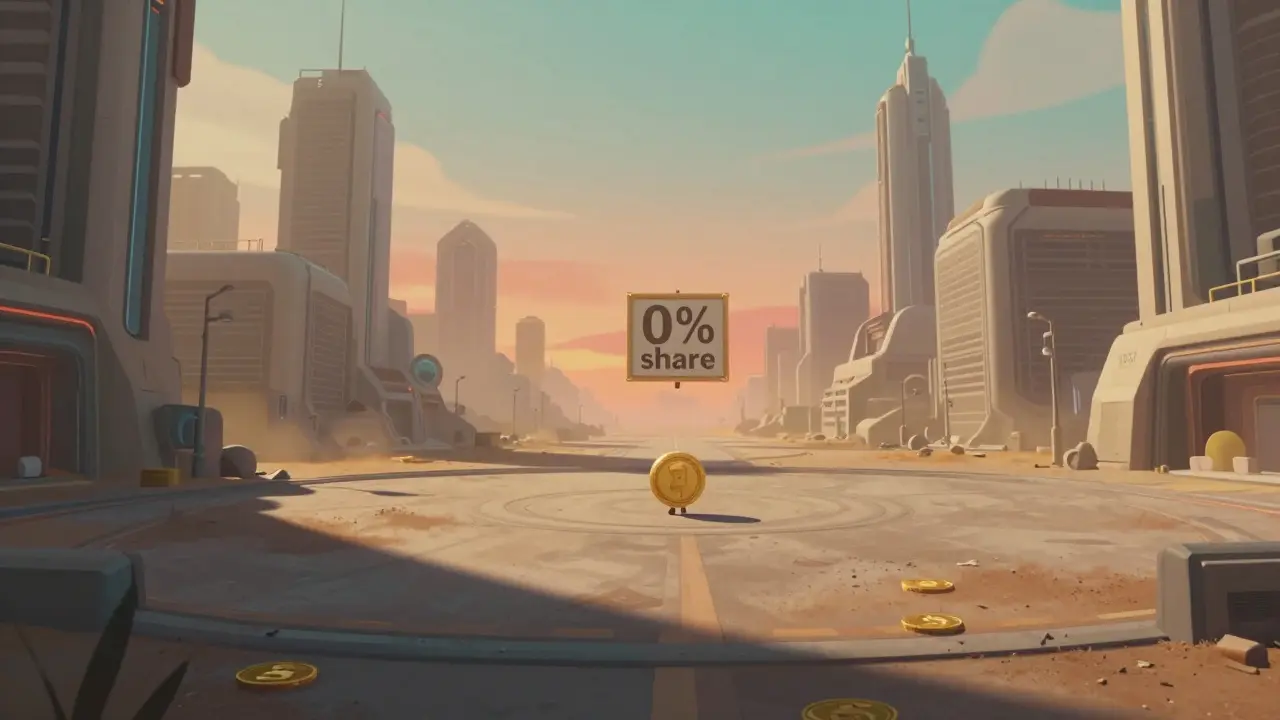
To put things in perspective, the decentralized exchange sector is massive, controlling over 40% of the DeFi market. Yet, Banus.Finance holds effectively 0% of that share. While 100x leverage is a flashy feature, it's a standard offering on almost every modern DEX. There is nothing here that makes Banus.Finance a unique or competitive alternative to established players.
The most likely outcome, based on historical data for tokens with such low trading volume, is that the project will cease to exist within a year. When a coin has fewer than 130 unique wallets interacting with it, it isn't a community; it's a ghost town.
What is the main use of the BANUS token?
The project identifies BANUS as a utility token, but the official documentation does not provide a clear, specific use case. While it likely intends to be used for governance or platform fees, these functions are not explicitly detailed or implemented in a transparent way.
Where can I buy Banus.Finance coins?
BANUS is primarily available on decentralized exchanges (DEXs) that support the BNB Smart Chain, such as PancakeSwap. However, users should be cautious as low liquidity often leads to failed transactions and high slippage.
Is Banus.Finance a scam?
While not legally proven as a scam, it exhibits several high-risk behaviors: an anonymous team, inconsistent price data across exchanges, extremely low trading volume, and reports of failed transactions from users.
What blockchain does BANUS use?
The BANUS token is a BEP-20 token, which means it operates on the BNB Smart Chain (BSC). The trading platform itself integrates with the Arbitrum and Avalanche networks.
Why are the prices different on CoinGecko and CoinMarketCap?
This happens because of extremely low liquidity. When there are very few trades happening, a single small buy or sell can swing the price wildly on one exchange but not another, leading to massive discrepancies in reported market values.
Next Steps for Investors
If you already hold BANUS and are struggling to sell, your best bet is to use a DEX aggregator to find the pool with the most liquidity. Be prepared to increase your slippage tolerance, though this means you'll get a worse price. If you are considering buying in, the safest move is to look for projects with verified teams, audited smart contracts, and a trading volume that exceeds at least $10,000 per day to ensure you can actually exit your position.
Robert Smith
April 28, 2026 AT 12:40Total ghost town 💀
Noel Mandotah
April 28, 2026 AT 18:12Oh look, another "revolutionary" DEX with zero liquidity. Groundbreaking. Truly.
Felix Eduardo Velasquez
April 30, 2026 AT 01:57The discrepancy between the reported circulating supply and actual exchange trading is the most telling part of this analysis. In a decentralized environment, transparency is the only real currency. When a project obscures its tokenomics to this degree, it isn't just a red flag; it's a systemic failure of trust. One must wonder if the 100x leverage is simply a lure to attract retail investors who don't understand that without deep liquidity, those leverage positions are practically impossible to close without massive slippage. It's a classic case of marketing preceding a non-existent product.
Ralph Espinosa
May 1, 2026 AT 08:34Exactly!!! Low liquidity is a nightmare for anyone trying to actually trade!!! Thanks for the warning!!!
Aaron Zeiler
May 2, 2026 AT 06:28just follow the volume the 31 dollar daily volume is the biggest giveaway here no one is using this thing
Arti Jain
May 3, 2026 AT 16:42Typical trash project. Pathetic.
Kara Spadone
May 4, 2026 AT 05:10The universe rewards those who seek truth, but some people just love walking into traps 🌀 It's almost poetic how the void of liquidity reflects the void of the team's integrity 🙄
Nitin Gupta
May 4, 2026 AT 14:23I agree with the points made here. It is always safer to stick to platforms with audited contracts and a clear history of development. For those new to DeFi, please remember that a high leverage offer often masks underlying instability.
Emily A
May 5, 2026 AT 11:02It is fundamentally embarrassing that anyone would consider this a viable investment. The lack of GitHub activity alone should be sufficient to deter the most naive investor.
Brendan Thraxton
May 5, 2026 AT 16:18keep your heads up everyone just do your research before jumping in let's all find the real gems together
VIVEK SINGH
May 6, 2026 AT 07:04Wow, a "utility token" with no utility. What a shocker. I'm sure the anonymous developers are very concerned about our loss of funds while they're sipping cocktails on a beach with our exit liquidity. Absolutely brilliant design if the goal was to steal money.
Michael Repak
May 7, 2026 AT 11:06Glad we have these warnings!!! Stay safe out there, everyone!!!
Livvy Cooper
May 8, 2026 AT 00:56I don't know, maybe it's just a slow start. Everything is a scam these days according to the internet.
edie rosa
May 8, 2026 AT 18:17This is just another example of the greed in crypto. People want 100x returns and then cry when they get rugged by an anonymous team with zero volume.
Gabby Puche
May 9, 2026 AT 03:15Yikes! 😬 Thanks for the heads up! Definitely staying far away from this one 🚩🚩🚩
Wayne Gillis
May 9, 2026 AT 20:21Wait, does anyone actually have bags of this? 💰 I want to know if anyone actually managed to sell or if you're all just stuck! DM me if you've tried exiting! 😂
Rachel S
May 11, 2026 AT 11:37It is truly appalling to witness such a blatant lack of transparency! One must be utterly delusional to believe a project with 127 wallets is a "hub"! The sheer audacity of the marketing is simply breathtaking! 😱
Lynne Teperman
May 13, 2026 AT 07:02complete wild west vibes here lol just a ghost ship drifting in the bsc ocean
Rain Richardsson
May 14, 2026 AT 06:31Sounds risky.
Lloyd I
May 14, 2026 AT 11:45Let's use this as a learning moment for everyone! Check the volume and the team first. We can all get better at this together!
Iestyn Lloyd
May 15, 2026 AT 09:25The slippage issues mentioned are a direct result of the thin order books. If the liquidity pool is small, a single trade of $100 can move the price by several percentage points, making the trade impractical.
Veronica Bago
May 16, 2026 AT 04:37Just another Tuesday in crypto, honestly. Everything's a gamble lol
Pramendra Singh
May 16, 2026 AT 12:34I appreciate the detailed breakdown. It helps us all stay cautious and make better choices. Hopefully, the developers will provide more clarity soon, though it seems unlikely.