

Imagine uploading a song and getting paid instantly for every single stream. No waiting months for royalty checks. No record label taking a huge cut. No algorithm hiding your track behind a paywall. This isn’t a dream from the future; it’s the core promise of Audius, a decentralized music streaming protocol built on blockchain technology. At the heart of this system lies its native cryptocurrency, the AUDIO token. But what exactly is this coin, and why does it matter to musicians, fans, and crypto investors alike?
The traditional music industry has long been criticized for its opaque payment structures. Artists often receive fractions of a cent per stream, while centralized platforms like Spotify or Apple Music hold the power. Audius flips this model. It creates a community-owned network where artists control their content, fans discover new music freely, and node operators keep the infrastructure running-all incentivized by the AUDIO token. If you’ve ever wondered how blockchain can actually improve daily life beyond speculation, Audius is one of the clearest examples.
How the Audius Network Actually Works
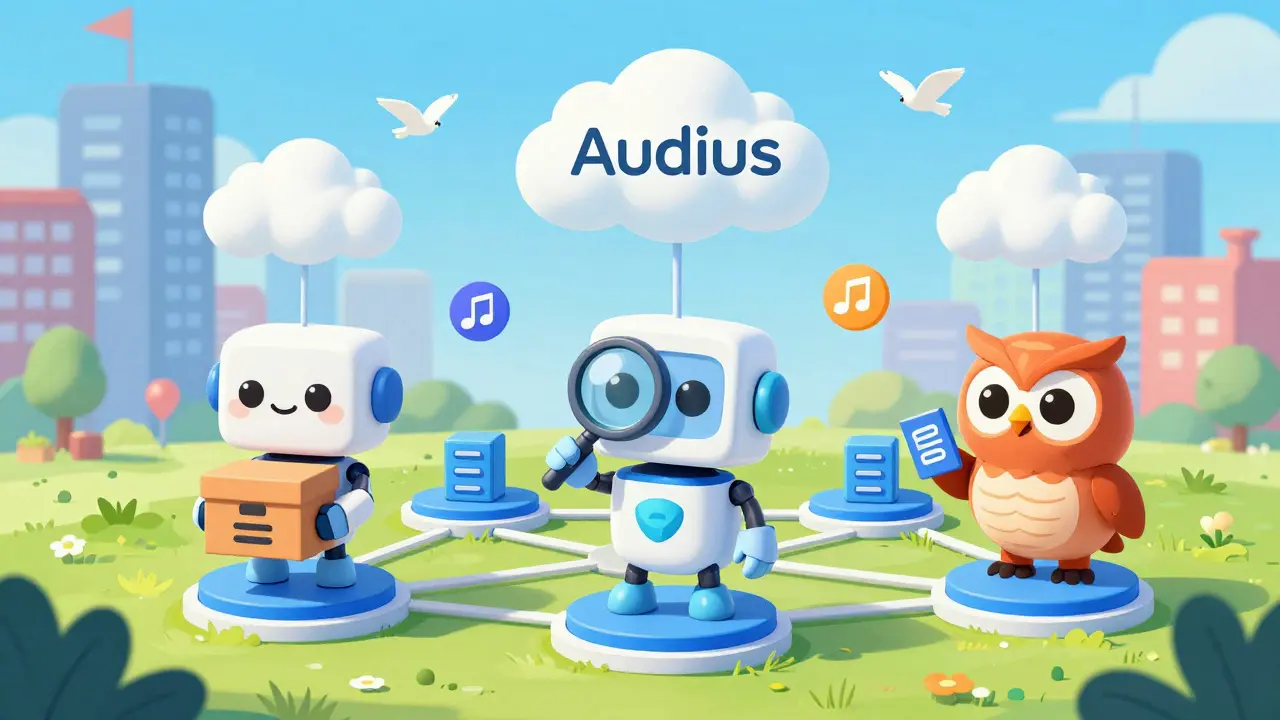
To understand the value of the AUDIO token, you first need to grasp the architecture that supports it. Audius isn’t just an app; it’s a distributed network consisting of three distinct types of nodes. Each plays a specific role in keeping the platform alive and decentralized.
- Content Nodes: These are the storage engines. They host the actual audio files, album art, and metadata. Instead of relying on a single central server farm, content nodes distribute data across many independent servers. They use the Audius Storage Protocol (AudSP), which interfaces with the InterPlanetary File System (IPFS) to ensure data remains accessible even if individual nodes go offline.
- Discovery Nodes: Think of these as the search engines of the network. When you type “indie rock” into the Audius app, discovery nodes index and retrieve relevant results. They also handle social features like likes, follows, and playlists. Crucially, they don’t store the heavy audio files, which keeps them lightweight and fast.
- The Content Ledger: This is the source of truth. Built primarily on smart contracts, the ledger tracks who owns what, calculates payouts, and manages the registry of nodes. While early versions relied heavily on Ethereum, the platform has evolved to optimize performance.
This separation of duties ensures no single entity controls the entire experience. If one node fails, others pick up the slack. For users, this means higher uptime and censorship resistance. For the ecosystem, it means resilience against corporate takeover or arbitrary policy changes.
The Role of the AUDIO Token
The AUDIO token is the fuel that powers this machine. It serves multiple functions within the ecosystem, making it more than just a speculative asset. Here’s how it works in practice:
- Artist Compensation: When someone streams a song, the artist earns AUDIO tokens instantly. There are no monthly minimums or complex royalty statements. You get paid when your music is played.
- Node Staking: To run a content or discovery node, operators must stake AUDIO tokens. This acts as a security deposit. If a node behaves maliciously-say, by deleting files or serving fake data-it risks losing its stake. Honest nodes earn rewards from network fees and token emissions.
- Governance: AUDIO holders can vote on protocol upgrades. Should the network change how payouts are calculated? Want to adjust staking requirements? Token holders decide through a decentralized governance process.
- Gamification & Badges: Artists and fans can earn unique badges by engaging with the platform. Some badges require holding or spending AUDIO, adding a layer of social status and engagement incentives.
This multi-utility design creates a circular economy. Artists upload music to attract listeners. Listeners stream music, triggering payments. Node operators provide the infrastructure to make it all happen, earning fees in return. Everyone benefits from network growth.
Why Did Audius Move to Solana?
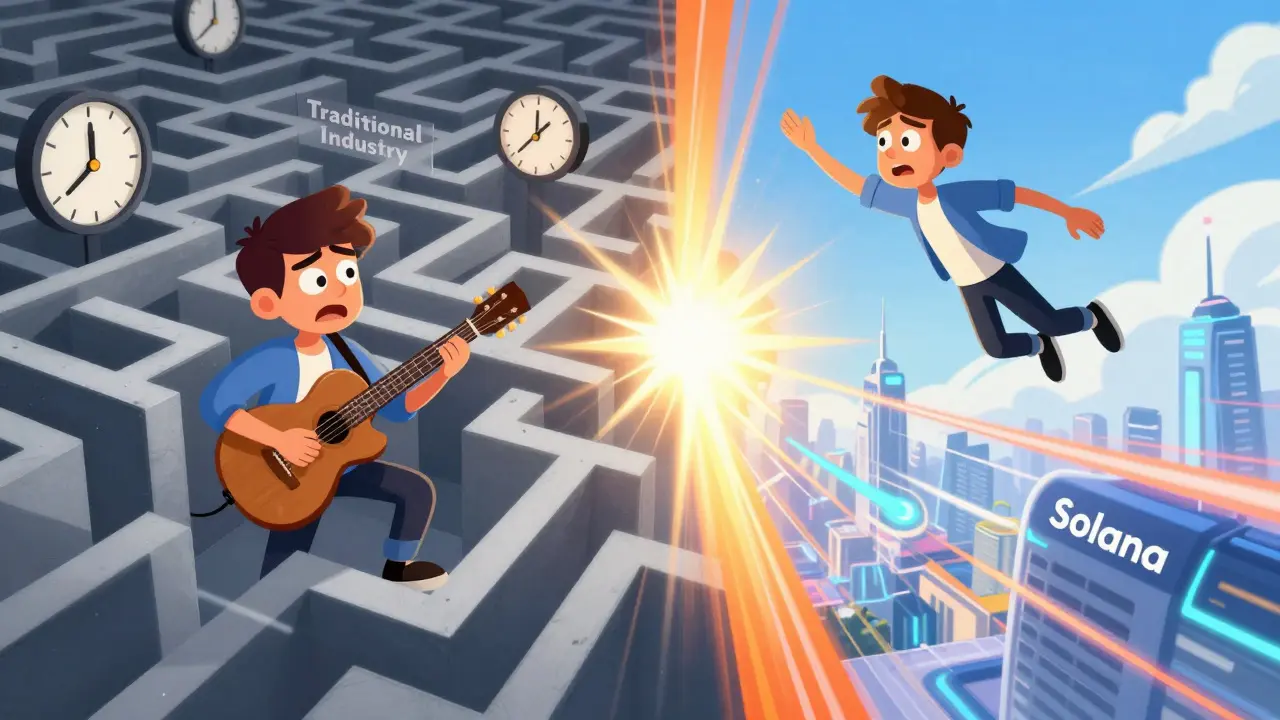
If you follow crypto news, you might remember Audius launching on Ethereum. In fact, the original smart contracts were deployed there in 2018. However, as the user base grew, Ethereum’s limitations became apparent. High gas fees and slow transaction speeds made frequent micro-transactions impractical.
In response, the Audius team migrated its content management system to Solana, a high-performance blockchain known for low costs and high throughput. This move was strategic. Solana can handle thousands of transactions per second at a fraction of a cent each. For a music streaming platform where millions of streams occur daily, this efficiency is non-negotiable.
Does this mean AUDIO is no longer an Ethereum token? Not entirely. The ERC-20 version still exists and can be traded on exchanges. However, the operational backbone-the part that processes streams and pays out artists-now runs on Solana. Wrapped versions of AUDIO facilitate this cross-chain interaction. For most users, this transition is invisible. They simply see faster loads and reliable payouts.
Audius vs. Traditional Streaming Platforms
Let’s put things in perspective. How does Audius stack up against the giants? The differences aren’t just technical; they’re philosophical.
| Feature | Audius (Web3) | Spotify/Apple Music (Web2) |
|---|---|---|
| Ownership | Community & Artist Owned | d>Corporate Owned|
| Payout Speed | Instant (on-stream) | Monthly/Quarterly (delayed) |
| Cost to Listen | Free (no subscription) | Freemium (ads) or Paid Subscription |
| Artist Control | Full control over content & pricing | Limited; subject to platform algorithms |
| Censorship Resistance | High (decentralized storage) | Low (centralized moderation) |
| Blockchain Base | Solana (primary) / Ethereum (legacy) | None (Centralized Databases) |
The biggest takeaway here is autonomy. On Spotify, if the algorithm decides your music doesn’t fit the current trend, your reach drops. On Audius, your audience grows organically through social sharing and direct fan support. Plus, because there are no subscription fees for listeners, the barrier to entry is zero. Anyone with an internet connection can start listening immediately.
Who Benefits Most From AUDIO?
Not everyone needs to buy AUDIO tokens to benefit from Audius. The platform serves three main groups, each with different motivations.
Independent Artists are the primary beneficiaries. If you’re tired of signing away rights to labels or fighting for visibility on crowded platforms, Audius offers a fresh start. You keep 100% of your royalties (minus minimal network fees). You build a direct relationship with fans who care about your work, not just passive background noise.
Fans & Collectors enjoy free access to a growing library of music. Beyond listening, some fans engage by curating playlists or supporting favorite artists directly. Holding AUDIO can unlock exclusive badges or early access to certain features, turning fandom into a participatory experience.
Node Operators & Developers see economic opportunity. Running a node requires technical know-how and capital (for staking), but it generates passive income. Developers contribute to the open-source codebase, improving the protocol for everyone. This group forms the technical backbone of the ecosystem.
Is AUDIO a Good Investment?
That depends on your goals. Like any cryptocurrency, AUDIO’s price fluctuates based on market sentiment, adoption rates, and broader crypto trends. It’s not a stablecoin; it’s a utility token tied to the success of a specific application.
If you believe in the long-term shift toward decentralized media, AUDIO represents a tangible bet on that future. Its value correlates with usage: more streams mean more demand for the token to facilitate payouts and staking. However, always do your own research. Look at active user metrics, developer activity, and partnership announcements rather than just price charts.
Remember, buying AUDIO doesn’t guarantee returns. It gives you a stake in a network that aims to democratize music distribution. If the network thrives, the token likely follows. If adoption stalls, the value may decline. Diversify wisely.
Getting Started With Audius Today
Ready to try it out? Here’s how to jump in:
- Download the App: Available on iOS, Android, and desktop. Create a free account using your email or social login.
- Explore the Library: Browse genres, follow artists, and create playlists. Notice how quickly songs load-that’s Solana working behind the scenes.
- Support Artists: If you love a track, share it. You can also tip artists directly with AUDIO tokens if you hold them.
- Buy AUDIO (Optional): If you want to stake or participate in governance, purchase AUDIO from a major exchange like Binance or Coinbase. Transfer it to a compatible wallet (like Phantom for Solana-based interactions).
The interface is intuitive, designed to feel familiar to anyone used to Spotify or SoundCloud. But under the hood, you’re interacting with a revolutionary piece of technology.
Can I listen to Audius for free?
Yes, absolutely. Listening to music on Audius is completely free for users. There are no subscription fees or ads interrupting your flow. The platform is funded by token incentives for node operators and artists, not by charging listeners.
Do I need to buy AUDIO tokens to use the app?
No. You can download the app, browse music, follow artists, and stream songs without owning any AUDIO tokens. Tokens are only necessary if you want to run a node, participate in governance voting, or tip artists directly in crypto.
How does Audius pay artists so quickly?
Unlike traditional platforms that batch payments monthly, Audius uses blockchain smart contracts to trigger instant micropayments. When a stream occurs, the contract automatically allocates AUDIO tokens to the artist’s wallet. This eliminates administrative delays and middlemen.
Is my music safe from being deleted on Audius?
Audius employs a decentralized storage system via IPFS and multiple content nodes. This means your files are replicated across many servers worldwide. While extreme cases of illegal content removal can still occur due to legal pressure, the system is far more resistant to arbitrary deletion or censorship than centralized servers.
Why did Audius switch from Ethereum to Solana?
Ethereum’s high transaction fees and slower speed became bottlenecks as Audius scaled. Solana offers near-instant transactions at negligible cost, making it ideal for processing millions of daily streams and micro-payments efficiently. The migration improved user experience and reduced operational costs.