
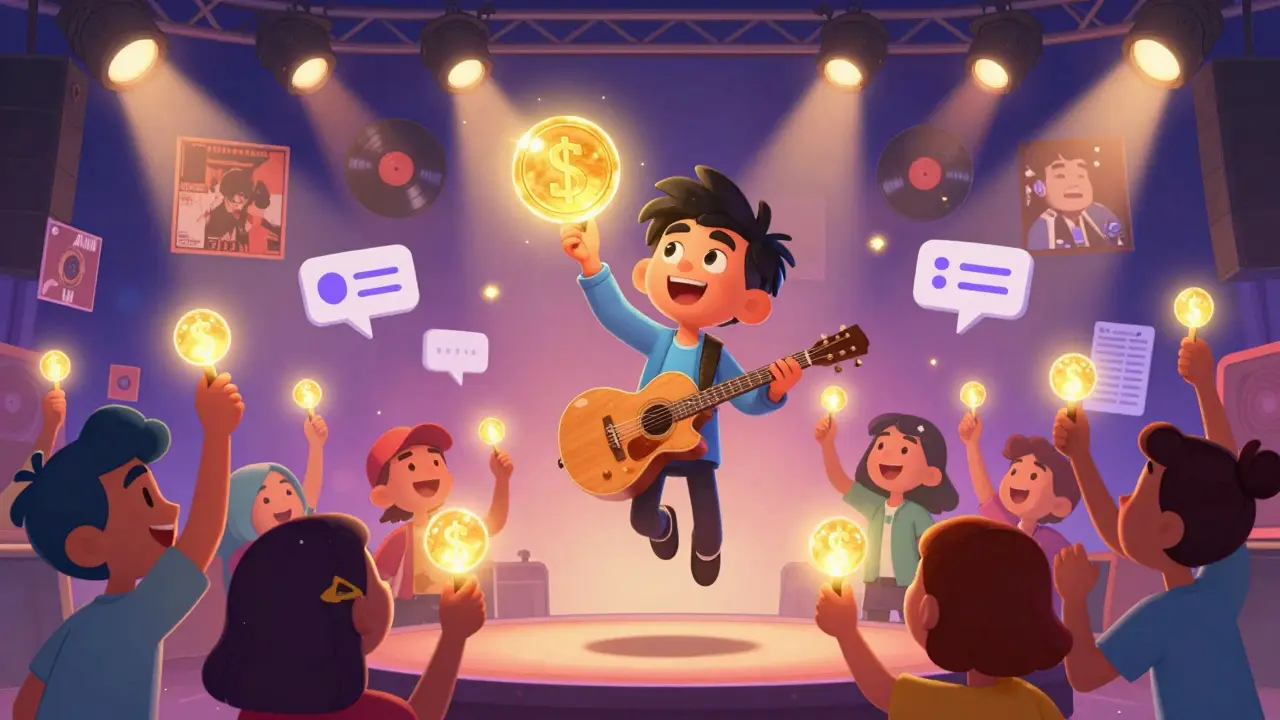
Think of social tokens as digital membership cards powered by blockchain. They’re not just another type of cryptocurrency - they’re personal coins created by real people: musicians, podcasters, artists, coaches, and even small online communities. If you follow someone online and wish you could do more than just like their posts, social tokens let you actually invest in their success - and get something back in return.
How Social Tokens Work
A social token is a digital asset issued by an individual or group on a blockchain like Ethereum, Solana, or Polygon. Unlike Bitcoin, which is decentralized and not tied to any person, social tokens are built around a specific creator or community. When someone launches a social token - say, $JAM for a musician - they’re creating a way for fans to support them directly.
Here’s how it plays out in real life:
- You buy $JAM tokens using crypto or fiat money.
- Now you’re part of the inner circle.
- You get access to private Discord chats, early concert tickets, limited-edition merch, or even voting rights on the next album cover.
- If more fans join and buy the token, its value goes up - and so does the creator’s earnings.
There’s no middleman. No YouTube ad revenue split. No Patreon subscription fee. Just you, the creator, and the blockchain.
Why They’re Different from NFTs
People often mix up social tokens and NFTs. They’re related, but not the same.
NFTs are unique digital items - think of a one-of-a-kind artwork, a video clip, or a collectible badge. Each one has its own value because it’s singular. Social tokens, on the other hand, are fungible. That means every $JAM token is identical to another $JAM token, like dollar bills. You can trade them, send them, or use them like currency within the community.
Think of it this way: social tokens are the foundation - they’re the membership. NFTs are the special perks - the exclusive art, the signed vinyl, the backstage pass. Together, they build a whole economy around a creator.
What You Get as a Holder
Buying a social token isn’t just about speculation. It’s about access. Here’s what real holders actually use them for:
- Exclusive content - Early access to songs, podcasts, or livestreams.
- Community perks - Private Telegram or Discord channels where you chat directly with the creator and other fans.
- Voting power - Decide on the next project, tour location, or merch design.
- Discounts and giveaways - Token holders get first dibs on limited drops or free tickets.
- Revenue sharing - Some creators share a percentage of sales or ad income with token holders.
One music producer in Austin launched $BEAT tokens. Holders got to vote on which tracks made it onto the next album. Three months in, the token’s value doubled as the album dropped. The creator used part of the proceeds to fund a local youth studio - something fans helped choose.
Who Can Create Them?
You don’t need to be famous. You don’t need a big team. You just need an audience.
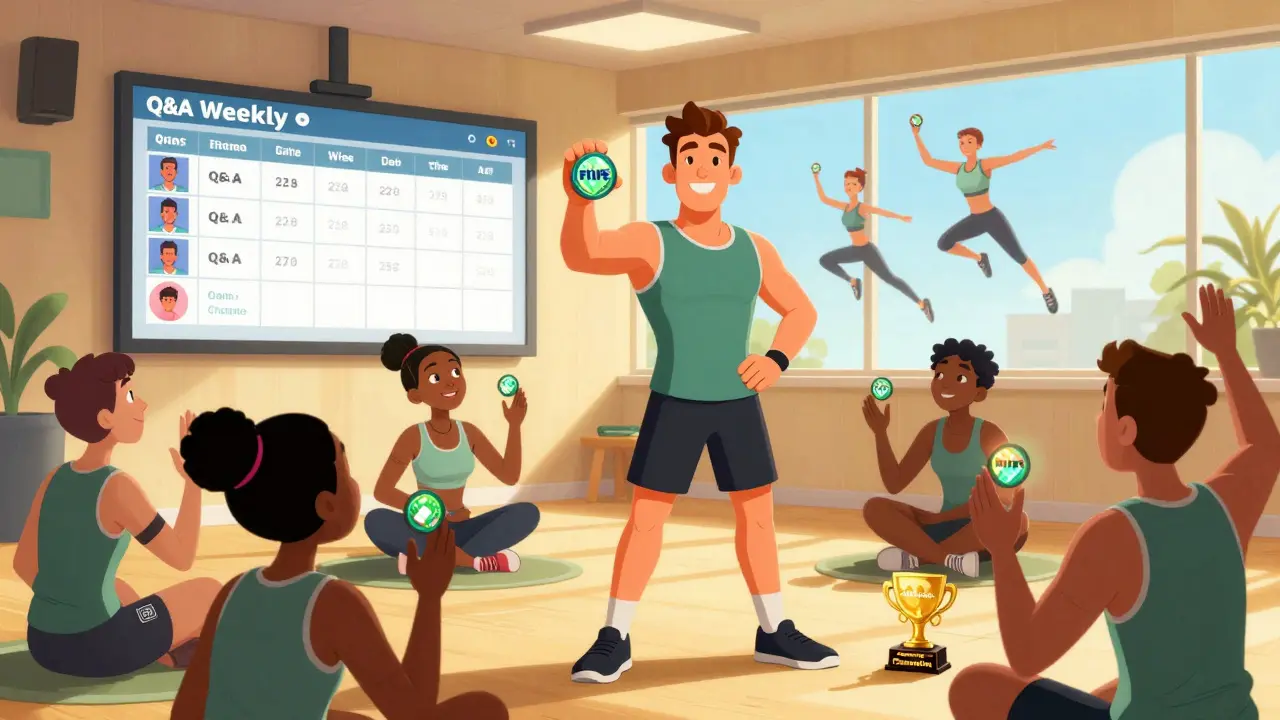
Platforms like Rally and Roll make it easy. A fitness coach in Auckland created $FITLIFE with just a few hours of setup. Her 2,000 followers bought tokens. She used the funds to pay for a personal trainer certification. In return, token holders got weekly live Q&As and custom workout plans.
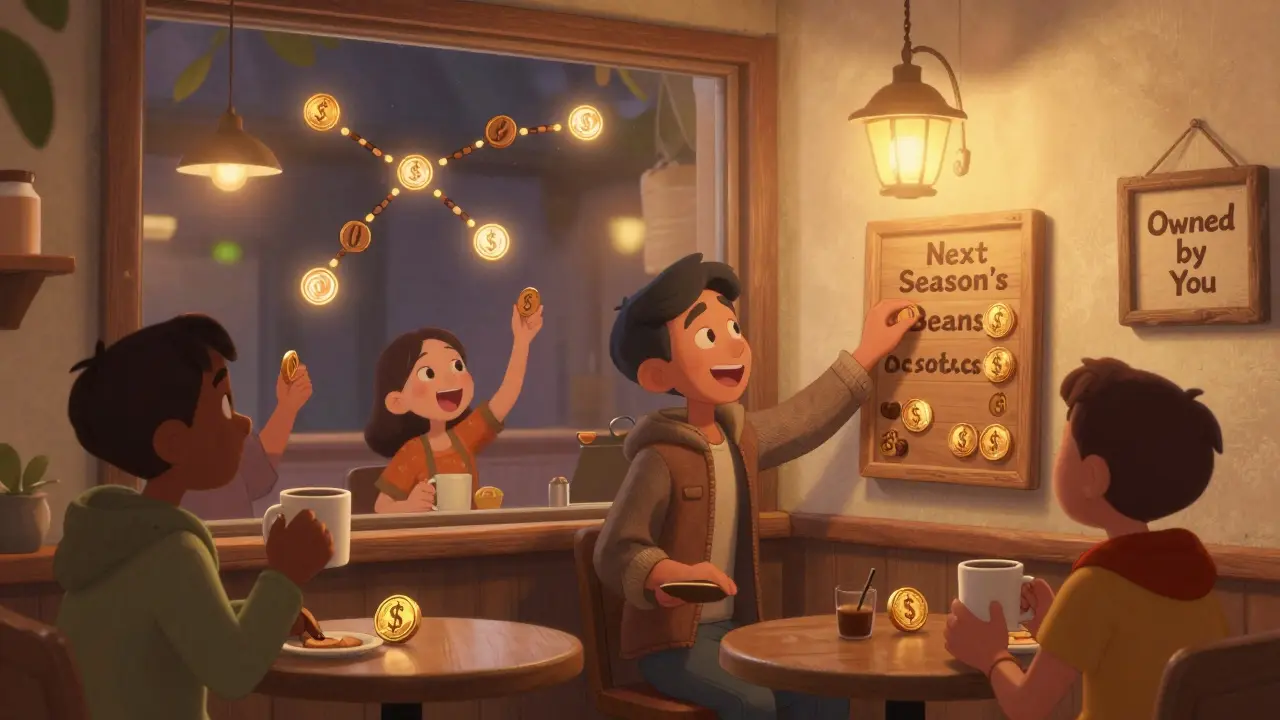
Small businesses use them too. A local coffee shop in Wellington launched $CUP tokens. Buy 50, get a free latte. Hold 100, and you’re on the board for next season’s bean selection. It’s not magic - it’s just better alignment between customer and brand.
The Upside - And the Risks
For creators, social tokens mean direct income without relying on ads or platform algorithms. For fans, it means real influence and ownership. It turns passive followers into active participants.
But it’s not risk-free.
- If the creator stops posting, the token value can crash.
- There’s no guarantee of returns - it’s not a stock.
- Some tokens are scams. Always check if the creator has a real track record.
- Regulations are still unclear in many countries. New Zealand doesn’t ban them, but taxes apply if you profit.
The key is treating them like community membership, not investment. Buy because you believe in the person - not because you think you’ll get rich.
The Bigger Picture
Social tokens are part of a shift away from centralized platforms. Instead of Instagram or TikTok controlling how creators earn, the blockchain puts the power back in the hands of the community.
Imagine a world where every podcast, artist, or educator has their own economy. Where your support isn’t just a like or a tip - it’s a stake. Where you help shape what comes next.
This isn’t science fiction. It’s happening now. In 2025, over $2 billion in social tokens were traded globally. Thousands of creators - not just celebrities - are using them to build sustainable careers.
It’s not about replacing YouTube or Patreon. It’s about adding something new: true ownership. A way to turn admiration into collaboration.
Getting Started
If you’re curious, here’s how to dip your toes in:
- Find a creator you love who’s launched a social token - check their bio or website.
- Read their token page. What benefits do holders get? Is it clear?
- Use a crypto wallet like MetaMask or Phantom.
- Buy a small amount. Start with $10-$20.
- Join their private community. Engage. Don’t just hold.
You don’t need to be a tech expert. Just be a fan who wants to do more than scroll.
Are social tokens the same as cryptocurrencies like Bitcoin?
No. Bitcoin is a decentralized currency with no ties to any person or group. Social tokens are created by individuals or communities and are tied directly to their brand, content, or influence. While both run on blockchains, social tokens are meant for community engagement, not general payments.
Can I make money from social tokens?
You can - but it’s not guaranteed. Some holders profit if the token’s value rises due to demand. But many people buy them to access perks, not to flip for profit. Treat them like a membership, not a stock. If you’re hoping to get rich, you’re likely to be disappointed.
Do I need crypto to buy social tokens?
Not always. Many platforms let you buy social tokens directly with a credit card or bank transfer. But once you own them, you’ll need a crypto wallet like MetaMask or Phantom to store and use them. Some platforms handle this for you, so you don’t need to manage crypto yourself at first.
Are social tokens legal?
In New Zealand and most countries, they’re legal - as long as they’re not marketed as investment products. If a creator says, "Buy this token to earn returns," it could be seen as a security and face regulation. Most creators avoid that language and focus on access and community, which keeps them in the clear.
What happens if the creator stops posting?
The token’s value usually drops. That’s why it’s important to support creators who are active and transparent. Some communities keep going even after the original creator steps back - especially if they’ve built strong governance systems. But in most cases, the token’s value is tied to the creator’s ongoing involvement.
Robert Kromberg
February 28, 2026 AT 14:30Really appreciate this breakdown. I’ve been skeptical about crypto stuff for years, but social tokens feel different-like a natural evolution of fandom. Not about getting rich, but about being part of something real.
My favorite example was the Austin music producer. That’s not finance-that’s community building. And honestly? More sustainable than any Patreon model I’ve seen.
Daisy Boliaan
March 2, 2026 AT 11:23OMG YES. I bought $JAM last month and now I’m in the Discord and we just voted on the album art and I cried. Like, actually cried. This isn’t crypto, this is emotional labor turned into a currency and I’m here for it. Also the creator sent me a handwritten thank you note via carrier pigeon (jk but it felt like it).
Who else is obsessed with this?!
Nicki Casey
March 2, 2026 AT 11:55This entire concept is a dangerous deregulation fantasy dressed up as empowerment. The blockchain is not a magic wand for bypassing legal, economic, and ethical frameworks. Social tokens are unregistered securities by any reasonable interpretation under U.S. SEC guidelines. The fact that this article treats them as benign community tools is dangerously naive.
There is no such thing as "non-investment" when financial value is exchanged for future benefits. This is a regulatory time bomb waiting to explode-and when it does, retail investors will be left holding worthless tokens while creators disappear into offshore wallets. The normalization of this nonsense is alarming.
maya keta
March 4, 2026 AT 00:13Okay but like, have y’all read the whitepaper on $CUP? The governance model is *chef’s kiss*-decentralized autonomous community treasury, token-weighted voting, smart contract escrow for merch revenue redistribution. It’s not just a coffee shop, it’s a proto-cooperative. We’re witnessing the birth of Web3 micro-economies here.
Also, the fact that this is even being discussed without mentioning the role of Layer 2 scaling on Polygon? Unacceptable. We need more technical rigor in these conversations.
Curtis Dunnett-Jones
March 5, 2026 AT 00:24While I admire the idealism behind this model, I must emphasize that the structural risks remain unaddressed. The absence of fiduciary duty, legal recourse, or regulatory oversight renders these systems inherently unstable.
One must ask: if a creator’s token collapses due to inactivity, who is accountable? Where is the consumer protection framework? This is not innovation-it is a legal gray zone masquerading as progress. We must demand transparency, not just enthusiasm.
Lilly Markou
March 6, 2026 AT 12:51I just… I don’t know. I feel like I’m supposed to be excited, but every time I think about buying one, I get this hollow feeling. Like I’m being asked to invest in someone’s dream, but what if their dream just… fades? What if I’m the one left holding the bag?
I miss when support was just a like. Simple. Safe. No pressure.
McKenna Becker
March 6, 2026 AT 15:04It’s not about money. It’s about agency. When you buy a token, you’re not purchasing a product-you’re signing a contract to co-create. That’s revolutionary. The real innovation isn’t the blockchain. It’s the shift from passive consumption to active participation.
Stop calling it crypto. It’s civic engagement with a wallet.
precious Ncube
March 8, 2026 AT 12:02Ugh. Another crypto bros’ fantasy. You think a local coffee shop needs blockchain? They need better beans and baristas who don’t glare at you for asking for oat milk.
And don’t get me started on "voting on bean selection." That’s not empowerment. That’s performative nonsense for people who think democracy is a Discord channel.
Phillip Marson
March 9, 2026 AT 10:02Y’all are overthinking this. You buy the token, you get the perks, you chill in the chat. If the creator ghost you? Tough luck. Life’s like that.
I got my free latte. I got to vote. I didn’t lose money. I didn’t win money. I just vibed. That’s the whole point. Stop turning everything into a portfolio.
Tracy Whetsel
March 10, 2026 AT 04:46Hey everyone, I just wanted to say-this is beautiful. 🌱
I started $FITLIFE last year and seeing how my followers turned into a real community… it changed everything. I used to feel alone in my work. Now I wake up to messages from people who say my workouts helped them through anxiety.
You don’t need to spend a lot. Just show up. Be kind. The rest follows.
And if you’re scared? Start with $5. I promise you won’t regret it.
Alyssa Herndon
March 10, 2026 AT 14:55I like how this is framed as empowerment but nobody talks about the energy it takes to maintain a token economy. The constant updates, the Discord moderation, the voting cycles, the transparency reports…
It’s a second job. And for most creators, it’s unpaid labor wrapped in crypto jargon. I’m glad it works for some, but let’s not pretend it’s universally accessible.
Also-why does every community need a governance structure? Can’t we just… like things?
Ifeanyi Uche
March 11, 2026 AT 00:17Man this is just america trying to sell blockchain as a solution to everything. In Nigeria we got real problems-electricity, roads, jobs. You people turning coffee into crypto? That’s not innovation that’s distraction.
But hey if you wanna buy tokens so you can vote on your latte flavor go ahead. I’ll be here building real things.
Jeff French
March 11, 2026 AT 12:43Layer 3 infrastructure is still nascent but the tokenomics on Solana are starting to show real utility. The burn mechanisms on $BEAT are particularly elegant-revenue recirculation via deflationary supply creates organic demand without centralized control.
Also the integration with wallet-based loyalty programs is underappreciated. This isn’t fandom. It’s behavioral economics on chain.
Elana Vorspan
March 13, 2026 AT 06:08I love this so much. 🥹 I bought $JAM because I’ve been listening to that artist since high school. Now I’m in the group and we’re planning a mini tour. I didn’t expect to make friends. I just wanted to say thanks.
It’s not about money. It’s about connection.
Also I made a meme of the album art and it went viral in the Discord. Best day ever.
Danny Kim
March 14, 2026 AT 14:24So you’re telling me the solution to YouTube’s broken monetization is… more blockchain? Brilliant. Next you’ll tell me we need NFTs for emotional support.
Just give me the money, creator. I’ll stop scrolling. I don’t need a token to feel like I matter.
Cathy Sunshine
March 15, 2026 AT 13:44This is the most transparent form of capitalist exploitation disguised as community. You’re not building an economy-you’re selling hope to people who don’t know the difference between a token and a pyramid scheme.
The fact that this is presented as "progress" is a cultural tragedy. We’ve traded substance for spectacle. And now we’re calling it art.
Richard Cooper
March 16, 2026 AT 12:27My dude just launched $BASS and now I get early demos. That’s it. That’s the whole thing. No stress. No voting. Just good music and a heads up. That’s all I wanted.
Also I got a sticker. It’s cute.
Robert Kromberg
March 17, 2026 AT 13:05Replying to Daisy: I saw your post about the Discord-your art got featured in the pinned thread. That’s wild. You’re the reason this works. Not the tech. Not the token. You.
Keep showing up.