
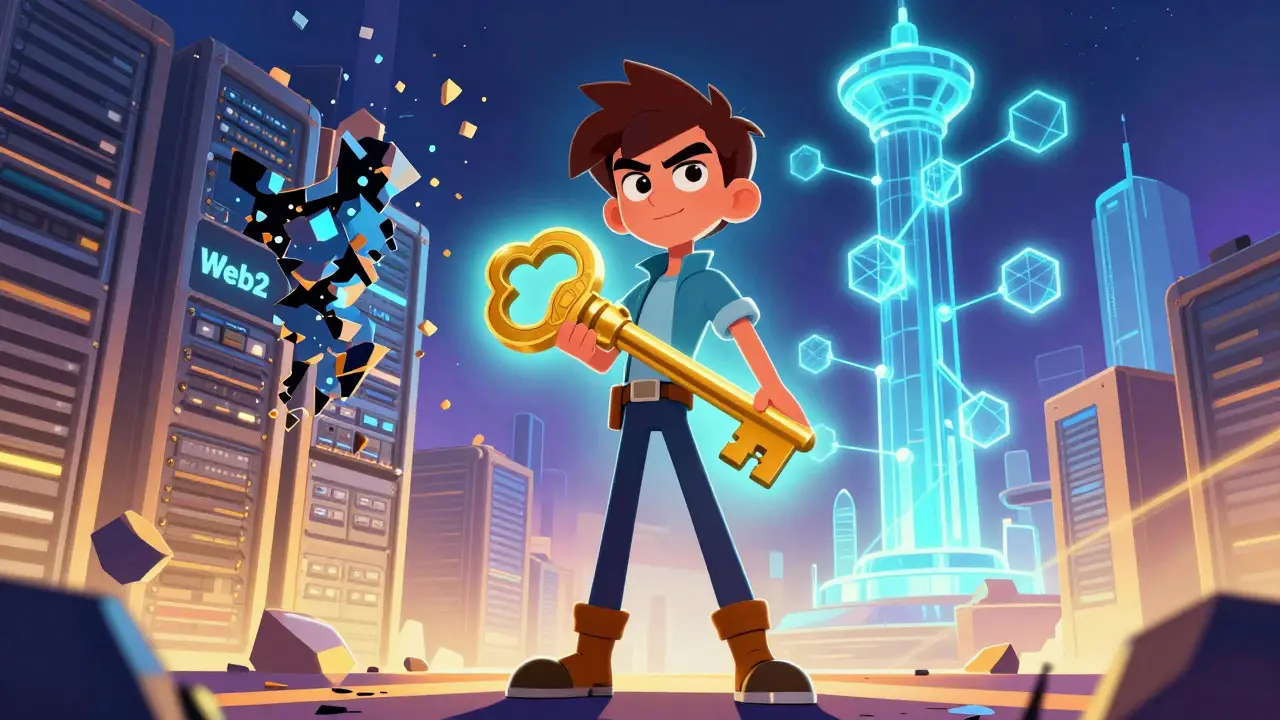
Imagine owning a digital painting that can't be copied, deleted by a server crash, or taken away by a platform shutdown. That is the promise of Web3, the third generation of the internet built on decentralized blockchain technology that enables verifiable digital ownership. Unlike Web2, where you rent space on Facebook or store files in Dropbox, Web3 shifts power to you. You hold the keys. You verify the proof. You control the asset.
But how does this actually work? And is it worth the learning curve? As of 2026, the global Web3 market has grown significantly, with projections suggesting a compound annual growth rate of over 40%. This isn't just hype; it's a structural shift in how we define "owning" something digital. Let’s break down what digital ownership really means in this new ecosystem, the tools you need, and the risks you must manage.
What Is Web3 and Why Does It Matter for Ownership?
To understand Web3, you have to look at what came before. Web1 was read-only-static pages you could view but not change. Web2 (the current internet) is read-write-you can post on social media, upload videos, and interact. But here’s the catch: in Web2, corporations own the infrastructure. If Twitter shuts down, your tweets are gone. If an app delists from the App Store, your data is trapped.
Web3 introduces the "read-write-own" model. The core mechanism is blockchain, a distributed ledger that records transactions immutably across a network of computers. When you buy a digital asset on Web3, the transaction is recorded on this public ledger. No single company controls it. Instead, cryptographic verification proves you are the owner. This is distinct from traditional digital files, which are just copies. In Web3, ownership is verified through private keys and smart contracts, creating a legal and technical framework for digital sovereignty.
The Core Tools: Wallets, Keys, and Networks
You don’t need to be a programmer to participate, but you do need specific tools. The most critical component is your crypto wallet, a digital tool that stores your private keys and allows you to interact with decentralized applications. Popular options include MetaMask, Phantom, and Trust Wallet. These wallets don’t just store coins; they are your identity on the web. Your "private key" is like a master password. If you lose it, you lose access to your assets forever. If someone steals it, they take everything. There is no "forgot password" button in Web3.
Underneath the wallet lies the network. Most Web3 activity happens on Ethereum, the leading smart contract platform that supports the majority of non-fungible tokens and decentralized finance applications. However, competition is fierce. Solana offers faster transaction speeds and lower fees, while Polygon provides a layer-2 solution to make Ethereum cheaper. Choosing the right network depends on what you’re doing: high-value art might stay on Ethereum for security, while frequent gaming actions might move to Solana for speed.
| Network | Average Transaction Speed | Typical Fee Cost | Best For |
|---|---|---|---|
| Ethereum | 15-30 TPS (Base Layer) | $1 - $50+ | High-value NFTs, DeFi, Security |
| Solana | ~2,300 TPS | < $0.10 | Gaming, High-frequency Trading |
| Polygon | ~7,000 TPS | < $0.05 | Low-cost Utility Tokens, Bridging |
NFTs and the Mechanics of Proof
When people talk about Web3 ownership, they usually mean Non-Fungible Tokens (NFTs). An NFT is a unique token on the blockchain that represents ownership of a specific item-digital art, music, domain names, or even tickets. The standard used on Ethereum is ERC-721. What makes an NFT different from a JPEG file? A JPEG is a copy; an NFT is a receipt. The NFT doesn’t necessarily contain the image itself (which is often stored off-chain for efficiency), but it contains a link to the image and a record of who owns that link.
This creates a provenance trail. Every time an NFT changes hands, the transaction is recorded publicly. Artists benefit from this through smart contracts, self-executing code that runs automatically when conditions are met, such as paying royalties on secondary sales. For example, if you sell a digital painting for 1 ETH, and I buy it later for 5 ETH, the smart contract can automatically send 5% of my purchase price back to the artist. This is impossible in traditional art markets, where galleries or auction houses capture the margin.
Real-World Use Cases Beyond Art
Digital ownership extends far beyond pixel art. Here are three concrete areas where Web3 is changing the game:
- Decentralized Finance (DeFi): Instead of using a bank, you use protocols like Aave or Uniswap. Your money sits in your wallet, not in a bank vault. You earn interest or yield directly from lending your assets. The risk is higher, but so is the control.
- Decentralized Autonomous Organizations (DAOs): DAOs are groups governed by code rather than a CEO. Members hold governance tokens that act as voting rights. If you want to change the rules of a protocol, you propose it and vote. This is digital ownership of the organization itself.
- Domain Names: Services like ENS (Ethereum Name Service) allow you to own a .eth domain. This replaces long, complex wallet addresses with human-readable names. Owning your domain name means no registrar can cancel it arbitrarily; it’s tied to your wallet.
The Risks: Security, Scams, and UX Challenges
Let’s be honest: Web3 is still rough around the edges. The biggest risk is user error. Because transactions are irreversible, one wrong click can cost you everything. In 2022 alone, billions of dollars were lost due to phishing scams and bridge hacks. Phishing remains the top threat. Fake websites, fake Discord messages, and malicious browser extensions try to trick you into signing a transaction that drains your wallet.
User experience (UX) is another hurdle. Completing a simple task in Web2 might take two clicks. In Web3, it can take seven steps: connect wallet, approve token, sign transaction, wait for confirmation, check gas fee, etc. New users often spend hours setting up their first wallet securely. To mitigate these risks, experts recommend using hardware wallets (physical devices that store keys offline) and always double-checking contract addresses before signing anything.

Getting Started: A Step-by-Step Guide
If you’re ready to dip your toes in, follow this process to secure your first digital asset safely.
- Choose a Wallet: Download a reputable non-custodial wallet like MetaMask (for Ethereum) or Phantom (for Solana). Avoid custodial exchanges if you want true ownership.
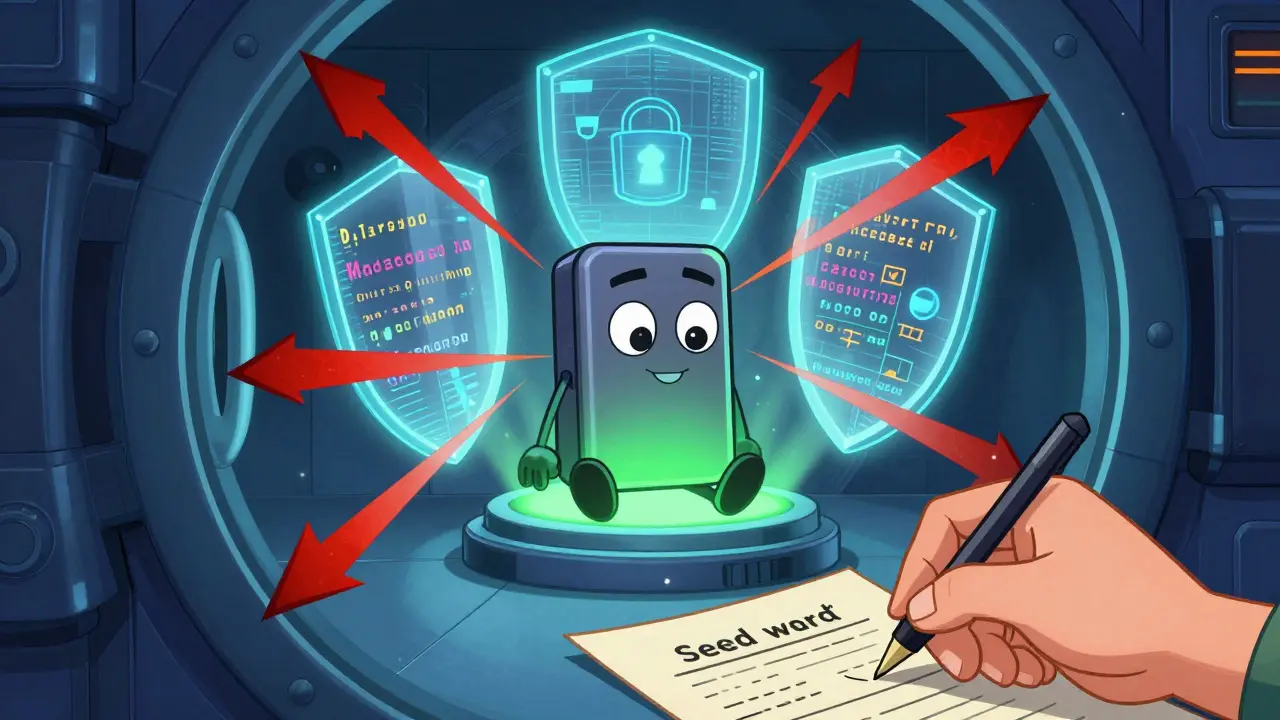
- Secure Your Seed Phrase: During setup, you’ll get a 12 or 24-word recovery phrase. Write this down on paper. Do not save it in a cloud note or screenshot. If you lose it, you lose your funds.
- Fund Your Wallet: Buy cryptocurrency (like ETH or SOL) on an exchange and transfer it to your wallet address. Start small-just enough for a few transactions.
- Connect to a dApp: Go to a trusted marketplace like OpenSea. Click "Connect Wallet." Review the permissions carefully. Only approve what you need.
- Make Your First Purchase: Buy a low-risk item, like a PFP (profile picture) NFT or a utility token. Check the creator’s reputation and the contract’s history before buying.
Remember, the goal is not just to buy, but to understand the mechanics. Check your transaction on a block explorer like Etherscan to see the immutable record of your ownership.
Regulatory Landscape and Future Outlook
As of 2026, regulation is becoming clearer. The European Union’s MiCA regulation has established a comprehensive framework for crypto-assets, providing legal certainty for owners. In the US, agencies are moving toward clearer guidelines on what constitutes a security versus a commodity. This clarity helps protect your ownership rights legally. While the technology is maturing, adoption is growing steadily, with Southeast Asia and North America leading in engagement. The future points toward greater interoperability between chains and improved user interfaces that hide the complexity behind the scenes. Whether you are an artist, investor, or developer, Web3 offers a path to genuine digital sovereignty-if you are willing to learn the ropes.
Is digital ownership in Web3 legally recognized?
Yes, increasingly so. With regulations like the EU's MiCA law taking effect, courts are beginning to recognize blockchain records as valid proof of ownership. However, laws vary by country, so it is wise to consult local legal standards for high-value assets.
Do I need to be a coder to use Web3?
No. You only need basic digital literacy. You interact with graphical interfaces (dApps) rather than writing code. However, understanding concepts like gas fees, seed phrases, and transaction signing is essential for safety.
What happens if I lose my private key?
You lose access to your assets permanently unless you have your seed phrase backup. This is why backing up your seed phrase offline is the most important step in Web3. There is no customer support to reset your key.
Are Web3 transactions expensive?
It depends on the network. Ethereum can be expensive during peak times ($1-$50+ per transaction), while networks like Solana or Polygon charge fractions of a cent. Many users now use Layer 2 solutions to reduce costs significantly.
How is Web3 different from Web2?
Web2 is centralized; companies control your data and can ban you. Web3 is decentralized; you control your data and assets via private keys. In Web3, ownership is verifiable on a public blockchain, whereas in Web2, ownership is based on trust in a corporation.