
You’ve heard the buzz. You’ve seen the name Wagmi popping up in discussions about the next big thing on zkSync Era. But here is the hard truth: if you are looking for a traditional crypto exchange like Binance or Coinbase to buy Bitcoin with your credit card, you are in the wrong place. Wagmi is not a centralized exchange. It is a decentralized finance (DeFi) protocol built on the zkSync Era blockchain.
So, why does this distinction matter? Because using a decentralized exchange (DEX) changes the rules of the game entirely. There is no customer support hotline. There is no password reset button. And right now, the data suggests that Wagmi is still in its very early infancy. Before you connect your wallet and risk your funds, let’s look at what the numbers actually say about this platform in mid-2026.
What Exactly Is Wagmi on zkSync Era?
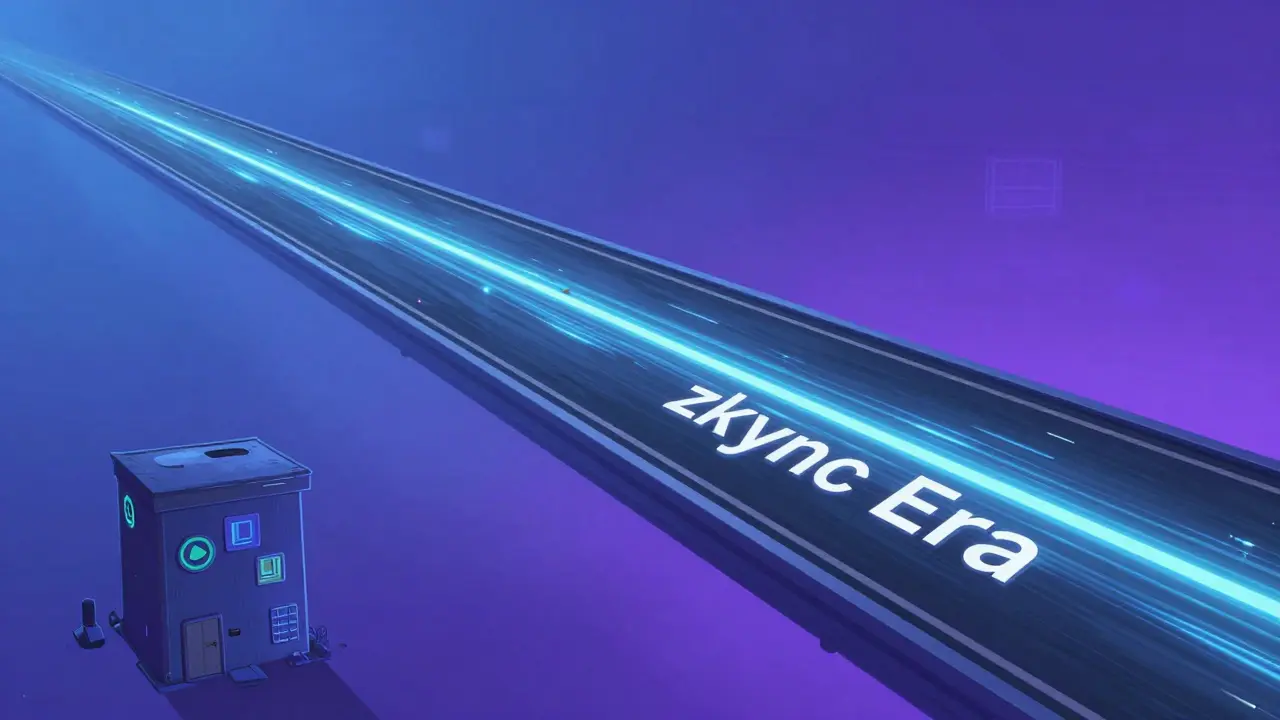
To understand Wagmi, you first need to understand where it lives. zkSync Era is a Layer 2 scaling solution for Ethereum that uses zero-knowledge rollups to make transactions faster and cheaper. Think of it as a high-speed highway built on top of the congested Ethereum mainnet. It allows developers to build applications that run smoothly without clogging up the base network.
Wagmi positions itself as a "one-stop-shop" for DeFi enthusiasts on this highway. The goal is to provide an experience that feels like a centralized exchange-easy swapping, liquidity provision, and strategy generation-but with the security of decentralization. In theory, this sounds perfect. In practice, we have to look at the execution.
The protocol is designed to be EVM-compatible, meaning it works with the same programming language (Solidity) used by most Ethereum apps. This lowers the barrier to entry for developers but also means it faces stiff competition from established giants already operating on zkSync.
The Reality Check: Trading Volume and Liquidity
When reviewing any exchange, centralized or decentralized, volume is king. Volume tells you two things: how many people trust the platform enough to trade on it, and whether you can actually sell your assets when you want to.
Here is the stark reality for Wagmi as of June 2026. The 24-hour trading volume sits at approximately $119.49. Yes, you read that correctly. One hundred and nineteen dollars. For context, major decentralized exchanges like Uniswap or SushiSwap process millions of dollars every single hour. Even smaller niche DEXs usually see thousands in daily volume.
This near-zero activity raises several red flags:
- Liquidity Risk: With such low volume, there is likely very little liquidity in the pools. This means if you try to swap a significant amount of tokens, you might suffer from extreme slippage, getting far fewer tokens than the price quote suggested.
- Adoption Issues: Low volume often indicates that users are hesitant to trust the protocol, or that marketing has failed to attract a community.
- Data Transparency: The lack of substantial Total Value Locked (TVL) data makes it difficult to assess the financial health of the project. While the broader zkSync ecosystem boasts over $795 million in bridged TVL, Wagmi has not captured a meaningful share of this pie.
If you are an average trader looking for efficiency, these metrics suggest Wagmi is not ready for prime time. It behaves more like a testnet environment than a live financial product.
Security and Trust: Who Is Behind the Code?
In DeFi, your security depends on the code and the team behind it. Unfortunately, comprehensive information about Wagmi’s development team is scarce. We do not have detailed public profiles of the founders, their past projects, or their track record in the industry. In the crypto world, anonymity isn't always bad, but for a new protocol handling user funds, transparency builds trust.
We also lack clear evidence of recent, independent security audits. Audits by firms like CertiK or OpenZeppelin are standard for credible DeFi protocols. Without these reports publicly linked and verified, you are essentially trusting the code based on faith rather than verification. Given the history of smart contract exploits in the DeFi space, this is a significant risk factor.
However, the underlying infrastructure offers some comfort. zkSync Era itself has attracted institutional interest, with entities like Sygnum Bank, Deutsche Bank, and UBS exploring funds on the chain. This validates the blockchain layer, but it does not automatically validate every application built on top of it. A secure building does not mean every tenant inside is trustworthy.

How Wagmi Compares to Established DEXs
To help you decide if Wagmi is worth a shot, let’s compare it to the standards set by mature decentralized exchanges. Use this table to gauge where Wagmi stands today.
| Feature | Wagmi (zkSync Era) | Established DEX (e.g., Uniswap, SyncSwap) |
|---|---|---|
| 24h Trading Volume | ~$119 | $10M - $1B+ |
| Liquidity Depth | Very Low (High Slippage Risk) | High (Low Slippage) |
| Team Transparency | Low/Limited Info | High (Public Teams/Audits) |
| User Base | Negligible | Millions of Active Users |
| Multi-Chain Support | Planned (Omni-layer) | Active on Multiple Chains |
| Best For | Early Speculators / Developers | Traders / Investors |
The gap is wide. Established DEXs offer deep liquidity, proven security records, and active communities. Wagmi is currently offering none of these in significant measure. Its advantage lies only in potential future growth if the team successfully executes its roadmap.
Fees, Features, and User Experience
One of the selling points of DeFi on zkSync Era is low transaction fees. Because zkSync is a Layer 2 solution, gas fees are typically a fraction of those on Ethereum Mainnet. Wagmi benefits from this infrastructure. You will likely pay pennies per transaction, which is attractive for small trades.
However, low fees don’t matter if you can’t execute the trade efficiently. The user interface aims to mimic centralized exchanges, simplifying the often-clunky DeFi experience. This includes features for:
- Swapping Tokens: Exchanging one asset for another directly from your wallet.
- Liquidity Provision: Depositing pairs of tokens to earn trading fees (though with low volume, earnings would be minimal).
- Strategy Generation: Automated tools to optimize yield (details on these strategies are currently vague).
The fee structure for the protocol itself (the cut Wagmi takes from each trade) is not clearly documented in public sources. Most DEXs charge between 0.05% and 0.3%. Without clear disclosure, users must assume standard rates, but hidden costs or dynamic fees could apply.
Future Roadmap: The Omni-Layer Promise
The development team has outlined plans to expand beyond zkSync Era. The concept is an "omni-layer" deployment, allowing Wagmi to operate across multiple blockchains once it is "thoroughly tested and refined." This multi-chain ambition is smart; it reduces reliance on a single ecosystem and opens up access to users on Arbitrum, Optimism, or Polygon.
But there is no specific timeline. No dates. No beta tests announced. In crypto, roadmaps are often optimistic projections rather than binding commitments. Until you see actual deployment on other chains, this remains a promise, not a feature.
Who Should Use Wagmi Right Now?
Let’s be direct. If you are a conservative investor looking to park funds safely, stay away. If you are a day trader needing instant liquidity, look elsewhere. Wagmi is currently suitable only for:
- DeFi Degens: High-risk traders who enjoy hunting for gems before they blow up (or crash). You are betting on the team’s ability to grow the protocol from scratch.
- Developers: Those interested in integrating with early-stage zkSync protocols to test integrations or provide initial liquidity for incentives.
- Ecosystem Believers: People who strongly believe in zkSync Era’s long-term dominance and want to support native applications, regardless of current performance.
For everyone else, the risks outweigh the rewards. The lack of volume, transparency, and proven security makes it a hazardous playground for significant capital.
Safety Tips If You Decide to Proceed
If you are determined to interact with Wagmi despite the warnings, follow these strict safety protocols:
- Use a Burner Wallet: Never connect your primary wallet holding your life savings. Use a separate wallet with only the funds you are willing to lose completely.
- Revoke Permissions: After interacting with the contract, use a tool like Revoke.cash to remove spending allowances. This prevents malicious contracts from draining your funds later.
- Verify Contract Addresses: Only interact with the official Wagmi contract addresses found on trusted aggregators like DefiLlama or the official zkSync documentation. Phishing sites are rampant in new DeFi spaces.
- Start Small: Test with $10 or $20 first. Check if the swap executes correctly and if you receive the expected output. Do not deposit large sums until you have verified the mechanics yourself.
Final Verdict: Wait for the Data
Wagmi on zkSync Era has the right idea: bringing centralized ease to decentralized security on a scalable Layer 2 network. The technology stack is solid, and the zkSync ecosystem is growing rapidly with institutional backing. However, Wagmi itself is currently empty. With less than $120 in daily volume, it lacks the critical mass needed to be a viable trading venue for most users.Crypto moves fast. Today’s obscure protocol can become tomorrow’s leader. But until Wagmi demonstrates consistent volume, publishes security audits, and reveals its team, it remains a speculative experiment rather than a reliable exchange. Keep an eye on DefiLlama for updates on its TVL and volume. When those numbers start climbing into the thousands, then it might be worth a second look.
Is Wagmi a centralized or decentralized exchange?
Wagmi is a decentralized exchange (DEX). It operates on the zkSync Era blockchain and allows peer-to-peer trading without a central authority holding your funds. You connect your own wallet to trade.
Why is the trading volume on Wagmi so low?
The low volume (~$119/day) suggests Wagmi is in its very early stages of adoption. It may lack sufficient marketing, liquidity incentives, or user trust compared to established competitors like Uniswap or SyncSwap.
Is it safe to use Wagmi with my main crypto wallet?
No. Due to the lack of transparent security audits and limited track record, it is highly recommended to use a separate "burner" wallet with minimal funds if you choose to interact with Wagmi.
What is zkSync Era?
zkSync Era is a Layer 2 scaling solution for Ethereum. It uses zero-knowledge proofs to bundle transactions off-chain, resulting in faster speeds and significantly lower fees while maintaining Ethereum's security guarantees.
Will Wagmi expand to other blockchains?
Yes, the team has stated plans to deploy an "omni-layer" version of the protocol on other networks after testing on zkSync Era. However, no specific timeline or target chains have been officially confirmed yet.
How do I check the real-time status of Wagmi?
You can monitor Wagmi’s Total Value Locked (TVL), trading volume, and number of users on DeFi analytics platforms like DefiLlama or Dune Analytics. These sources provide unbiased, on-chain data.
Jay Sharma
June 26, 2026 AT 22:35they want you to trust the code but who wrote the code? it is always a shadowy group of elites in silicon valley trying to steal your life savings while you sleep. i bet the smart contracts are backdoored by the fbi or some foreign intelligence agency. do not connect your wallet unless you want to be tracked.
Scott Miller
June 28, 2026 AT 20:18you guys are missing the point entirely! this is exactly how early adopters get rich. remember when uniswap was just a concept? wagmi is going to moon because zkSync is the future and everyone who says otherwise is a hater. buy the dip and hold tight!
Abby Martin
June 30, 2026 AT 15:08oh please, let me educate you on basic economics before you throw money into a black hole. liquidity is not optional, it is fundamental. if there is no volume, there is no market. it is that simple. stop pretending that 'potential' pays the bills. you are being reckless and naive.
Mélanie Boulay
June 30, 2026 AT 15:49i have been following the development of zero-knowledge rollups for quite some time now, and while the technology behind zkSync Era is indeed promising, one must consider the broader implications of investing in protocols that have not yet established a robust foundation of user trust and transparent operational metrics. it is important to approach such opportunities with a measured perspective, recognizing that the absence of substantial trading volume often reflects deeper structural issues rather than mere temporary setbacks, and thus caution is warranted until more concrete evidence of sustainability emerges.
Maurice Flynn
July 1, 2026 AT 18:22it is funny how we chase these new projects thinking they will change our lives, but really we are just gambling on hope. maybe the real value is in the journey of learning about blockchain tech, not the profit. stay chill and observe the chaos.
nancy jarecki
July 3, 2026 AT 00:09the sheer lack of due diligence displayed by the masses is truly disheartening. without audited smart contracts and verifiable team identities, this protocol is nothing more than a speculative bubble waiting to burst. only the intellectually lazy would ignore these glaring red flags.
Robert Hundley
July 3, 2026 AT 13:28hey folks! just checking out the scene here :D looks like a quiet day on wagmi. anyone else trying out the swap feature? curious to see if the fees are actually low as advertised. let us know what you think! :)
Melissa L
July 4, 2026 AT 07:57i dont get why everyone is so mad. its just a small project. maybe it will grow later. i tried swapping 10 bucks and it worked fine for me. no big deal. why make such a fuss about it?
Rob Morton
July 4, 2026 AT 12:29what defines a successful decentralized exchange in the current market climate? is it purely volume, or does community engagement play a larger role in long-term viability? i wonder if wagmi is focusing too much on technical specs and not enough on building a loyal user base from the ground up.
Routh Middaugh
July 4, 2026 AT 23:04well... i suppose we should all remain open to new possibilities; after all... innovation rarely comes without risk... however... prudence is also a virtue... perhaps we can find a middle ground between blind optimism and cynical dismissal... what do you think?
Ryan Peters
July 6, 2026 AT 22:01this is exactly why american innovation is failing. we let these anonymous overseas teams build financial infrastructure with zero accountability. where is the regulation? where is the oversight? it is a joke that we allow this unregulated casino to operate on our networks. pathetic.
ross harris
July 8, 2026 AT 13:33the digital carcass of wagmi lies rotting in the ether, a monument to greed and ignorance. you fools dance around the fire of volatility, unaware that the flames are already licking at your heels. it is a beautiful tragedy, really. watch them burn.
Carl Belgrave
July 8, 2026 AT 15:41listen up you degenerates. if you cannot handle the risk of a rug pull, stay out of crypto. this is america, land of the free, home of the brave investors. wagmi is a test of your mettle. prove you are worthy or go back to your bank accounts.
Carl Hanzel
July 10, 2026 AT 13:22everyone here is so eager to give advice yet so poor at listening. you think you are smart for avoiding wagmi? you are just missing out on the next big thing. typical herd mentality. i will be laughing when i am sitting on a pile of cash and you are crying over missed opportunities.
Daniel J. Cox
July 10, 2026 AT 23:38in my experience with various defi protocols across different cultures, the key is understanding the local context. in asia, for example, early adoption is driven by community trust rather than just audits. wagmi might be tapping into that untapped potential. keep an open mind :)
Emma Rémond
July 11, 2026 AT 17:09how quaint. the plebeians gather to discuss a protocol that lacks even basic economic fundamentals. it is almost adorable how you cling to hope in the face of mathematical certainty. your ignorance of liquidity dynamics is both baffling and predictable. do try to keep up.
ELNORA JEFFERSON
July 12, 2026 AT 21:10i am so tired of reading these same old complaints. it is either going to work or it won't. stop whining and start doing something productive with your time instead of analyzing every little detail of a failed startup. ugh.
Scott Miller
July 13, 2026 AT 14:08come on abby, lighten up! you act like you invented finance. wagmi is building something new and you are stuck in the past. embrace the change or get left behind. i am all in and i feel great about it.