NFT Collapse 2022: What Happened and Why It Still Matters
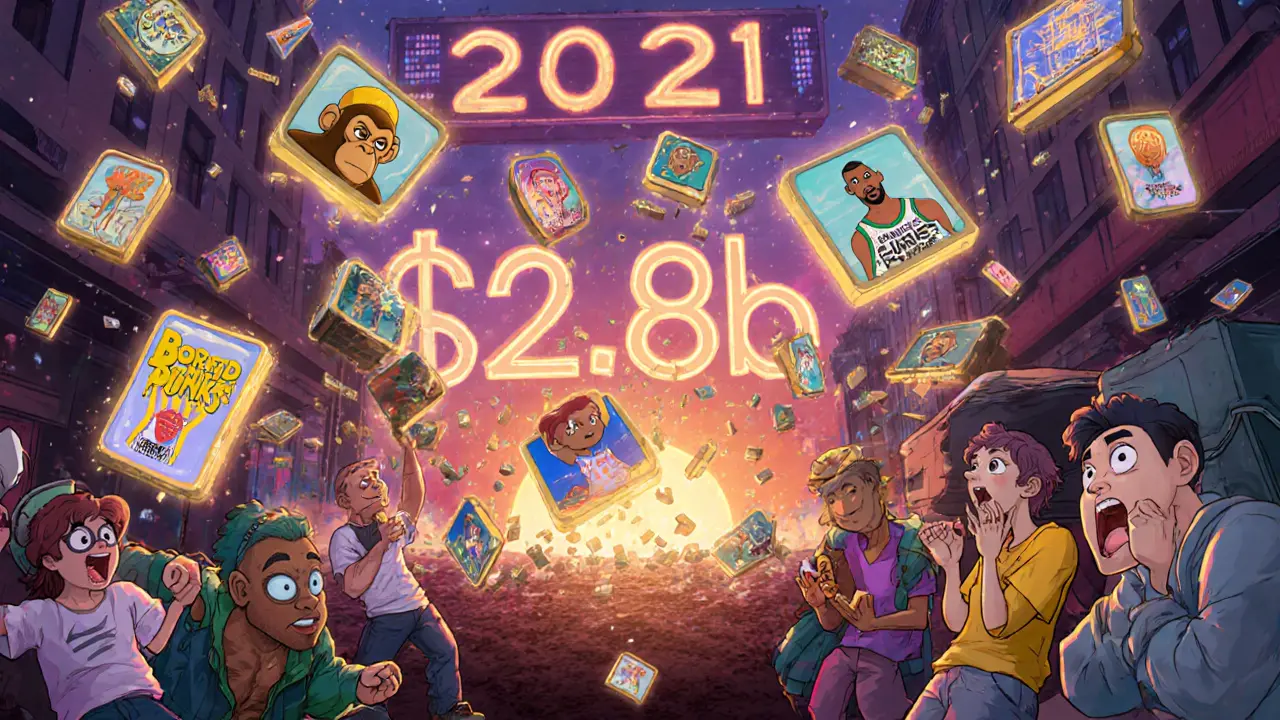
When the NFT collapse 2022, the sudden and dramatic fall in value of non-fungible tokens after a year of explosive growth. Also known as the NFT market crash, it wasn’t just a price drop—it was the end of a fantasy where a JPEG of a monkey could be worth millions. Before 2022, NFTs were everywhere: celebrities launched them, brands rushed to mint them, and people bought them thinking they were buying the future. But by mid-2022, trading volumes dropped 90%, floor prices vanished, and entire collections became worthless. The bubble didn’t burst—it deflated quietly, like a balloon with a slow leak.
What killed it? Simple: NFT valuation, the flawed idea that digital art or profile pictures had intrinsic value. Also known as speculative pricing, it relied on hype, not utility. People weren’t buying NFTs because they liked the art—they were buying because they thought someone else would pay more later. When the crypto market turned bearish, and Bitcoin started falling, that chain of hope snapped. NFT scams, projects with no team, no roadmap, and fake volume. Also known as rug pulls, became impossible to ignore. Collections like the infamous World of Women and Azuki saw prices drop 80% in weeks. Even big names like Bored Ape Yacht Club lost over 70% of their value. The market didn’t just correct—it exposed how little real demand existed.
And it wasn’t just about price. The infrastructure cracked. Marketplaces like OpenSea saw traffic plummet. Wallets filled with NFTs became digital clutter. Communities that once buzzed with excitement turned silent. The NFT collapse 2022 didn’t kill blockchain—it killed the idea that you could build value on empty promises. What’s left are a few real use cases: gaming assets, ticketing, and identity verification. But the wild west era? Gone.
What you’ll find below aren’t just articles about dead NFTs. These are real case studies of what went wrong, who got burned, and how the same mistakes are still being repeated today—with new tokens, new names, and the same old gamble. You’ll see how NFT scams mimic legitimate launches, how valuation myths still fool new investors, and why the market hasn’t truly recovered. This isn’t history. It’s a warning.