NFT Bubble Burst: What Happened and What’s Left
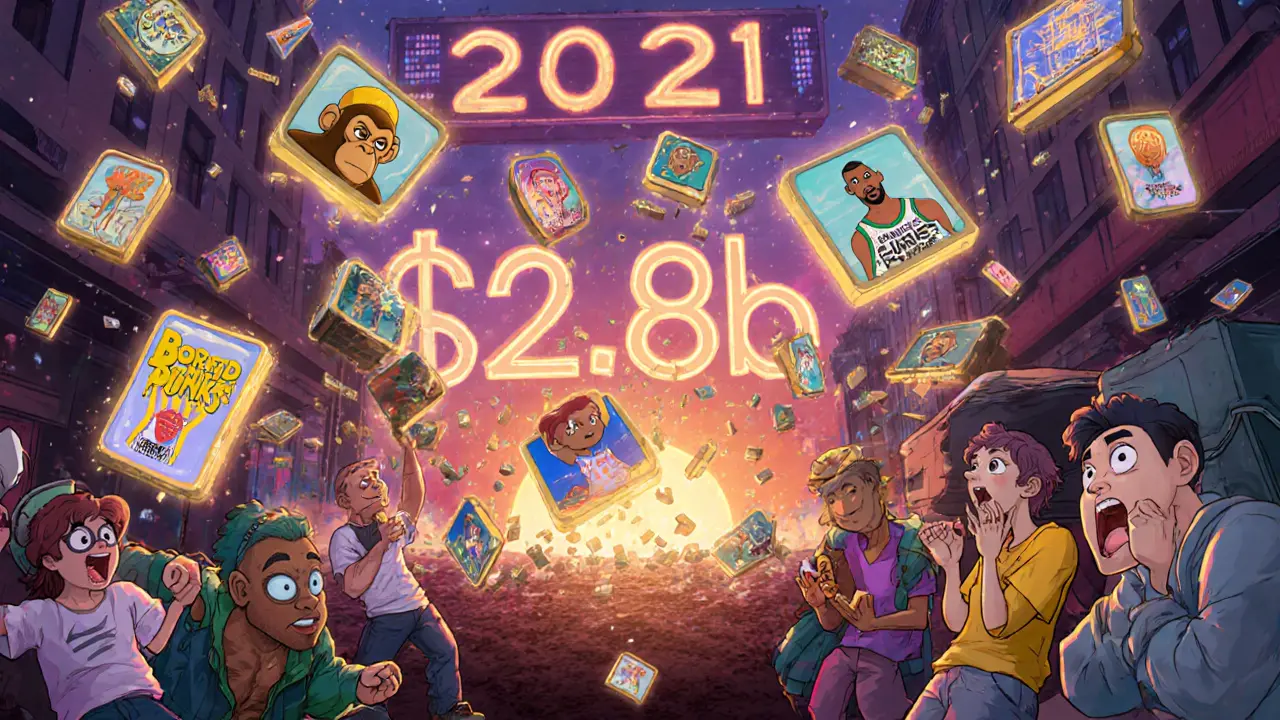
When the NFT bubble burst, a rapid collapse in the value of digital collectibles driven by speculation, hype, and inflated demand. Also known as crypto collectibles crash, it wasn’t just a price drop—it was a full system failure of trust, utility, and real-world value. In 2021, people paid millions for pixelated apes and cartoon cats. By 2023, most of those same NFTs were worth less than the gas fee to transfer them. The crash didn’t happen because people stopped liking art. It happened because the market was built on lies, empty promises, and fake demand.
Behind the scenes, NFT valuation, the flawed process of assigning worth to digital assets based on hype, celebrity endorsements, and artificial scarcity was never grounded in anything real. No one cared about the art. They cared about flipping it before the next sucker bought in. Projects like Bored Ape Yacht Club and CryptoPunks got rich from floor price games and insider sales. Meanwhile, thousands of other NFTs—those with no roadmap, no team, no utility—were just digital graffiti with a blockchain label. When the money stopped flowing, the whole structure collapsed like a house of cards.
And then came the NFT scams, fraudulent projects designed to steal funds under the guise of innovation, often with fake teams, doctored analytics, and rug pulls. Countless users lost life savings to NFTs that vanished overnight—no warning, no refund, no explanation. The SEC didn’t step in until after the damage was done. Exchanges that once pushed NFTs as the future of ownership quietly shut down their marketplaces. Even big names like OpenSea saw trading volume drop over 90%.
But here’s the truth most people still miss: the NFT bubble didn’t kill NFTs. It killed the grifters. The ones with real utility—like ticketing for concerts, membership access to exclusive communities, or proof of ownership for physical goods—are still around. Some even grew stronger. The difference? They stopped pretending to be investments. They became tools. The survivors learned one thing: if your NFT doesn’t do something useful, it’s just a JPEG with a blockchain stamp.
What’s left after the crash? Fewer projects. Fewer hype cycles. Fewer people buying on FOMO. But also, clearer signals. Real teams. Real use cases. And a market that finally cares about what the asset actually does—not just how much it cost last week. The NFT bubble burst didn’t end digital ownership. It just cleaned house.
Below, you’ll find real breakdowns of projects that died, scams that got exposed, and the few NFTs that actually delivered on their promises. No fluff. No hype. Just what happened, why it mattered, and what to avoid next time.