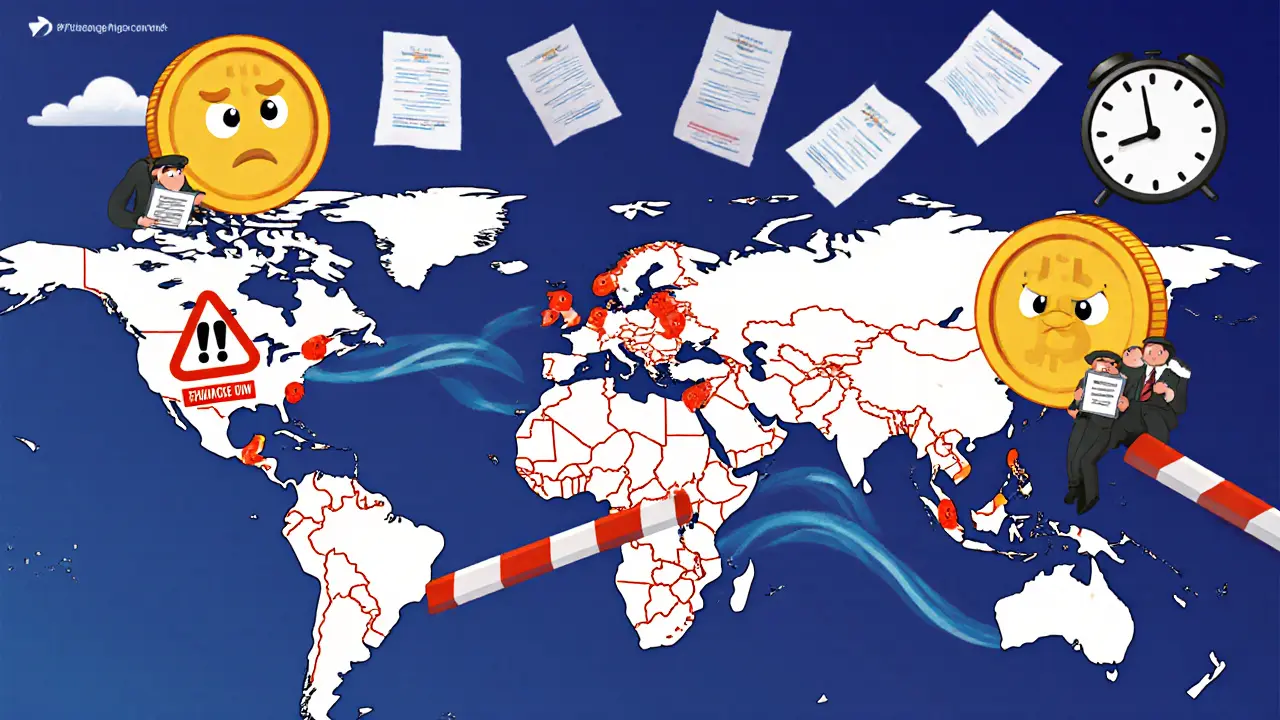
Greylist Countries: What They Are and How They Impact Crypto and Finance
When a country ends up on the greylist, a list of nations under increased monitoring by the Financial Action Task Force for weak anti-money laundering and counter-terrorist financing controls. Also known as FATF greylist, it signals that the country has serious gaps in its financial oversight — not yet a blacklist, but close enough to trigger red flags across global banks and crypto platforms. Being on this list doesn’t mean a country is illegal — it means its systems are too easy to exploit. And for anyone trading crypto, sending money abroad, or running a business that touches international finance, that’s a big deal.
Why does this matter to crypto users? Because exchanges like Coinbase, Kraken, and Binance don’t operate in greylisted countries without heavy restrictions. They often block deposits, freeze accounts, or refuse to list tokens tied to those regions. Why? Banks that process fiat on-ramps — the bridges between real money and crypto — refuse to work with firms that touch greylisted jurisdictions. It’s not about politics; it’s about compliance. If a crypto exchange gets caught processing transactions from a greylisted country, it risks losing its own licenses. That’s why you see services like crypto exchange licensing in Singapore or New Zealand’s Dasset collapse — they’re trying to stay clean in a world where regulators watch every move. The FATF greylist, a global standard for financial crime prevention led by the intergovernmental Financial Action Task Force directly shapes which crypto projects get listed, which wallets get blocked, and who can even sign up.
It’s not just about trading. If you’re trying to claim an airdrop, use a DeFi protocol, or even send crypto to a friend overseas, you might hit a wall if either end is linked to a greylisted country. The AML compliance, the set of rules and procedures financial institutions must follow to detect and prevent money laundering requirements aren’t optional — they’re enforced through real penalties. That’s why the financial sanctions, restrictions placed on individuals, companies, or entire nations to pressure them to change harmful behavior tied to greylist status ripple through every layer of crypto. You can’t ignore it. Even if you’re not in a greylisted country, your transaction might still get flagged if it passes through one. That’s why platforms like UpdatePrime track these changes — because what’s legal today might be blocked tomorrow.
Below, you’ll find real cases showing how greylist status has crashed projects, shut down exchanges, and confused users trying to participate in airdrops or IDOs. Some of these stories aren’t about scams — they’re about systems collapsing under regulatory pressure. Others are about people getting locked out because their country got added to the list last month. This isn’t theoretical. It’s happening right now — and if you trade crypto, you need to know how it works.