FATF Greylist: What It Means for Crypto Exchanges and Global Compliance
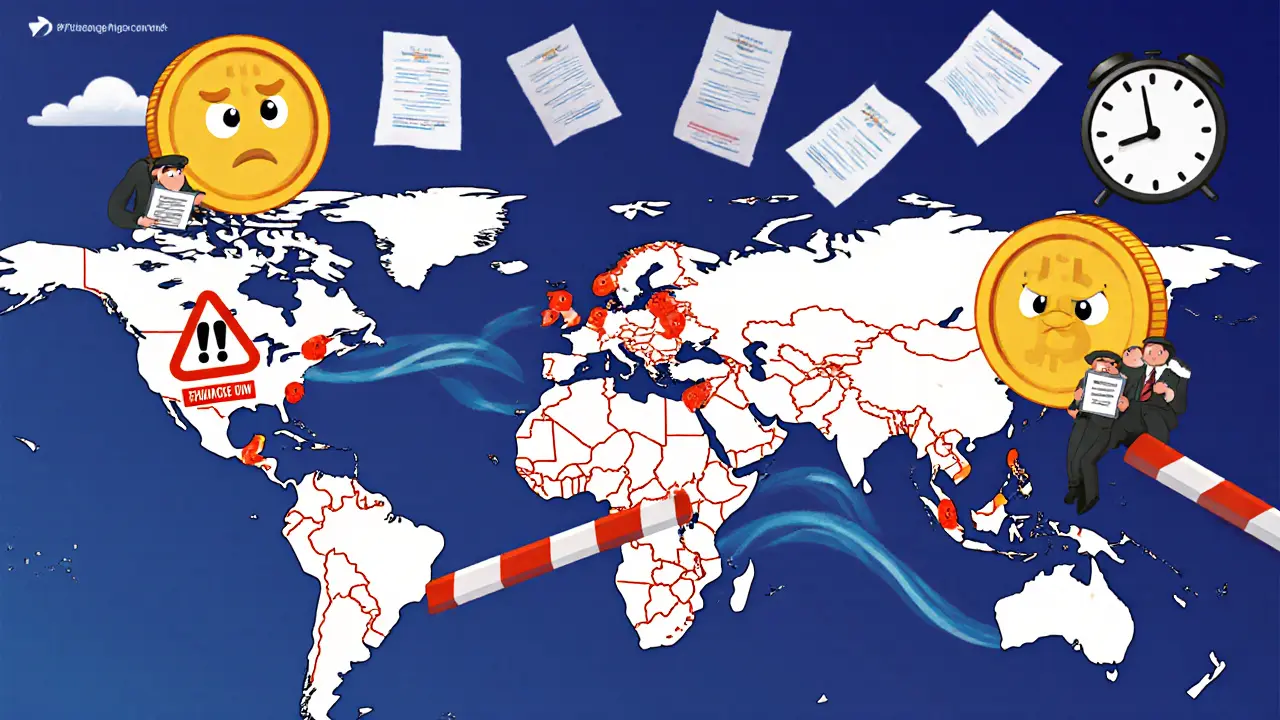
When you hear FATF greylist, a list of countries under increased monitoring by the Financial Action Task Force for weak anti-money laundering and counter-terrorist financing controls. Also known as jurisdictions under increased monitoring, it's not a blacklist—it's a warning sign that can make it harder for crypto businesses to operate globally. Countries on this list aren’t banned, but they’re flagged for having gaps in their financial oversight. That means banks and exchanges outside those countries often refuse to process transactions involving them. For crypto platforms, this isn’t just a paperwork issue—it’s a survival problem.
The FATF recommendations, global standards for combating financial crime that include rules for virtual asset service providers require exchanges to know who their customers are, track where money moves, and report suspicious activity. If a country isn’t enforcing these rules, its exchanges get cut off from the global financial system. That’s why Singapore, for example, pushed hard to meet FATF standards before launching its 2025 licensing rules. Exchanges there now need real AML teams, capital reserves, and transparent ownership—none of which are optional if you want to work with banks or international users.
And it’s not just about big exchanges. Even small DeFi platforms or wallet providers can get caught in the crossfire. If a user from a FATF greylisted country tries to swap tokens on a platform that doesn’t screen them, the whole platform risks being labeled non-compliant. That’s why so many airdrops and IDOs in 2025 explicitly exclude users from countries like Iran, North Korea, or Myanmar—they’re not being picky, they’re protecting themselves. The AML compliance, the set of procedures financial institutions follow to prevent money laundering and terrorist financing isn’t a buzzword—it’s the line between staying open and shutting down overnight.
What you’ll find in the posts below are real examples of how this plays out. From Singapore’s strict licensing rules to exchanges like Dasset that collapsed after failing to meet global compliance standards, these aren’t theoretical risks. They’re happening now. You’ll also see how projects try to dodge these rules—and why most of them fail. Whether you’re running a business, trading crypto, or just trying to understand why some platforms won’t let you in, the FATF greylist is the hidden force shaping your experience. Let’s look at what’s really going on behind the scenes.