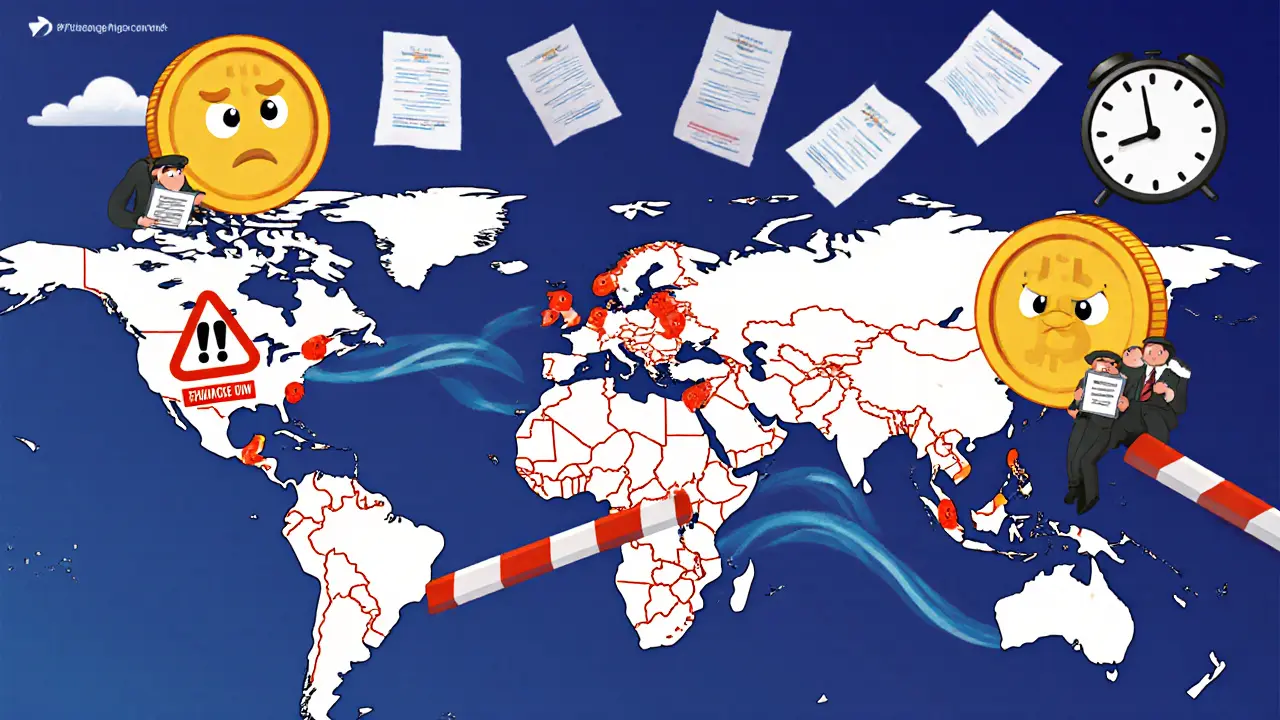
FATF Compliance: What It Means for Crypto Exchanges and Users
When you hear FATF compliance, the global standard set by the Financial Action Task Force to stop money laundering and terrorist financing in financial systems. Also known as crypto AML rules, it's not just paperwork—it’s what keeps some exchanges alive and shuts down others overnight. If a platform claims to be "regulated" but doesn’t follow FATF, it’s not regulated at all. It’s a ghost.
FATF compliance isn’t optional for any exchange that wants to work with banks, payment processors, or major markets. It forces platforms to know who their users are (KYC), track where money moves (transaction monitoring), and share that data with other platforms (the FATF travel rule, the requirement for crypto services to share sender and receiver info on transfers over $1,000). That’s why Singapore’s MAS requires full licensing—because without FATF, there’s no trust. And without trust, banks cut ties. Look at Dasset in New Zealand: it wasn’t hacked. It was frozen because it couldn’t prove it followed the rules.
This isn’t just about exchanges. If you’re using DeFi, swapping tokens on Uniswap, or holding tokens like AXT or GEAR, FATF compliance affects you too. Projects that ignore it don’t get listed on major exchanges. They don’t get banking access. Their users get locked out. Even airdrops like the IguVerse NFT scam or the fake LARIX mining campaign thrive in the gray zones where FATF doesn’t reach—because they don’t have to answer to anyone. Meanwhile, platforms like those in Singapore must report every large transfer, flag suspicious wallets, and keep records for five years. That’s the cost of being legal.
And here’s the truth: if a crypto project doesn’t mention FATF, AML, or KYC at all, it’s not a project—it’s a gamble. The tokens might be cheap, but the risk isn’t just price drops. It’s losing access to your funds because the platform got shut down. Or worse—your wallet gets flagged because someone else used it for illegal activity, and now you’re stuck in a 6-month investigation with no way out.
That’s why the posts below matter. They don’t just tell you what’s trending. They show you which platforms actually follow the rules, which ones are hiding in plain sight, and which airdrops are just traps waiting for the next wave of users who didn’t ask, "Is this compliant?" You’ll find deep dives on Singapore’s licensing rules, the real story behind failed exchanges, and why some "crypto" tokens have no business existing in a world with FATF. This isn’t theory. It’s what keeps your money safe—or takes it away.