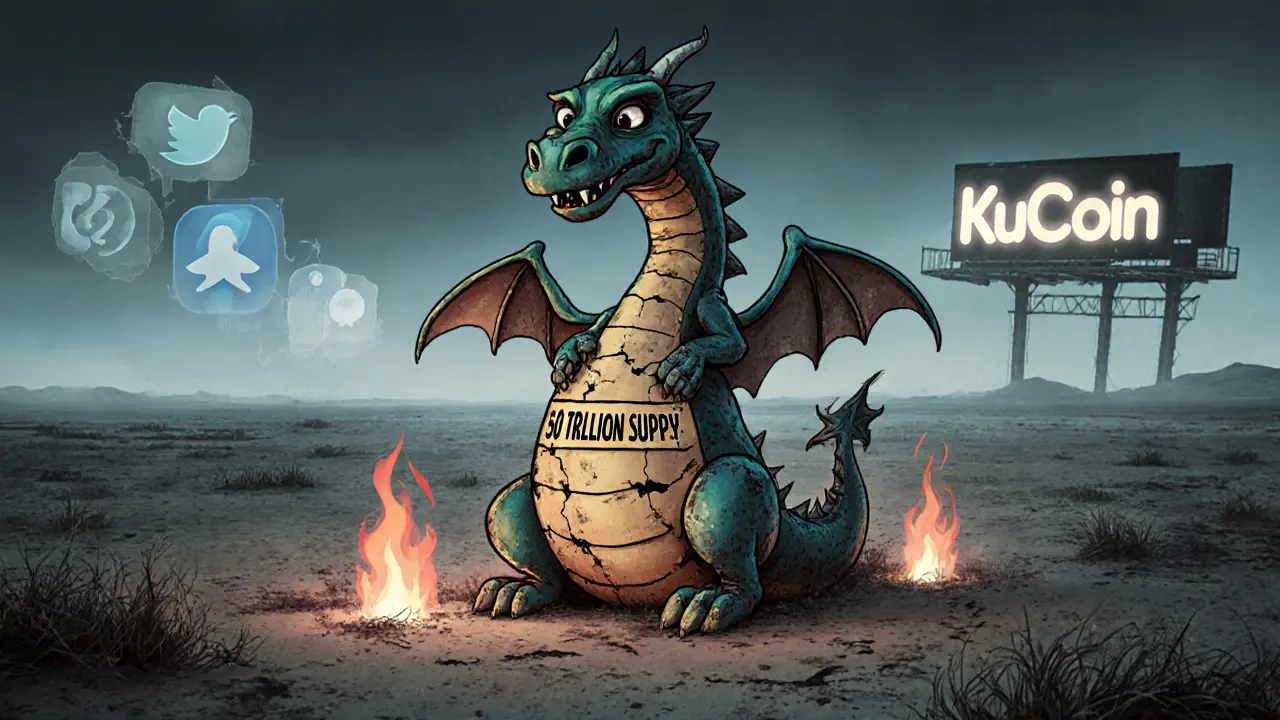
DragonKing coin: What It Is, Risks, and Why It's Not What You Think
When you hear DragonKing coin, a meme-based cryptocurrency with no official team, whitepaper, or blockchain utility. Also known as DKING, it's one of hundreds of tokens that pop up on social media with flashy promises but zero real infrastructure. Unlike Bitcoin or Ethereum, DragonKing coin doesn’t solve a problem, enable a network, or back its value with real-world use. It’s a speculative bet on hype — and most of those bets end in losses.
It’s part of a bigger pattern: meme coins, crypto assets built on internet jokes, not technology. Examples like UPDOG or AAAHHM share the same DNA — zero supply transparency, no development roadmap, and price moves driven entirely by TikTok trends and Discord hype. These tokens often rely on fake airdrops, bots, and paid influencers to create the illusion of demand. The tokenomics, how supply and distribution are structured for DragonKing coin? Almost certainly designed to enrich early buyers and exit scams. If you can’t find a verified contract address on Etherscan or BscScan, it’s not a coin — it’s a trap.
And you’ll see this over and over in the posts below: projects that vanish after launch, airdrops that never happen, exchanges that don’t exist. DragonKing coin fits right in. It doesn’t have a team, a product, or even a working website. It has a ticker symbol, a Twitter account with 10K followers, and a chart that spikes every time someone posts a meme about dragons winning the market. That’s it.
So why do people still buy it? Because they think they’re getting in early. But in crypto, early doesn’t mean smart — it often means first to lose money. The real winners aren’t the last people buying at the peak. They’re the ones who walked away before the hype started. If you’re wondering whether DragonKing coin is worth your time, the answer is simple: it’s not. Look for projects with open-source code, active developers, and real utility. Skip the dragons. They’re not flying — they’re falling.
Below, you’ll find real stories about tokens that looked like opportunities but turned out to be ghosts, scams, or dead ends. No fluff. No promises. Just what actually happened.