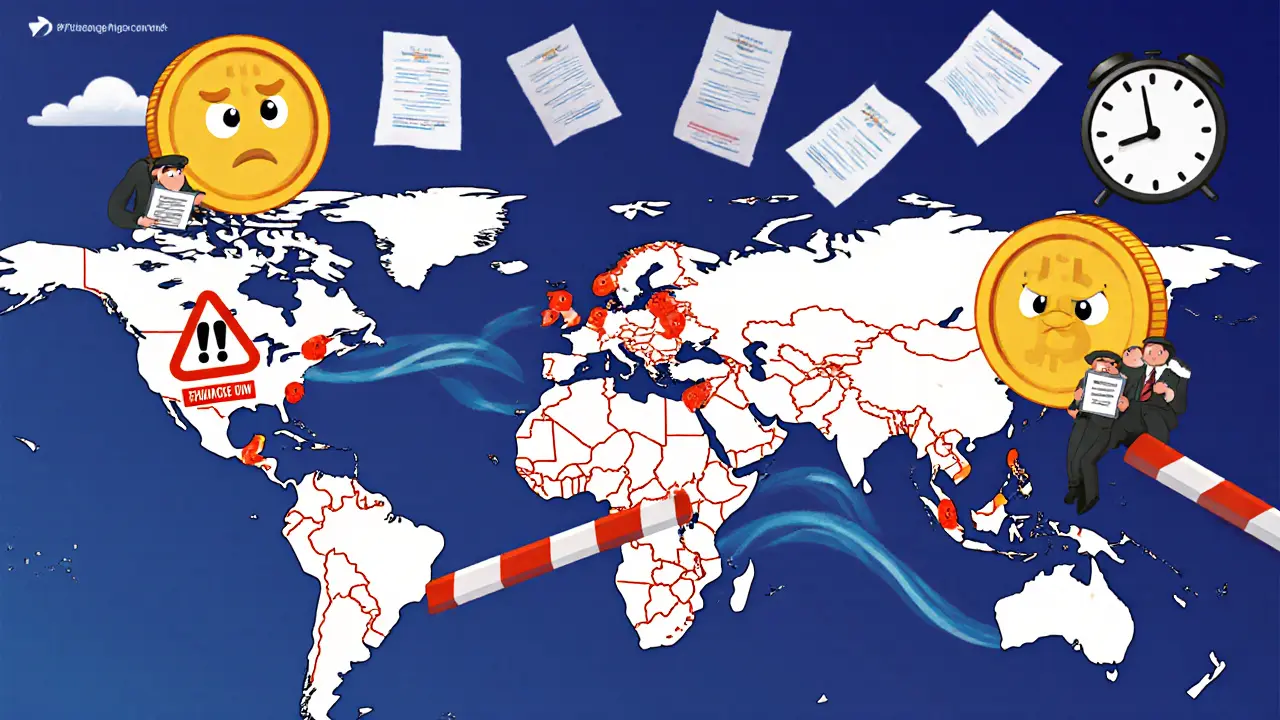
Cryptocurrency Regulation: What You Need to Know in 2025
When it comes to cryptocurrency regulation, the rules that govern how digital currencies are traded, taxed, and licensed by governments. Also known as crypto compliance, it’s no longer optional—it’s the difference between using a platform that lasts and one that vanishes overnight. In 2025, if you’re trading, investing, or even just holding crypto, you’re already under regulation—even if you didn’t sign up for it.
Take Singapore’s MAS crypto regulations, the strict licensing system enforced by the Monetary Authority of Singapore for all crypto exchanges. Also known as DTSP license, it forces platforms to prove they have enough cash, clean anti-money-laundering systems, and real human staff. If they don’t, they can’t operate. That’s why some exchanges shut down and others had to rebuild from scratch. This isn’t just bureaucracy—it’s a filter that separates real businesses from fly-by-night operations. Meanwhile, in India, the government allows you to hold crypto but bans businesses from accepting it as payment. Also known as crypto acceptance India, the law says you can trade, but you can’t pay for groceries with Bitcoin. Why? Because the tax system and financial oversight are still catching up, and the government doesn’t trust crypto to be stable or traceable. And if you’re a U.S. citizen planning to move abroad? U.S. exit tax crypto, a rule that treats your crypto like property you’re selling when you leave the country. Also known as Section 877A crypto, it means you could owe thousands in taxes just for packing your bags—even if you never sold a single coin.
These aren’t isolated cases. They’re part of a global shift. Countries are no longer asking if crypto should be regulated—they’re asking how fast they can do it without killing innovation. That’s why you’ll find posts here about licensing in Singapore, scams hiding behind fake airdrops, and why some tokens have zero supply because the team never intended to launch anything real. You’ll see how regulation isn’t just about laws on paper—it’s about who gets to operate, who gets left behind, and who gets burned because they didn’t check the fine print.
Some of these posts expose fake exchanges like RocketSwap and Dasset that vanished after taking users’ money. Others warn you about airdrops that never happened—like IguVerse’s World Cup NFTs or MetaGear’s mysterious GEAR token. These aren’t just stories about failed projects. They’re lessons in how regulation—or the lack of it—creates the perfect environment for fraud. If a project doesn’t answer to any government, any bank, or any audit, it’s not a revolution. It’s a gamble with your money.
What you’ll find below isn’t a list of headlines. It’s a map. A map of where crypto regulation actually matters, who’s enforcing it, and what happens when you ignore it. Whether you’re trying to start a business that accepts crypto, avoid a tax trap, or just pick a safe exchange, the answers are here—not in theory, but in real cases, real failures, and real rules that changed people’s lives overnight.