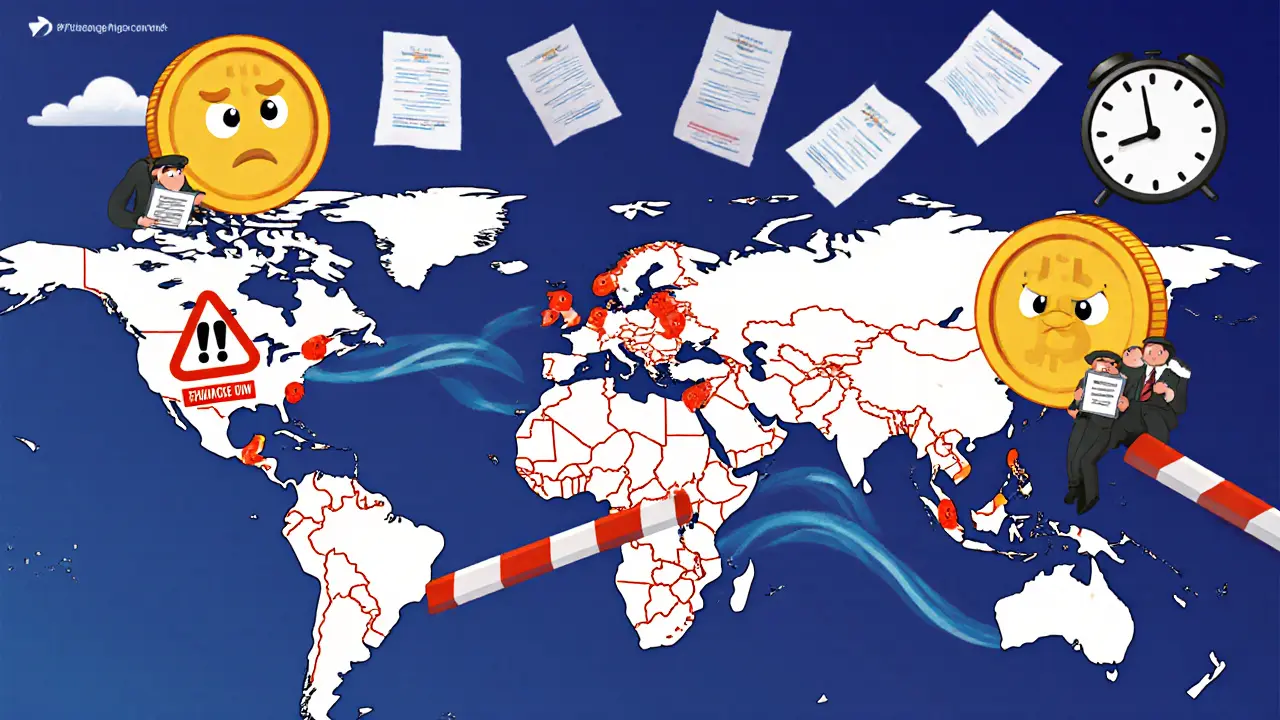
Crypto Restrictions: What’s Banned, Blocked, and Legally Risky in 2025
When you hear crypto restrictions, government rules that limit how cryptocurrency can be used, traded, or issued. Also known as crypto regulations, these rules are no longer just about taxes—they’re about control, compliance, and catching scammers before they vanish. In 2025, countries aren’t just watching crypto—they’re shutting it down, licensing it, or making it so expensive to use that it’s practically dead.
Crypto exchange licenses, official permits required for platforms to operate legally. Also known as MAS crypto regulations, these are now the gatekeepers. In Singapore, you can’t run an exchange without one. In India, businesses can’t even accept crypto as payment—even if holding it is fine. And in the U.S., the exit tax treats crypto like property you’re selling when you leave the country. These aren’t suggestions. They’re legal traps waiting for the unprepared. Meanwhile, crypto airdrop scams, fake token distributions designed to steal personal data or funds. Also known as crypto fraud, they’re exploding because people think free tokens mean free money. But look closer: SHREW was never an airdrop—it was an ICO that died. IguVerse promised NFTs and vanished. MetaGear has zero tokens in circulation but still gets search traffic. These aren’t mistakes. They’re engineered to look real until it’s too late.
It’s not just about avoiding scams. It’s about understanding where crypto still works—and where it’s already dead. Dasset, New Zealand’s first compliant exchange, collapsed after its bank froze withdrawals. RocketSwap doesn’t exist. MM Finance has no supply. PureFi’s airdrop ended in 2022, but people still search for it. The market isn’t just volatile—it’s full of ghosts. And if you don’t know the rules, you’re not just risking money—you’re risking legal trouble.
What you’ll find below isn’t a list of prices or hype. It’s a map of the legal and practical minefields. From Singapore’s strict licensing rules to India’s payment bans, from failed airdrops to phantom exchanges—each post cuts through the noise. You’ll see what’s real, what’s rigged, and what’s simply gone. No fluff. No guesses. Just what’s actually happening in 2025, so you don’t get left behind—or worse, sued.