
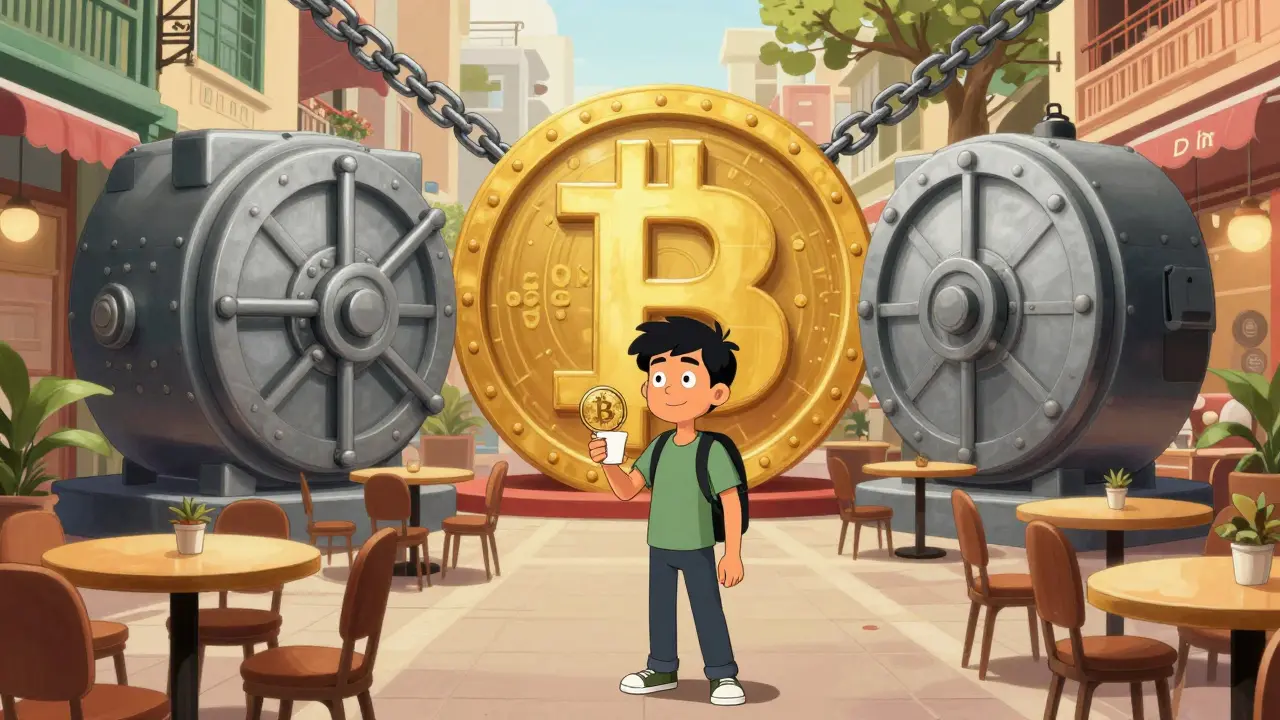
When you hear about Vietnam and cryptocurrency, you might think of a country where people trade Bitcoin in cafes or use Ethereum to pay for food. That’s true - but there’s a lot more happening behind the scenes. Since June 2025, Vietnam has officially recognized Bitcoin and Ethereum as virtual assets, not currency. That change didn’t come from pressure or global trends. It came from a deliberate, step-by-step plan by the State Bank of Vietnam to control, not ban, digital money.
From Ban to License: How Vietnam Changed Its Mind
Just a year ago, the State Bank of Vietnam made it clear: no banks could process crypto transactions. No exchanges could operate legally. No one could use Bitcoin to buy a phone or pay rent. That changed with the Law on Digital Technology Industry passed in June 2025. Suddenly, owning, trading, and inheriting crypto became legal. But here’s the twist - you still can’t use it to pay for coffee. The bank didn’t open the floodgates. It built a locked gate with a very specific key. Only Vietnamese companies can issue virtual assets. And those assets? They can’t be backed by US dollars, euros, or even Vietnamese dong. They must be tied to real things - like gold, real estate, or carbon credits. This isn’t about freedom. It’s about control.The Five-Year Experiment: What’s Really Happening
In September 2025, the State Bank launched a five-year pilot program. It’s not a law. It’s a test. Five companies will get licenses to run crypto exchanges. That’s it. No more. No less. And to even apply, a company needs at least 10 trillion Vietnamese dong in capital - around $379 million. That’s more than most banks in Southeast Asia have in reserves. To qualify, shareholders must come from established industries: commercial banks, insurance firms, securities companies, or tech giants. They also need two full years of profits under their belt. No startups. No foreign investors. No hedge funds. This isn’t designed to attract Coinbase or Binance. It’s designed to keep crypto trading inside Vietnam’s financial bubble. And here’s the real kicker: starting in 2026, every trade on these licensed exchanges must happen in Vietnamese dong. No BTC/USDT pairs. No ETH/EUR. Just BTC/VND. That means every buyer and seller is forced to convert their crypto into local currency - giving the State Bank full visibility into every transaction.Why No One Has Applied Yet
As of October 2025, not a single company had submitted a license application. Not one. Why? The requirements are so strict, even Vietnam’s biggest financial players are hesitating. The capital needed is enormous. The compliance burden is heavy. And if you mess up? Fines can reach up to 5% of annual revenue. Meanwhile, informal trading is booming. Binance P2P is one of the most active markets in Southeast Asia. People are still buying Bitcoin with cash, bank transfers, and even mobile wallets. The government knows this. That’s why they didn’t shut it down. They’re letting it run - while they build a legal version that’s slower, safer, and fully monitored.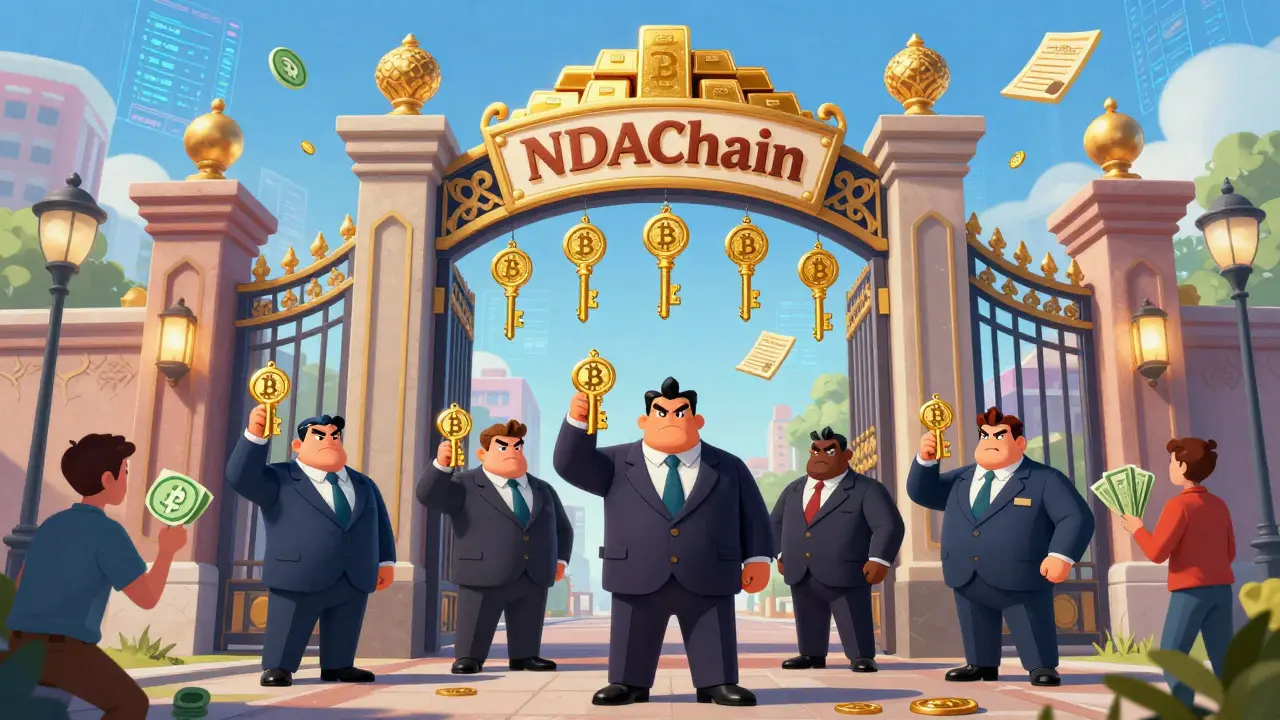
NDAChain: Vietnam’s Secret Blockchain
While the world watches crypto exchanges, Vietnam quietly launched NDAChain in July 2025. It’s not a public blockchain like Ethereum. It’s a permissioned system - controlled entirely by the government. Think of it as a digital ledger for bonds, carbon credits, and land titles. Every transaction is recorded, every asset tokenized, and every change tracked. This isn’t about decentralization. It’s about control. NDAChain lets the State Bank see what’s happening in the digital economy without letting anyone else run it. It’s their way of saying: we’ll use blockchain - but only if we’re the ones holding the keys.Why Vietnam Is Still a Crypto Leader
Despite all the restrictions, Vietnam ranked fourth in the 2025 Chainalysis Global Crypto Adoption Index. Over 20% of tech-savvy Vietnamese own digital assets. That’s higher than Japan, Canada, or Australia. How? Because people don’t wait for permission. They find ways. The government knows this. That’s why their policy isn’t about stopping crypto. It’s about redirecting it. They want to capture the tax revenue. They want to keep money flowing through Vietnamese banks. They want to prevent capital flight. And they want to make sure that when Bitcoin rises, Vietnam’s economy rises with it.
How This Compares to Neighbors
Compare this to Singapore. There, stablecoins are legal. You can trade BTC/USD. You can get licensed in weeks. Foreign firms are setting up offices. Vietnam? Not even close. Singapore is building a global crypto hub. Vietnam is building a national experiment. The Philippines allows crypto payments through licensed platforms. Thailand lets banks offer crypto services. Vietnam? No payments. No foreign exchanges. No stablecoins. It’s the most restrictive legal framework in Southeast Asia - even though adoption is among the highest.What This Means for You
If you’re a Vietnamese citizen: you can now legally own Bitcoin. You can trade it on a licensed exchange - if one ever launches. You can’t use it to pay bills, but you can sell it for dong and buy a house. If you’re a foreign investor: you can’t trade directly. You must go through a Ministry of Finance-approved Crypto Asset Service Provider (CASP). That’s rare. That’s slow. And right now, there aren’t any. If you’re a business: don’t expect to open a crypto exchange in Vietnam anytime soon. The capital is too high. The rules are too tight. The market is too controlled.The Bigger Picture
The State Bank of Vietnam isn’t against crypto. It’s against chaos. It’s against losing control of money. It’s against unregulated flows that could destabilize the economy. Their policy isn’t about stopping innovation. It’s about making sure innovation serves the state - not the other way around. The five-year pilot will end in 2030. What happens then? No one knows. But if the pilot works - if tax revenue grows, if capital stays in Vietnam, if fraud stays low - expect broader access. If it fails? Expect tighter rules. Right now, Vietnam is walking a tightrope. High adoption. Low access. Strict rules. Real demand. It’s not the most exciting crypto story. But it might be the most honest one.Is Bitcoin legal in Vietnam?
Yes, Bitcoin and other cryptocurrencies are legal as virtual assets under Vietnam’s Law on Digital Technology Industry, passed in June 2025. You can own, trade, and inherit them. However, they cannot be used as payment for goods or services, and financial institutions are still banned from processing crypto transactions.
Can I buy Bitcoin on a Vietnamese exchange?
Not yet. Although five crypto exchange licenses were approved under a 2025 pilot program, no company has applied for one as of late 2025. The requirements - including a minimum capital of 10 trillion VND and ownership restrictions - have deterred applicants. Trading is still done informally through P2P platforms like Binance P2P.
Why can’t I trade BTC/USDT in Vietnam?
Vietnam bans fiat-backed stablecoins like USDT from being issued or traded on licensed platforms. The State Bank requires all crypto trades to be denominated in Vietnamese dong (VND) to maintain monetary control. This prevents capital outflows and ensures all transactions are visible to regulators.
Are foreign crypto companies allowed in Vietnam?
No. Only Vietnamese-owned companies can apply for exchange licenses. Foreign firms cannot operate directly. Foreign investors can only access crypto assets through Ministry of Finance-approved Crypto Asset Service Providers (CASPs), and none have been established yet as of early 2026.
What is NDAChain?
NDAChain is Vietnam’s government-run, permissioned blockchain launched in July 2025. It’s not public or decentralized. It’s used to tokenize assets like bonds, carbon credits, and property titles. The State Bank uses it to monitor digital asset activity, improve data security, and prevent fraud - all while keeping full control.
Why is Vietnam’s crypto adoption so high despite restrictions?
Vietnam has one of the highest crypto adoption rates globally - fourth in the 2025 Chainalysis Index - because of strong tech literacy, high mobile internet use, and distrust in traditional banking. People use P2P platforms to buy Bitcoin with cash or bank transfers. The government hasn’t stopped this, because it’s easier to regulate than ban.
Will Vietnam allow crypto payments in the future?
It’s unlikely in the near term. The State Bank of Vietnam has made it clear that allowing crypto as payment would threaten monetary policy and financial stability. Their goal is to integrate crypto as an investment asset - not a currency. Any future change would require major revisions to the 2025 legal framework.
How does Vietnam’s policy compare to Singapore’s?
Singapore allows stablecoins, foreign crypto firms, and USD trading pairs. It has a fast-track licensing system and actively invites global exchanges. Vietnam does the opposite: only VND trading, no stablecoins, no foreign ownership, and a 10-trillion-VND capital barrier. Singapore wants to be a global hub. Vietnam wants to be a controlled experiment.
Lauren Brookes
February 15, 2026 AT 07:44Most places panic and ban. Vietnam says, 'We'll let it exist, but on our terms.' That takes guts. And patience.
jennifer jean
February 15, 2026 AT 18:29They're not stopping people from using crypto - they're just making sure it doesn't break the economy. Like letting your kid ride a bike but making them wear a helmet. No drama. No panic. Just control with care.
Sasha Wynnters
February 16, 2026 AT 15:40It’s not crypto freedom. It’s crypto feudalism. And honestly? It might work.
Charrie VanVleet
February 17, 2026 AT 09:25Yeah, the rules are tight. Yeah, no one’s applying yet. But that’s because they’re waiting to see if the system actually works. And if it does? This could be a blueprint for other emerging economies. Not flashy. Not sexy. But deeply practical.
Scott McCrossan
February 18, 2026 AT 00:14Meanwhile, people are still buying BTC with cash under tables. This isn’t policy. It’s theater. A slow-motion train wreck dressed in regulatory silk.
Rajib Hossaim
February 18, 2026 AT 18:22Beth Erickson
February 18, 2026 AT 23:21Ruby Ababio-Fernandez
February 19, 2026 AT 03:43Jenn Estes
February 20, 2026 AT 08:16They’re not innovating. They’re over-engineering. And now they’re stuck with a system that’s too expensive, too slow, and too paranoid to ever work. Congrats. You made crypto boring.
Jeremy Fisher
February 20, 2026 AT 19:37Think about it: in a culture where community and order matter more than individual freedom, this makes total sense. You don’t let your neighbor drive a car without a license. Why should crypto be any different?
Compare it to the U.S. - we let anyone start a crypto exchange, let stablecoins float freely, and then wonder why inflation’s a mess. Vietnam? They’re building a system that won’t break. Even if it’s slow. Even if it’s boring. Even if it’s not sexy.
That’s not weakness. That’s wisdom. It’s not about being first. It’s about being last - and still standing.
Anandaraj Br
February 21, 2026 AT 03:33This whole thing is a joke. A sad, overcomplicated, government-run circus. They’re not controlling crypto. They’re just delaying the inevitable. And when it blows up? They’ll be the ones with egg on their face. Mark my words.
AJITH AERO
February 22, 2026 AT 20:04Meanwhile, my uncle in Hanoi bought BTC with cash from a guy in a motorbike helmet last week. This policy? It’s not regulation. It’s performance art.
Angela Henderson
February 24, 2026 AT 05:42It’s not perfect. But it’s honest. And honestly? That’s more than most governments do.
Geet Kulkarni
February 24, 2026 AT 15:14