

You have $1,000 in your wallet. The price of Bitcoin is surging. Do you buy it outright and wait for the moon? Or do you use that same $1,000 as collateral to control $10,000 worth of Bitcoin, hoping to multiply your gains tenfold? This is the core dilemma facing every trader entering the digital asset space. The choice isn't just about which button to click; it's about choosing between two fundamentally different financial universes: Spot Trading and Futures Trading.
In 2026, with mature exchanges and sophisticated tools available globally, understanding this distinction is no longer optional-it’s survival. One path offers ownership and peace of mind. The other offers speed, leverage, and the potential for rapid wealth-or rapid ruin. Let’s break down exactly how they work, where they fail, and which one actually fits your personality.
The Core Difference: Ownership vs. Obligation
At its simplest level, Spot Trading is buying an asset like you would buy a coffee or a car. You pay the current market price, and you receive the asset immediately (or within a standard settlement period like T+2). When you buy Ethereum on the spot market, you own that Ethereum. It sits in your wallet. You can send it to a friend, stake it for rewards, or hold it for ten years while forgetting the password. The risk is straightforward: if the price drops, your asset is worth less. If it rises, it’s worth more. Your maximum loss is capped at the amount you invested.
Futures Trading, however, is not about owning the asset. It is about betting on the future price of the asset. A futures contract is a standardized agreement between two parties to buy or sell an asset at a predetermined price at a specified time in the future. You are not buying Bitcoin; you are signing a contract that says, "I agree to settle the difference between today’s price and the price on December 31st." Most retail traders never take physical delivery of the underlying asset. Instead, positions are cash-settled. This means you profit or lose based on price movement, but you never actually hold the coin.
This structural difference changes everything. In spot trading, you are a holder. In futures trading, you are a speculator or a hedger. There is no expiration date for your spot holdings-you can HODL forever. Futures contracts have strict expiration dates. If you don’t close your position before the deadline, it settles automatically, potentially locking in losses or profits whether you wanted them to or not.
Leverage: The Double-Edged Sword
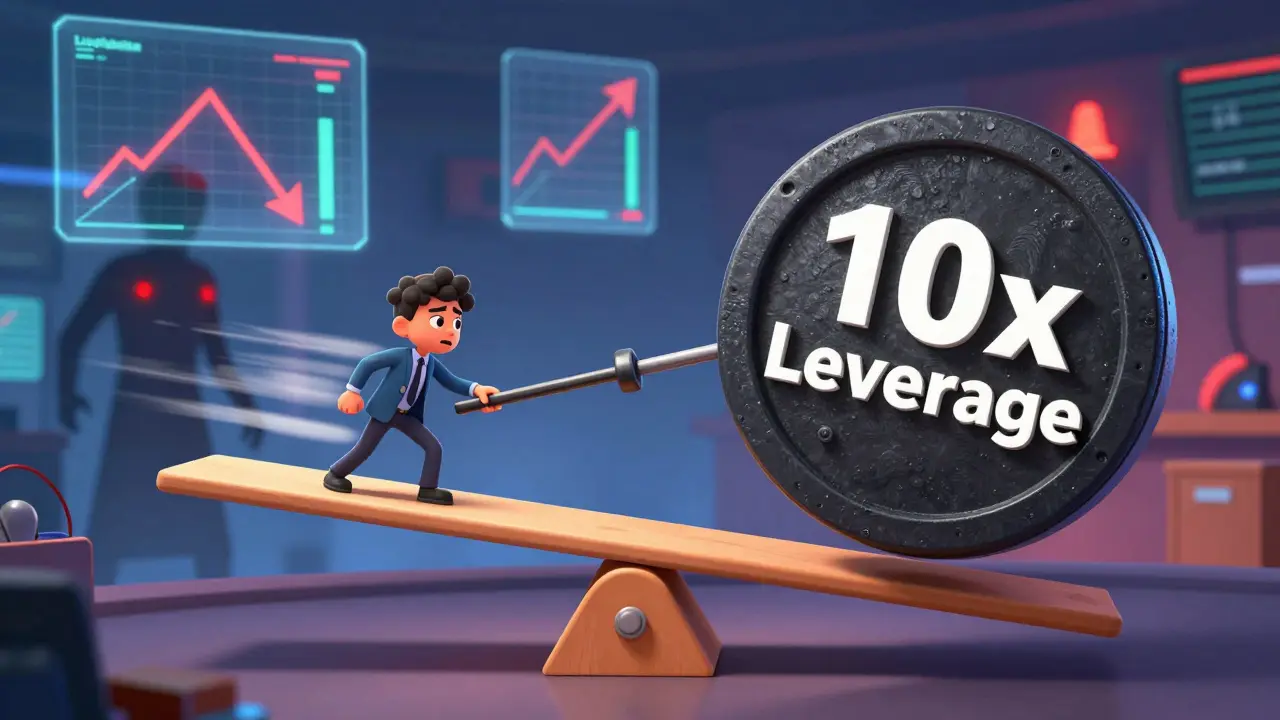
If there is one feature that defines futures trading, it is Leverage. In the spot market, leverage is rare and usually requires complex lending protocols. Typically, you need 100% of the capital to make a trade. To buy 1 BTC at $20,000, you need $20,000.
In the futures market, you only need a fraction of that value, known as Margin. Exchanges allow you to borrow capital against your existing funds. With 10x leverage, you only need $2,000 in margin to control a $20,000 position. With 100x leverage-a common offering on major crypto exchanges-you could control that same $20,000 position with just $200.
This sounds incredible until you look at the math of loss. Leverage amplifies both gains and losses proportionally. If Bitcoin moves up 5%:
- Spot Trader: Makes a 5% profit on their total capital.
- Futures Trader (10x Leverage): Makes a 50% profit on their margin.
- Futures Trader (100x Leverage): Makes a 500% profit on their margin.
Now, flip the script. If Bitcoin drops by 5%:
- Spot Trader: Loses 5% of their portfolio value. They still own the asset.
- Futures Trader (10x Leverage): Loses 50% of their margin.
- Futures Trader (100x Leverage): Is Liquidated. Their entire $200 margin is wiped out because the loss exceeds their collateral. The exchange forcibly closes the position to protect itself from further debt.
Liquidation is the nightmare scenario of futures trading. It happens when the market moves against you enough that your remaining margin falls below the Maintenance Margin requirement. Unlike spot trading, where you can simply "wait it out" during a crash, futures traders must maintain minimum equity levels or face instant execution. This makes futures trading psychologically intense and technically demanding.
Directional Flexibility: Going Long and Short
Another critical divergence lies in how you can make money. In the spot market, the strategy is unilateral: you go Long. You buy low, you sell high. If the market crashes, you cannot profit directly from the decline unless you sell your assets first (which realizes a loss) and hope to buy back lower later. You are dependent on bullish sentiment.
Futures trading is bilateral. You can go long, but you can also go Short. Shorting involves selling a contract you don’t own, expecting the price to drop so you can buy it back cheaper later. This allows experienced traders to profit in bear markets. During the volatile corrections of 2024 and 2025, many spot holders watched their portfolios shrink by 30%, while skilled futures traders doubled their accounts by correctly shorting overbought rallies.
This flexibility makes futures essential for Hedging. Large institutional holders or miners might own significant amounts of Bitcoin (spot). If they fear a short-term price drop, they can open a short futures position. If the price drops, the loss on their spot holdings is offset by the profit on their short futures contract. This risk management tool is unavailable to pure spot traders without engaging in complex lending markets.
Pricing Mechanics: Spot Price vs. Futures Basis
Why is the price of a Bitcoin futures contract often slightly higher or lower than the current spot price? This difference is called the Basis. The futures price is not arbitrary; it is calculated based on the spot price plus the cost of carry. This includes interest rates, storage costs (minimal for crypto), and expected dividends or yield.
When the futures price is higher than the spot price, the market is in Contango. This is typical in bull markets, reflecting optimism that prices will rise. When the futures price is lower than the spot price, the market is in Backwardation. This often signals extreme bearishness or immediate supply shortages.
Traders monitor the basis closely. A widening contango can indicate overheating in the market. Arbitrageurs exploit these differences by buying spot and selling futures simultaneously to lock in risk-free profits. For the average trader, understanding basis helps gauge market sentiment. If everyone is aggressively going long on futures, driving the basis extremely high, it may be a contrarian signal that a correction is imminent.
| Feature | Spot Trading | Futures Trading |
|---|---|---|
| Ownership | Direct ownership of asset | Contractual obligation (no asset ownership) |
| Leverage | None (typically 1x) | High (up to 100x or more) |
| Risk Profile | Lower (max loss = investment) | Higher (risk of liquidation & debt) |
| Direction | Long only (buy low, sell high) | Bilateral (Long and Short) |
| Expiration | None (hold indefinitely) | Fixed date (must settle or roll over) |
| Costs | Trading fees | Trading fees + Funding rates (perpetuals) |
| Best For | Long-term investors, beginners | Speculators, hedgers, active traders |
Fees and Hidden Costs: Funding Rates
While spot trading charges a simple maker/taker fee per transaction, futures trading introduces additional complexity, particularly with Perpetual Contracts. Unlike traditional futures with set expiry dates, perpetuals never expire. But how do they stay anchored to the spot price? Through the Funding Rate.
Every few hours (usually every 8 hours), traders on one side of the market pay traders on the other side. If the majority of traders are long (bullish), longs pay shorts. If the majority are short (bearish), shorts pay longs. This mechanism incentivizes the futures price to converge with the spot price.
For active traders, funding rates can eat into profits significantly. Holding a large leveraged position overnight during a highly bullish market might mean paying 0.01% to 0.1% every 8 hours. Over a week, this compounds. Spot traders avoid this entirely. You hold your asset, and you pay nothing unless you move it.
Who Should Use Which?
There is no universally "better" method. The right choice depends on your experience, psychology, and goals.
Choose Spot Trading If:
- You are new to cryptocurrency and want to understand basics without complexity.
- Your goal is long-term wealth accumulation (holding for years).
- You want to participate in network effects (staking, governance voting).
- You have low tolerance for stress and sudden account wipes.
- You prefer simplicity: buy, store securely, forget.
Choose Futures Trading If:
- You have advanced knowledge of technical analysis and risk management.
- You want to profit from both rising and falling markets.
- You are actively managing a portfolio and need to hedge against volatility.
- You have limited capital but high risk tolerance and want to maximize efficiency.
- You can dedicate time to monitoring positions and adjusting stop-losses.
Many professional traders use a hybrid approach. They hold a core portfolio in spot for stability and growth, while using a small portion of capital for futures speculation or hedging. This balances the safety of ownership with the agility of derivatives.
Risk Management: Surviving the Volatility
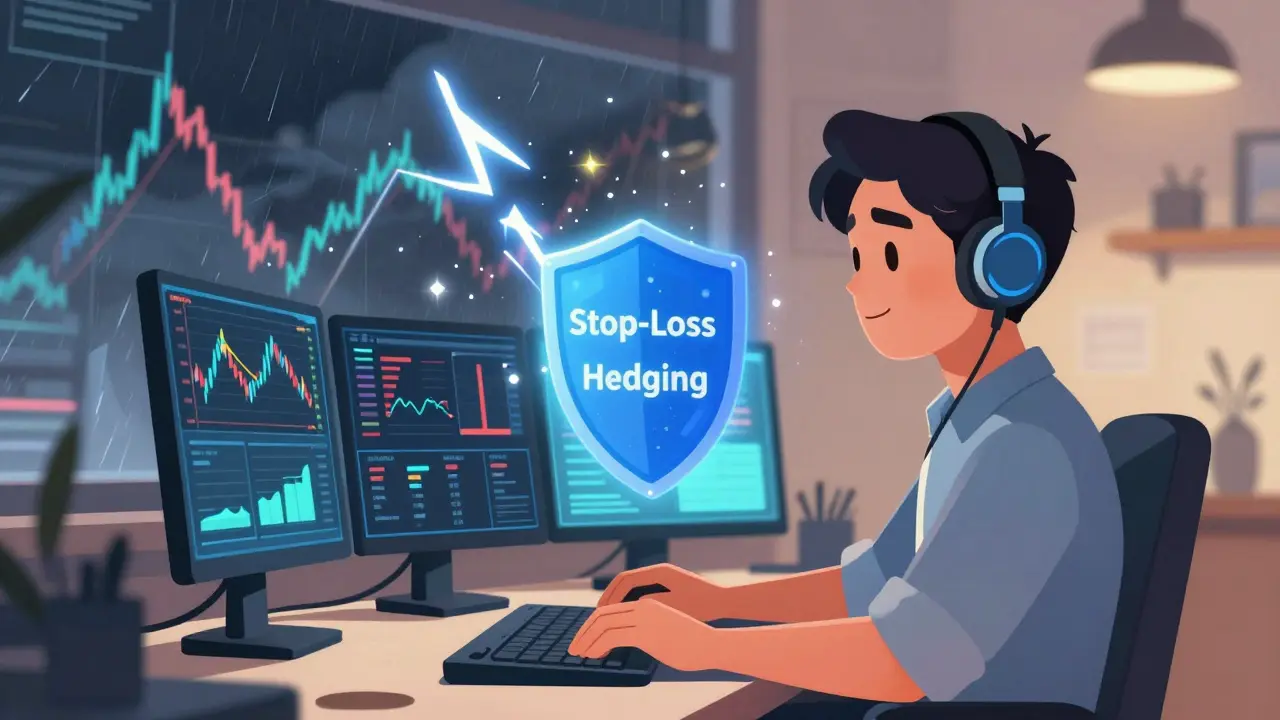
If you decide to enter futures trading, risk management is not optional-it is mandatory. The most common mistake beginners make is using excessive leverage. Just because an exchange offers 100x leverage doesn’t mean you should use it. Professional traders rarely exceed 2x to 5x leverage. High leverage reduces your margin for error to near zero. A minor wick in the chart can trigger liquidation.
Always use Stop-Loss Orders. These automatically close your position if the price hits a certain level, limiting your loss to a predefined amount. Without stop-losses, you are gambling, not trading. Additionally, calculate your position size carefully. Never risk more than 1-2% of your total trading capital on a single futures trade. This ensures that even a string of losses won’t destroy your account.
Understand the difference between Isolated Margin and Cross Margin. In isolated margin, only the allocated funds for that specific position are at risk. If liquidated, you lose only those funds. In cross margin, your entire account balance backs the position. While this delays liquidation, it risks wiping out your whole account if the market moves sharply against you. For most traders, isolated margin is safer.
Can I lose more money than I deposited in futures trading?
In most modern crypto exchanges, auto-deleveraging and insurance funds prevent negative balances for retail traders. However, in extreme flash crash scenarios, it is theoretically possible to owe more than your initial margin if the exchange cannot liquidate your position fast enough. Always check the exchange’s terms regarding negative balance protection.
Is spot trading completely risk-free?
No. While you cannot be liquidated, spot trading carries market risk. The value of your assets can drop significantly, potentially to near zero for altcoins. Additionally, you face counterparty risk if you leave assets on centralized exchanges that may hack or collapse. Self-custody mitigates some of this risk.
What is the best leverage ratio for beginners?
Beginners should avoid leverage entirely or stick to 1x to 2x maximum. Higher leverage amplifies emotional decision-making and increases the likelihood of premature liquidation due to normal market noise. Focus on learning price action before introducing leverage.
Do I need to pay taxes on futures trading profits?
Tax laws vary by jurisdiction. In many countries, including New Zealand and the US, profits from futures trading are considered taxable income or capital gains. You must track every trade, including funding rate payments, which may also be taxable events. Consult a local tax professional for accurate advice.
Can I convert spot holdings to futures easily?
Not directly. You typically need to sell your spot assets for stablecoins (like USDT or USDC) and then transfer those funds to your futures margin account. Some integrated platforms allow seamless switching, but they remain separate balances with different risk profiles.
Anuj Kashyap
July 14, 2026 AT 00:58It is fascinating how we have turned the concept of ownership into a mere suggestion rather than a guarantee. 🤔 When you buy spot, you hold the digital equivalent of gold in your vault. When you trade futures, you are essentially betting on the weather while standing outside in the rain without an umbrella. The philosophical implication here is that modern finance rewards those who dance with danger rather than those who build foundations. We have created a system where patience is punished and speculation is glorified as 'strategy'. It reminds me of ancient gambling dens, just with better graphics and more complex math to hide the house edge behind. The soul of the market has shifted from value creation to zero-sum extraction. One wonders if this is progress or just evolution of vice. 😌
Jackie D
July 14, 2026 AT 08:45i totally get why people jump straight to futures but its kinda wild how risky it actually is like sure leverage sounds sexy but u can lose everything in seconds which is not fun at all i prefer keeping my coins in a cold wallet and watching them grow slowly even if it takes years because then i own them for real and no one can take them away unless i give them permission so maybe stick to spot if u want peace of mind instead of stress
Ruth Williams
July 15, 2026 AT 16:16The notion that beginners should dabble in futures is preposterous. Only those with a sophisticated understanding of macroeconomic indicators and technical analysis should attempt such maneuvers. The average retail trader lacks the discipline required to manage margin calls effectively, resulting in predictable liquidations that serve only to enrich institutional arbitrageurs. Spot trading is for the patient; futures are for the proficient. Do not confuse ambition with competence.
Sophie Nakasako
July 17, 2026 AT 11:05I think it's really important to recognize that both strategies have their place depending on where you are in your journey! I started with spot because I wanted to understand the basics without the pressure of ticking clocks and funding rates. It allowed me to learn about blockchain technology and community governance without worrying about getting wiped out by a sudden dip. Once I felt confident in my ability to read charts and manage risk, I experimented with small positions in futures to hedge against volatility. It’s a learning curve, but taking it step-by-step makes all the difference in staying sane and profitable!
Kristy Morrow
July 17, 2026 AT 15:45everyone says spot is safe but its just slow death by inflation really futures are the only way to make real money quickly otherwise ur just holding bags waiting for nothing to happen besides most people dont know how to use leverage properly so they blow up but thats their fault not the tools fault
John Harman
July 18, 2026 AT 15:14Look, I've been trading since the early days and let me tell you something: if you don't understand basis risk and funding rate arbitrage, you're already dead. Most of these 'gurus' telling you to HODL spot are either shilling or ignorant. The smart money is always using derivatives to hedge exposure. You think institutions are buying spot? Please. They're running delta-neutral strategies with perpetuals. If you're not using at least 3x leverage on your directional bets, you're leaving alpha on the table. Stop listening to retail noise and start studying order flow.
Antony Lopez
July 19, 2026 AT 04:50This whole crypto thing is a scam anyway but if you must participate do it on US exchanges where regulations exist foreign platforms are full of bots and manipulation designed to steal from American investors we need stricter controls on leverage limits to protect our citizens from losing their life savings to offshore entities that don't care about us
Kat Barr
July 19, 2026 AT 23:48Oh my gosh!! I am so glad someone finally explained this clearly!!! 🌟 I was so confused about why my friend kept talking about shorting and I thought he was being negative about Bitcoin lol 😂 But now I see that it is actually a tool for profit! I am definitely sticking to spot trading for now because I love the idea of owning my coins and putting them in my hardware wallet 💻✨ It feels so much safer and less stressful! Thank you for breaking it down so nicely!!!
Logan Edmison
July 20, 2026 AT 20:49honestly i think the whole debate is missin the point its not about which is better its about what kind of person u r if u cant handle losin sleep over a chart then spot is for u but if u thrive on chaos then futures is ur playground i blew up three accounts last year but hey i learned somethin along the way right?
Michelle Walker
July 22, 2026 AT 07:33You’re ignoring the liquidity trap inherent in spot markets during flash crashes. Futures provide immediate exit velocity. Spot holders are often stuck waiting for order books to replenish while prices gap down. It’s inefficient. Use leverage or get left behind.
Ella Collinson
July 23, 2026 AT 00:05The asymmetry of risk-reward profiles between spot and perp contracts necessitates a nuanced approach to portfolio construction. While spot offers direct exposure to asset appreciation, it fails to account for opportunity cost and capital efficiency metrics. Conversely, perpetual futures introduce funding rate drag and counterparty risk, yet offer superior tactical flexibility for hedging beta exposure. A sophisticated investor must dynamically allocate based on implied volatility surfaces and basis differentials, rather than adhering to dogmatic 'HODL' narratives. Ignoring these quantitative realities results in suboptimal Sharpe ratios.
Ray Arney
July 23, 2026 AT 21:50I agree with the points made here. It seems like a balanced view is best. I personally mix both. I keep most in spot for long term growth but use a little bit of futures to hedge when things look shaky. It helps me sleep better at night knowing I have some protection against sudden drops.
Andrew Schneider
July 25, 2026 AT 03:37Boring! 🥱 Everyone talks about safety but nobody talks about the thrill of the squeeze! I love watching shorts get rekt! It’s pure adrenaline! Sure, you might lose your shirt, but isn’t life about taking risks? I’d rather go out in a blaze of glory with 100x leverage than watch my spot portfolio crawl up 5% a year like a snail! 🐌💥 Who else loves the drama?
Eric Braddock
July 25, 2026 AT 20:48Wake up sheeple! The funding rates are manipulated by centralized exchanges to bleed retail traders dry! They create fake volume to trigger stop losses and liquidate leveraged positions so they can confiscate your margin! Spot is also rigged because they control the order book depth! The entire system is a honeypot designed to extract wealth from the masses! Don’t trust any exchange! Self-custody is the only freedom but even that is monitored by chain analysis firms working for the deep state! Stay paranoid!
Nick G
July 27, 2026 AT 13:24In many cultures, the concept of borrowing against future earnings is viewed with skepticism, as it disrupts the natural cycle of saving and investing. However, in the fast-paced world of digital assets, the ability to leverage positions allows for greater participation in global economic shifts. It is essential to respect the diversity of financial strategies employed across different societies, recognizing that what works in one context may not be suitable for another. We should encourage open dialogue about these methods, fostering an environment where individuals can make informed decisions based on their unique circumstances and cultural values, thereby promoting financial literacy and inclusivity.
Nick Wengel
July 27, 2026 AT 15:15I think both have pros and cons. I just buy spot and hold. Simple is good.
Alicia Hull
July 28, 2026 AT 03:47This article is incredibly well-written and informative! However, I must challenge the assumption that spot trading is inherently 'safer.' While you avoid liquidation, you are exposed to significant downside risk without any mechanism to offset losses. In a bear market, spot holders can see 80-90% drawdowns. Futures allow you to protect your capital through shorting. Therefore, futures are arguably safer for risk management if used correctly. Let’s discuss this further!
Johan Otto
July 29, 2026 AT 08:22OMG you guys are so boring! 😩 Why are we talking about boring spot trading when we could be talking about the next meme coin moonshot?! 🚀 I lost my rent money on Doge but at least I had fun! Life is too short to be careful! Just ape in! 🦍
Tracy Marshall
July 29, 2026 AT 14:52the government wants you to lose money in futures so they can tax your gains and fund their wars meanwhile spot holders are free citizens storing value outside the banking system but even that is under threat from CBDCs we must resist the digital leash and stay off grid completely otherwise they will track every transaction you make and destroy your privacy forever
Guy Davis
July 31, 2026 AT 05:11u r all sinners for gambling with ur money god hates a merry gambler stick to savings accounts and pray for forgiveness
KEITH WONG
August 1, 2026 AT 09:29Listen up kids! 👋 If you cant afford to lose it dont trade it period! I see too many newbies blowing up their accounts because they think they are geniuses. Stick to spot until you can consistently make profits in a simulator. Then maybe try 2x leverage. Anything more is just gambling and I dont gamble. I invest. Know the difference. 📉📈
Natalie Lucas
August 2, 2026 AT 20:57lets gooo! 🙌 i love how this post breaks down the options so clearly im feeling so empowered to start my journey now im gonna buy some btc on spot and just chill while it grows no stress no drama just vibes ✨ keep shining everyone!
Curtis Johnson
August 4, 2026 AT 12:06I appreciate the detailed breakdown here. It’s easy to get overwhelmed by all the jargon. I think the key takeaway is knowing your own risk tolerance. For me, the anxiety of checking funding rates every few hours is not worth the potential extra returns. I prefer the simplicity of spot. But I respect those who have the discipline to trade futures responsibly. It’s not about being right or wrong, it’s about finding what fits your lifestyle and mental health. Let’s support each other in making informed choices.
Steven Briggs
August 5, 2026 AT 20:22spot is fine