
Quick Takeaways for SPAY Holders
- The Token: SPAY is the lifeblood of the game, used for land, gear, and trading.
- The Airdrop: Distributed primarily through Gate.io's Startup Free Offering to reward active community members.
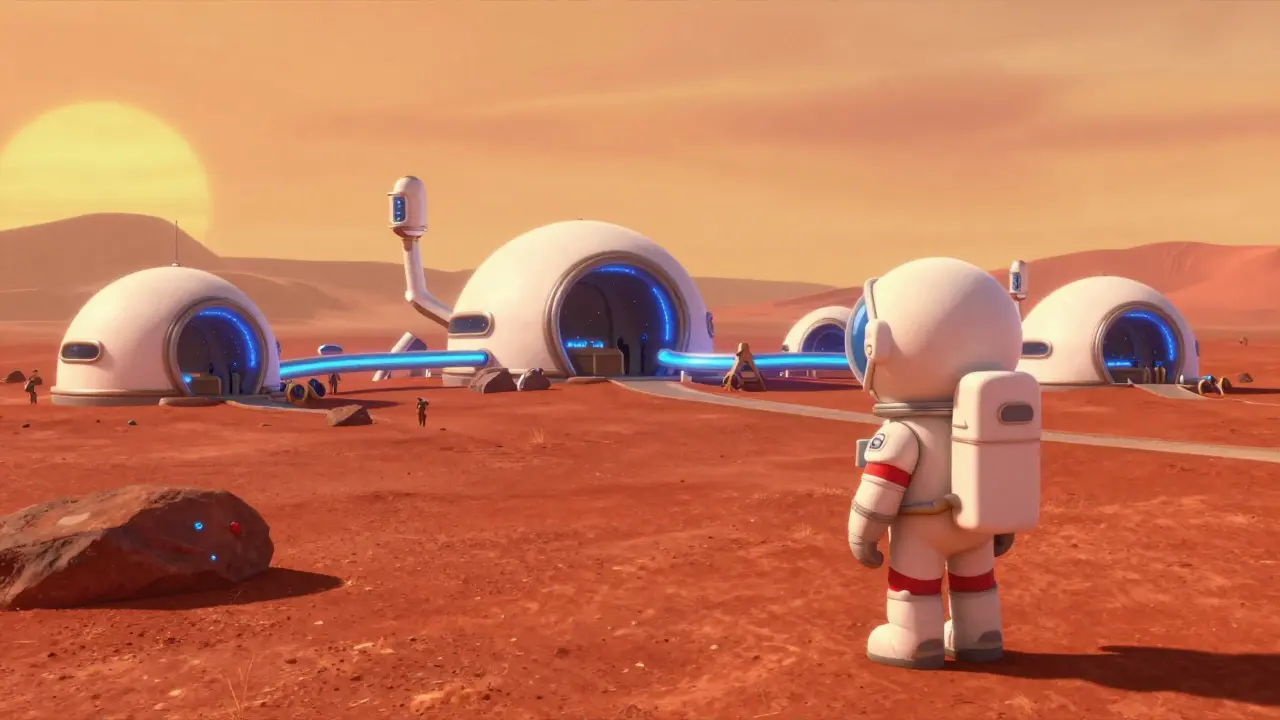
- The Goal: Use tokens and NFTs to build defensive structures and protect your Mars base.
- Scarcity: Only 360 land parcels exist, making land ownership a high-value asset.
How the SpaceY 2025 Airdrop Actually Worked
Most airdrops are a chaotic scramble, but SpaceY took a more organized route. They partnered with Gate.io to launch a Startup Free Offering. In this model, 10,000 SPAY tokens were given away for free. The beauty of this approach was the "zero-cost subscription," meaning users didn't have to risk their own capital to participate.
The team didn't just want to spam wallets; they targeted VIPs and GT token holders who already showed an interest in blockchain ecosystems. By rewarding people who actually understand how to use a wallet and trade NFTs, they ensured that the airdrop recipients would actually play the game rather than just selling the tokens immediately. If you received these tokens, you essentially got a head start in the Martian economy, giving you a financial cushion to start buying equipment or saving for land.
The Economy of SPAY: More Than Just Speculation
A token is only as good as what you can actually do with it. In SpaceY, SPAY isn't just for trading on exchanges; it's a functional currency. You need it to buy land, trade equipment in the marketplace, and upgrade your defenses. With a maximum supply of 25,000,000 tokens, the supply is relatively tight compared to the ambition of the project.
The most interesting part of the economics is the land scarcity. There are exactly 360 pieces of land available on the Mars base. Because the number of players will eventually far outweigh the number of plots, the demand for SPAY to acquire these parcels remains high. This creates a natural value floor for the token because it's a requirement for the most prestigious part of the game: property ownership.
| Attribute | Value / Detail |
|---|---|
| Max Token Supply | 25,000,000 SPAY |
| Total Land Parcels | 360 Pieces |
| Blockchain Network | Ethereum |
| Private Funding | $4,650,000 |
| Access Platforms | iOS, Android, Browser |
NFTs and The Art of Martian Defense
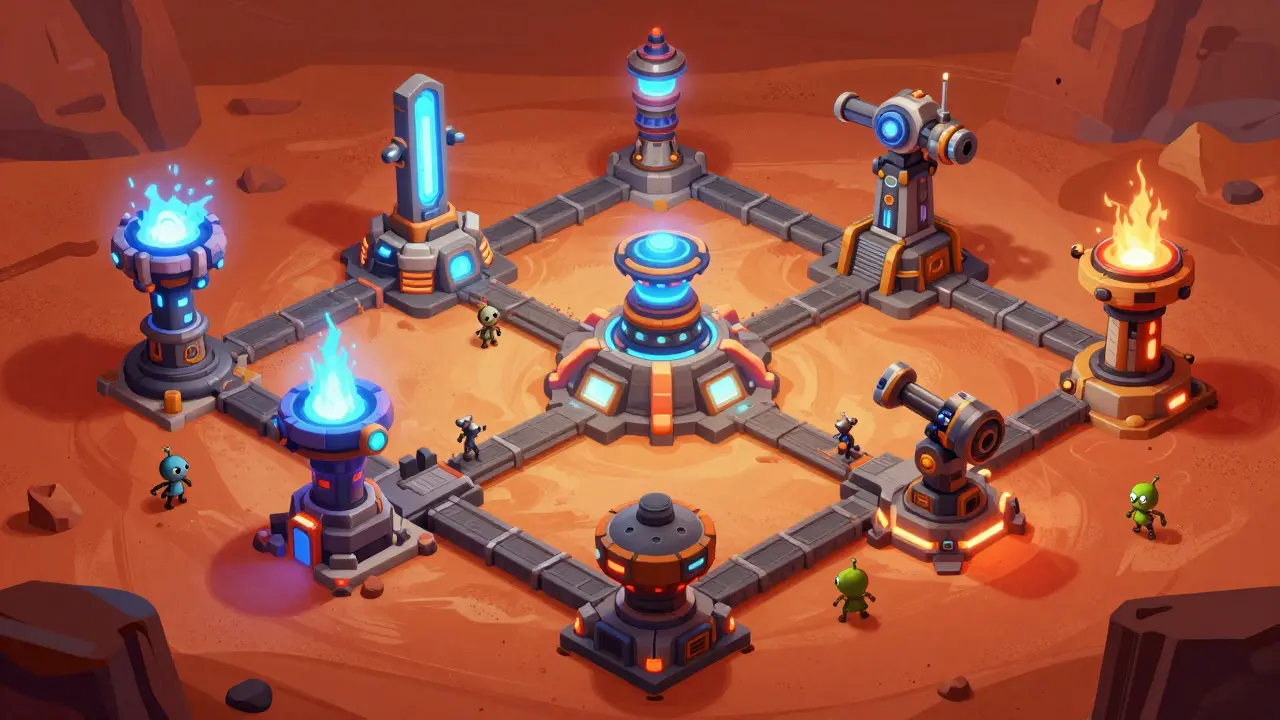
If SPAY is the money, NFTs are the assets. In SpaceY 2025, everything of value is tokenized. This includes the land itself, the buildings you erect, and the defensive towers you use to keep the aliens at bay. Each tower has different attributes and rarity levels, meaning some are significantly more powerful than others.
When you own land, you can attach these structures permanently to your property. This is where the real wealth building happens. If you build a highly efficient defense system on your plot, the value of that land increases. You can then sell the entire package-land and buildings-on the internal marketplace or a platform like OpenSea. It's essentially digital real estate flipping with a tower defense twist.
Who is Backing the Mission?
One of the biggest red flags in crypto is a lack of institutional backing. SpaceY avoided this by raising over $4.6 million in its private funding round back in 2021. They brought in a heavy-hitting group of venture capital firms including Titans Ventures, Lancer Capital, and Fenbushi Capital.
Having eight professional VC firms on board means the project has the runway to actually finish its roadmap. This funding is what allows them to expand the Mars territories and develop new building options, ensuring the game doesn't feel empty or stagnant after the first few months of play.
Risks and Things to Watch Out For
It's not all smooth sailing on the way to Mars. Like any project on Ethereum, SpaceY faces the classic issue of network congestion and gas fees. If you're moving a few cheap NFTs, the cost of the transaction might actually be higher than the asset itself. This is a common hurdle for all blockchain games trying to scale.
Then there's the volatility. The price of SPAY can swing wildly based on market sentiment. If you're entering for the "earn" part of play-to-earn, remember that the economy depends on new players joining. If the player base shrinks, the demand for land and towers drops, which could impact the value of your assets. It's a high-risk, high-reward environment.
Next Steps for New Players
If you're just getting started or recently claimed your airdrop, don't just let the tokens sit there. The best move is to get into the v1 metaverse. Use the official website to check for special access tickets. Once inside, focus on understanding the tower defense mechanics before spending your SPAY on expensive land. Learn which defensive combinations work best, and keep an eye on the marketplace for undervalued NFTs that could be upgraded for a profit.
What is the main use of SPAY tokens?
SPAY is the primary currency in the SpaceY 2025 ecosystem. Players use it to purchase limited Martian land parcels, buy and sell equipment in the marketplace, and fund the construction of defensive structures to protect their settlements.
How many land plots are available in the game?
There are exactly 360 pieces of land available on the Mars base. This strict limit is designed to create scarcity and drive the value of both the land and the SPAY tokens needed to acquire them.
Can I play SpaceY 2025 on my phone?
Yes, the game is designed for cross-platform accessibility. You can play it on Android devices, iOS devices, and through standard web browsers.
Was the SPAY airdrop free?
Yes, the airdrop conducted via Gate.io's Startup Free Offering was a zero-cost subscription model. Eligible VIP and GT users could receive tokens without any funds being deducted from their accounts.
Who developed SpaceY 2025?
The game was developed by the Blockfish team, leveraging their experience in blockchain gaming to create a AAA tower defense experience with a Mars colonization theme.
ssjuul z
April 11, 2026 AT 06:07LFG! This sounds like a blast 🚀 Let's get those bases built and dominate Mars together! 🔥
Rima Dinar
April 13, 2026 AT 02:07For anyone who is just starting out, it is really important to remember that the learning curve for blockchain games can be a bit steep, so I highly suggest spending a few hours just exploring the v1 metaverse without spending all your tokens immediately because patience is the key to long-term success in these types of digital economies where timing everything perfectly can lead to much higher rewards for your initial effort.
Hope Johnson
April 13, 2026 AT 15:01The concept of digital scarcity applied to a Martian landscape is a fascinating mirror to our own earthly struggles with land and resources, suggesting that even in a simulated environment, humans will instinctively gravitate toward the pursuit of exclusivity and the hoarding of limited space to establish a sense of status and security within a larger community of explorers.
Artavius Edmond
April 15, 2026 AT 14:49I'm totally down for this vibe! Anyone else already in the game? I'd love to see some of your tower setups!
Jason Davis
April 16, 2026 AT 05:25Just a heads up, make sure you double check the contract adress before minting any NFTs becuase there are tonz of scam links floating around in the discord groups right now.
Agnessa Dale
April 16, 2026 AT 18:08Everything looks so promising for this project, I can't wait to see it grow!
Prasanna Shembekar
April 16, 2026 AT 18:46omg i missed the airdrop i am actually crying right now
Jessie Tayaban
April 16, 2026 AT 19:41Omg the graphics look so cool!!! I bet the land flippin is gonna be absolute chaos lol’
Amanda Faust
April 17, 2026 AT 08:14the limited supply of 360 parcels is basically a textbook example of artificial scarcity to pump the floor price
Rebecca Violette
April 18, 2026 AT 12:53it's so unfair that only VIPs got the tokens i feel like the whole system is just rigged against us regulars
Emily H
April 19, 2026 AT 05:27The inclusion of venture capital funding provides a commendable level of stability to the project's development cycle.
Swati Sharma
April 19, 2026 AT 10:48The synergy between the tokenomics and the NFT utility is quite robust, especially if the project manages to maintain a high TVL and liquidity for the SPAY pair on decentralized exchanges while optimizing the gas-burn mechanisms for on-chain transactions.
Stanly Hayes
April 19, 2026 AT 21:44Who cares about the tech, I just want to build the biggest base on Mars and kick everyone else off!
Lane Montgomery
April 21, 2026 AT 08:29Show me your wallet balance.
logan bates
April 22, 2026 AT 06:52American devs making a Mars game, finally something done right.
Omotola Balogun
April 23, 2026 AT 19:28Actually the private funding round was much more significent than people realize and it's likely the team has a hiden reserve for future updates that isn't fully disclosed yet.
EDOZIEM MICHAEL
April 24, 2026 AT 21:46the dream of mars is just a dream of escapism for all of us really
Akshay Gorad
April 24, 2026 AT 23:16I appreciate the detailed breakdown of the airdrop process.
jennelle williams
April 24, 2026 AT 23:19just keep it simple and have fun