

When you're trading crypto on a decentralized exchange, speed, cost, and simplicity matter. But not all DEXs are built the same. MoonSwap isn't trying to beat Uniswap or PancakeSwap in volume. It's built for one thing: letting projects on the Moonriver network launch and trade tokens with near-zero friction. If you're a developer or someone deep in the Polkadot ecosystem, MoonSwap is a game-changer. If you're just swapping USDC for ETH on the side? You'll hit walls fast.
What MoonSwap Actually Is
MoonSwap isn't just another DEX. It's the native trading layer of Moonriver - the canary network for Moonbeam, which itself is an Ethereum-compatible blockchain on Polkadot. Think of Moonriver as a testbed. Everything that runs here gets stress-tested before going live on Moonbeam. MoonSwap, launched in late 2021, was built from the ground up to serve that purpose.It runs on the Ethereum Virtual Machine (EVM), so if you've used MetaMask on Ethereum or BSC, you already know how to connect. No new wallet needed. Just add Moonriver's network details (chain ID 1285, RPC endpoint, and native token MOVR) and you're in. The interface looks like Uniswap V2 - sliders, token selectors, price estimates. Simple. Familiar. But under the hood, it's optimized for cross-chain liquidity.
Why MoonSwap Is Cheap - Like, Crazy Cheap
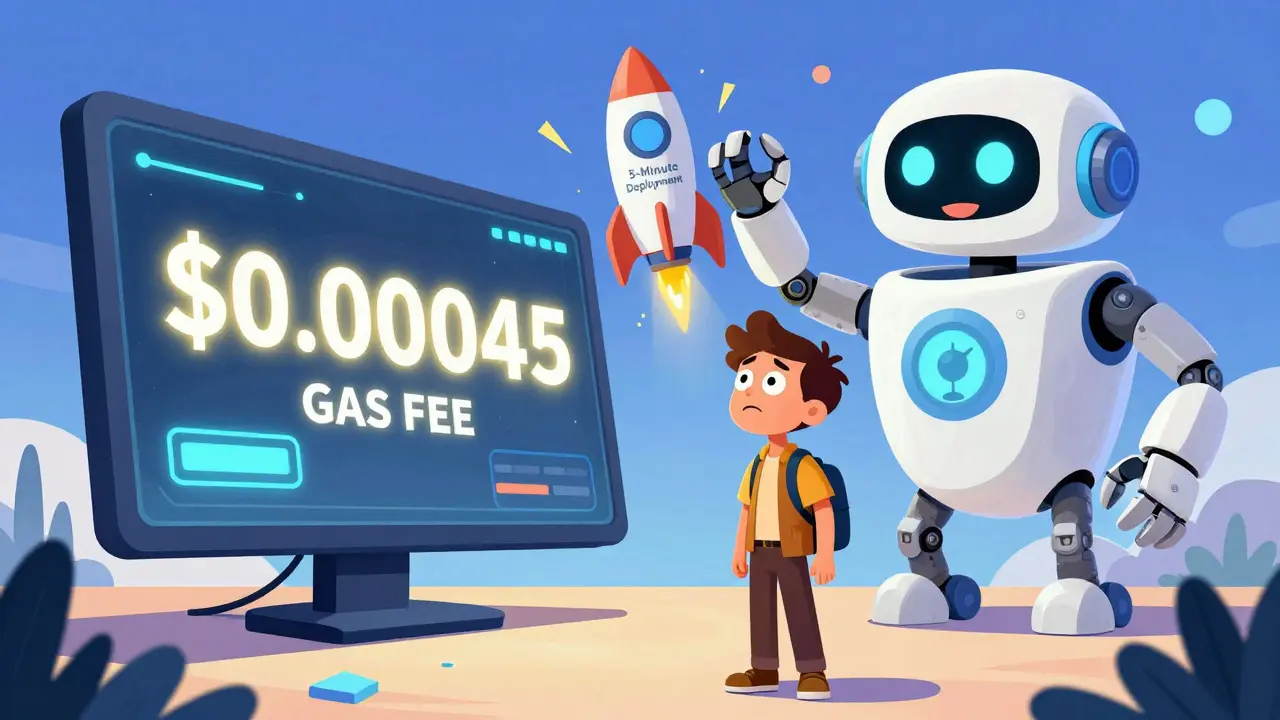
Let’s talk fees. On Ethereum, a simple swap can cost $1.25 or more. On BSC, it's around $0.05. On Moonriver? It’s $0.00045. That’s not a typo. At $3.00 per MOVR (as of March 2026), each transaction costs just 0.00015 MOVR. That’s 2,700 times cheaper than Ethereum.Why? Moonriver uses a different consensus mechanism than Ethereum. Blocks finalize in 12-15 seconds, and the network is designed for low overhead. Gas is paid in MOVR, the native token. You can’t pay with USDT or ETH. You need MOVR. That’s a hurdle for new users - but it’s also what keeps the network secure and aligned. MOVR isn’t just a currency; it’s the fuel.
Trading Volume? It’s Tiny. But That’s Not the Point
MoonSwap averages $8.2 million in daily volume. Compare that to Uniswap’s $1.2 billion or PancakeSwap’s $420 million. Yeah, it’s small. But here’s the truth most reviews miss: MoonSwap doesn’t need to be big. It doesn’t aim to be the next Coinbase. It’s a niche tool for a niche ecosystem.Over 63% of its users are developers, project teams, or early adopters launching new tokens. In Q4 2025 alone, 327 new projects deployed liquidity pools on MoonSwap - all without approval, without fees, without waiting. That’s the real value. You can list your token in under five minutes. No pitch deck. No VC. Just add liquidity and go. That’s why MoonSwap is the go-to for Polkadot parachain teams.
Where MoonSwap Shines: Cross-Chain Swaps
Here’s where MoonSwap gets really interesting. Because Moonriver is built on Polkadot, it can talk directly to other parachains. MoonSwap lets you swap between assets from 15+ different blockchains - all without bridging.For example: You hold a token from Acala (Polkadot parachain) and want to trade it for a token from Kusama. On most DEXs, you’d need to bridge from Acala to Ethereum, swap on Uniswap, then bridge back. On MoonSwap? One click. Direct swap. No intermediaries. No waiting. That’s because Moonriver uses XC-20 tokens - wrapped versions of assets from other chains that are natively recognized on the network.
This feature is unique. No other DEX on a non-Ethereum chain offers this level of seamless cross-chain access. Even SushiSwap on Polygon can’t do it. MoonSwap’s integration with Moonriver’s NFT marketplace is another win - 47% of NFT trades in Q4 2025 happened via MoonSwap liquidity pools. That’s more than OpenSea’s integration with Uniswap.
The Dark Side: Slippage, Liquidity, and MOVR Volatility
Here’s the catch. MoonSwap’s low volume means shallow liquidity for most tokens. If you try to swap more than $50,000 worth of a lesser-known token, expect slippage over 5%. One user on Trustpilot reported 7.2% slippage swapping USDC to MOVR. That’s not a glitch - it’s a feature of low liquidity pools.And then there’s MOVR itself. Since gas is paid in MOVR, if the price drops 30%, your transaction costs effectively rise 30%. A $0.00045 fee becomes $0.0006. Doesn’t sound like much - until you’re making 20 swaps a day. That’s why developers who use MoonSwap daily always keep a buffer of MOVR. It’s not optional. It’s mandatory.
Also, no stop-loss. No limit orders. No fiat on-ramps built in. You can’t buy MOVR with a credit card on MoonSwap. You need to use MoonPay or another third-party service, which adds steps. For newcomers, the learning curve is steeper than it looks.
Who Should Use MoonSwap?
- Developers launching tokens on Polkadot or Moonbeam - this is your best friend.
- DeFi users deep in the Moonriver ecosystem - if you’re holding XC-20 tokens or using Moonriver-based DeFi apps, MoonSwap is your hub.
- Traders who want ultra-low fees - if you’re doing micro-trades or arbitrage between Moonriver-connected chains, the gas savings add up fast.
Who should avoid it?
- Casual traders - if you just want to swap BTC for ETH, use a centralized exchange or a DEX with deeper pools.
- High-frequency traders - Moonriver’s 12-15 second block times are too slow for scalp trading. Solana-based DEXs are 10x faster.
- Users who hate managing gas tokens - if you don’t want to hold MOVR separately from your trading assets, this isn’t for you.
What’s Next for MoonSwap?
The November 2025 upgrade introduced concentrated liquidity - meaning liquidity providers can now lock their funds within specific price ranges, like Uniswap V3. This boosted capital efficiency by 3.7x. It’s a smart move.Looking ahead, MoonSwap is set to integrate with Polkadot 2.0’s XCMP-Lite protocol in Q2 2026. That’ll open direct swaps across 100+ parachains. If that happens, MoonSwap could go from a niche tool to a critical bridge in the Polkadot DeFi world. Analysts estimate this could expand its addressable market by 83%.
But the risk? Moonriver’s survival. If Moonbeam fails to gain mainstream adoption as an Ethereum scaling solution, MoonSwap loses its reason to exist. Right now, 89% of its trading volume comes from Moonbeam ecosystem tokens. It’s a single-point dependency.
Final Verdict
MoonSwap isn’t perfect. It’s not even close to being the biggest DEX. But it doesn’t need to be. It’s the most efficient, cheapest, and most developer-friendly trading platform in the Polkadot ecosystem. If you’re building, deploying, or deeply invested in Moonriver-based projects, MoonSwap is indispensable.For everyone else? Stick with Uniswap, PancakeSwap, or a centralized exchange. MoonSwap isn’t broken - it’s just not meant for you.
Do I need MOVR to use MoonSwap?
Yes. All transaction fees on MoonSwap are paid in MOVR, the native token of the Moonriver blockchain. You can’t use USDT, ETH, or any other token to pay for gas. You must hold MOVR in your wallet separately from the assets you’re trading. Without MOVR, you can’t swap, provide liquidity, or interact with any part of the platform.
Can I buy MOVR directly on MoonSwap?
No. MoonSwap does not have a built-in fiat on-ramp. You cannot buy MOVR with a credit card or bank transfer directly through the platform. To get MOVR, you need to use a third-party service like MoonPay, which integrates with Moonriver wallets. Alternatively, you can swap another crypto (like ETH or USDT) for MOVR on a centralized exchange like Kraken or Binance, then send it to your Moonriver-compatible wallet.
Is MoonSwap safer than centralized exchanges?
Yes - but with caveats. Since MoonSwap is a decentralized exchange, you keep full control of your funds. There’s no KYC, no custodial risk, and no exchange hack to worry about. However, you’re still exposed to smart contract risk. If there’s a bug in MoonSwap’s code, your funds could be lost. Always use trusted wallets like MetaMask or Ledger, and never send funds to unknown contracts. Also, MOVR price volatility can make transactions more expensive if the token drops in value.
Why is slippage so high on MoonSwap?
Slippage is high because many liquidity pools on MoonSwap are shallow. With an average daily volume of $8.2 million, MoonSwap is small compared to giants like Uniswap. Tokens with less than $1 million in liquidity often have wide spreads. If you try to trade more than $50,000 in one go, the price moves significantly before your trade completes. For large trades, split them into smaller chunks or use a DEX aggregator like Rango Exchange.
Can I use MoonSwap without a wallet?
No. MoonSwap requires a Web3 wallet that supports the Ethereum Virtual Machine (EVM). This includes MetaMask, Trust Wallet, or Ledger. You must connect your wallet to interact with the platform. There is no browser-based or custodial option. If you’re new to crypto, set up MetaMask first, then add the Moonriver network manually using chain ID 1285, RPC URL, and MOVR as the native token.
Grace van Gent-Korver
March 12, 2026 AT 10:56Zephora Zonum
March 13, 2026 AT 17:35ann neumann
March 15, 2026 AT 01:49Jennifer Pilot
March 15, 2026 AT 13:19Sharon Tuck
March 16, 2026 AT 07:19karan narware
March 17, 2026 AT 04:19Michael Suttle
March 18, 2026 AT 12:04Jenni James
March 19, 2026 AT 08:12Chelsea Boonstra
March 21, 2026 AT 06:48Alex Thorn
March 21, 2026 AT 06:55Howard Headlee
March 21, 2026 AT 15:59Brandon Kaufman
March 23, 2026 AT 00:26Anshita Koul
March 24, 2026 AT 10:27PIYUSH KOTANGALE
March 24, 2026 AT 22:13