
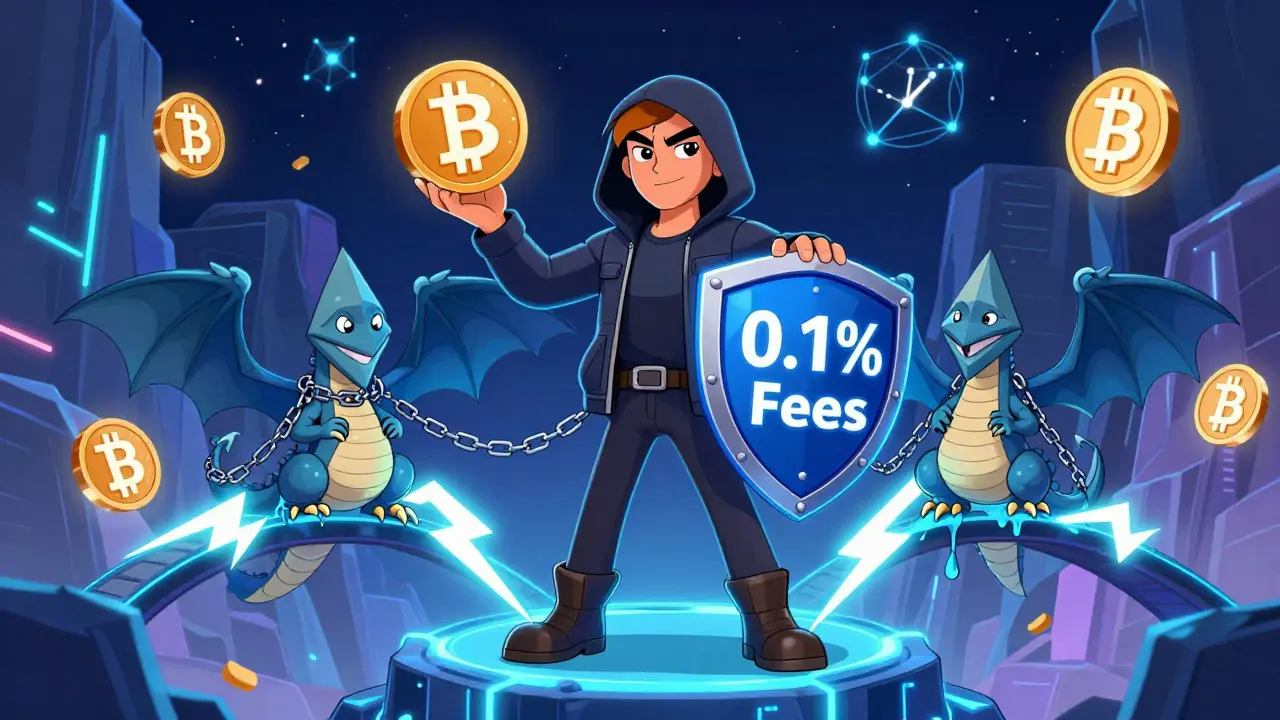
Most people think crypto exchanges are either big names like Binance or niche DeFi platforms that require Ethereum wallets. But what if you want to trade Bitcoin directly-no bridging, no EVM, no extra tokens-just pure BTC and USDT with near-zero fees? That’s where Libre crypto exchange comes in. Launched in 2023, Libre isn’t another Ethereum-based DEX. It’s built from the ground up for Bitcoin users who are tired of paying 0.5% fees just to swap BTC for stablecoins. The promise? Instant trades, 0.1% fees, and no need to leave Bitcoin’s network. But is it as good as it sounds?
How Libre Works (Without Ethereum)
Libre doesn’t run on Ethereum. It doesn’t use MetaMask. It doesn’t require you to wrap your Bitcoin into wBTC or use a sidechain like Liquid. Instead, it uses a custom Layer-2 protocol built on Bitcoin’s own infrastructure. Think of it like the Lightning Network, but designed specifically for trading. When you deposit BTC into Libre, it’s locked in a multisig wallet and replaced with a pegged version on Libre’s chain. That pegged BTC can then be swapped for USDT instantly. The whole process happens in under two seconds, with transaction fees as low as $0.02 for a $1,000 trade.This is a big deal. On regular Bitcoin networks, a simple transfer can take 10 to 60 minutes. On centralized exchanges, you pay 0.1% to 0.5% and risk custody. Libre cuts through both problems. You keep control of your keys, and you trade at speeds that rival Solana. The platform uses ring signatures and stealth addresses to hide transaction details, making trades more private than most public blockchains.
The Fees and Speed Advantage
Let’s compare Libre to the competition:| Platform | Fee (BTC/USDT) | Trade Speed | Supported Assets |
|---|---|---|---|
| Libre | 0.1% flat | 2 seconds | BTC, USDT |
| Thorchain | 0.3-0.5% | 15-30 seconds | 20+ coins |
| Sideshift.ai | 0.3-0.7% | 1-5 minutes | 50+ coins |
| Binance (Centralized) | 0.1% (maker), 0.1% (taker) | Instant | 500+ coins |
Libre wins on fees and speed for BTC/USDT trades. But here’s the catch: it only supports two assets. No ETH, no SOL, no DOGE. If you’re a Bitcoin maximalist who only trades BTC and stablecoins, this is perfect. If you want to swap BTC for Chainlink or Polygon, you’ll need another platform.
The LIBRE Token and Staking
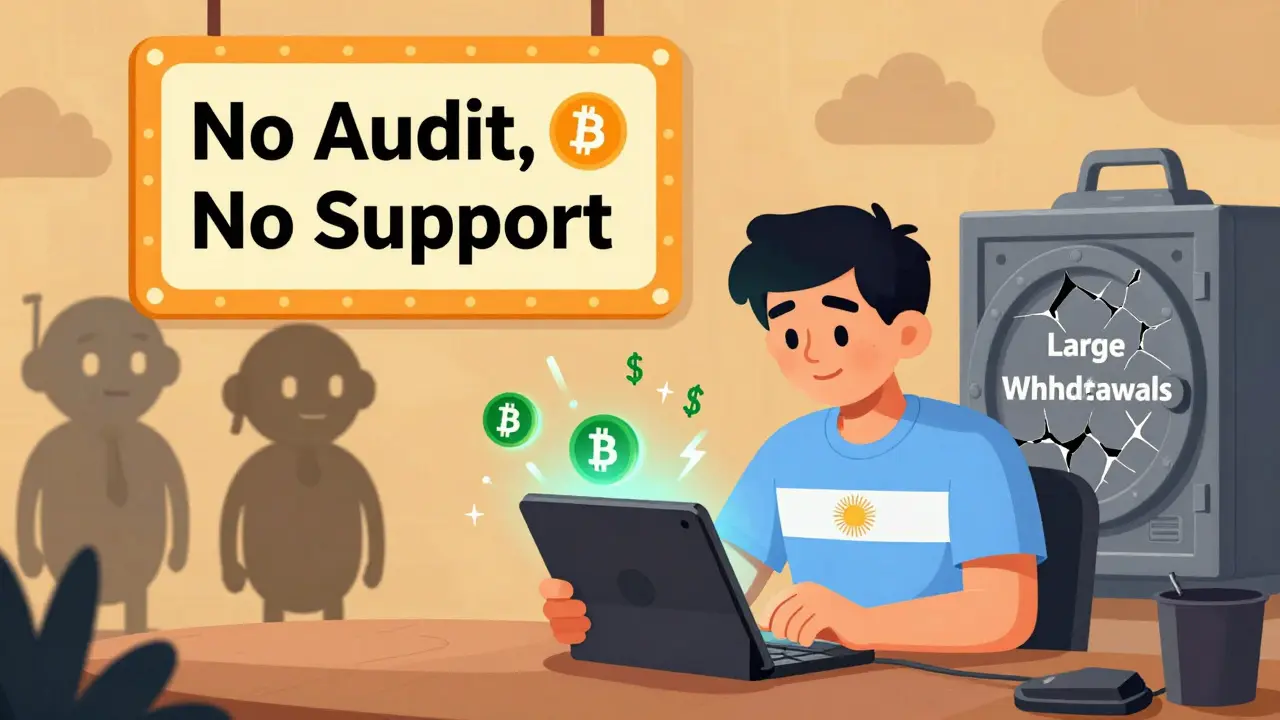
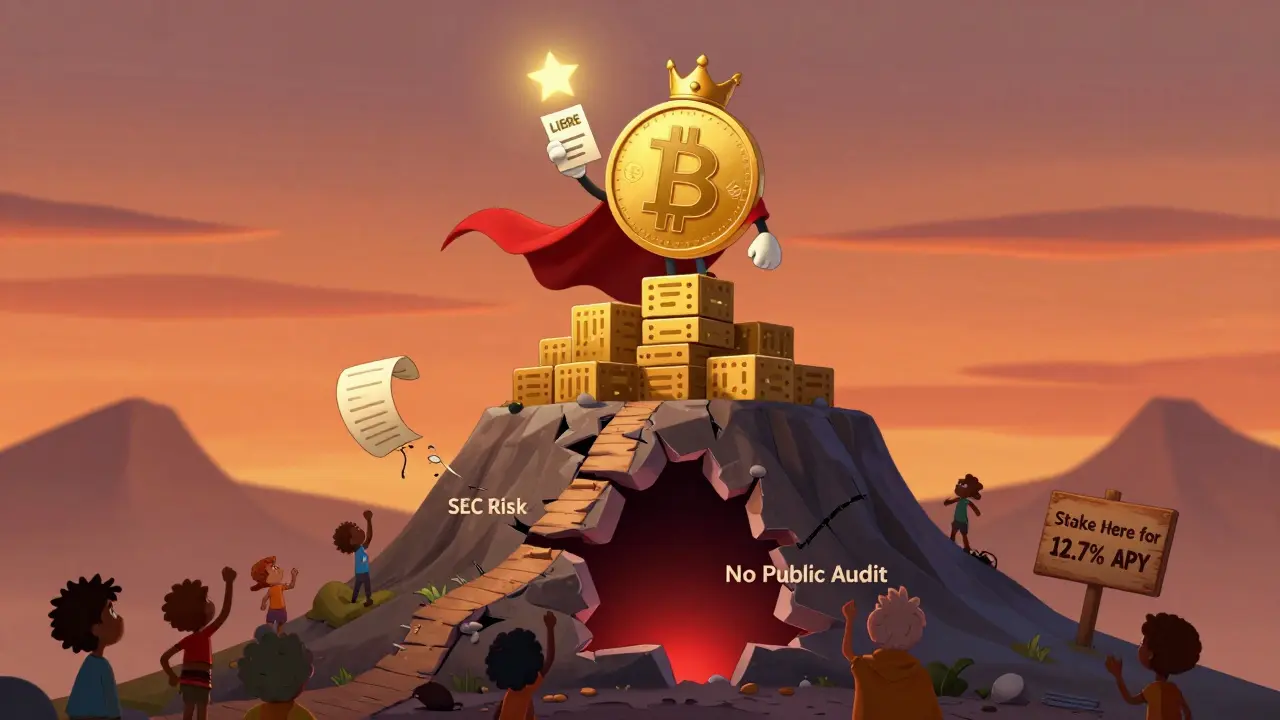
Libre has its own token: LIBRE. There are 1 billion in total, with about 628 million circulating. You don’t need LIBRE to trade BTC or USDT. But if you want to vote on platform upgrades-like adding new stablecoins or changing fee structures-you need to stake it. Staking rewards range from 4.2% APY for 30 days to 12.7% for a full year. That’s higher than most DeFi protocols, but there’s a catch: your voting power fades as your staking period nears end. So if you lock up for a year, you get the best yield but less influence near the end. It’s a design that encourages long-term holding, not just profit-taking.As of November 2025, the LIBRE token is listed on Coinbase, which gives it some legitimacy. But Coinbase also says the smart contracts have been audited by Certik. The problem? No public audit report exists. Libre’s website doesn’t link to one. Certik’s site doesn’t list it. This contradiction is a red flag. Security researcher Alex Thorn called it “a major counterparty risk.” If something goes wrong with the pegged BTC system, and no one can verify the code, who’s liable?
What’s Missing: The Dark Side
Libre’s biggest weakness isn’t speed or fees. It’s what it doesn’t offer.- No limit orders. You can only do market trades. That’s fine for quick swaps, but terrible for anyone trying to time the market.
- No mobile app. You have to use a web wallet or integrate with a Lightning wallet like Phoenix or BlueWallet.
- Liquidity is thin above $500,000. One user reported a $12,000 USDT withdrawal taking two hours during a market spike. That’s not normal for a platform claiming “instant” trades.
- Customer support takes over 58 hours on average to respond. Reddit users report waiting days for answers to simple questions.
- No API for developers. If you’re a trader using bots or automation tools, Libre doesn’t support them.
These aren’t minor quirks. They’re deal-breakers for serious traders. Libre feels like a beta product that’s been pushed live because it works well for small, simple trades-not because it’s ready for scale.
Who Is Libre For?
Libre isn’t for everyone. It’s not for altcoin traders. It’s not for institutional investors. It’s not for people who need customer service.It’s for one group: Bitcoin users who want to swap BTC for USDT without leaving the Bitcoin ecosystem, without paying high fees, and without trusting a centralized exchange. If you’re the kind of person who uses a hardware wallet, hates Ethereum, and just wants to move money quickly and cheaply-Libre is one of the few options that fits.
For example, a freelancer in Argentina gets paid in BTC. They need to convert it to USDT to pay bills in USD. On Binance, they pay 0.1% and risk account freezes. On Libre, they pay 0.1%, keep control, and get the USDT in two seconds. That’s powerful.
Future Plans and Risks
Libre’s roadmap includes adding USDC and DAI support by mid-2026, and integrating with FedNow for direct bank on-ramps. That could be huge. If they can connect Bitcoin DeFi to real-world banking without going through traditional gatekeepers, they might become essential infrastructure.But the risks are real. The SEC’s new guidelines for non-EVM DeFi protocols could classify LIBRE as a security. The lack of public audits makes regulators nervous. And competition is growing. The Lightning Network is adding native DeFi tools. Projects like Strike and River are building similar services with better support.
Delphi Digital gives Libre a 65% chance of surviving past 2027. Standard Chartered says 30%. The difference? One trusts the tech. The other trusts the transparency.
Final Verdict
Libre crypto exchange delivers on its core promise: fast, cheap, Bitcoin-native trading. For small to medium-sized BTC/USDT swaps, it’s the best option out there. The fees are lower than everyone. The speed is unmatched for a Bitcoin solution. The privacy features are impressive.But it’s not a full exchange. It’s a tool. A very useful tool-if you know its limits. Don’t use it for large trades. Don’t expect customer help. Don’t assume it’s safe just because it’s on Coinbase. And never stake more than you’re willing to lose until an audit report is made public.
If you’re a Bitcoin purist looking for a clean, simple way to trade without intermediaries, Libre is worth trying. Just don’t treat it like a bank. Treat it like a high-speed gas station for your Bitcoin-fast, cheap, but only for the essentials.
Is Libre a centralized or decentralized exchange?
Libre is a decentralized exchange (DEX). It doesn’t hold your funds. You connect your own Bitcoin wallet, and trades happen directly through smart contracts on its Layer-2 chain. However, because it uses pegged Bitcoin and lacks public smart contract audits, some security experts argue it has centralized risk elements.
Can I trade altcoins on Libre?
No. As of November 2025, Libre only supports BTC and USDT. There are no plans to add other cryptocurrencies until at least mid-2026, when USDC and DAI may be added. If you want to trade altcoins, you’ll need another platform.
Do I need the LIBRE token to trade?
No. You can trade BTC for USDT without owning any LIBRE tokens. You only need LIBRE if you want to participate in governance voting, like deciding on new features or fee changes. It’s optional for trading, required for influence.
Is Libre safe to use?
It’s relatively safe for small trades if you use a hardware wallet. But there are serious risks: no public smart contract audit, slow customer support, and thin liquidity for large withdrawals. Many security professionals consider the lack of audit transparency a major red flag. Only use what you can afford to lose.
How does Libre compare to the Lightning Network?
The Lightning Network is for sending Bitcoin quickly and cheaply. Libre is for trading Bitcoin for stablecoins quickly and cheaply. They’re complementary. Libre actually uses Lightning Network bridges to move BTC on and off its chain. So Libre is built on top of Lightning, not a replacement for it.
Can I use Libre on my phone?
There’s no official Libre mobile app. But you can use it through any Lightning Network-compatible wallet like Phoenix, BlueWallet, or Muun. Just connect your wallet to the Libre website, and you can trade from your phone. It works, but it’s not as seamless as a native app.
What’s the minimum amount to trade on Libre?
There’s no official minimum. You can trade as little as $1 worth of BTC or USDT. However, due to network fees and the way pegged assets work, trades under $10 may not be cost-effective. Most users find $50-$500 to be the sweet spot.
Is Libre available worldwide?
Yes, Libre has no geographic restrictions. Anyone with a Bitcoin wallet can access it. However, users in the U.S. and EU should be aware that regulatory scrutiny is increasing. While it’s not blocked, future legal changes could affect access depending on your location.
Dan Dellechiaie
December 26, 2025 AT 06:46Libre’s Layer-2 is basically Lightning Network with a fancy UI and zero transparency. They’re not building anything new-they’re repackaging existing tech and calling it revolutionary. And don’t get me started on the ‘audit’ lie. Certik doesn’t list it? That’s not a bug, that’s a feature for scammers. You think Coinbase listing means safety? Bro, they listed DOGE. This is a rug-pull waiting for a bull run.
Radha Reddy
December 26, 2025 AT 14:00As someone from India, I appreciate the idea of avoiding centralized exchanges due to regulatory uncertainty. However, the lack of a mobile app and slow support makes it impractical for daily use. I’ve tried similar platforms before-without reliable customer service, even the best tech becomes a liability. Patience is a virtue, but not when your funds are stuck.
Shubham Singh
December 27, 2025 AT 16:10Let me be blunt: this is a textbook example of crypto vaporware. Zero public audit? No API? No limit orders? And you call this a ‘tool’? A hammer that only works on nails the size of a grain of sand isn’t a tool-it’s a paperweight. The author pretends this is innovative, but it’s just a glorified atomic swap with a marketing team.
Vijay n
December 28, 2025 AT 01:34Collin Crawford
December 29, 2025 AT 09:11You’re ignoring the fundamental flaw: if Libre doesn’t hold your keys, then it’s not decentralized. It’s a custodial Layer-2 with a pseudonymized interface. The multisig wallet? Controlled by their team. The pegged BTC? Backed by their reserves. This isn’t Bitcoin-native-it’s Bitcoin-wrapped-in-a-proprietary-black-box. And you’re calling this innovation? It’s a Trojan horse for centralized control.
Tristan Bertles
December 30, 2025 AT 07:32I’ve used Libre for small swaps-$50-$200 range-and honestly, it’s been smooth. Fast, cheap, no drama. I don’t care about limit orders or APIs. I’m not a trader, I’m just someone who gets paid in BTC and needs to pay rent in USD. If you’re trying to HODL and swing trade, yeah, this isn’t for you. But for the average person? It works. Just don’t throw $10k at it and expect magic.
Naman Modi
December 31, 2025 AT 10:24Mmathapelo Ndlovu
January 1, 2026 AT 02:35I love the vision-Bitcoin without the Ethereum noise. But I also feel the fear. That silence around the audit… it’s louder than any whitepaper. I’ve seen too many beautiful projects die because no one could prove they weren’t smoke and mirrors. Maybe Libre’s honest. But honesty needs proof. Not promises. Not Coinbase listings. Proof.
Tyler Porter
January 1, 2026 AT 18:28Look. If you just want to swap BTC to USDT fast and cheap, and you’re not trading big amounts, this might work. But don’t overthink it. It’s not a bank. It’s not a stock exchange. It’s a tool. Like a wrench. You don’t need a manual for a wrench, but you also don’t use it to hammer a nail. Use it right. Don’t blame the tool when you break something.
Rishav Ranjan
January 3, 2026 AT 05:08Jacob Lawrenson
January 4, 2026 AT 10:15THIS IS THE FUTURE. NO MORE CUSTODIAL EXCHANGES. NO MORE 0.5% FEES. JUST PURE BTC TO USDT IN 2 SECONDS. WHY ARE YOU STILL USING BINANCE?? YOU’RE LIVING IN 2018. LIBRE IS THE REAL DEAL. STAKE THAT LIBRE TOKEN. BE PART OF THE MOVEMENT. 🚀🔥
Sybille Wernheim
January 6, 2026 AT 09:12Hey, I tried it last week-$75 swap, took 1.8 seconds, fee was $0.01. Honestly? I’m impressed. I don’t need 500 coins. I need to pay my internet bill without getting my account frozen. Libre does that. I’m not a degenerate trader. I’m just a normal person trying to use crypto like money. And it works. 🙌
Sheila Ayu
January 6, 2026 AT 14:35Oh wow, another ‘Bitcoin-only’ platform that’s secretly centralized. And you’re surprised no one trusts it? The fact that they’re not publishing the audit? That’s not a ‘gap,’ that’s a confession. They know the code is garbage. And Coinbase listing? That’s not a stamp of approval-it’s a warning label. Don’t be the sucker who gets wiped out because they ‘trusted the brand.’
Janet Combs
January 7, 2026 AT 03:32i used libre once to swap 30 bucks of btc to usdt and it worked but then i tried to withdraw 500 and it took 3 hours and i was like… is this even real? also why is the website so ugly?? like it looks like it was made in 2015 on geocities. the tech might be cool but the whole vibe says ‘we’re not ready’ 😅
Charles Freitas
January 7, 2026 AT 21:00You call this ‘Bitcoin-native’? The fact that you need to trust their multisig to ‘peg’ your BTC means you’ve already surrendered decentralization. You’re not using Bitcoin-you’re using their version of Bitcoin. And the LIBRE token? That’s a security disguised as a governance token. The SEC will shut this down in 12 months. Mark my words. This isn’t innovation. It’s regulatory suicide.
Sarah Glaser
January 9, 2026 AT 02:54While the technical architecture is intriguing, the absence of formal, publicly verifiable security audits constitutes a material risk that cannot be mitigated by marketing narratives or community testimonials. The platform’s operational model, though efficient, introduces counterparty risk that fundamentally contradicts the ethos of decentralized finance. Until such disclosures are made, prudent actors should refrain from deploying capital.
roxanne nott
January 9, 2026 AT 07:41the fact that they say 'no minimum' but trades under $10 are 'not cost effective' is such a lie. they just want you to trade more so they can profit off your volume. also 'libre' is spelled wrong. it's libre. not libere. or libree. or libreee. it's libre. fix your branding. also no audit. red flag. also why is the logo a potato? 🥔