
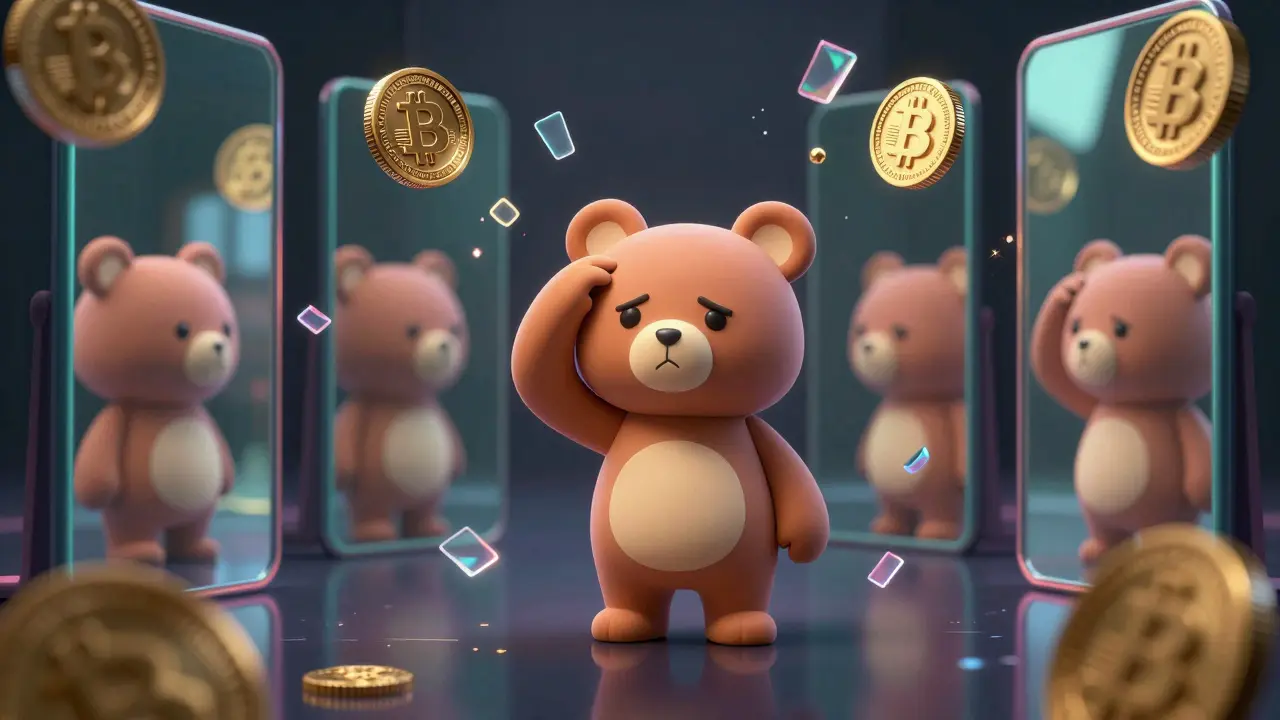
Searching for a Kuma Inu airdrop right now is like walking into a hall of mirrors. You see the name "Kuma" everywhere, but the details are blurry, and the promises are conflicting. If you've seen posts about a massive KUMA event, you need to stop and look closer before connecting your wallet to any site. In the world of crypto, a little bit of naming confusion is often the perfect cover for a phishing scam.
The core of the problem is simple: there are two completely different projects using the same name. One is a meme-inspired DeFi project called Kuma Inu, and the other is a high-profile trading platform that recently rebranded to Kuma. When people talk about "Kuma rewards" or "Kuma events," they are almost always talking about two different things. Understanding this distinction is the only way to protect your assets.
Quick Summary of the KUMA Situation
- Kuma Inu (KUMA): A community meme token with a yield farming protocol. There is currently no official airdrop confirmed by the team.
- Kuma (formerly IDEX): A decentralized exchange integrated with Berachain. They have an active reward program for trading perpetual futures.
- The Danger: Scammers often use the buzz around the Berachain Kuma rewards to trick Kuma Inu holders into "claiming" fake airdrops.
- Market Status: Kuma Inu shows extremely low trading volume, making it a high-risk asset for speculation.
Decoding the Kuma Inu (KUMA) Project
Kuma Inu is a community-driven cryptocurrency that started as a meme token and evolved to include decentralized finance (DeFi) features. Its main utility revolves around the Kuma Breeder protocol, a yield farming system where users can earn $dKuma tokens.
On paper, Kuma Inu sounds like a standard community project. It uses a decentralized autonomous governance system, meaning token holders can theoretically vote on where the marketing budget goes or how the project develops. However, if you look at the actual market data, the picture is less exciting. The token often shows near-zero 24-hour trading volume, and the price hovers around a fraction of a cent (roughly $0.000000003235 USD). When a token has no one trading it, any "event" or "airdrop" announcement should be viewed with extreme skepticism.
The Berachain Kuma Confusion
Most of the current noise about "Kuma events" actually comes from a different entity. On March 24, 2025, Kuma (which was previously known as IDEX) rebranded to align itself with the Berachain ecosystem. This is a professional hybrid decentralized exchange that matches orders centrally but settles them on-chain for Ethereum assets.
This project is actually running a reward program. Since April 1, 2025, users trading perpetual futures on their platform can earn BGT (Berachain Gas Token). This is a points-based system tied to Berachain's Proof of Liquidity (PoL) mechanism. Because this is a legitimate, high-value event, scammers are using the name "Kuma" to lure in people who think the meme token (Kuma Inu) is finally doing something big.
| Feature | Kuma Inu (KUMA) | Kuma (formerly IDEX) |
|---|---|---|
| Primary Goal | Meme/Community DeFi | Hybrid Decentralized Exchange |
| Ecosystem | Kuma Breeder Protocol | Berachain / Ethereum |
| Active Rewards | None confirmed | BGT Rewards (Perpetual Trading) |
| Market Activity | Very Low / Dormant | High / Professional Trading |
| Airdrop Status | Unconfirmed / Likely Fake | Points-based Reward System |
How to Spot a Fake KUMA Airdrop
If you stumble upon a website or a Telegram group claiming there is a "limited time" Kuma Inu airdrop, ask yourself a few questions. Does the site ask you to "connect" your wallet immediately to check eligibility? Does it require you to send a small amount of BNB or ETH as a "gas fee" to unlock the tokens? If the answer is yes, you are looking at a scam.
Legitimate airdrops in 2026 follow a specific pattern. They have clear snapshot dates, verified allocation lists, and official announcements across multiple verified channels. For example, look at projects like Yei Finance; they provide a detailed timeline with registration phases and allocation confirmations. Kuma Inu has none of these. There are no smart contract addresses for a new distribution, no snapshot dates, and no technical documentation explaining how the tokens will be delivered.
The Reality of KUMA Price Predictions
You'll find plenty of sites like TradingBeast or WalletInvestor predicting that KUMA will hit $0.00000001094 by the end of 2025 or fluctuate throughout 2026. While these numbers look promising because they represent a percentage increase, you have to remember the starting point is almost zero. In a market where trading volume is non-existent, these predictions are based on mathematical algorithms, not on actual buyer demand.
A token can have a "predicted price," but without liquidity, that price doesn't matter. If there is no one to buy your tokens, the price on the screen is just a number. This is why relying on a predicted price jump to justify "farming" a fake airdrop is a dangerous game.
Your Safety Checklist for Token Events
To keep your funds safe while hunting for rewards, stick to these rules of thumb:
- Verify the Contract: Always check if the airdrop is mentioned in the official project documentation or a verified block explorer.
- Ignore DMs: No official project team will ever slide into your DMs on Telegram or Discord to tell you that you've won an airdrop.
- Check Volume: If a project claims a huge event is happening but the trading volume is $0, it's a major red flag.
- Separate Wallets: If you absolutely must interact with a new dApp, use a "burner wallet" with only a tiny amount of funds. Never use your primary vault.
Is there a confirmed Kuma Inu (KUMA) airdrop?
No. There is no official announcement from the Kuma Inu team regarding a token airdrop. Any website claiming to distribute KUMA tokens for free right now is likely a phishing site designed to steal your seed phrase or wallet funds.
What is the difference between Kuma Inu and Kuma?
Kuma Inu (KUMA) is a community meme token with a yield farming protocol called Kuma Breeder. Kuma (formerly IDEX) is a professional decentralized trading platform that has integrated with Berachain and offers BGT rewards for traders. They are entirely unrelated projects.
How do I get BGT rewards from the Kuma platform?
BGT rewards are earned by trading perpetual futures on the Kuma (formerly IDEX) platform. This is part of their integration into the Berachain ecosystem and is based on their Proof of Liquidity (PoL) model, not a traditional airdrop.
Is Kuma Inu a safe investment for 2026?
Kuma Inu is a high-risk meme token. With minimal trading volume and a lack of recent official updates, it should be treated as a speculative asset. Only invest money you are prepared to lose entirely.
What should I do if I already connected my wallet to a Kuma airdrop site?
If you've interacted with a suspicious site, immediately revoke all permissions using a tool like Revoke.cash. If you provided your seed phrase, your wallet is compromised; move any remaining funds to a brand new wallet address immediately.
Carroll Foster
April 8, 2026 AT 14:46Imagine actually thinking a meme coin with zero liquidity is going to moon just because some random site says there's an airdrop. The cope is real with these retail traders. Total lack of basic due diligence on the order book and they wonder why their bags are worth less than a piece of gum. Just pure comedy at this point.
Will Dixon
April 9, 2026 AT 13:59this is helpful man. i almost clicked some link on twiter lol.
ssjuul z
April 9, 2026 AT 15:19Stay safe everyone! 🛡️ Always double check the contract addresses before doing anything!
Jason Davis
April 10, 2026 AT 08:54I've seen this a lott lately. The rebranding of IDEX to Kuma creates a perfect storm for phishing. Most peopel just see the keyword and jump in without checking the ecosystem. Always use a burner wallet for this stuff.
Rima Dinar
April 11, 2026 AT 10:57It is truly heart-wrenching to see how many people lose their hard-earned savings to these deceptive schemes, but this guide provides exactly the kind of mentorship that newcomers need to navigate the treacherous waters of decentralized finance without falling prey to the psychological traps set by scammers who exploit the hope of a quick windfall. We must keep supporting each other and sharing this knowledge so that the community grows stronger and more resilient against these malicious actors who target the vulnerable and the uninformed in our quest for financial freedom.
Prasanna Shembekar
April 11, 2026 AT 17:01so scary honestly
Jessie Tayaban
April 13, 2026 AT 01:51Omg I literally almost fell for this!! 😱 The sites look so proffesional now its actually terrifying how easy it is to get tricked into signing some random transacton that just drains everything in seconds!!
Amanda Faust
April 13, 2026 AT 03:53basic logic applies here liquidity equals viability no liquidity no project
Hope Johnson
April 14, 2026 AT 17:47The duality of these two projects is a fascinating study in how naming conventions can create chaos in a decentralized market. When we consider the philosophical implication of identity in the digital age, it becomes clear that a name like 'Kuma' is merely a label, yet it carries enough weight to either signal a professional trading environment or a speculative meme community. It is our responsibility as mentors in this space to guide others toward a more holistic understanding of market dynamics, ensuring they don't mistake a glimmer of hope for a guaranteed reward, as the pursuit of wealth should never supersede the preservation of one's existing assets through critical thinking and patience.
Artavius Edmond
April 14, 2026 AT 22:53Good looking out on this. Just vibes and caution today.
Jonathan Chamma
April 15, 2026 AT 06:29It's like a little digital trap for the unwary. Just keep your eyes peeled and your heart light, friends. Using a burner wallet is a smart move that keeps your main stash cozy and safe from the bad actors out there.
Lane Montgomery
April 15, 2026 AT 10:21Who's the author?
aletheia wittman
April 15, 2026 AT 13:23this is totaly a nightmare!! how can ppl be so mean and steal from others just becaus they want money its just too much drama for me
Rebecca Violette
April 15, 2026 AT 14:00i bet some ppl already lost everything and now they're just crying about it online lol its just so sad
Emily H
April 17, 2026 AT 13:52The level of detail provided regarding the Proof of Liquidity model is most commendable. It is imperative that investors distinguish between a legitimate reward system and a phishing attempt to maintain the integrity of their portfolios.
Swati Sharma
April 18, 2026 AT 03:00The delta between these two assets is massive in terms of utility. The PoL mechanism on Berachain is actual tech, while the meme coin side is just pure speculation. Leveraging the confusion between the two is a classic social engineering tactic used by bad actors to bypass the security mindset of the user.
Scott Fenton
April 20, 2026 AT 01:43I concur with the advice to utilize tools such as Revoke.cash. It is the most prudent course of action for any individual who may have inadvertently interacted with a malicious smart contract.
Mikayla Murphy
April 21, 2026 AT 18:24It's really a shame that people have to be this careful. I appreciate the warning; it helps a lot of people who aren't as tech-savvy as some of us.
Stanly Hayes
April 23, 2026 AT 13:49Why are people so stupid that they fall for this? Just read the damn news!
logan bates
April 24, 2026 AT 20:52Only US-based platforms should be trusted anyway.
Agnessa Dale
April 26, 2026 AT 20:17Always stay positive and keep learning!
Terrance Hausmann
April 26, 2026 AT 21:35I'm just glad we're all talking about this in a constructive way so we can help each other avoid these traps. It's all about patience and slow growth, and while the lure of an airdrop is strong, the peace of mind that comes from a secure wallet is worth so much more than a few speculative tokens that might never even have a buyer in the first place.