
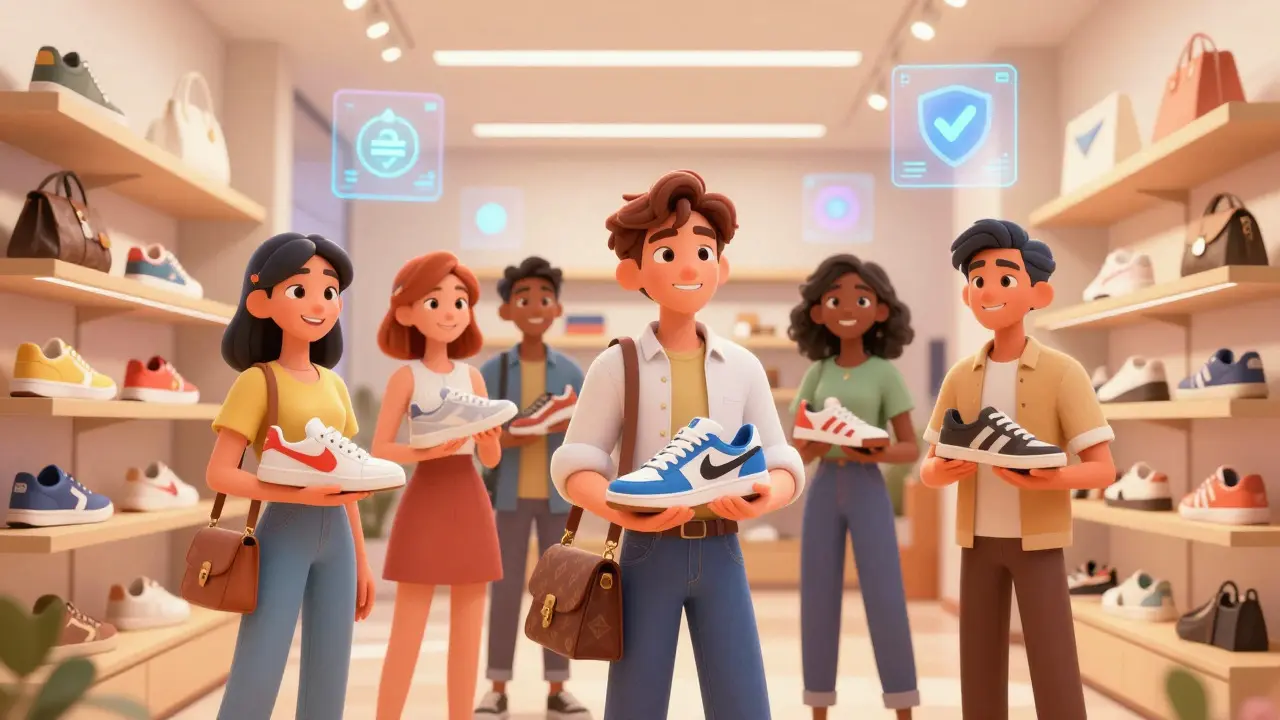
Imagine buying a pair of sneakers that cost $500. You get home, check the box, and everything looks perfect. But what if those shoes are fake? What if the brand you trusted just lost your business because someone else printed a convincing replica? This isn't a hypothetical scenario. It is happening right now, costing brands billions.
The global counterfeit market hit $1.82 trillion in value according to reports from just a few years ago, and that number only grows. Traditional methods like holograms, QR codes, and serial numbers have failed to keep up. They can be copied, peeled off, or forged with alarming ease. Enter Non-Fungible Tokens (NFTs). While many people still associate NFTs with expensive JPEGs of monkeys, their real-world application in stopping fraud is quietly revolutionizing how we verify truth in physical goods.
This guide breaks down exactly how NFT anti-counterfeiting works, why it beats traditional methods, and where the technology actually falls short. We will look at the mechanics, the hybrid solutions required for physical items, and what this means for brands and buyers in 2026.
Why Traditional Authentication Fails
To understand why NFTs matter, you first need to see why old-school security fails. For decades, luxury brands and pharmaceutical companies relied on physical markers. Think of the holographic sticker on a Louis Vuitton bag or the scratch-off code on a prescription drug bottle.
The problem is simple: these markers exist in the physical world. If a counterfeiter can buy one genuine item, they can scan, copy, or replicate that marker. Once a high-quality forgery of the security tag exists, the system is broken. Furthermore, these systems are often siloed. A database of serial numbers might be hacked, or worse, an insider might leak the next batch of codes to counterfeiters before the products even ship.
There is also no history. A serial number tells you if an item is registered, but it doesn't tell you who owned it before, if it was repaired, or if it traveled through suspicious channels. You get a static yes/no answer, not a story.
How NFT Technology Solves the Trust Problem
Non-Fungible Tokens (NFTs) change the game by moving the proof of authenticity onto the blockchain. An NFT is a unique digital token that acts as a certificate of ownership. Unlike cryptocurrencies like Bitcoin, which are identical and interchangeable, every NFT is distinct.
When applied to anti-counterfeiting, the process looks like this:
- Minting: When a brand manufactures a product, they create a corresponding NFT on a blockchain network. This token contains metadata about the item-its model number, manufacturing date, materials used, and initial owner.
- Linking: The NFT is linked to the physical product via a secure method, such as a NFC chip embedded in the product itself or a unique QR code that requires scanning to access the token.
- Verification: Anyone can verify the product's authenticity by checking the blockchain. Since the ledger is decentralized, no single company controls the data, making it nearly impossible to alter without detection.
The core power here lies in three technical features:
- Immutability: Once data is written to the blockchain, it cannot be changed. A counterfeiter cannot simply edit the record to say their fake bag is authentic.
- Traceability: Every transfer of the NFT is recorded. If a limited-edition watch changes hands five times, the blockchain shows the entire lineage. This creates a verifiable history of ownership.
- Cryptographic Security: Access to the NFT is controlled by private keys. Only the person holding the correct key can transfer or modify the associated data, preventing unauthorized duplication.
| Feature | Traditional (Holograms/QR) | NFT-Based System |
|---|---|---|
| Tamper Resistance | Low (can be copied/forged) | High (cryptographically secured) |
| Ownership History | None or Limited | Complete and Public Ledger |
| Data Control | Centralized Database | Decentralized Blockchain |
| Transferability | Manual Paperwork | Instant via Smart Contract |
| Cost at Scale | Low per unit, high management | Higher setup, lower verification cost |
The "Physical Gap": Why NFTs Aren't Enough Alone
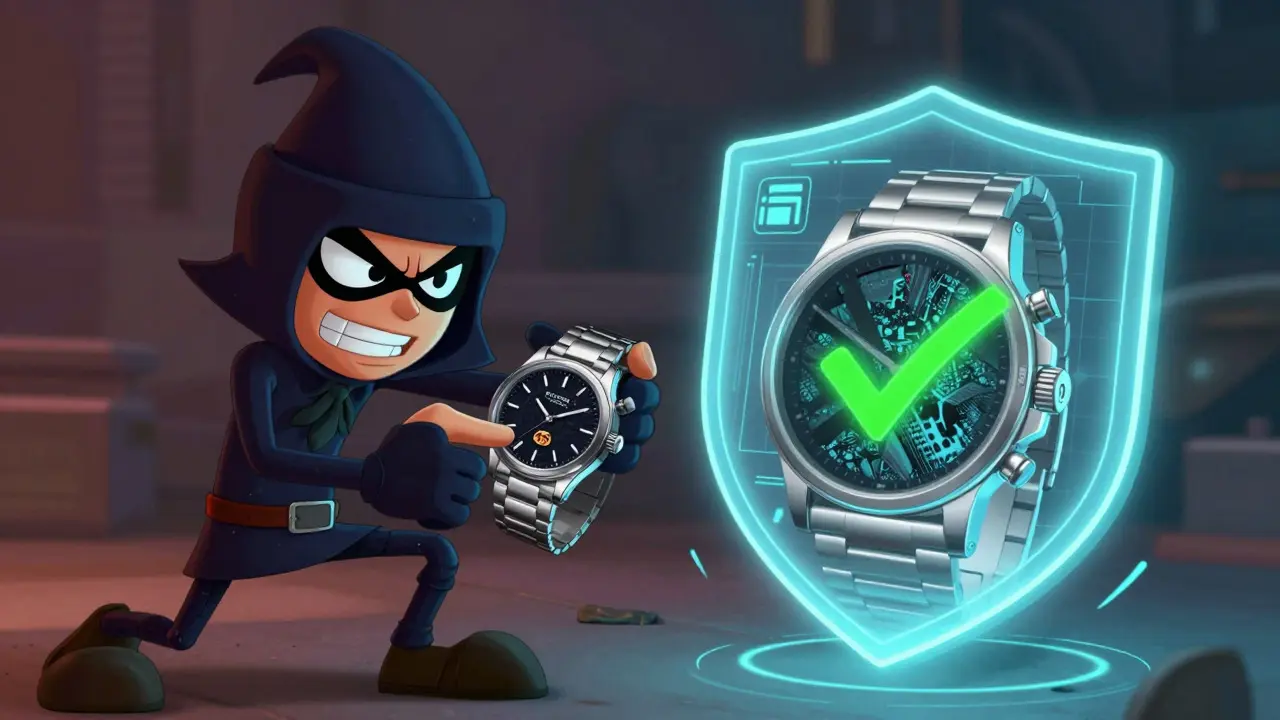
Here is the catch that most marketing brochures ignore. An NFT proves that a *digital* record is authentic. It does not prove that the *physical* object attached to it is real. This is known as the "oracle problem" or the link between the digital and physical worlds.
If I buy a fake Rolex, but I somehow manage to steal the NFC chip from a genuine Rolex and glue it onto my fake one, the blockchain will still say the item is authentic. The NFT is valid; the shoe is fake. According to analysis from firms like AlpVision, blockchain technology alone cannot provide complete anti-counterfeiting protection for physical products.
To fix this, successful implementations use a hybrid approach. This combines the transparency of NFTs with physical authentication technologies. Common methods include:
- NFC Chips: Embedded microchips that are difficult to remove without destroying the product. These chips store a unique ID that links to the NFT.
- Fingerprinting Technology: Using AI to scan the microscopic surface texture of a material (like leather or fabric). No two pieces of leather are exactly alike. This unique "fingerprint" is hashed and stored on the blockchain alongside the NFT.
- Watermarking: Invisible digital watermarks added to packaging or labels that can be scanned with a smartphone camera.
The NFT serves as the unchangeable logbook, while the physical tech ensures the item in your hand matches the logbook entry. Without this combination, the system has a critical vulnerability.
Real-World Applications and Case Studies
We are already seeing this technology move beyond theory into practice across several high-stakes industries.
Luxury Fashion: Brands like LVMH and Prada have experimented with digital passports for their goods. In 2026, this is becoming standard for high-end resale markets. Collectors value the ability to prove provenance. When you buy a vintage Chanel bag, the NFT history shows every previous owner, verifying it hasn't been swapped with a replica during transit.
Pharmaceuticals: Counterfeit drugs kill thousands of people annually. By assigning an NFT to each batch or even each individual pill bottle, pharmacies can scan the item upon receipt. If the blockchain record doesn't match the expected supply chain path, the batch is rejected immediately. This prevents fake medication from entering hospitals.
Sneakers and Streetwear: The secondary market for sneakers is rife with fakes. Platforms like StockX have faced legal battles over authenticity. Nike, for instance, has accused platforms of selling certified fakes. Integrating NFTs directly into the shoe design allows buyers to verify authenticity instantly via their phone, reducing reliance on third-party human inspectors who can make mistakes.
However, implementation is not without friction. Early adopters report challenges with user experience. Asking a regular consumer to set up a crypto wallet to verify a purchase is a barrier. Successful brands are hiding this complexity behind simple QR code scans that lead to a web-based verification page, keeping the blockchain interaction invisible to the end-user.
Challenges and Risks for Businesses
Adopting NFT anti-counterfeiting isn't just a technical upgrade; it's a strategic shift. Here are the hurdles you need to clear.
Technical Complexity: Building smart contracts requires specialized developers. If the code has bugs, the entire system can fail. You need robust infrastructure that integrates with existing ERP and supply chain software. It is not a plug-and-play solution for small businesses yet.
Legal Ambiguity: Laws around digital assets are still evolving. Michigan State University legal experts warn that virtual reality NFTs pose new risks to trademark holders. If a brand sells a digital twin of a product, who owns the rights to that image? Clear terms of service and smart contract logic are essential to avoid future litigation.
Environmental Concerns: While older blockchains like Ethereum consumed massive amounts of energy, the shift to Proof-of-Stake consensus mechanisms has reduced energy usage by over 99%. However, some consumers still associate crypto with environmental damage. Brands must choose eco-friendly chains (like Polygon or Solana) and communicate this clearly.
Platform Fragmentation: Not all NFT marketplaces are created equal. Major platforms like OpenSea have strict takedown procedures for infringing material. Smaller exchanges may be slower to act. Brands must monitor multiple platforms to ensure counterfeit NFTs claiming to represent their products are removed quickly.
Future Outlook: Where Is This Going?
The trajectory for NFT-based authentication points toward broader standardization. We are moving away from isolated experiments toward industry-wide protocols. Expect to see "dynamic NFTs" become common. These are tokens that can update their metadata based on real-world events. Imagine a car's NFT automatically updating its maintenance records every time it visits a dealer, creating a living history of the vehicle's condition.
Government sectors are also exploring this for identity documents and land titles, where fraud costs are measured in social stability rather than just profit margins. As virtual worlds expand, the distinction between physical and digital goods will blur further, making unified authentication systems even more critical.
The journey toward unquestionable authenticity has just begun. For brands, the question is no longer if they should adopt blockchain traceability, but how quickly they can integrate it with physical safeguards to protect their reputation and customers.
Can NFTs completely stop physical counterfeiting?
No, not on their own. NFTs provide a tamper-proof digital record, but they do not physically prevent someone from making a fake object. To be effective, NFTs must be combined with physical authentication methods like NFC chips or surface fingerprinting to link the digital token securely to the physical item.
Is using NFTs for anti-counterfeiting expensive?
The initial setup cost is higher due to development and integration needs. However, long-term costs can decrease because automated verification reduces the need for manual inspections and intermediaries. The ROI comes from protecting brand equity and reducing losses from fraud.
Which blockchain is best for product authentication?
Ethereum is the most established, but Layer 2 solutions like Polygon or alternative chains like Solana are often preferred for product authentication due to lower transaction fees and faster processing speeds. The choice depends on your specific volume and environmental sustainability goals.
How do consumers verify an NFT-authenticated product?
Consumers typically scan a QR code or tap an NFC chip embedded in the product with their smartphone. This opens a web page showing the product's details and its blockchain history. The goal is to make this process seamless so users don't need to understand cryptocurrency wallets.
What happens if the physical tag is stolen and moved to a fake item?
This is a known risk called tag swapping. To mitigate this, brands use tags that are destroyed when removed (void stickers) or combine the tag with biometric-like scanning of the product's surface texture. If the surface texture doesn't match the data linked to the NFT, the system flags it as suspicious.