

Imagine a company with no CEO, no board of directors, and no headquarters. Instead of a boss giving orders, the entire organization is run by a piece of code and a global community of thousands of people who all have a say in where the money goes. This isn't a sci-fi movie; it's how a DAO is a Decentralized Autonomous Organization, an entity governed by rules encoded on a blockchain that allows members to make decisions collectively without a central authority. But how does that actually work in practice? How do you stop a thousand strangers from arguing in circles forever and actually get things done?
The Engine Behind the Vote
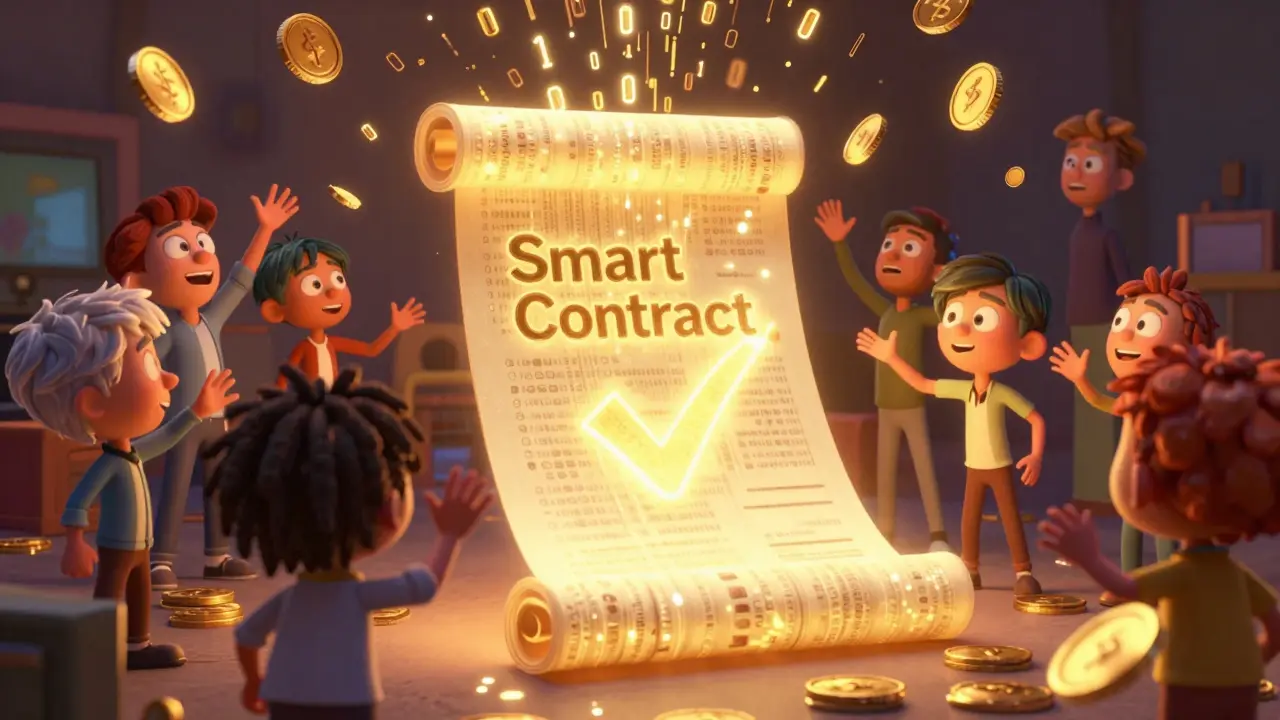
At the heart of every DAO is a set of Smart Contracts. Think of these as digital legal agreements that execute themselves automatically. If a condition is met-for example, if 60% of members vote "yes" on a funding request-the smart contract triggers the payment immediately. There is no accountant to sign a check and no manager to approve the expense. The code is the law.
This technical setup removes the "middleman" risk. In a traditional company, a leader might promise a change but never implement it. In a DAO, once the community reaches a consensus, the blockchain ensures the action happens exactly as coded. This transparency is why DAOs are so disruptive; you don't have to trust a person's word when you can see the logic in the open-source code.
The Life Cycle of a Proposal
Decisions in a DAO don't just happen randomly; they follow a specific pipeline to ensure the community actually understands what they are voting on. It usually breaks down into four main stages:
- The Idea: A member submits a proposal. This could be anything from "let's spend 50 ETH to hire a new designer" to "let's change the voting threshold for security updates."
- The Debate: Before any buttons are clicked, the community discusses the idea in forums or chat apps. This is the "human" part of the process where flaws in the proposal are poked and improved.
- The Vote: Token holders cast their votes during a set window of time. Depending on the DAO's rules, this might take a few days or a couple of weeks.
- Execution: If the proposal hits the required target, the smart contract automatically carries out the decision.
How Voting Power is Actually Calculated
Not all votes are created equal. The way a DAO weighs a voice depends on its specific goals. Most use Governance Tokens, which are digital assets that grant the holder the right to vote. However, the DAO governance model varies wildly depending on the mechanism chosen.
| Mechanism | How it Works | Pros | Cons |
|---|---|---|---|
| Token-Weighted | 1 Token = 1 Vote | Simple, fast to implement | "Whales" (large holders) can dominate |
| Holographic Consensus | Members bet tokens on predictions | Scales well for large groups | High complexity for new users |
| Multisig Voting | Community signals, small group executes | Extremely fast for emergencies | More centralized and less transparent |
| Permissioned Majority | Specialists make the final call | Expert-led decisions | Risks excluding the wider community |
Setting the Rules: The Governance Parameters
Before a DAO can operate, the developers have to set the "ground rules." If these aren't tuned correctly, the organization can either freeze up (because no one can agree) or be taken over by a small group of insiders. Based on frameworks like those used by Aragon, there are a few critical settings to consider.
First is the Quorum. This is the minimum number of people who must participate for a vote to be valid. If a DAO has 10,000 members but only 10 people vote, the decision shouldn't count, even if those 10 all agree. Without a quorum, a tiny minority could steer the entire organization.
Then there is the Pass Rate. For a simple budget increase, a simple majority (50% + 1) usually works. But for "constitutional" changes-like changing how tokens are minted-many DAOs require a super-majority, often 67% or more, to ensure there is overwhelming support for high-risk moves.
Real-World Application: The Lido DAO Example
To see this in action, look at Lido DAO. They use a sophisticated system to balance security and speed. For a proposal to pass at Lido, at least 5% of the total token supply must vote "yes," and those "yes" votes must represent more than 50% of all tokens cast.
They also tackle "voter fatigue." If a DAO has 50 different small proposals every week, people stop voting. Lido solves this by bundling proposals into packages, allowing members to approve multiple related items at once. They also implement a unique two-phase voting window: a 48-hour period for general voting and a final 24-hour "objection phase" where members can quickly pivot their stance if a critical flaw is discovered at the last minute.
The Dark Side: Risks and Failures
Decentralization sounds great on paper, but it has a messy track record. The biggest risk is the code itself. In 2016, a project called The DAO suffered a massive security breach because of a flaw in its smart contract, leading to millions of dollars being drained. When the code is the law, a bug in the code becomes a legal loophole for hackers.
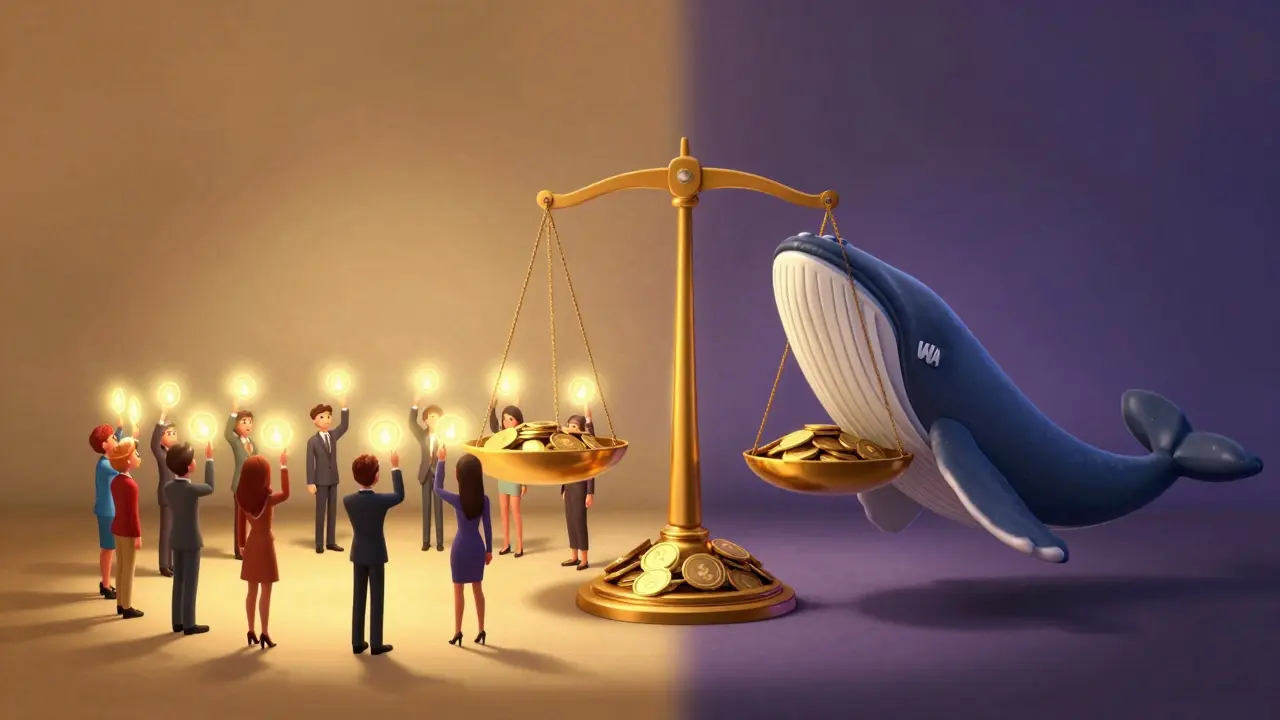
There is also the risk of "Governance Capture." This happens when a few wealthy individuals buy up a huge percentage of tokens, effectively turning a democratic DAO back into a traditional dictatorship. To fight this, some organizations are experimenting with quadratic voting, which makes it more expensive for a single person to cast a massive number of votes for one proposal.
What happens if a DAO can't reach a quorum?
If a proposal fails to meet the quorum, the vote is simply void. The proposal doesn't pass, and no action is taken by the smart contracts. Usually, the proposer will then refine the idea, promote it more heavily in the community forums, and resubmit it for a second vote.
Can you change the rules of a DAO after it's launched?
Yes, but it's usually difficult. Most DAOs have a specific process for "governance updates." This typically requires a super-majority vote because changing the rules is a high-risk move that affects every token holder. Once the vote passes, a new smart contract is deployed or the existing one is updated.
Is a DAO more efficient than a traditional company?
In terms of execution, yes-smart contracts are instant. In terms of decision-making, often no. Reaching a consensus among thousands of global members is much slower than a CEO making a decision in five minutes. This is why many DAOs use "committees" or multisig wallets for day-to-day operations while keeping the big-picture decisions decentralized.
Do I need a lot of tokens to have an influence in a DAO?
In token-weighted systems, yes. Your influence is directly tied to your holdings. However, many newer DAOs are moving toward "reputation-based" systems or holographic consensus to ensure that expertise and active contribution matter more than just how much money you have.
What is a multisig wallet in the context of DAO governance?
A multisig (multi-signature) wallet requires multiple authorized people to sign off on a transaction before it can be sent. DAOs often use these for emergency funds or urgent security patches. While it's more centralized than a full community vote, it prevents a single person from stealing funds and is much faster than a full governance cycle.
Next Steps for Getting Involved
If you're looking to enter the world of decentralized governance, don't start by buying tokens. Start by joining a DAO's Discord or Discourse forum. Read the current proposals and see how the community debates. You'll quickly see where the friction points are-whether it's low voter turnout or dominance by a few large holders.
For those building a DAO, the biggest piece of advice is to start with a flexible governance structure. Don't lock yourself into a rigid set of rules on day one. Use tools like Aragon or Tally to experiment with your quorum and pass rates, and always have a multisig safety valve for emergencies before you fully hand the keys to the community.
Jimmy vasquez
May 2, 2026 AT 04:37Most people forget that the real hurdle isn't the code but the social layer. Getting thousands of people to actually read a proposal before voting is the hardest part of any DAO. I've seen plenty of projects fail not because of a bug, but because of total voter apathy.
Robert Smith
May 3, 2026 AT 15:14True that 💯
Felix Eduardo Velasquez
May 3, 2026 AT 23:22The tension between efficiency and decentralization is a classic philosophical dilemma. If you optimize for speed, you inevitably move toward a centralized structure like a multisig. If you optimize for pure democracy, you risk stagnation. The goal isn't to eliminate the middleman entirely, but to make the middleman accountable through transparent, programmable constraints.
Nitin Gupta
May 5, 2026 AT 20:14I think the mention of quadratic voting is quite important here. It's a great way to ensure that a few whales can't just steamroll the entire community's will, though it does introduce some complexity in terms of identity verification to prevent Sybil attacks.
VIVEK SINGH
May 7, 2026 AT 18:48Oh look, another utopian dream where "the code is law" until the code actually breaks and everyone panics. It's adorable that we think replacing a CEO with a smart contract solves human greed. All it does is move the greed to the people who write the contracts or the ones who can afford a million tokens to buy the vote. Pure genius, really.
Lloyd I
May 7, 2026 AT 22:01Hey, let's look at the bright side! We're seeing the birth of a whole new way to collaborate globally. Even with the growing pains, the ability to coordinate capital and labor without a central bank or corporate HQ is a huge leap forward for inclusivity in finance!
debra hoskins
May 9, 2026 AT 15:31The whole "community debate" phase is basically just a digital shouting match. Most of these forums are just echo chambers where people nod along until the tokens start losing value, then the real screaming begins. It's a chaotic circus disguised as governance.
Janis Naglis
May 9, 2026 AT 23:18Wait!!! We really need to talk about the synergistic potential of on-chain signaling!!! If we can leverage better UX for the voting portals, we can totally mitigate that voter fatigue!!! The agility of a DAO is only limited by our own cognitive load management!!! Let's keep pushing for those optimistic paradigms!!!
Chloe Fletcher
May 10, 2026 AT 08:02Love the energy here! 🌟 I totally agree that better tools will make it easier for everyone to participate without feeling overwhelmed. We just need to keep supporting each other and building better onboarding paths for the newbies! 🚀💖
Harvey Alford
May 11, 2026 AT 01:22Too slow. I'd just buy the tokens and win.
Rachel S
May 12, 2026 AT 00:54It is truly a tragedy when a flaw in the smart contract leads to such catastrophic loss, as we saw with the 2016 event. 😱 One must wonder if the pursuit of absolute decentralization is worth the inherent risk of irreversible technical errors. While the theory is elegant, the reality of immutable code is terrifyingly unforgiving for those who make a single mistake. 🏛️
Lynne Teperman
May 12, 2026 AT 01:54wild to think about a world without bosses just vibes and code
Pramendra Singh
May 12, 2026 AT 08:03I believe we will eventually find a middle ground where stability and decentralization coexist perfectly. It takes time to build these systems, but the spirit of cooperation is what will ultimately make DAOs successful in the long run.
Gabby Puche
May 13, 2026 AT 08:13just hanging out and watching these governance wars unfold is honestly a hobby at this point lol 😂