
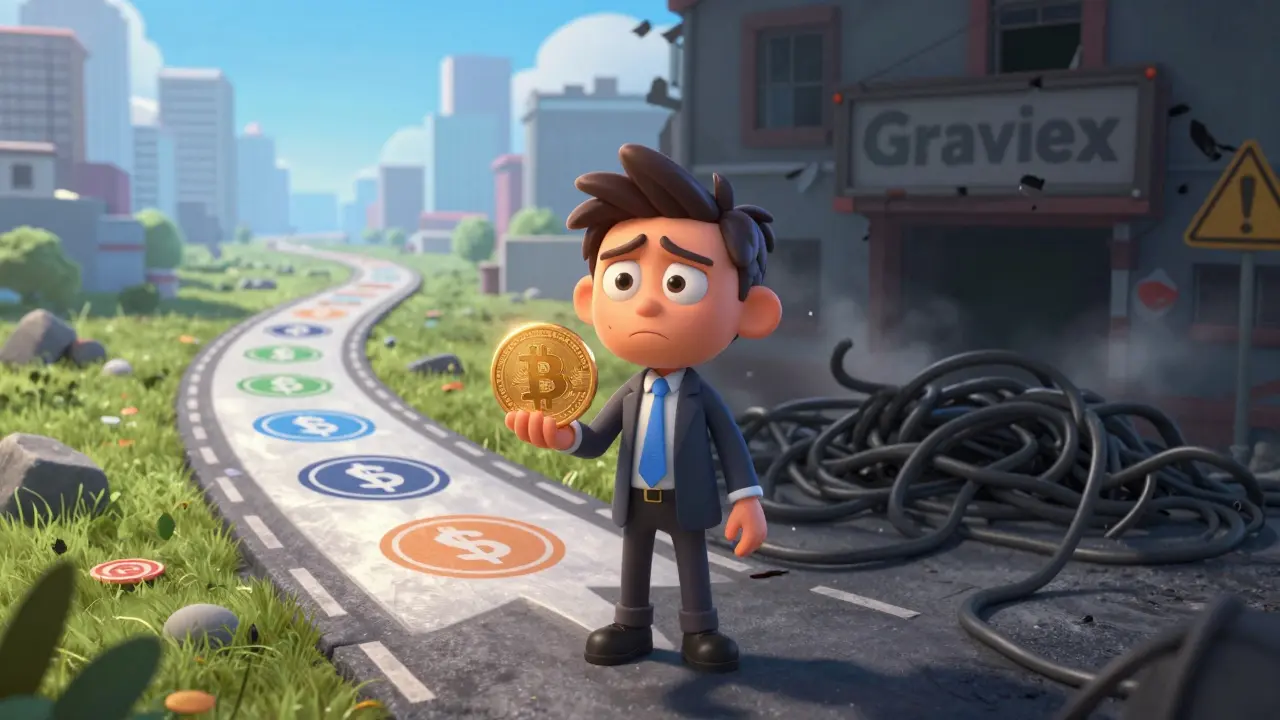
Have you heard of Global Gravitation, the supposed Bitcoin exchange promising easy profits? If you are searching for this name in July 2026, stop and read carefully. There is no major, reputable cryptocurrency platform called "Global Gravitation." This name likely stems from a mix-up with Graviex, a Malta-based exchange launched in 2018, or it could be a signal of a scam site using a similar-sounding name to trick users.
In the crypto world, names matter. A slight change can mean the difference between a functional, albeit flawed, trading platform and a complete fraud that steals your funds. Before you deposit a single dollar, we need to clear up the confusion. We will look at what Graviex actually is, why experts rate it poorly, and how to spot if you are dealing with a fake entity impersonating legitimate services.
The Identity Crisis: Graviex vs. Global Gravitation
Let’s get straight to the point. If you type "Global Gravitation" into a search engine, you might find scattered references, but you won’t find a top-tier exchange. The most likely candidate you are looking for is Graviex.net. Graviex is a real company, headquartered in Malta, operating since 2018. However, it is not a household name like Binance or Coinbase. It sits at position 169 on CoinMarketCap rankings as of 2026, which tells us it is a mid-level player with limited visibility and trust compared to giants.
Why would someone call it "Global Gravitation"? It sounds more impressive. It sounds like a global financial institution. But here is the truth: Graviex has struggled with reputation issues for years. According to Traders Union, a respected broker review agency, Graviex holds an Overall Score of just 1.69 out of 10. Expert Anton Kharitonov explicitly does not recommend this broker due to widespread client dissatisfaction. If you are being pitched by a site claiming to be "Global Gravitation," ask them for their regulatory license number. If they hesitate, run.
| Feature | Graviex (Real) | Fake "Global Gravitation" Sites |
|---|---|---|
| Regulation | Malta-based, registered entity | Often unregistered or offshore shell companies |
| Domain Age | Established since 2018 | Recently created domains (less than 1 year) |
| Trading Pairs | 110+ pairs including BTC, ETH | Limited pairs or non-existent order books |
| Withdrawal Process | Crypto-only or via Payeer | Impossible withdrawals, high "taxes" demanded |
| Reputation | Poor (1.69/10 rating) | No reviews or fake 5-star testimonials |
How Graviex Actually Works (And Why It’s Flawed)
If you decide to proceed with Graviex-the likely intended target-understand that it is not a beginner-friendly platform. It operates with a specific set of constraints that many modern traders find frustrating. First, you cannot deposit money directly from a bank card. You must send cryptocurrency or use Payeer, a digital wallet service popular in certain regions but not globally accepted. This friction alone filters out many casual investors.
The platform offers spot trading only. No futures, no margin trading beyond 1:1 leverage, and no complex derivatives. While this limits risk, it also limits opportunity. You can trade over 110 pairs, including Bitcoin (BTC) and Ethereum (ETH), but also obscure coins like VIVID, VEIL, UPX, and UCR. These lesser-known tokens often suffer from low liquidity, meaning you might struggle to sell large amounts without crashing the price.
Here is where it gets tricky. Graviex uses a proprietary token called GIO. Holding GIO reduces your trading fees. If you hold 50,000 GIO tokens, you get a 50% discount on commissions. This creates a conflict of interest. The exchange encourages you to buy its own token to save money on trading other assets. It’s a classic retention strategy, but it locks your capital into an asset whose value depends entirely on the exchange’s success.
Fees, Liquidity, and Hidden Costs
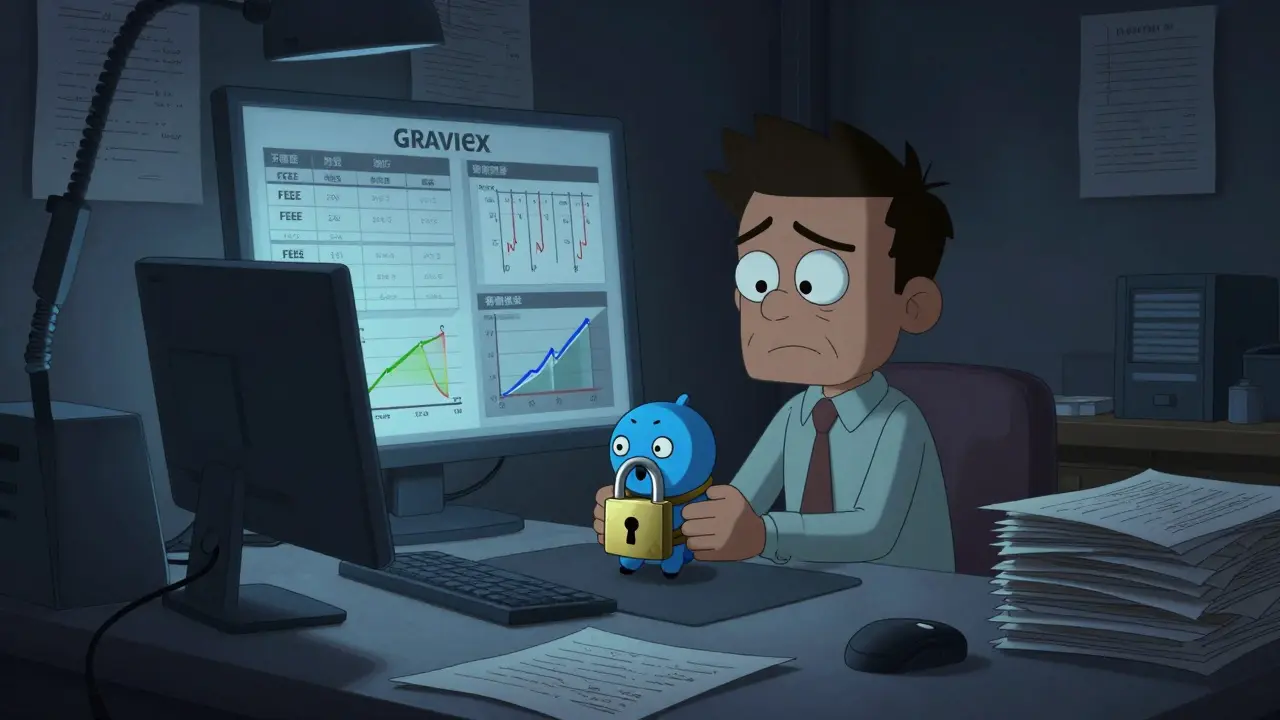
Costs eat into profits. Graviex claims to have low fees, but let’s break down the reality. The standard trading commission is 0.2% per order. That seems reasonable until you realize that if your order executes partially, you pay proportional fees. Withdrawal fees are progressive and vary by coin. For Bitcoin, the fee is 0.0004 BTC, which might seem small, but during times of high network congestion, this can translate to significant dollars. For Ethereum, it’s 0.022 ETH.
More importantly, consider liquidity. Low liquidity means wide spreads. When you buy Bitcoin on Graviex, you might pay $3,000, but the sell order is only $2,990. On larger exchanges, that spread might be pennies. On Graviex, it can be dollars. Over time, these tiny losses add up. Combined with the fact that daily trading volume exceeds $100 million but is concentrated in fewer pairs, slippage becomes a real issue for active traders.
Customer support is another weak point. Users report slow responses and limited help options. If you face a withdrawal issue-and Graviex has faced criticism for withdrawal delays-you are left waiting. There is no phone support, no live chat guarantee. In crypto, speed is everything. A delayed withdrawal during a market crash can cost you thousands.
The Gravity Token Confusion
You might also hear about "Gravity" in crypto circles. Do not confuse this with Graviex. Gravity (G) is a token issued by Galxe, a platform for web3 user engagement. It is not an exchange. It is an asset you can buy and sell. Price predictions for Gravity in 2026 show volatility, with estimates ranging from $0.00029 to $0.026 depending on the analyst. Some projects like TradingBeast predict highs near $0.026 by late 2025, while others see minimal growth. Investing in Gravity is speculative, unrelated to trading on Graviex, and carries its own risks.
Mixing up Graviex, Gravity, and a fictional "Global Gravitation" is dangerous. Each has different purposes, risks, and structures. Never invest based on a name that sounds familiar but lacks verification.
Safety First: How to Verify Any Crypto Exchange
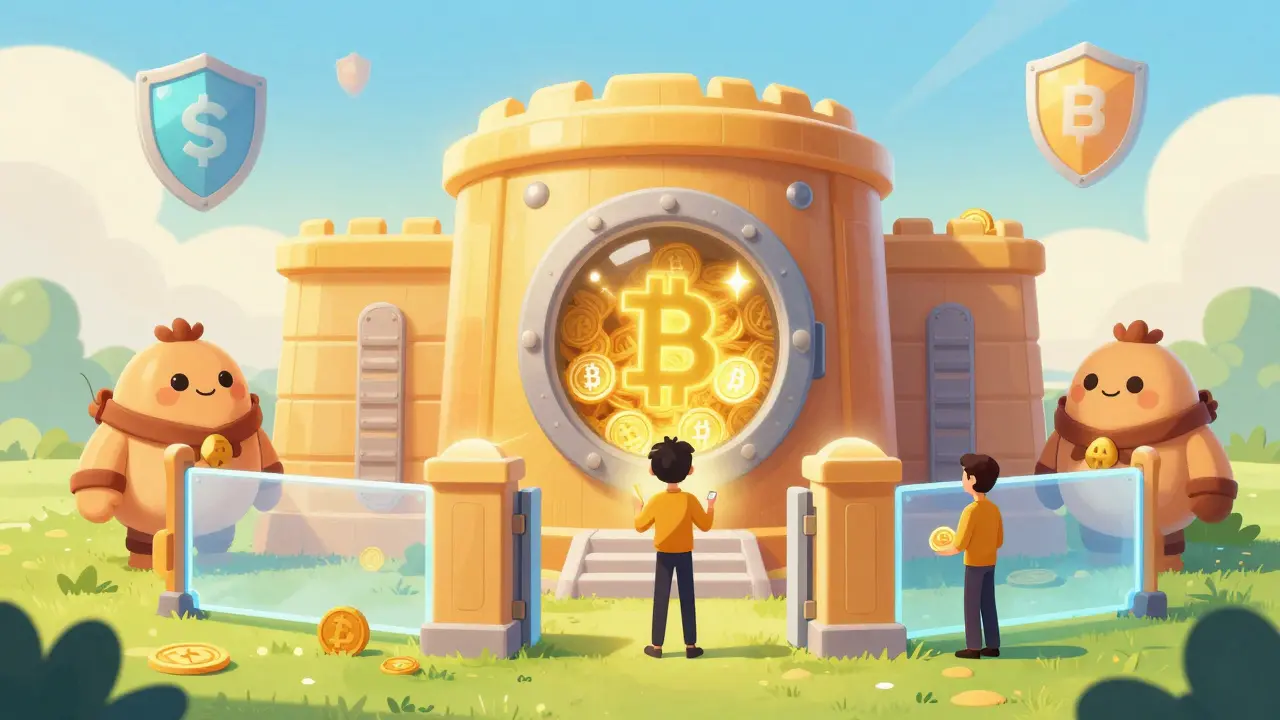
Before you trust any platform with your Bitcoin, follow these steps. First, check the domain age. Use tools like Whois to see when the website was created. If "Global Gravitation" was registered last month, it is likely a scam. Second, look for regulatory information. Legitimate exchanges display their license numbers clearly. Third, read independent reviews. Ignore testimonials on the exchange’s own site. Look for forums like Reddit or Trustpilot where users share unfiltered experiences. Fourth, test with small amounts. Deposit $10, trade once, and try to withdraw. If the withdrawal fails or takes weeks, close the account immediately.
In 2026, the crypto market is more mature. Institutional adoption is rising, and regulations are tightening. Platforms that do not comply with basic security standards are disappearing. Graviex survives, but barely. Its poor rating and user complaints suggest it is holding on by a thread. For most traders, especially beginners, there are better, safer options available.
Better Alternatives for Bitcoin Trading
If you want to trade Bitcoin safely, consider established platforms. Binance, Coinbase, Kraken, and Bybit offer higher liquidity, better customer support, and stronger security measures. They may have slightly higher fees for some services, but the reliability is worth it. You can deposit via bank transfer, credit card, or crypto. You can access futures, staking, and a wider range of assets. Most importantly, they have proven track records of handling millions of users securely.
Do not let the allure of "low fees" or "exclusive tokens" blind you to red flags. Graviex’s GIO token program is interesting on paper, but in practice, it ties your fate to a struggling exchange. Ask yourself: Do I really want my savings dependent on a platform rated 1.69 out of 10?
Is Global Gravitation a real crypto exchange?
No, there is no reputable exchange called "Global Gravitation." This name is likely a confusion with Graviex, a Malta-based exchange, or a scam site mimicking legitimate platforms. Always verify the exact URL and regulatory status before depositing funds.
What is the reputation of Graviex in 2026?
Graviex has a poor reputation, with a Traders Union score of 1.69 out of 10. Experts advise against using it due to low liquidity, withdrawal issues, and limited customer support. It ranks 169th on CoinMarketCap, indicating low market trust.
Can I deposit fiat currency directly on Graviex?
No, Graviex does not accept direct bank card deposits. You must deposit cryptocurrencies or use Payeer, a third-party digital wallet. This adds complexity and potential fees to the funding process.
What is the GIO token used for?
GIO is Graviex’s proprietary token. Holding 50,000 GIO tokens reduces trading fees by 50%. It also allows participation in dividend programs. However, buying GIO ties your investment to the exchange’s performance, which carries significant risk given its poor ratings.
Is Gravity (G) token related to Graviex?
No, Gravity (G) is a token by Galxe, a web3 engagement platform. It is completely separate from Graviex exchange. Confusing the two can lead to incorrect investment decisions.
Are there better alternatives to Graviex for Bitcoin trading?
Yes, platforms like Binance, Coinbase, Kraken, and Bybit offer higher liquidity, better security, and more reliable customer support. They are widely regulated and trusted by millions of users globally.
KEITH WONG
July 13, 2026 AT 00:06bro this article is basically saying dont trust anything thats not binance 🤷♂️ but like seriously if its ranked 169th on cmc why are people even looking at it? the name global gravitation sounds like a cult not an exchange 😂 i tried to find it once and ended up on some phishing site so yeah run away fast
Natalie Lucas
July 14, 2026 AT 12:35omg yes! i was just thinking the same thing lol. its so wild how these scam sites keep popping up with names that sound almost legit. like gravity? graviex? its giving major red flags everywhere 🚩🚩🚩 stay safe everyone!!
Curtis Johnson
July 14, 2026 AT 17:40i mean look, i get why people fall for it. the promise of easy money is intoxicating right? but you have to ask yourself who benefits when you lose everything. it’s always the house or in this case the scammers. we need to be more careful out there folks.
Steven Briggs
July 15, 2026 AT 22:38heard about this before. seems shady. stick to known exchanges.
Hamza k
July 17, 2026 AT 06:48absolute garbage platform if it exists at all. the audacity to call themselves global gravitation is laughable. they probably cant even process a withdrawal without charging you enough fees to buy a small car. don’t touch it with a ten foot pole.
Kim Kay
July 17, 2026 AT 08:04i think its important we help each other spot these scams. i made a mistake early on trusting a site that looked nice but had no reviews. learned my lesson the hard way. please check the domain age first!
Brad Semp
July 18, 2026 AT 13:10It is truly disheartening to observe the sheer lack of due diligence displayed by the average retail investor. The suggestion that one might consider trading on a platform with a Traders Union score of 1.69 is akin to suggesting one should purchase real estate in a war zone. Graviex is a relic of a less regulated era, and anyone still using it is either ignorant or complicit in their own financial ruin.
Korn Arrieta
July 19, 2026 AT 07:44stop crying about it and take responsibility. if you put your money on a tier 3 exchange you deserve to lose it. the market doesn't care about your feelings. griviex has been trash since day one and now these clone scams are just picking up the scraps from idiots who cant read.
Jackie D
July 19, 2026 AT 14:01wait so the gio token is basically a trap? like you have to buy their coin to save on fees which means you’re stuck with their coin? that sounds super sketchy to me. feels like a pyramid scheme disguised as a discount program.
Ruth Williams
July 21, 2026 AT 03:18Precisely. The GIO token mechanism is a textbook example of predatory retention strategy. It forces capital allocation into an asset with no intrinsic value other than its utility within a failing ecosystem. A sophisticated investor would recognize this immediately as a conflict of interest designed to lock users into a sinking ship.
Sophie Nakasako
July 22, 2026 AT 14:56it makes me wonder what drives people to seek out obscure exchanges. is it curiosity? greed? or just bad google results? i feel like we need to educate ourselves more on how liquidity works because low liquidity is the silent killer of portfolios.
Kristy Morrow
July 23, 2026 AT 14:58you guys are missing the point entirely. the problem isn't just the exchange its the entire crypto culture that encourages gambling over investing. everyone wants to be rich quick and ignores the basics. typical.
Antony Lopez
July 24, 2026 AT 10:37american investors need to wake up. why are we allowing these offshore scams to operate? if this was a us bank it would be shut down in seconds. but crypto is the wild west and we let these crooks steal our money. pathetic.
Winston Lacewing
July 24, 2026 AT 15:13oh my god can you believe the nerve of these people?! i lost $500 to a similar scam last year and i still cry about it sometimes 😭😭 they took everything and blocked me on telegram. never trust anyone who promises guaranteed returns!!!
Kristine Lawson
July 26, 2026 AT 05:26I must respectfully disagree with the notion that emotion plays a significant role in investment decisions; rather, it is a failure of moral character to engage with unregulated entities. One has a duty to oneself and society to ensure that one's capital is deployed responsibly. To do otherwise is not merely foolish; it is ethically bankrupt.
Tawny Holmes
July 26, 2026 AT 19:04binance is safer. use that.
Jessie Smith
July 27, 2026 AT 15:20look i know better than most of you here. i’ve been trading since 2013. these mid-tier exchanges are death traps. the spread alone will kill you. plus the support is non-existent. i see kids falling for this every day and it’s embarrassing really.
Drew M
July 28, 2026 AT 06:46honestly this whole situation is tragic 🎭 the drama of losing your life savings to a fake exchange named after a physics concept? classic. please learn to verify domains people! 🙏✨
Deep Rahman
July 28, 2026 AT 13:35i have been thinking about this for a long time and i believe that the issue is deeper than just one company. it is about the nature of trust in digital spaces. when we cannot see the person behind the screen we become vulnerable. we must build systems that protect the weak from the strong because the strong will always try to take advantage if given the chance and this is a sad truth about human nature.