

Imagine checking your wallet one morning to find $17,000 worth of tokens that cost you nothing but a few clicks. For thousands of crypto users, this wasn't a dream-it was reality during the golden era of crypto airdrops, strategic token distributions where blockchain projects allocate free tokens to specific user groups to bootstrap network effects and reward early adopters. But not every free token is a ticket to riches. Some turned into digital dust, while others built empires. Understanding the history of these distributions helps you separate hype from opportunity.
The Origin Story: From Iceland to DeFi Summer
Airdrops didn't start with complex protocols or billion-dollar valuations. They began with a simple idea: distribute currency widely to build a community. In 2014, Auroracoin sent coins to every citizen of Iceland, earning the nickname "Iceland's Bitcoin." It was a novelty, not a strategy. Fast forward to 2020, and the landscape shifted dramatically. During "DeFi Summer," projects realized that giving away tokens could create loyal users who had a financial stake in the protocol's success.
This shift marked the birth of the modern airdrop. Instead of random giveaways, projects started targeting active users. Uniswap set the standard here. In September 2020, it distributed 400 UNI tokens to anyone who had used its platform before June 2020. This wasn't just marketing; it was decentralization. By giving governance power to users, Uniswap ensured its community had a say in its future. At its peak, those 400 tokens were worth over $17,000 per wallet. That single event changed how the industry viewed token distribution forever.
The NFT Boom: When Apes Got Rich (and Poor)
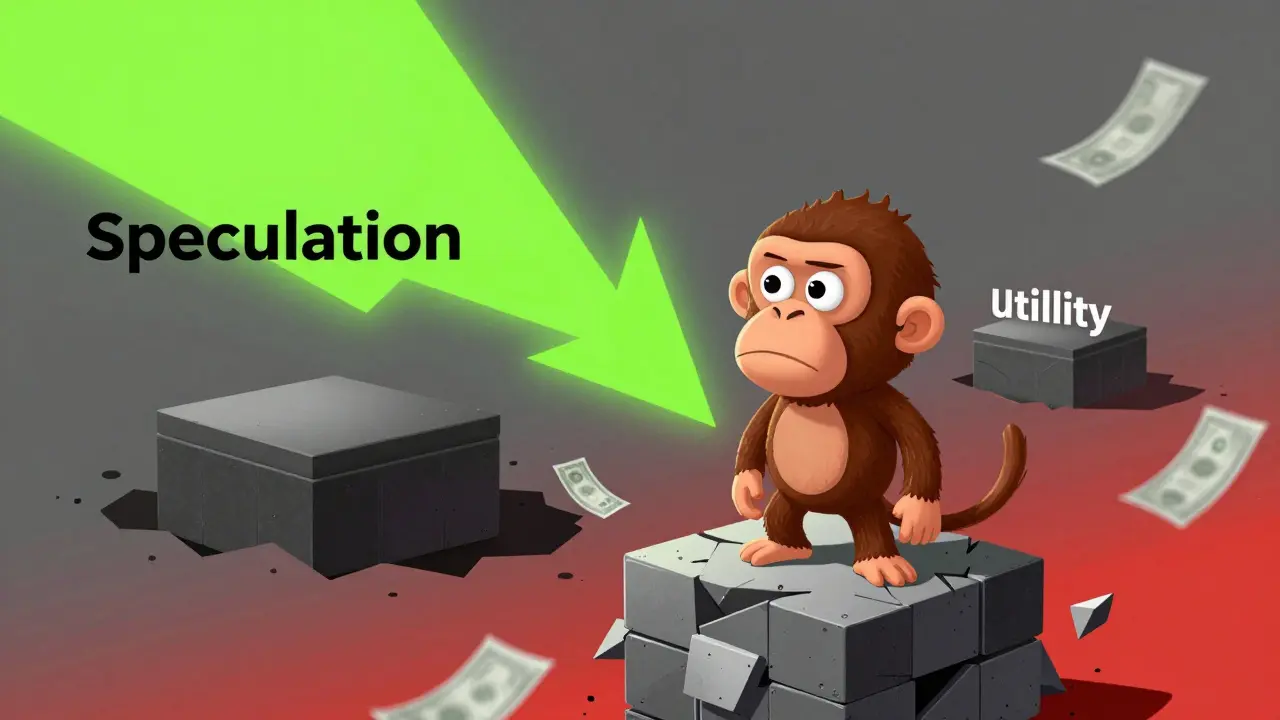
In 2022, the focus shifted from decentralized finance to non-fungible tokens (NFTs). The launch of Apecoin became a case study in extreme volatility. Holders of the Bored Ape Yacht Club NFT received 10,950 APE tokens. At the all-time high price of $23.63, each holder stood on a mountain of value-over $258,000 for some.
But the market turned quickly. By late 2025, APE had lost 99% of its value, trading at just $0.24. Many holders watched their paper wealth vanish as the project struggled to find utility beyond speculation. This experience taught the community a hard lesson: an airdrop's initial value doesn't guarantee long-term success. Without real-world use cases or strong economic models, even the most famous brands can fade into obscurity.
Layer 2 Giants: Arbitrum and Starknet
As Ethereum became congested and expensive, Layer 2 solutions stepped up. Arbitrum launched its ARB token in March 2023, distributing 1.13 billion tokens to users who had bridged funds or traded on its network. The allocation was complex, tracking transaction volume and bridge usage over 11 months. While ARB hit an all-time high of $1.69, it settled around $0.47 by late 2025, retaining about 28% of its peak value. Users who engaged deeply with the ecosystem fared better than casual participants.
Similarly, Starknet distributed its STRK token in February 2024. With a valuation reaching $3.09 billion, Starknet rewarded users across multiple chains, including Ethereum and zkSync. These airdrops highlighted a new trend: multi-chain activity. Projects no longer just looked at one platform; they tracked your entire Web3 footprint. This made farming more difficult but also more rewarding for dedicated users.
The Meme Coin Wildcard: Bonk and Solana
Sometimes, chaos creates opportunity. In 2022, Bonk arrived on the Solana blockchain, distributing 50% of its 100 billion supply to the community. Unlike serious DeFi projects, Bonk was a meme coin-a joke with real money attached. It reached a valuation of $1.325 billion at its peak, driven purely by community enthusiasm and social media hype.
Bonk's journey illustrates the double-edged sword of speculative assets. While early recipients saw massive gains, the token eventually dropped 99.99% from its highs. Yet, unlike APE, Bonk maintained a cult-like following. Its success wasn't about utility; it was about culture. For many users, Bonk proved that attention itself has value in crypto markets.
New Models: Hyperliquid and Pi Network
Recent years have introduced innovative approaches to distribution. Hyperliquid launched its HYPE token in November 2024 with a fully decentralized model. It allocated 31% of its supply directly to users based on trading activity. HYPE surged from $2 to $22.67 within 45 days, showcasing the power of organic growth without venture capital pressure. However, like many high-flyers, it corrected to $8.45 by late 2025, reminding investors that momentum isn't permanent.
On the other end of the spectrum sits Pi Network. Since 2019, over 50 million users have "mined" Pi on their phones. In 2025, Pi finally launched, claiming a $12.6 billion valuation. Critics argue this figure is inflated due to illiquid secondary markets. Only 12% of users actively trade on exchanges like OKX and Binance. Pi represents a different kind of airdrop: one built on patience and mass adoption rather than technical engagement. Whether it succeeds remains unproven, but its scale is undeniable.

How to Spot a Legitimate Airdrop
With great rewards come great risks. Scammers target eager airdrop hunters constantly. Here’s how to stay safe:
- Verify Official Channels: Never click links from Twitter DMs or unsolicited emails. Always go through official project websites or verified Discord servers.
- Check Wallet Compatibility: Use hardware wallets like Ledger for claiming large amounts. Software wallets are convenient but less secure against sophisticated attacks.
- Understand Gas Fees: Claiming on Ethereum can cost $45-$120 in gas fees. Ensure the potential reward outweighs the cost.
- Beware of Phishing Sites: Fake portals mimic official sites perfectly. Double-check URLs and look for HTTPS security indicators.
- Research Vesting Schedules: Tokens often unlock gradually. Don’t expect immediate liquidity if the project uses vesting.
According to Airdrop Alert’s 2025 report, 37% of recipients lost funds to scams during major distributions. Security should always be your priority over speed.
The Future of Airdrops: Regulation and Reputation
The wild west days of airdrops are ending. Regulatory bodies like the SEC and EU’s MiCA framework are tightening rules. Projects must now prove that tokens aren’t unregistered securities. This means stricter eligibility criteria and clearer disclosure requirements.
At the same time, airdrops are becoming smarter. Projects like ENS pioneered reputation-based distributions, weighting rewards by contribution quality rather than simple activity metrics. AI-driven assessment tools may soon automate this process, making it harder to game the system with bot accounts. The goal is no longer just to hand out free money-it’s to build sustainable communities.
What is the biggest crypto airdrop in history?
In terms of total value distributed at launch, Uniswap's UNI airdrop is often cited as the most impactful, allocating 15% of its total supply to users. However, Pi Network claims the largest number of recipients with over 50 million users, though its market valuation remains contested due to low liquidity.
Are crypto airdrops still profitable in 2026?
Yes, but profitability has decreased. Early airdrops offered easy millions, while current ones require significant effort, multi-chain activity, and risk management. Projects like Hyperliquid show potential, but many tokens lose 80-90% of their value after launch. Success depends on selecting projects with strong fundamentals and long-term utility.
Why did Apecoin fail so dramatically?
Apecoin relied heavily on the hype surrounding Bored Ape Yacht Club NFTs without establishing clear utility or economic sustainability. Once the novelty wore off, selling pressure overwhelmed buying interest, causing the price to drop 99% from its all-time high. It serves as a cautionary tale about relying solely on brand recognition.
How do I avoid airdrop scams?
Always verify links through official project channels. Never share your private keys or seed phrases. Use hardware wallets for claiming large amounts. Be skeptical of promises that seem too good to be true. If a site asks for unusual permissions or seems poorly designed, leave immediately.
What is the difference between an airdrop and an ICO?
An Initial Coin Offering (ICO) requires you to buy tokens upfront, usually with fiat or other cryptocurrencies. An airdrop gives you tokens for free, typically in exchange for past usage or promotional activities. Airdrops carry lower financial risk but often come with higher uncertainty regarding future value.