

Imagine handing over your passport every time you want to prove who you are. You’d probably keep it in a safe and only show it when absolutely necessary. Now, think about what happens online. Every time you log into a service, buy something, or even just comment on a forum, you are often handing over far more than just your name. You are sharing your email, your location, your purchase history, and sometimes even your social connections. This is the problem with centralized identity systems. They force you to trust third parties with your most sensitive data.
This is where Decentralized Identifiers (DIDs) come in. DIDs are not just another tech buzzword; they represent a fundamental shift in how we handle digital identity. Defined by the World Wide Web Consortium (W3C), DIDs allow individuals and organizations to create their own identifiers without relying on central authorities like Google, Facebook, or government databases. Instead of asking a server "Who am I?", you can cryptographically prove "I control this identifier" directly to the party that needs to know.
What Exactly Are Decentralized Identifiers?
To understand DIDs, you first need to unlearn how traditional usernames work. In a centralized system, your username exists because a company’s database says it does. If that company goes bankrupt, gets hacked, or simply bans you, your identity effectively disappears or becomes compromised. A DID is different. It is a globally unique identifier that follows a specific syntax, usually looking something like `did:example:123456789abcdefghi`.
The magic lies in the structure. The prefix (`did`) identifies the method, while the rest points to a specific decentralized network or ledger. When you interact with a DID, you aren’t talking to a middleman. You are interacting with a DID Document. This document contains the cryptographic keys and endpoints needed to verify the holder’s identity. Think of it as a digital business card that lives on a distributed ledger, but one that only reveals exactly what you choose to share.
The W3C DID Core v1.0 Specification, which serves as the foundational standard, explicitly states that DIDs enable entities to prove control over them using cryptographic proofs, such as digital signatures. This means no passwords to reset, no security questions to answer, and no reliance on a central authority to validate your existence.
The Architecture Behind DID Protocols
DID standards do not exist in a vacuum. They rely on a robust set of communication protocols. In networking terms, a protocol is a system of rules that allows two or more entities to transmit information. For DIDs, these protocols define the syntax, semantics, and synchronization of communication.
One of the most powerful aspects of the W3C specification is its technology-agnostic nature. The standard does not prescribe a single underlying technology. This flexibility allows implementers to build DID methods on various infrastructures:
- Distributed Ledgers: Blockchains like Ethereum or Bitcoin provide immutable records for DID documents.
- Decentralized File Systems: Networks like IPFS store the actual data associated with the identity.
- Distributed Databases: Peer-to-peer networks ensure redundancy and availability.
This layered approach mirrors established networking models, such as the seven-layer OSI model. DID protocols often operate at the network and transport layers, ensuring that data moves securely and predictably between parties. By separating the identity layer from the infrastructure layer, developers can swap out the underlying blockchain or database without breaking the identity system itself.
Cryptography and Secure Communication
Security is the backbone of any identity system. In the world of DIDs, cryptography is not an add-on; it is the core mechanism. The DID specification includes properties like keyAgreement, which specifies how an entity can generate encryption material to transmit confidential information.
Here is how it works in practice. Let’s say you want to send a secure message to someone using their DID. Your software looks up their DID Document, finds their public key under the keyAgreement property, and uses it to encrypt your message. Only the recipient, who holds the corresponding private key, can decrypt it. This establishes a secure communication channel without needing a pre-existing relationship or a third-party messaging service.
This functionality is similar to how Internet Protocol Security (IPsec) sets up encrypted connections over a virtual private network (VPN). However, unlike IPsec, which relies on centralized authentication servers, DID-based encryption is self-sovereign. You control the keys. If you lose them, you lose access, which brings us to a critical point: responsibility.
Control, Privacy, and Self-Sovereignty
The primary advantage of DID protocols is entity control. In centralized systems, your identity is fragmented across dozens of platforms, each collecting its own slice of your data. With DIDs, you can maintain multiple identities for different contexts. You might have one DID for professional interactions, another for healthcare, and a third for casual social media use. These identities remain separate, preserving your privacy.
The W3C specification highlights that since the generation and assertion of DIDs are entity-controlled, each entity can have as many DIDs as necessary to maintain their desired separation of personas. This contrasts sharply with federated identity systems, where a single login (like "Sign in with Google") ties all your activities together under one corporate umbrella.
Furthermore, DIDs enable selective disclosure. Instead of showing a full driver’s license to prove you are over 21, you can present a verifiable credential that proves only your age, without revealing your address or photo. This minimizes data exposure and reduces the risk of identity theft.
Comparison: Centralized vs. Decentralized Identity
| Feature | Centralized Identity | Federated Identity | Decentralized Identity (DID) |
|---|---|---|---|
| Control | Service Provider | Identity Provider (e.g., Google) | User/Entity |
| Data Storage | Central Database | Provider’s Server | Distributed Ledger/User Wallet |
| Privacy | Low (Full profile shared) | Medium (Linked accounts) | High (Selective disclosure) |
| Portability | None (Locked in) | Limited (Within ecosystem) | Full (Cross-platform) |
| Single Point of Failure | Yes | Yes (Provider) | No (Distributed) |
As the table shows, DIDs offer a distinct advantage in terms of control and privacy. While centralized systems are convenient, they come with significant risks. Federated systems improve convenience but still rely on large corporations. DIDs remove the middleman entirely, placing power back in the hands of the user.

Implementation Challenges and Real-World Use
Despite the clear benefits, adopting DID standards is not without challenges. One major hurdle is user experience. Managing cryptographic keys is difficult for the average person. If you lose your private key, there is no "Forgot Password" button. This requires new tools, such as user-friendly wallets and backup mechanisms, to become mainstream.
Another challenge is interoperability. While the W3C DID Core specification provides a common framework, different DID methods (e.g., `did:ethr`, `did:key`, `did:web`) may have varying capabilities. Developers must ensure their applications can resolve and interpret DID documents from diverse sources. This is where protocol suites come into play, combining multiple standards to create a seamless experience.
Current implementations are already emerging in various sectors. Healthcare providers are exploring DIDs for patient record management, allowing patients to grant temporary access to doctors without storing records centrally. Financial institutions are using DIDs for Know Your Customer (KYC) processes, reducing fraud and speeding up onboarding. Governments are experimenting with digital IDs that give citizens control over their personal data.
The Future of Digital Identity
The landscape of digital identity is evolving rapidly. As more industries recognize the limitations of centralized systems, the demand for decentralized alternatives will grow. DID standards provide the technical foundation for this shift, offering a flexible, secure, and user-centric approach to identity management.
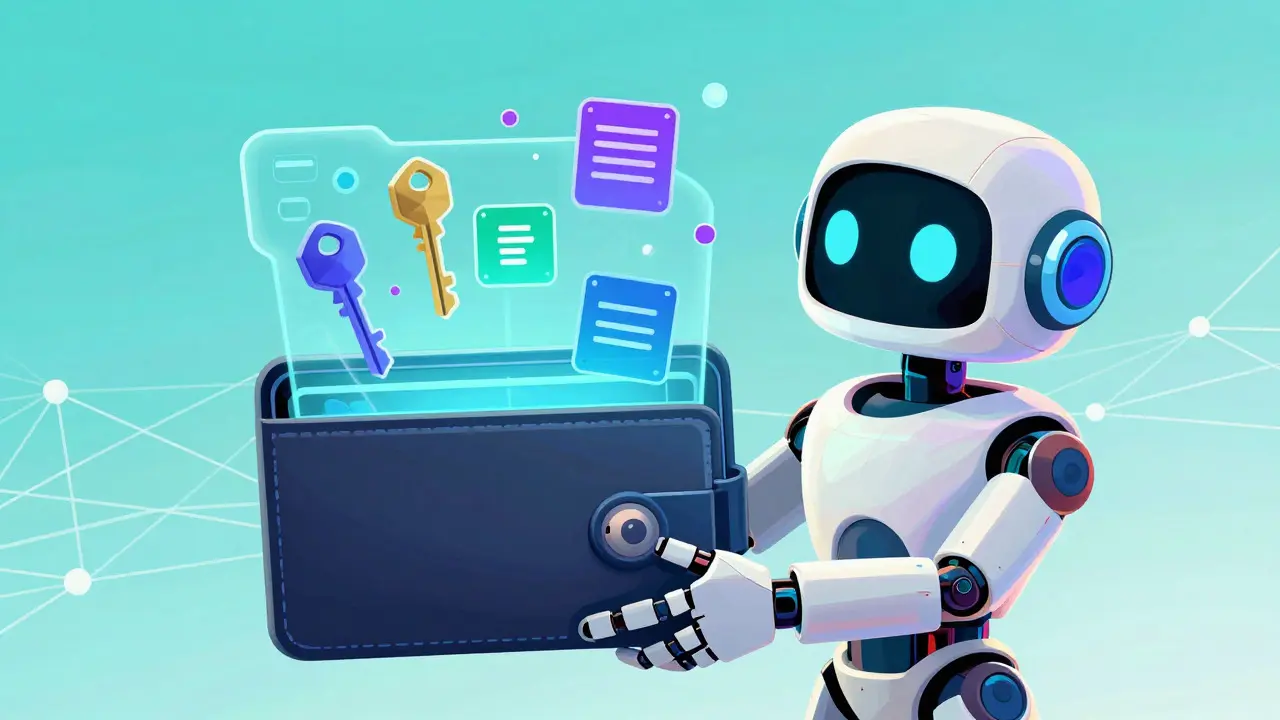
We are moving towards a future where your digital identity is as portable and private as your physical wallet. You will carry your credentials in a digital wallet, presenting them only when necessary and retaining full control over who sees what. This vision is no longer science fiction; it is being built today through the collaborative efforts of the W3C, blockchain developers, and privacy advocates worldwide.
For businesses, early adoption of DID protocols can mean better security, reduced compliance costs, and enhanced customer trust. For individuals, it means reclaiming ownership of their digital selves. The transition will take time, but the direction is clear. Decentralized identity is not just an option; it is the inevitable next step in the evolution of the internet.
What is the difference between a DID and a username?
A username is controlled by a central service provider and exists only within their database. A Decentralized Identifier (DID) is globally unique, cryptographically verifiable, and controlled by the user. Unlike a username, a DID does not require a central authority to validate it, and it can be used across multiple platforms without creating new accounts.
How do DID protocols ensure security?
DID protocols use cryptographic keys to secure identity. Each DID is associated with a DID Document containing public keys. Users hold the corresponding private keys to sign transactions or decrypt messages. This ensures that only the legitimate owner can prove control over the identifier, eliminating reliance on passwords or centralized authentication servers.
Can I use DIDs with existing blockchain networks?
Yes. The W3C DID specification is technology-agnostic, meaning DIDs can be implemented on various distributed ledgers, including Ethereum, Bitcoin, and other blockchain networks. Different "DID methods" are defined for specific chains, allowing seamless integration with existing blockchain infrastructure.
What happens if I lose my private key for a DID?
If you lose your private key, you lose access to the DID. Unlike centralized systems, there is no admin to reset it. However, advanced DID implementations include recovery mechanisms, such as multi-signature schemes or social recovery, where trusted contacts can help restore access. Proper key management is crucial for users.
Are DIDs anonymous?
DIDs themselves are pseudonymous, not inherently anonymous. The identifier does not reveal personal information unless linked to verifiable credentials. Users can maintain different DIDs for different contexts, enhancing privacy. True anonymity depends on how the DID is used and whether off-chain data is linked to it.