

Before July 2025, anyone could run a crypto exchange in the Philippines and serve Filipino users without asking for permission. That changed overnight. The Securities and Exchange Commission (SEC) didn’t just tighten rules - it rewrote the entire game. Starting July 5, 2025, every crypto platform serving Filipinos had to get licensed. No exceptions. No gray areas. If you’re trading, storing, or selling crypto to someone in the Philippines, you’re now under the SEC’s microscope.
Who Needs a License?
The SEC calls these platforms Crypto Asset Service Providers (CASP) any entity that provides services involving crypto assets, including trading, custody, exchange, or brokerage. That covers everything from big names like Binance and OKX to small local apps offering peer-to-peer trading. If your platform has even one Filipino user, you need a license. It doesn’t matter if you’re based in Singapore, the U.S., or Estonia. The SEC’s reach is global - as long as you’re targeting Filipinos, you’re in their jurisdiction.What Does the License Cost?
This isn’t a simple form you fill out online. The SEC demands serious financial backing. To qualify, a CASP must be registered as a domestic corporation a company legally incorporated under Philippine law with a minimum paid-up capital of PHP 100 million (about $1.8 million USD). And here’s the catch: that money can’t be in Bitcoin or Ethereum. It has to be cash, bank deposits, or other approved assets. Crypto itself doesn’t count toward this requirement. You also need a physical office in the Philippines. No virtual addresses. No PO boxes. The SEC wants real walls, real employees, and real oversight. This rule alone blocks most international exchanges that don’t have local operations. Even if you’re a global giant like Kraken or KuCoin, you can’t just rely on a remote team - you need a registered office in Manila or Cebu.What Documents Do You Submit?
Applying for a license isn’t a one-page application. The SEC requires a full package submitted at least 30 days before you start any crypto activity. Here’s what’s on the checklist:- Business rules and operational procedures
- Anti-money laundering (AML) and Know Your Customer (KYC) systems
- Risk control mechanisms for market volatility and hacking
- Detailed disclosure plans for all crypto offerings
- Proof of physical office lease or ownership
- Financial statements showing the PHP 100 million capital
How Are They Enforcing It?
The SEC didn’t wait to act. On August 1, 2025, they publicly named ten major exchanges operating illegally in the Philippines: OKX, Bybit, KuCoin, Kraken, Gate.io, MEXC, Bitget, Binance, Coinbase, and Huobi. These platforms were told to stop serving Filipino users immediately. Binance was already blocked in 2024 after a 90-day grace period. Now, the SEC is moving faster. If you don’t comply, your website could be blocked by Philippine ISPs. Your app might be pulled from the Google Play Store and Apple App Store in the country. And if you keep operating? Fines start at ₱50,000 per violation and go up to ₱10 million. Plus, you pay an extra ₱10,000 per day until you stop.
Marketing Rules Are Tighter Than Ever
You can’t just run a TikTok ad saying "Earn 20% daily with crypto!" The SEC banned all promises of guaranteed returns. Even phrases like "high-yield staking" or "risk-free profits" are now illegal unless you’re offering a registered security - which almost no crypto asset is. Every marketing campaign must include a disclosure document filed with the SEC. That document has to be published on your website, app, and social media pages - at least 30 days before any promotion starts. It must clearly state:- What asset you’re offering
- How it works
- What risks are involved
- That it’s not a bank deposit or insured
- That past performance doesn’t guarantee future results
How Do You Stay Compliant After Getting Licensed?
Getting the license is just the beginning. The SEC doesn’t give you a certificate and walk away. Licensed CASPs must:- Submit monthly financial reports
- Undergo quarterly AML audits
- Keep customer funds completely separate from company funds
- Report suspicious transactions to the Anti-Money Laundering Council
- Update disclosure documents whenever they change their terms
Who’s Already Licensed?
Only a handful of platforms have made the cut so far. Youholder, a local Filipino exchange, was among the first to get approved. Cex.io and Bitget also submitted full applications and are now operating legally. Bigone and Bybit are working toward compliance but haven’t completed the process. These platforms now have a clear advantage: they’re the only ones you can trust without fear of sudden shutdown. They’ve invested millions in local infrastructure, hired Filipino compliance officers, and built transparent reporting systems. For users, this means safer deposits, faster withdrawals, and real accountability.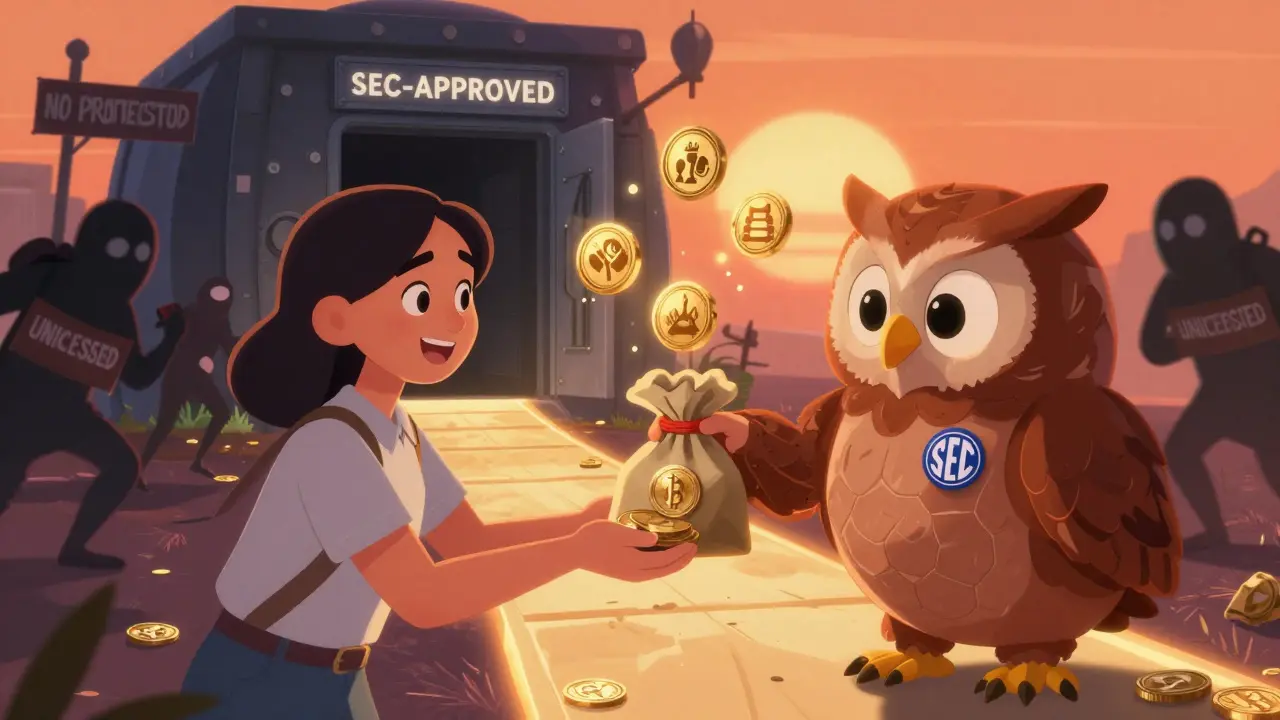
What About Everyday Crypto Users?
The SEC isn’t banning crypto. You can still buy Bitcoin, sell Ethereum, or stake Solana. The rules target platforms - not people. If you’re trading on a licensed exchange, you’re protected. If you’re using an unlicensed one? You’re on your own. No recourse if funds disappear. No way to file a complaint. No legal backup. The SEC’s message is clear: if you want to use crypto in the Philippines, use a licensed platform. Period.Why This Matters Beyond the Philippines
The Philippines didn’t just copy another country’s rules. It built one of the most detailed crypto frameworks in Southeast Asia. Other nations - Thailand, Indonesia, Vietnam - are watching closely. The PHP 100 million capital requirement is high. The physical office rule is strict. The marketing restrictions are unprecedented. But here’s the truth: it’s working. Crypto adoption in the Philippines is still growing - at 4.59% annually. Revenue hit ₱1.1 billion in 2025. Over 12.7 million Filipinos now use crypto. The SEC didn’t kill the market. It cleaned it up. Legitimate businesses are thriving. Scammers are being pushed out.What’s Next?
The SEC says it’s open to feedback. They’ve signaled that future updates might include:- Lower capital requirements for niche services (like custodial wallets)
- Fast-track licensing for ASEAN-based platforms
- Integration with central bank digital currency (CBDC) pilots
Do I need a license if I only trade crypto personally in the Philippines?
No. The licensing rules apply only to businesses that provide crypto services - like exchanges, wallets, or trading platforms. If you’re buying or selling crypto for yourself, you don’t need a license. But if you’re operating a platform that lets others trade, even if it’s just a small app or website, you must register with the SEC.
Can I use Binance or OKX if I’m in the Philippines?
Technically, no. Both Binance and OKX were publicly named by the SEC in August 2025 for operating without a license. While you might still access their websites, they’re not legally allowed to serve Filipino users. Your funds are at risk - there’s no legal protection if they freeze withdrawals or get shut down. The SEC advises users to move their assets to licensed platforms like Youholder or Cex.io.
What happens if I don’t report my crypto gains to the SEC?
The SEC doesn’t handle income taxes - that’s the Bureau of Internal Revenue (BIR). But if you’re running a CASP and fail to report financial activity, you’ll face SEC penalties. For individual users, not reporting crypto gains to the BIR could lead to tax audits, fines, or legal action - separate from SEC enforcement.
Is staking crypto legal in the Philippines?
Yes - but only if done through a licensed CASP. The SEC allows staking as long as the platform offering it has filed the required disclosure documents and obtained proper licensing. Unlicensed platforms offering staking rewards are violating marketing rules and may be targeted for enforcement.
How long does it take to get a CASP license?
There’s no fixed timeline, but applications that are complete and accurate typically take 60 to 90 days. The SEC reviews business models, AML systems, capital proof, and physical office verification. Incomplete submissions are returned, which delays the process. Many foreign firms are taking longer because they’re building local teams and offices from scratch.
Ian Thomas
March 3, 2026 AT 11:48So the SEC just turned the Philippines into a crypto gated community? Brilliant. You can’t operate unless you’re a billionaire with a Manila office? That’s not regulation - that’s a corporate tax dodge disguised as consumer protection. I’m curious: who exactly benefits here? The 3 local exchanges? Or the banks that are now the only real winners?
And let’s be real - if you’re a Filipino trying to use crypto, you’re either stuck with Youholder’s clunky UI or you’re doing it peer-to-peer in Telegram. This isn’t innovation. It’s a velvet rope for Wall Street’s leftovers.
Josh Moorcroft-Jones
March 4, 2026 AT 13:26Look, I get it - the SEC is trying to protect people from themselves, but let’s not pretend this isn’t a power grab wrapped in compliance jargon. PHP 100 million in capital? That’s not a barrier to entry - that’s a death sentence for any startup with a brain and a dream. And don’t even get me started on the ‘physical office’ requirement - you’re telling me a guy in Davao who built a Telegram bot to help his cousins trade SOL has to rent a 500-square-foot office in Makati just to avoid being ‘illegal’? That’s not oversight - that’s performance art for regulators who think bureaucracy equals legitimacy.
And the marketing rules? ‘No guaranteed returns’? So… no more ‘earn 15% APY’? Cool. But what about ‘staking rewards’? ‘Yield farming’? ‘Liquidity mining’? Those aren’t promises - they’re market mechanics. You can’t regulate language out of existence. The SEC is trying to police semantics while ignoring the real issue: financial illiteracy. And that’s not fixable with forms.
jack carr
March 4, 2026 AT 19:37I just want to say… I’m impressed. I really am. I thought this would be another case of overreach, but honestly? The Philippines is doing something bold here. Not perfect? No. But it’s trying. Real infrastructure. Real oversight. Real accountability. That’s rare.
And yeah, maybe it’s expensive. Maybe it’s slow. But at least now, if your funds disappear, you can actually file a complaint. No more ‘oops, our server got hacked, sorry’. That’s worth something.
jay baravkar
March 5, 2026 AT 13:50YESSSS!! 🙌 This is what crypto needs - not chaos, not hype, not ‘just trust us bro’ - but REAL accountability! 💪 The SEC didn’t kill innovation… they gave it a spine! 🇵🇭✨ If you’re building something legit, you don’t fear regulation - you welcome it. And to everyone saying ‘this is too strict’ - guess what? The market is still growing. 12.7 million users. ₱1.1B revenue. This isn’t a crackdown - it’s a cleanup. Keep going, SEC! You’re doing God’s work! 🙏🔥
Jane Darrah
March 6, 2026 AT 13:44Okay, so let me get this straight - the SEC is saying you can’t just ‘be a crypto guy’ anymore? You have to be a corporation with a lease, a CFO, and a PowerPoint deck on ‘risk mitigation protocols’? 😭
And the worst part? They’re acting like this is ‘progress’. Like, wow, we’ve moved from ‘wild west’ to ‘corporate zoo’. Congratulations, we’ve turned peer-to-peer trading into a compliance seminar with a side of existential dread.
Meanwhile, my cousin in Cebu is still buying DOGE via GCash because ‘Youholder takes 3 days to withdraw’. So… who’s really being protected here? The investors? Or the lawyers?
I miss the days when you just sent Bitcoin and said ‘lol good luck’.
Denise Folituu
March 7, 2026 AT 15:24They’re calling this ‘responsible innovation’? Please. This isn’t innovation - it’s extortion. You want to serve Filipinos? Pay $1.8 million. Rent an office. Hire 5 compliance officers. Submit 47 forms. And then - oh wait - you still can’t say ‘high yield’ without getting fined.
Let’s be honest: this isn’t about protecting users. It’s about protecting banks. It’s about making sure that every peso that flows through crypto eventually gets funneled into BPI or BDO’s vaults. The SEC didn’t create rules - they created a toll road for the financial elite.
And now they’re patting themselves on the back like heroes? You didn’t clean up the market. You just made it harder for the little guy to play - while the big players? They’ve already bought their licenses. It’s not regulation. It’s capture.
Eva Gupta
March 8, 2026 AT 18:03As someone from India, I’ve seen this movie before. When India cracked down on crypto in 2018, everyone screamed ‘ban!’ - but then they came back with smart regulations. Now, Indian exchanges are thriving. The Philippines is doing the same - not perfectly, but with intention.
Yes, the capital requirement is high. But imagine if every local startup had to meet that bar - it forces real commitment. No fly-by-night apps. No rug pulls. No ‘send us your seed phrase and we’ll help you stake’ scams.
It’s not about stopping crypto. It’s about making it safe for people who actually need it - like the millions who use it to send money home or avoid inflation. This isn’t bureaucracy. It’s care.
Nancy Jewer
March 8, 2026 AT 23:41From a regulatory architecture standpoint, the CASP framework represents a paradigmatic shift toward institutional-grade crypto governance. The capital adequacy requirement, when paired with segregated custody protocols and mandatory AML audits, aligns closely with FATF’s Travel Rule implementation thresholds. The physical presence mandate, while operationally burdensome, mitigates jurisdictional arbitrage risks - a critical flaw in jurisdictions like Singapore, where shell entities operate with impunity.
Furthermore, the disclosure regime for marketing materials introduces a novel form of behavioral nudge architecture - forcing transparency as a systemic default rather than a compliance afterthought. This isn’t regulation as constraint - it’s regulation as design.
Leah Dallaire
March 9, 2026 AT 00:01Let’s not pretend this isn’t a power play. The SEC didn’t act because of ‘consumer protection’. They acted because foreign exchanges were making it too easy for Filipinos to bypass the peso. Every time someone buys BTC on Binance instead of depositing into a local bank, the central bank loses control. This isn’t about safety - it’s about sovereignty.
And the ‘physical office’ rule? That’s not about oversight. It’s about making sure every peso spent on crypto infrastructure stays in Manila. You’re not regulating crypto - you’re weaponizing bureaucracy to protect the banking oligarchy.
They say ‘no one’s banning crypto’. But if you have to spend $2M to even talk to your users? That’s a de facto ban.
prasanna tripathy
March 10, 2026 AT 06:31I’ve been trading crypto since 2017. I’ve lost money. I’ve made money. But never have I felt safer than now - not because I’m using a licensed exchange, but because I know that if something goes wrong, someone is actually responsible.
Before, if a platform vanished? No one cared. Now? If Youholder freezes my withdrawal, I can call the SEC. They’ll answer. They’ll investigate. That’s worth more than any 20% APY.
And to the people saying ‘this is too strict’ - I say: what’s the alternative? More scams? More dead wallets? More families losing their life savings to a Discord admin who says ‘trust me’? No thanks.
James Burke
March 10, 2026 AT 11:33Big picture: this is a masterclass in how to regulate decentralized tech without killing it. The SEC didn’t try to control the blockchain. They controlled the access points. That’s smart. They didn’t ban crypto - they made sure the people handling it had skin in the game.
And yeah, the $1.8M is steep. But think about it - if you’re serious about building a platform for millions of users, shouldn’t you have the capital to back it? If you can’t raise that? Maybe you’re not ready.
It’s not about size. It’s about responsibility.
Bill Pommier
March 11, 2026 AT 11:47While the regulatory framework exhibits a commendable degree of structural rigor, the enforcement mechanisms remain fundamentally flawed. The imposition of a domestic corporate registration requirement constitutes an extraterritorial overreach that violates the principles of comity under international financial law. Furthermore, the mandate for physical office presence is not only economically discriminatory, but also technologically anachronistic in an era of cloud-native infrastructure.
Moreover, the prohibition of marketing terminology such as ‘high-yield staking’ - while ostensibly consumer-protective - constitutes an unconstitutional prior restraint on commercial speech under the First Amendment, even if applied extraterritorially. The SEC’s approach, while well-intentioned, is legally unsustainable and sets a dangerous precedent for global financial governance.
Megan Lutz
March 11, 2026 AT 13:51They’re calling this ‘responsible innovation’? It’s just capitalism with a government stamp. You have to be a corporation to serve Filipinos? That’s not regulation - it’s gatekeeping. The real winners? The banks. The lawyers. The guys who already had the money to rent offices and hire compliance teams.
And let’s not pretend the SEC is here to protect users. They’re here to protect the peso. They don’t want people buying crypto because it’s better - they want people buying pesos because it’s ‘safer’.
This isn’t about safety. It’s about control. And the people who need crypto the most? The ones sending money home? The ones avoiding inflation? They’re the ones getting squeezed.
Basil Bacor
March 12, 2026 AT 19:50