

For years, navigating the world of cryptocurrency in Nigeria felt like walking through a minefield. One day you could trade freely; the next, your bank account was frozen because the Central Bank decided digital assets were too risky. But if you are reading this in mid-2026, the ground beneath your feet has finally solidified. The era of ambiguity is over.
In March 2025, President Bola Ahmed Tinubu signed the Investments and Securities Act (ISA) 2025 into law. This wasn't just a minor tweak to old rules. It was a complete overhaul that explicitly recognized digital assets as securities under Nigerian law. For the first time, there is a clear, written playbook for how crypto works in Africa’s most populous nation. You don’t need to guess anymore whether your exchange is legal or if your gains are taxable. The rules are set, and they matter for every trader, investor, and business owner in the country.
The End of the Gray Area: What the ISA 2025 Actually Says
To understand where we stand today, we have to look at what changed. Before 2025, Nigeria relied on an outdated version of the Investments and Securities Act from 2007. That law didn't know what Bitcoin was. It certainly didn't know how to regulate it. This gap allowed fraudsters to operate with impunity while legitimate businesses struggled to find banking partners.
The new ISA 2025 closes that gap completely. It defines a crypto asset clearly as "a digital representation of value that can be transferred, digitally traded and used for payment or investment purposes." Crucially, it excludes digital versions of fiat money (like stablecoins pegged 1:1 to the Naira or Dollar acting as cash substitutes) from this specific classification, treating them differently. This definition brings clarity. If you are holding Ethereum for investment, it is a security. If you are using a platform to trade these assets, that platform falls under strict regulation.
This legislation fundamentally shifts the power dynamic. It moves cryptocurrency from the shadows into the light of capital market rules. It acknowledges that Nigerians are using crypto not just for speculation, but as a vital part of their financial ecosystem. By defining these assets, the government has given regulators the tools they need to protect you, rather than just banning you.
Who Is in Charge? SEC vs. CBN Roles Explained
One of the biggest sources of confusion in the past was knowing which agency to listen to. Was it the Central Bank of Nigeria (CBN)? Was it the Securities and Exchange Commission (SEC)? The answer used to be "both, and neither," leading to contradictory messages. The current framework clarifies these roles significantly.
Securities and Exchange Commission (SEC) is now the primary regulator for digital assets. Under the ISA 2025, the SEC has comprehensive authority over the issuance, trading, and promotion of cryptocurrencies. They monitor exchanges, conduct audits, and have the power to impose penalties, suspend operations, or even remove executives from non-compliant companies. If you are running a crypto exchange or a Virtual Asset Service Provider (VASP), your boss is the SEC. Platforms like Quidax and Busha were among the first to receive early approvals, signaling that licensed entities are the only ones allowed to operate legally.
On the other side, the Central Bank of Nigeria (CBN) retains control over monetary policy and banking regulations. Remember the 2021 ban where the CBN prohibited banks from processing crypto transactions? That stance softened in 2023 when the CBN allowed banks to open accounts for licensed VASPs. Today, the CBN ensures that crypto activities do not threaten national financial stability. They work alongside the SEC, but they do not directly regulate the trading of tokens. Instead, they focus on the banking channels that facilitate these trades.
Then there is the Nigerian Financial Intelligence Unit (NFIU) and the Economic and Financial Crimes Commission (EFCC). These agencies handle anti-money laundering (AML) and counter-terrorism financing (CFT). They monitor transactions to ensure no illicit funds are moving through the system. This multi-agency approach means that while you have more freedom to trade, you also face stricter scrutiny on where your money comes from and where it goes.
| Agency | Primary Role | Key Powers |
|---|---|---|
| SEC | Regulates issuance, trading, and promotion of digital assets | Licensing exchanges, auditing, suspending operations, removing executives |
| CBN | Monetary policy and banking oversight | Approving bank accounts for licensed VASPs, ensuring financial stability |
| NFIU / EFCC | Anti-money laundering (AML) and fraud prevention | Monitoring transactions, investigating fraud, accessing telecom records |
Is Crypto Legal Tender? The Payment Reality
Here is a critical distinction that many people miss: Just because crypto is regulated doesn't mean it is legal tender. As of 2026, cryptocurrency is not recognized as legal tender in Nigeria. You cannot walk into a supermarket in Lagos or Abuja and pay for groceries with Bitcoin unless the merchant explicitly agrees to accept it as a private arrangement. The Nigerian Naira remains the only official currency for debt settlement and official payments.
However, this does not mean you can't use crypto for payments between individuals. Peer-to-peer (P2P) trading and private transfers are fully legal. The restriction applies to businesses trying to force crypto as a mandatory payment method instead of Naira. This protects consumers from volatility risks while allowing individuals the freedom to transact as they see fit. So, if your friend owes you money and offers to pay in USDT, you can accept it. But a landlord cannot demand rent exclusively in crypto.
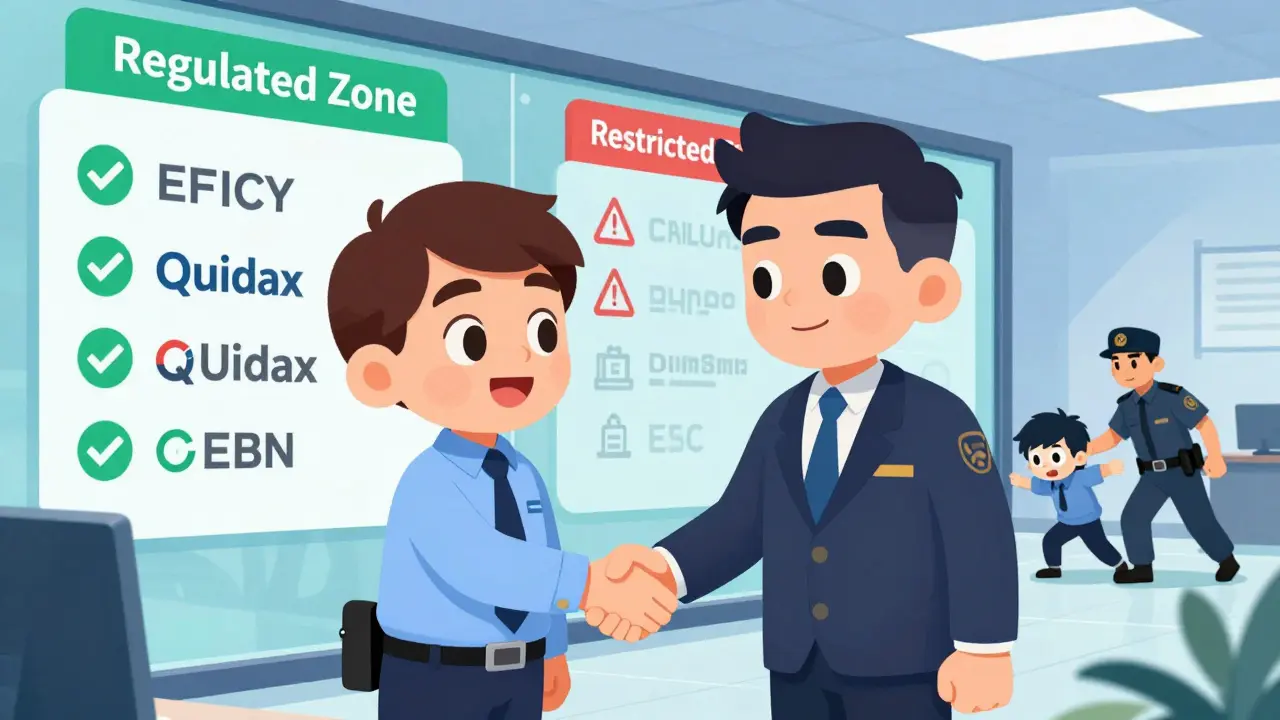
Taxes Are Here: Understanding the NTAA 2025
If you thought regulation was the only change, think again. In June 2025, the Nigeria Tax Administration Act (NTAA) 2025 was signed into law, taking effect in 2026. This means the days of flying under the radar regarding crypto taxes are officially over.
The NTAA places the burden of compliance squarely on Virtual Asset Service Providers (VASPs). Exchanges like Binance P2P operators, Quodax, and others must report transaction data to tax authorities. For individual users, this means your gains are taxable. The government recognizes that crypto activity in Nigeria is massive-estimated at $92.1 billion in value between July 2024 and June 2025 alone. They are not going to let that revenue stream go untaxed.
The penalties for non-compliance are severe. If a VASP fails to comply with reporting requirements, they face an initial penalty of ₦10 million ($6,693) in the first month, plus ₦1 million ($669) for each additional month of delay. The SEC can also suspend or revoke licenses for non-compliant entities. For traders, this implies that you should keep detailed records of your transactions. While the VASP handles the bulk of reporting, being able to prove your cost basis and gains will be essential during any tax audit.
How to Stay Compliant: A Practical Checklist
Navigating this new landscape requires action. You can no longer rely on offshore platforms that ignore local laws without risk. Here is how to ensure you are operating within the boundaries of the ISA 2025 and NTAA 2025:
- Use Licensed Exchanges Only: Check the SEC website for the list of approved Virtual Asset Service Providers. Trading on unlicensed platforms exposes you to seizure of funds and lack of legal recourse if something goes wrong.
- Keep Detailed Records: Save every transaction receipt. Note the date, amount, type of crypto, and the fiat value at the time of trade. You will need this for tax purposes.
- Understand Your Tax Liability: Consult with a tax professional who understands digital assets. Capital gains from selling crypto for profit are taxable. Know your rates and deadlines.
- Avoid Unregistered Investment Schemes: The ISA 2025 explicitly bans Ponzi schemes. If a platform promises guaranteed high returns with zero risk, it is likely a scam. The SEC has enhanced tools to shut these down, including access to telecom records.
- Separate Business and Personal Use: If you run a business, do not mix personal crypto wallets with business accounts. This creates a nightmare for accounting and tax reporting.

What About NFTs and Forex?
The new laws extend beyond simple cryptocurrencies like Bitcoin and Ethereum. The ISA 2025 also covers Non-Fungible Tokens (NFTs) and online forex trading platforms, but with important nuances.
If you buy an NFT as a piece of art-a digital painting or collectible-it is generally unaffected by securities regulations. However, if an NFT is marketed as a financial product or an investment opportunity (such as fractional ownership of real estate or revenue-sharing rights), it falls under SEC scrutiny. The key question regulators ask is: "Is this being sold as an investment contract?" If yes, it must comply with securities laws.
Similarly, online forex platforms that allow retail investors to trade currencies are now under tighter control. Previously, many of these operated in a gray area. Now, they must register and adhere to the same transparency and consumer protection standards as crypto exchanges. This protects everyday Nigerians from predatory practices common in the unregulated forex space.
Looking Ahead: Stability and Growth
The transition from the restrictive 2021 era to the structured 2026 environment has not been smooth. Licensing delays and rigorous vetting processes have frustrated some operators. However, this friction is necessary. It filters out bad actors and builds trust in the system.
Nigeria remains a global leader in peer-to-peer crypto volume. The resilience of adoption shows that demand is real. By providing a clear legal framework, the government is positioning Nigeria as a hub for fintech innovation in Africa. Other nations are watching closely. If Nigeria can successfully balance innovation with consumer protection, it could serve as a model for the continent.
For you, the user, this means greater safety. Your assets are protected by law. Your disputes can be resolved through established channels. And your contributions to the economy are recognized through fair taxation. The wild west is closing, but the opportunities remain vast-if you play by the rules.
Is cryptocurrency illegal in Nigeria in 2026?
No, cryptocurrency is not illegal in Nigeria in 2026. The Investments and Securities Act (ISA) 2025 explicitly recognizes digital assets as securities, providing a legal framework for their issuance, trading, and investment. However, crypto is not legal tender and cannot replace the Naira for official payments.
Which agency regulates crypto in Nigeria?
The Securities and Exchange Commission (SEC) is the primary regulator for digital assets in Nigeria. They oversee exchanges, enforce licensing requirements, and protect investors. The Central Bank of Nigeria (CBN) oversees banking interactions with licensed crypto firms, while the NFIU handles anti-money laundering compliance.
Do I have to pay taxes on my crypto profits?
Yes. Under the Nigeria Tax Administration Act (NTAA) 2025, which took effect in 2026, crypto gains are taxable. Virtual Asset Service Providers (VASPs) are required to report transaction data, making it easier for tax authorities to track earnings. You should keep detailed records of all trades to calculate your capital gains accurately.
Can I use crypto to pay for goods and services?
You can use crypto for peer-to-peer transactions if both parties agree. However, crypto is not legal tender. Businesses cannot force customers to pay in crypto instead of Naira, and debts must be settled in Naira. Using crypto for private payments is legal, but widespread commercial adoption as a substitute for fiat is restricted.
Are all crypto exchanges legal in Nigeria?
No. Only exchanges licensed by the SEC are legal to operate in Nigeria. Unlicensed platforms may still exist, but using them carries significant risk, including potential loss of funds and lack of legal protection. Always check the SEC's list of approved Virtual Asset Service Providers before depositing money.
What happened to the CBN's crypto ban?
The strict ban imposed by the Central Bank of Nigeria (CBN) in 2021, which prohibited banks from processing crypto transactions, was relaxed in 2023. Banks are now allowed to provide accounts to licensed Virtual Asset Service Providers (VASPs). The full regulatory framework was completed with the ISA 2025, replacing the previous ambiguous stance with clear cooperation between the CBN and SEC.
Melissa L
June 26, 2026 AT 06:56omg this is so confusing lol. i just want to buy some bitcoin without my bank freezing my account again :/
Robert Hundley
June 26, 2026 AT 14:54Hey there! It actually isn't that bad once you get the hang of it. The new laws mean you just have to use licensed exchanges like Busha or Quidax. It's a whole new era for crypto in Nigeria, folks! :) The SEC is watching now, so stay sharp and keep your receipts. It’s exciting times ahead!
nancy jarecki
June 27, 2026 AT 20:03The semantic distinction between 'legal tender' and 'regulated security' is often lost on the layperson, leading to widespread misunderstanding of the regulatory framework. One must appreciate the nuanced legislative intent behind the ISA 2025, which explicitly categorizes digital assets as securities rather than currency. This is not merely a bureaucratic adjustment; it is a fundamental reclassification that aligns Nigerian jurisprudence with global financial standards. The exclusion of stablecoins from this specific classification further demonstrates a sophisticated approach to monetary policy. Ignoring these subtleties invites regulatory peril.
Jay Sharma
June 28, 2026 AT 07:14they are just tracking us now. the sec and cbn working together means they can see every single transaction you make. its all about control. the tax act is just a way to drain our wealth while pretending to protect us. dont trust the government with your keys. they will freeze everything eventually.
Maurice Flynn
June 29, 2026 AT 01:53I suppose regulation brings a certain stability, even if it feels restrictive at first. It is interesting to observe how markets adapt when the rules become clear. Perhaps this clarity allows for more serious investment rather than just speculation. We shall see where this path leads.
Rebecca Shoniker
June 30, 2026 AT 08:17You really need to understand the compliance requirements!! If you are a VASP, the penalties are severe!!! Do not ignore the reporting obligations!!! The NTAA 2025 is strict!!! Keep your records perfect!!! Failure to comply results in suspension!!! Be careful!!!
Ryan Peters
July 1, 2026 AT 02:40Typical bureaucratic overreach. They call it 'protection' but it's just another way to squeeze taxes out of successful traders. The jargon-heavy explanation of SEC vs CBN roles is just smoke and mirrors. Real innovation happens in the shadows, not under the watchful eye of regulators who don't understand blockchain technology. Sad state of affairs.
Mélanie Boulay
July 2, 2026 AT 16:31It is important to recognize the boundaries set by these new regulations, as they provide a necessary structure for financial interactions within the digital asset space, ensuring that participants adhere to established legal frameworks while maintaining respect for individual autonomy in choosing how to engage with these technologies, provided such engagement does not infringe upon the rights of others or violate statutory requirements regarding anti-money laundering protocols and consumer protection measures that have been meticulously outlined in recent legislative updates.
ross harris
July 3, 2026 AT 13:48The whole thing is a grand theater of power dynamics shifting beneath our feet like tectonic plates grinding against each other in a slow, inevitable collision. You think you're trading Bitcoin, but you're really dancing to the tune of the SEC's baton, a puppet on strings made of code and law. The color of money changes, but the hand that holds it remains the same, stained with the ink of bureaucracy and the blood of failed startups.
Scott Miller
July 4, 2026 AT 01:06This is huge news everyone! Finally some real structure! Get your licenses sorted and start trading legally! Don't let the old fears hold you back! Embrace the change and grow your portfolio! The opportunities are endless if you play by the rules! Let's go Nigeria! 💪🚀
Daniel J. Cox
July 4, 2026 AT 12:07As someone who has watched the fintech scene evolve in Lagos, this shift is remarkable. It bridges the gap between traditional banking habits and modern tech adoption. The cultural acceptance of crypto is already high; now the legal framework catches up. This could truly position Nigeria as a continental hub for innovation. 🌍💼
John Curry
July 4, 2026 AT 23:44Oh, the irony! We sought freedom from the banks, only to find ourselves shackled by the SEC. Yet, perhaps there is wisdom in this cage. Is true liberty found in chaos, or in the order that protects the weak from the wolves? I tremble before the complexity of it all. What does it mean to be free in a regulated market?
Nicole Woessner
July 6, 2026 AT 18:32i think its good that they clarified the tax part though because its better to know what you owe than to get surprised later. the naira is still king for payments so dont try to pay rent in bitcoin unless your landlord is cool with it. just keep your records safe
Jon Milton
July 8, 2026 AT 10:57Look, I get the frustration with the CBN's past antics, but this new setup is actually pretty solid. The SEC taking the lead makes sense because they deal with securities. Just stop whining about taxes. If you make money, you pay. It's basic civic duty. Use the licensed platforms and sleep well at night. No excuses.
Abby Martin
July 9, 2026 AT 02:53Let me tell you something, people. If you are still using unlicensed offshore platforms, you are basically asking to get scammed. It's not smart. The SEC has a list of approved providers. Use them. And don't come crying when your funds get frozen because you didn't bother to check. It's that simple. Stay compliant and stay safe.
Rob Morton
July 10, 2026 AT 06:56I wonder how small investors will handle the record-keeping requirement. It seems daunting for those who trade frequently. Perhaps the exchanges will offer tools to help automate this process? It would be helpful to have a standardized way to calculate capital gains without hiring an accountant for every trade.
Routh Middaugh
July 11, 2026 AT 08:53The distinction between NFTs as art versus NFTs as investments is crucial!! Many people miss this nuance!! If it promises returns, it is a security!! Check the SEC guidelines!! Don't fall for hype!!
Carl Belgrave
July 11, 2026 AT 14:47Nigeria is taking charge of its own destiny! This is what strong leadership looks like. Regulating the crypto space shows we are serious about economic growth and security. Other countries should take notes. We are building a robust financial system that protects our citizens and attracts legitimate business. Proud of the progress!