
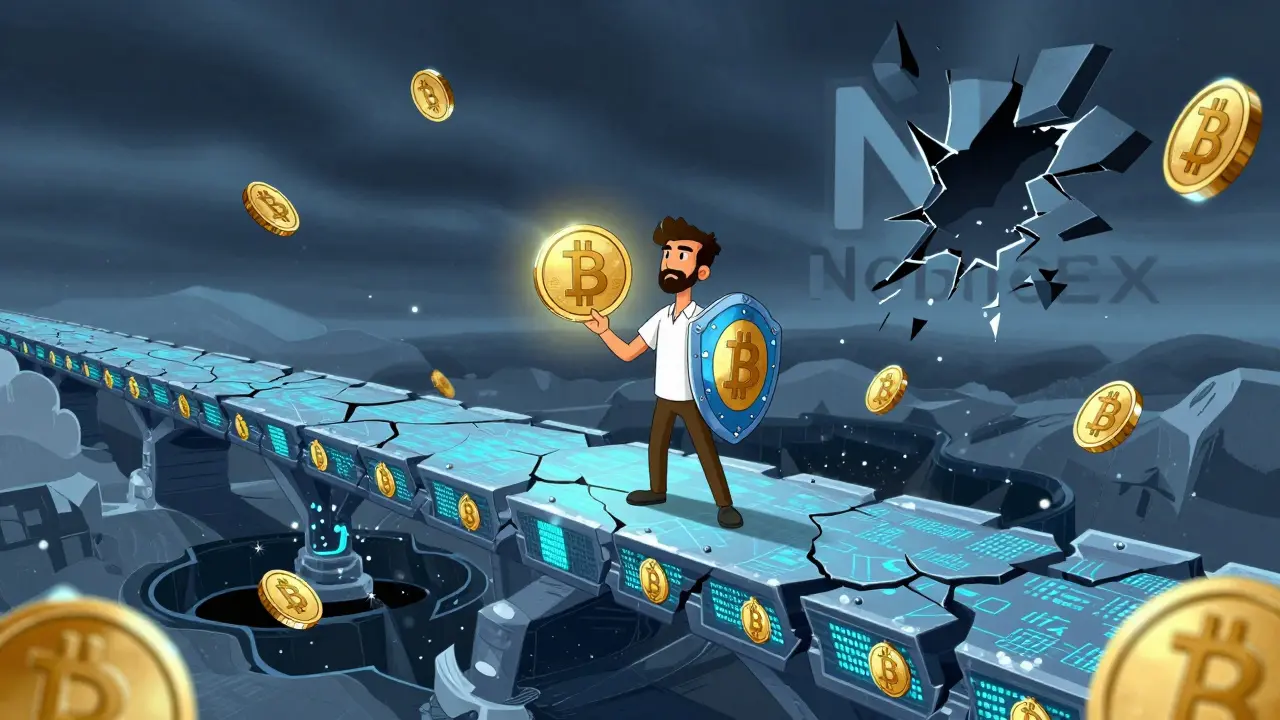
Iranian Crypto Exchange Comparison Tool
This tool helps Iranian citizens compare top crypto exchanges based on your priorities. Select what matters most to you, and see which exchanges best match your needs.
| Exchange | Minimum Deposit | Coins Supported | Fee | Best For |
|---|---|---|---|---|
| MEXC | $30 | 196 | 0.2% | High liquidity, good altcoin selection |
| Bitsgap | $0 | 673 | Varies | Trading bots, no deposit minimum |
| XT.com | $10 | 1,010 | 0.2% | Most coins available, low fees |
| LATOKEN | $1 | 475 | 0.49% | Low entry, obscure tokens |
| CoinEx | $1 | 475 | 0.49% | Beginner-friendly, staking available |
| KuCoin | N/A | 2,500+ | 0.2% | P2P trading, beginner mode |
| BingX | N/A | 1,000+ | 0.2% | Copy trading |
| Nobitex | 0 (Rial) | 50+ | Varies | Domestic Rial conversion only |
Recommendation
Select your priorities above to see your recommended exchange.
Important Considerations
High Risk: Nobitex is highly recommended against for holding funds due to recent $90M hack and sanctions.
Stablecoins: Consider using DAI on Polygon for safer storage (less than 50 cents in gas fees).
Legal: All exchanges operate in a legal gray zone. Keep detailed records for tax compliance.
Iranian citizens face some of the toughest financial restrictions in the world. International banks block transactions, credit cards don’t work abroad, and access to global markets is tightly controlled. But cryptocurrency? It’s become a lifeline. Over 11 million Iranians now use digital assets to send money, buy goods, and protect savings from inflation. And while sanctions make it harder, several crypto exchanges still let them trade - some legally, some with risk.
Nobitex: The Domestic Giant Under Fire
If you’re in Iran and you trade crypto, you’re probably using Nobitex. It handles more than 87% of all local crypto transactions as of 2025. Founded in Iran, it’s built for Persian speakers, supports Rial deposits, and has a simple interface that even beginners can use. But it’s also the most dangerous place to hold crypto in the country. On June 18, 2025, hackers stole over $90 million from Nobitex. That’s one of the biggest exchange hacks in history. The breach exposed how deeply the platform is tied to Iran’s informal economy - and how vulnerable it is. After the hack, users scrambled to move funds. Many switched to international platforms. Others moved to decentralized networks like Polygon to swap USDT for DAI, avoiding the centralized risk altogether. Worse, Nobitex was officially designated as a sanctioned entity. In July 2025, Tether froze 42 crypto addresses linked to the exchange. Half of those addresses had direct ties to IRGC-affiliated wallets. That wasn’t just a coincidence - it was a signal. The Iranian government didn’t shut Nobitex down. But it didn’t protect it either.International Exchanges That Still Accept Iranian Users
While domestic options are risky, international exchanges still let Iranians sign up - if they can get past the hurdles. Here are the top five platforms that work for Iranian users in late 2025, based on trading volume, fee structure, and user reports.| Exchange | Minimum Deposit | Coins Supported | Spot Maker Fee | Key Strengths |
|---|---|---|---|---|
| MEXC | $30 | 196 | 0.2% | High liquidity, good altcoin selection, stable uptime |
| Bitsgap | $0 | 673 | Varies | Trading bots, no deposit minimum, connects to other exchanges |
| XT.com | $10 | 1,010 | 0.2% | Most coins available, low fees, good for advanced traders |
| LATOKEN | $1 | 475 | 0.49% | Low entry, supports obscure tokens, decent customer support |
| CoinEx | $1 | 475 | 0.49% | Simple UI, good for beginners, staking available |
These platforms don’t openly advertise that they serve Iranians. But they don’t block them either. Most require basic KYC - a passport or national ID. Some ask for a proof of address, but many Iranian users report success using a utility bill screenshot or even a university letter.
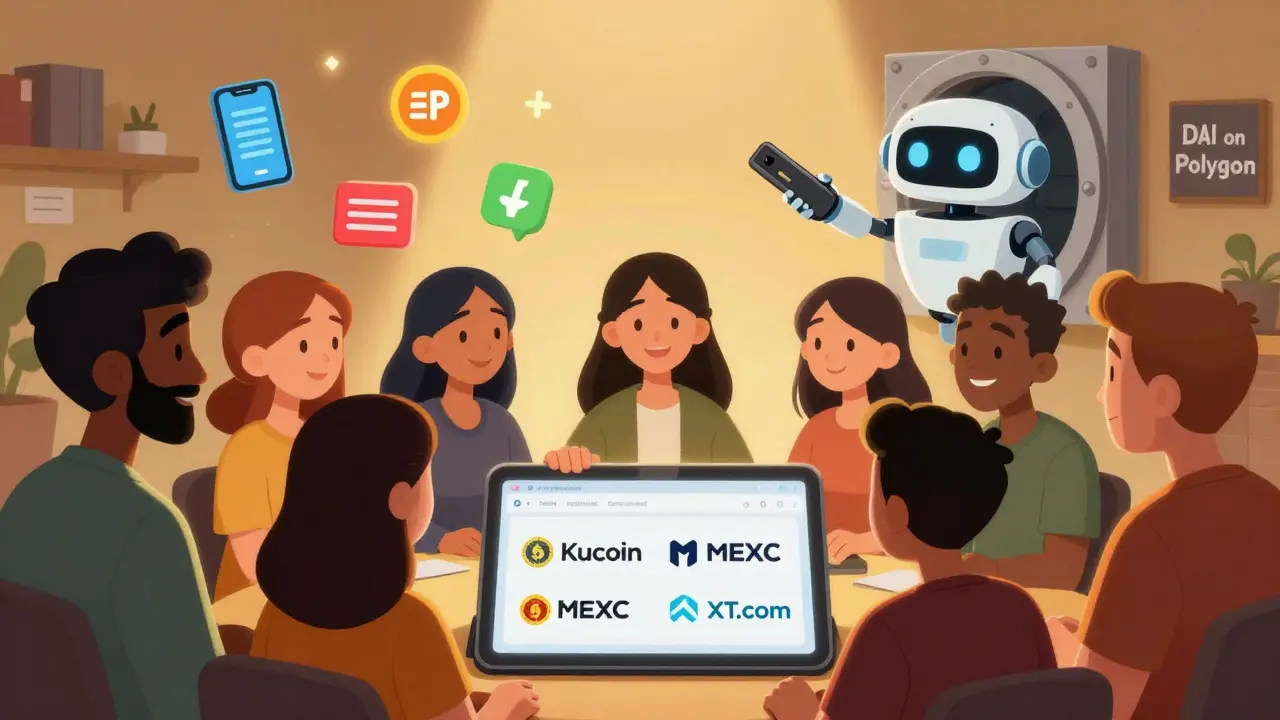
Why KuCoin and BingX Are Popular Despite Lower Scores
Not all rankings are based on fees or coin count. CexFinder’s user-driven ratings show something else: usability matters. KuCoin scores 4.4 out of 5 for Iranian users, not because it’s the cheapest, but because it’s the easiest. It lets you deposit fiat via peer-to-peer (P2P) networks. You can buy USDT or USDC directly from other users using local payment methods like local bank transfers or even mobile wallets. It also has a beginner mode, savings accounts that earn interest, and staking for over 100 coins. For someone who just wants to hold Bitcoin without learning complex trading tools, KuCoin is the safest bet. BingX scores 4.0 and is popular for copy trading. You can follow experienced traders from Iran or elsewhere and replicate their trades automatically. That’s huge for users who don’t have time to analyze charts or follow crypto news daily.The USDT Crisis and the Rise of DAI
In July 2025, everything changed when Tether froze $90 million in Iranian-linked USDT wallets. Overnight, people who held USDT on international exchanges woke up to locked accounts. Some lost access to their entire savings. The response was fast. Crypto influencers in Iran started pushing DAI - a decentralized stablecoin pegged to the dollar, built on the Polygon network. Why Polygon? Because it’s faster, cheaper, and harder for Tether to freeze. You can swap USDT for DAI in minutes for less than 50 cents in gas fees. Now, many Iranian traders keep only small amounts of USDT. Most of their stablecoin holdings are in DAI. They use decentralized exchanges like QuickSwap or SushiSwap on Polygon to move funds without relying on centralized platforms. It’s not perfect - but it’s more secure than trusting a single exchange.
The New Tax Law: Crypto Is Now Officially Regulated
In August 2025, Iran passed its first crypto tax law. The Law on Taxation of Speculation and Profiteering treats cryptocurrency gains the same as gold, real estate, or forex trading. If you make a profit, you owe taxes. This isn’t about punishing traders. It’s about control. The government now has a legal framework to track, monitor, and tax digital asset activity. It’s a sign that Iran isn’t trying to ban crypto - it’s trying to own it. For users, this means two things: First, keep records of every trade. Second, avoid using exchanges that don’t provide transaction history. Nobitex’s system is still unreliable after the hack. International exchanges like MEXC and XT.com generate detailed reports you can download.What You Should Do Right Now
If you’re an Iranian citizen looking to trade crypto in 2025, here’s what works:- Don’t keep large sums on Nobitex. The hack proved it’s not safe. Use it only for small, quick trades or Rial conversions.
- Start with KuCoin or MEXC. They’re the most reliable for beginners. Use P2P to deposit funds if you can.
- Move most of your stablecoins to DAI on Polygon. It’s your best hedge against future freezes.
- Use Bitsgap or XT.com for advanced trading. If you’re comfortable with bots and margin trading, these offer the most tools.
- Always enable 2FA and use a hardware wallet for long-term storage. No exchange is safe forever.
The truth is, crypto in Iran isn’t about getting rich. It’s about staying financially alive. The system is broken. The banks won’t help. The government doesn’t trust you. But blockchain? It doesn’t care who you are or where you live. It just works.
That’s why millions keep using it - despite the risks, the freezes, the hacks, and the taxes. Because for now, crypto is the only financial system that still answers when Iran calls.
Can Iranian citizens legally use crypto exchanges?
Yes, but with risks. Iran doesn’t ban cryptocurrency outright - it taxes it. The government recognizes crypto as a financial asset under the 2025 Tax Law. However, international exchanges aren’t officially approved, and using them may violate U.S. or EU sanctions. Users operate in a legal gray zone: domestically, it’s tolerated; internationally, it’s monitored.
Why can’t Iranians use Binance or Coinbase?
Binance and Coinbase comply strictly with global sanctions. They block Iranian IP addresses and freeze accounts linked to Iran. Even if you use a VPN, these platforms flag Iranian IDs during KYC. Most users report being permanently banned after verification. Smaller exchanges like MEXC or KuCoin have looser enforcement - not because they’re reckless, but because they lack the resources to monitor every user’s location.
Is it safe to use Nobitex in 2025?
No, not for holding large amounts. After the $90 million hack and government sanctions, Nobitex is considered high-risk. While it’s still the most convenient for converting Rials to crypto, it’s not secure. Treat it like a cash exchange - use it to buy or sell quickly, then move funds to a non-Iranian exchange or cold wallet.
How do Iranians deposit money on international exchanges?
Most use peer-to-peer (P2P) trading. You find a seller on KuCoin, MEXC, or XT.com who accepts local payment methods - like bank transfer, mobile wallet, or even cash delivery. You pay them in Rials, and they send you USDT or USDC. Some use crypto ATMs or trusted intermediaries. Direct bank deposits from Iran are almost always blocked.
What’s the best stablecoin for Iranians right now?
DAI on the Polygon network is currently the safest. It’s decentralized, so Tether can’t freeze it. Polygon has low fees and fast transactions, making it ideal for frequent swaps. USDT is still widely used, but after the July 2025 freezes, most experienced users avoid holding large amounts of it on centralized exchanges.
Do I need a VPN to use these exchanges?
Not necessarily. Most exchanges don’t block Iranian IPs - they block Iranian IDs. If you complete KYC with an Iranian passport, you’ll likely be flagged regardless of your location. A VPN won’t help if you’re using your real ID. It’s only useful if you’re trying to access a site that’s blocked locally - not to hide your identity from the exchange.
Are there any crypto exchanges based in Iran?
Yes - Nobitex is the only major one. Other smaller platforms like Zarinex and Digifinex exist, but they have far less volume and reliability. Nobitex dominates the market, handling over 87% of domestic crypto trades. But due to its sanctioned status and recent hack, it’s no longer recommended for long-term storage.
What happens if my account gets frozen on an international exchange?
Recovery is unlikely. Exchanges like MEXC or XT.com rarely reverse freezes tied to Iranian accounts, especially after the July 2025 sanctions wave. Your best move is to avoid holding large amounts on any centralized platform. Use decentralized wallets and DAI on Polygon to maintain control. If your account is frozen, contact support - but don’t expect a quick fix.
Vidyut Arcot
December 4, 2025 AT 18:55Really appreciate this breakdown. I’ve been helping friends in Tehran navigate this mess, and your list of exchanges is gold. DAI on Polygon is the real MVP now - no one’s freezing that. Just keep small amounts on any CEX and move fast.
Also, Nobitex? Only for Rial swaps. Not a wallet. Not even close.
Ankit Varshney
December 5, 2025 AT 10:55Same here. Used MEXC for 8 months. No issues. KYC was smooth with my Indian passport - they didn’t ask where I was from. Just a photo and a selfie. Simple.
Paul McNair
December 5, 2025 AT 12:36This is one of the clearest, most humane guides I’ve read on crypto in Iran. Not just technical - it’s human. The part about crypto being the only system that still answers when Iran calls? That hit me.
It’s not about speculation. It’s survival. And the fact that people are using DAI on Polygon to outmaneuver sanctions? That’s innovation with dignity.
Christy Whitaker
December 6, 2025 AT 11:50Wow, so you’re telling me people are just… using crypto to bypass sanctions? And you think that’s okay? What about the IRGC? You’re enabling them. This isn’t freedom - it’s laundering with blockchain.
Mohamed Haybe
December 7, 2025 AT 19:21Iranians are using crypto because the world starved them. You think the US sanctions made them better off? No. They made them desperate. And now they’re smarter than your banks. DAI on Polygon? That’s not evasion. That’s evolution. And you? You’re still mad because you can’t control it.
Ziv Kruger
December 9, 2025 AT 10:10There’s a quiet revolution here. Not in price charts. Not in HODLing. But in autonomy.
When your government can’t touch your money - even if it’s just a few hundred dollars in DAI - you’re not trading crypto.
You’re reclaiming your right to exist.
Jay Weldy
December 9, 2025 AT 20:40Just wanted to say - this post gave me chills. Not because of the numbers, but because of the humanity behind them. People aren’t trying to get rich. They’re trying to feed their families. That’s worth honoring.
Heather Hartman
December 11, 2025 AT 16:55Thank you for writing this. I’ve been sharing it with my students who are studying global finance. This isn’t just crypto - it’s civil resistance with wallets. 🙏
Ann Ellsworth
December 13, 2025 AT 14:00DAI on Polygon? Please. That’s just DeFi theater. You’re still exposed to oracle manipulation, MEV attacks, and liquidity fragmentation. Real stability is USDT with proper reserves - not some algorithmic fantasy. And don’t get me started on Bitsgap’s bot fees - they’re predatory.
Catherine Williams
December 13, 2025 AT 16:17Ann, you’re missing the point. It’s not about ‘real stability’ - it’s about *unfreezeable* stability.
USDT can vanish overnight. DAI can’t. The difference isn’t technical - it’s existential.
For someone in Tehran, holding USDT is like keeping cash under a mattress in a warzone. DAI? That’s the vault underground.
Melinda Kiss
December 14, 2025 AT 23:35This is the most thoughtful, compassionate summary of crypto in Iran I’ve ever read. Thank you for not reducing it to ‘hacks’ and ‘fees.’ It’s about dignity. It’s about choice. And it’s about people refusing to be erased.
Also - yes, 2FA. Always. Hardware wallet. Always. Even if it’s just a $20 Ledger Nano S. Don’t risk it.
Alan Brandon Rivera León
December 15, 2025 AT 20:35Used to work with a guy in Tehran. He’d trade on KuCoin, send USDT to a friend in Dubai, and they’d cash out in person. No bank. No wire. Just trust and a handshake over WhatsApp.
That’s the real economy now. Not exchanges. Not apps. People.
Nancy Sunshine
December 16, 2025 AT 18:08While the technical details are commendable, one must not overlook the broader geopolitical implications. The normalization of circumventing international financial regulations through decentralized technologies represents a paradigmatic shift in state sovereignty and monetary control. It is imperative that regulatory frameworks evolve to address the emergent non-state financial architectures that now operate beyond the reach of traditional compliance mechanisms. Furthermore, the ethical dimensions of enabling access to sanctioned entities require multidisciplinary scrutiny - not merely pragmatic adoption.