
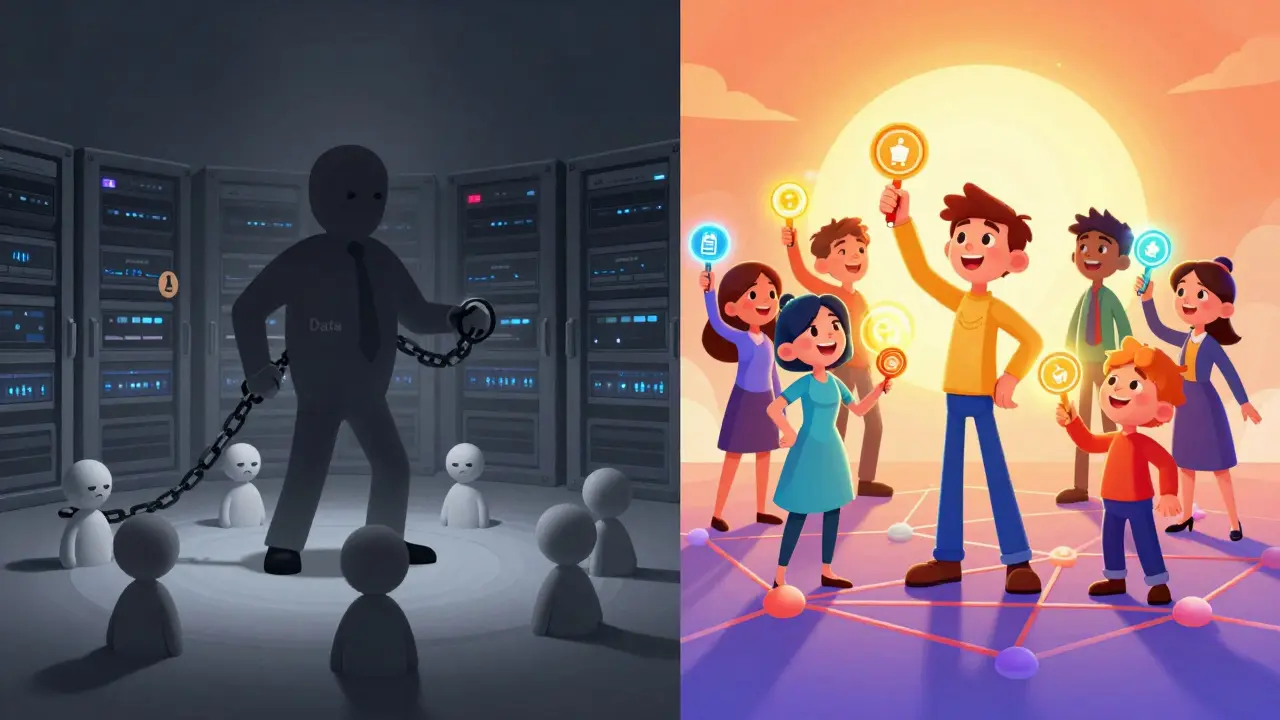
Imagine logging into a website, posting content, and then realizing that the platform can delete your account, ban you without warning, or sell your data to advertisers-all with zero recourse for you. That is the reality of the current internet, known as Web2. Now imagine an internet where you own your data, control your identity, and cannot be censored by a single corporation. This is the promise of Web3, the third generation of internet technology built on blockchain networks that prioritize user ownership and decentralization. It is not just a buzzword; it is a fundamental architectural shift from centralized servers to distributed ledgers.
The core principles of Web3 are designed to redistribute power from tech giants back to individual users. But how does this actually work? What makes a system truly "decentralized"? And why do experts argue that these principles are both revolutionary and fraught with technical hurdles? Let’s break down the essential pillars that define Web3, moving beyond the hype to understand the mechanics behind the movement.
Decentralization: The Foundation of Control
At its heart, Web3 is about removing single points of failure and control. In the Web2 era, companies like Google, Facebook, and Amazon act as gatekeepers. They host the data, enforce the rules, and profit from your attention. If their servers go down, the service stops. If they change their terms of service, you must comply or leave.
Decentralization in Web3 shifts this model. Instead of relying on central servers, applications run on peer-to-peer networks of computers (nodes) spread across the globe. No single entity owns the network. For example, Ethereum is a decentralized computing platform that allows developers to build smart contracts and decentralized applications (dApps). When you interact with an Ethereum-based application, you are talking directly to the network, not to a company’s database. This means the service cannot be easily shut down, censored, or manipulated by one actor. It creates an autonomous network where code, rather than corporate policy, governs interactions.
User Ownership and Digital Assets
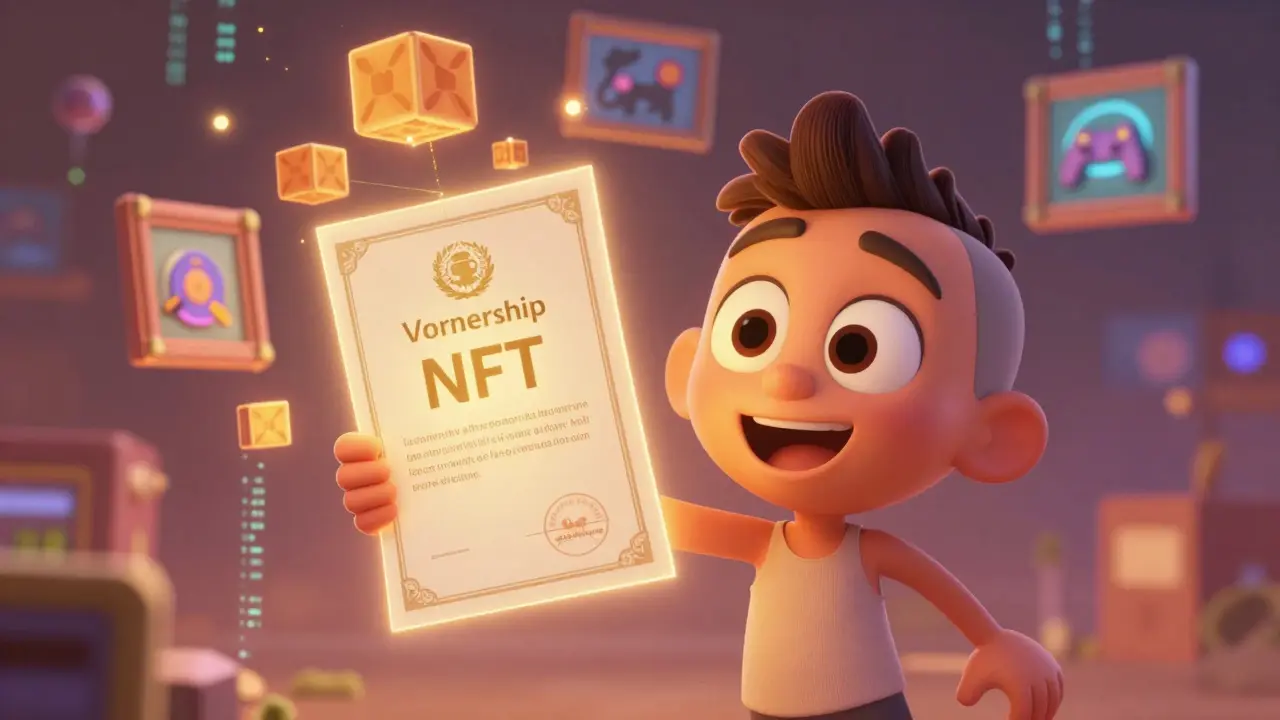
The most tangible benefit of Web3 for everyday users is ownership. In Web2, you might have millions of followers on Instagram, but you do not own those connections. If Instagram bans you, those followers vanish. In Web3, assets are represented as tokens on a blockchain, giving users verifiable proof of ownership.
This principle relies on Non-Fungible Tokens (NFTs) and cryptocurrencies. An NFT is a unique digital certificate stored on a blockchain that proves you own a specific item-whether it’s art, a domain name, or in-game equipment. Because the record is immutable and public, no one can take it away from you unless you choose to transfer it. PwC describes this shift as moving from a "read-write" internet to a "read-write-own" paradigm. You are not just consuming content; you are owning the underlying digital property rights associated with it.
Trustlessness and Cryptographic Verification
You might wonder: if there is no central authority, how do we trust the system? The answer lies in "trustlessness." This doesn’t mean you don’t trust anyone; it means you don’t need to trust a middleman. Instead, you trust mathematics and cryptography.
In traditional finance, you trust banks to keep your ledger accurate. In Web3, Smart Contracts are self-executing contracts with the terms of the agreement directly written into code. These contracts run automatically when predefined conditions are met. For instance, if you buy a digital item, the smart contract verifies payment and instantly transfers ownership. There is no human intervention, no risk of fraud by a clerk, and no hidden fees. The security comes from consensus mechanisms like Proof-of-Stake, where validators stake cryptocurrency to secure the network. If they try to cheat, they lose their stake. This cryptographic verification ensures transparency and integrity without requiring blind faith in an institution.
Interoperability and Open Standards
One of the biggest frustrations in Web2 is walled gardens. Your contacts on WhatsApp cannot talk to your friends on iMessage. Your game progress on PlayStation doesn’t transfer to Xbox. Web3 aims to solve this through interoperability.
Because Web3 applications are built on open-source protocols, they can communicate with each other. A token earned in one game could potentially be used in another, or a digital identity verified on one platform could grant access to another. Layer-2 Solutions like Optimism and Arbitrum enhance this by allowing different blockchain networks to scale and interact more efficiently. This openness encourages innovation, as developers can build on existing infrastructure rather than starting from scratch. It creates a cohesive ecosystem where value flows freely between applications, much like email works across different providers today.
Self-Sovereign Identity
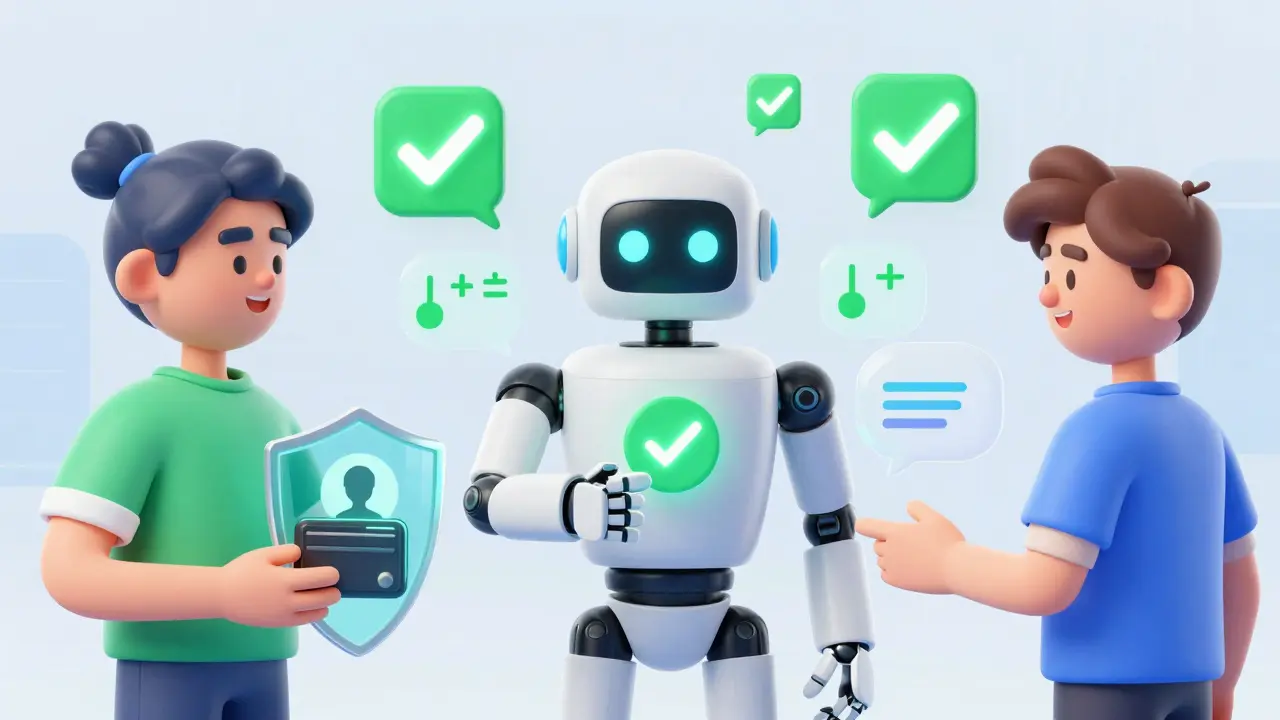
Your online identity in Web2 is fragmented and vulnerable. You create accounts everywhere, often using the same password, making you susceptible to data breaches. In Web3, you control your identity through a Crypto Wallet, which serves as a digital tool that stores private keys and allows users to interact with blockchain networks.
This wallet is your universal login. Instead of entering passwords, you sign transactions with your private key. You decide what information to share and with whom. This concept, known as Self-Sovereign Identity (SSI), means you carry your reputation, credentials, and history with you. If you build a reputation as a reliable freelancer on one Web3 platform, that reputation can follow you to others, reducing friction and increasing opportunities. It puts the power of personal data back in your hands, allowing you to monetize or protect it as you see fit.
| Feature | Web2 (Current Internet) | Web3 (Decentralized Internet) |
|---|---|---|
| Ownership | Platforms own user data and content | Users own data and digital assets via tokens |
| Control | Centralized corporations dictate rules | Decentralized communities and code govern |
| Identity | Siloed accounts managed by platforms | Self-sovereign identity via crypto wallets |
| Trust Model | Trust intermediaries (banks, platforms) | Trustless verification via cryptography |
| Monetization | Ads and data sales benefit platforms | Token economies compensate users directly |
Challenges and Realities
While the principles are compelling, the execution faces significant hurdles. Scalability remains a major issue. Ethereum, the leading Web3 platform, processes only 15-20 transactions per second on its base layer, compared to Visa’s 24,000. While Layer-2 solutions help, the user experience can still be slow and expensive during peak times. Gas fees-the cost to process transactions-can spike dramatically, making small interactions impractical.
User experience is another barrier. Managing private keys is risky; if you lose your seed phrase, you lose access to your assets forever. Studies show that nearly half of new users abandon dApps due to complexity. Furthermore, regulatory uncertainty looms large. Governments are still figuring out how to classify tokens and enforce laws in a borderless, decentralized environment. Despite these challenges, the core principles of Web3 continue to attract billions in investment and millions of users who believe in a more equitable digital future.
What is the main difference between Web2 and Web3?
The primary difference is ownership and control. Web2 is centralized, meaning big tech companies own the platforms, your data, and the rules. Web3 is decentralized, built on blockchains, where users own their data, digital assets, and identity through cryptographic keys and tokens.
How does decentralization improve security?
Decentralization removes single points of failure. In a centralized system, hacking one server can compromise all data. In a decentralized network like Bitcoin or Ethereum, data is replicated across thousands of nodes. To alter the ledger, an attacker would need to control more than 50% of the entire network's computing power, which is practically impossible for large networks.
What is a self-sovereign identity in Web3?
Self-sovereign identity (SSI) means you control your digital identity without relying on a central authority. Instead of creating separate accounts for every service, you use a crypto wallet as a universal login. You decide what personal information to share with each application, keeping your data private and portable across the internet.
Are Web3 transactions truly anonymous?
Web3 transactions are pseudonymous, not fully anonymous. Your wallet address is visible on the public blockchain, and all transactions linked to it are transparent. However, your real-world identity is not directly attached to the address unless you voluntarily link them. Privacy-focused tools and coins exist to enhance anonymity, but standard blockchains like Ethereum offer transparency rather than secrecy.
Why is interoperability important for Web3?
Interoperability allows different blockchain networks and applications to communicate and share data seamlessly. Without it, Web3 would be a collection of isolated silos, similar to Web2. With interoperability, assets and identities can move freely between platforms, enabling a unified, efficient, and innovative global digital economy.