
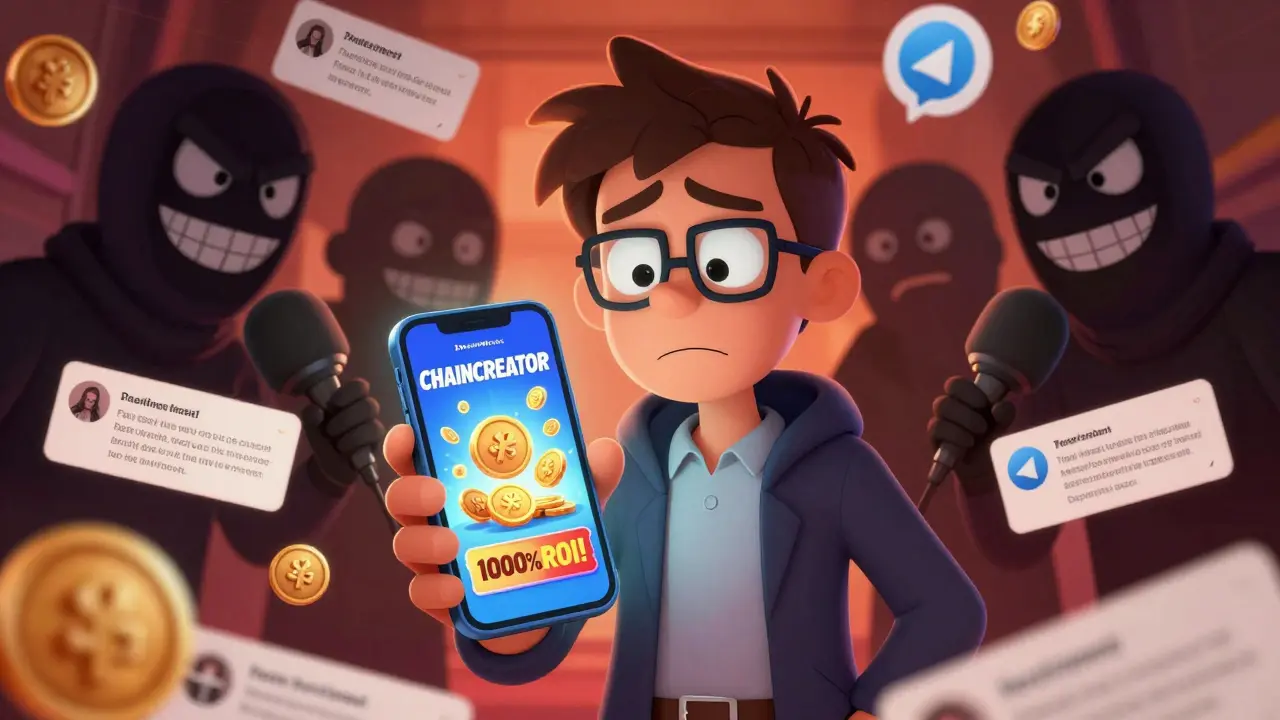
There’s no such thing as CHAINCREATOR as a legitimate cryptocurrency exchange - not in 2025, not in 2026, and likely never will be. If you’ve seen ads, YouTube videos, or Telegram groups pushing CHAINCREATOR as the "next big thing" in crypto trading, you’re being targeted by a scam. No major review site, no regulatory body, and no credible blockchain analyst has ever verified its existence. Not Coin Bureau. Not Money.com. Not even the fraud databases tracking crypto scams.
Let’s cut through the noise. You’re probably here because someone told you CHAINCREATOR offers low fees, high yields, or a "secret" trading platform you can’t find anywhere else. Maybe they promised a $500 signup bonus or said it supports 500+ altcoins. Sounds too good to be true? That’s because it is. Every trusted source that reviews crypto exchanges - and there are dozens of them - lists Binance, Coinbase, Kraken, Bybit, MEXC, and Crypto.com. Not CHAINCREATOR. Not once.
Where Did CHAINCREATOR Come From?
There’s no official website, no registered company, no domain history, and no public team behind CHAINCREATOR. If you search for it, you’ll find paid ads, fake Telegram channels, and YouTube videos with misleading thumbnails like "CHAINCREATOR EXCHANGE - 1000% ROI IN 7 DAYS!". These aren’t reviews. They’re clickbait. The creators aren’t traders - they’re scammers using AI-generated voices and stock footage to make it look real.
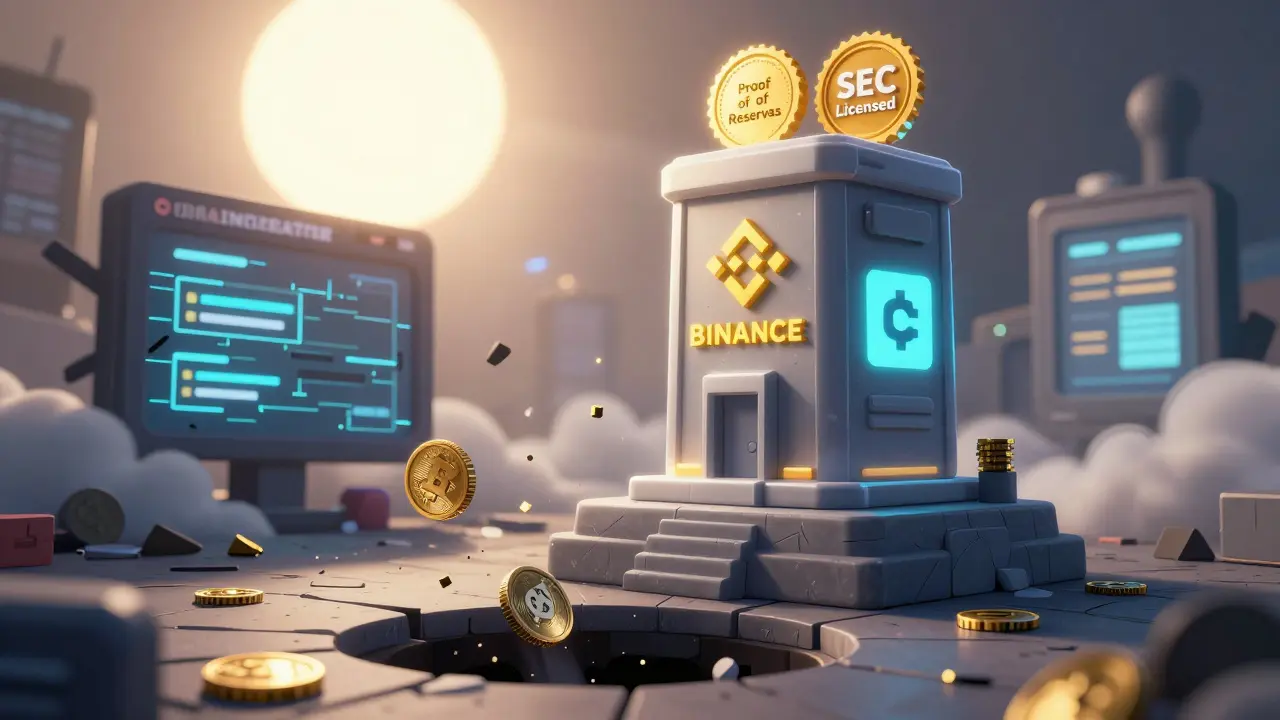
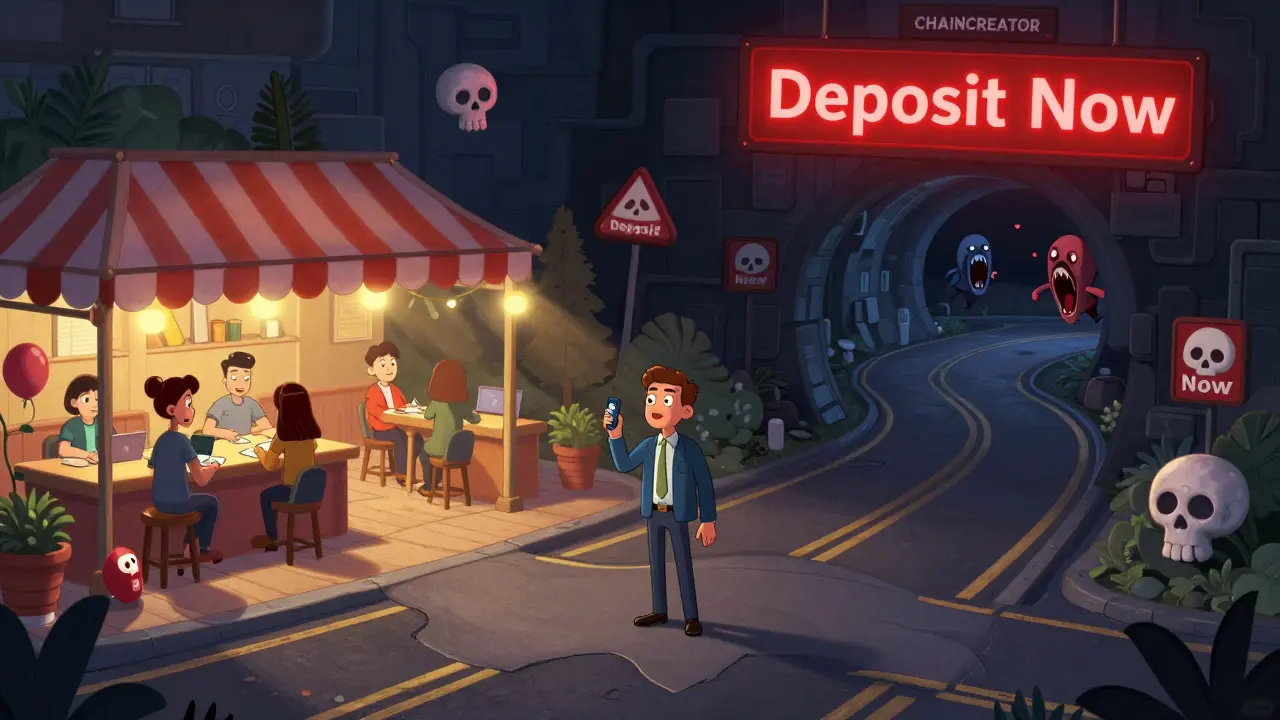
Compare this to real exchanges. Binance has been audited by third parties like Grant Thornton. Kraken publishes monthly Proof of Reserves reports. Coinbase is regulated by the SEC and NYDFS. These platforms have public leadership teams, legal offices, and customer support lines you can actually call. CHAINCREATOR? No phone number. No email. No physical address. Just a landing page with a spinning coin animation and a "Deposit Now" button.
What Do Real Crypto Exchanges Look Like in 2026?
Legit exchanges don’t hide. They compete on transparency. Here’s what you should expect from any platform you consider:
- Proof of Reserves: Publicly verifiable audits showing they hold your coins. Kraken does this monthly. Binance does it quarterly.
- Regulatory compliance: Licensed in at least one major jurisdiction like the U.S., EU, or Singapore. Coinbase is licensed in 40+ U.S. states. Kraken holds a BitLicense.
- Clear fee structure: Maker-taker fees under 0.2% for spot trading. Crypto.com charges 0.25%-0.08% maker, 0.50%-0.18% taker. CHAINCREATOR? No fee schedule listed.
- Mobile app quality: Real apps on Apple App Store and Google Play with 4+ star ratings and thousands of reviews. CHAINCREATOR’s app doesn’t exist in either store.
- Customer support: Live chat, ticket systems, response times under 24 hours. Real exchanges have teams. Scams have auto-replies like "Contact our manager" with a Telegram link.
CHAINCREATOR checks none of these boxes. That’s not an oversight - it’s a red flag.
Why Do Scams Like CHAINCREATOR Still Exist?
Because they prey on newcomers. People who don’t know how to check if a platform is real. People who see a flashy ad and think, "If it’s on YouTube, it must be legit." The crypto space is full of legitimate innovation - DeFi protocols, staking rewards, institutional-grade custody - but scams like CHAINCREATOR poison the well. They make real users distrust everything, even honest platforms.
These scams work because they mimic real ones. They use similar logos. They copy website layouts from Binance or Coinbase. They even fake testimonials with stock photos of people holding phones and smiling. But here’s the trick: real exchanges don’t need to chase you. They have millions of users because they’re reliable. Scams need to find you - through ads, DMs, and TikTok videos.
What Happens If You Deposit Money on CHAINCREATOR?
If you send crypto to CHAINCREATOR, it’s gone. Not locked. Not frozen. Gone. There’s no customer service to help you. No chargeback system. No legal recourse. Once your Bitcoin or Ethereum leaves your wallet and hits their address, it’s mixed into a laundering pool and disappears into the blockchain void.
Some users report being asked to pay "withdrawal fees" or "taxes" before they can access their funds. That’s a classic scam tactic. You send more money to unlock your original deposit - and then they vanish. There’s no refund. No appeal. No trace.
And no, the fact that Crypto Legal’s fraud database doesn’t list CHAINCREATOR doesn’t mean it’s safe. That database only includes platforms that have been reported. CHAINCREATOR hasn’t been reported yet - because not enough people have lost money on it. It’s still too new.
How to Spot a Fake Crypto Exchange
Here’s how to protect yourself:
- Check the domain. Does it use a .com, .io, or .app? Scams often use .xyz, .info, or misspellings like "chaincreator-exchange.com".
- Search for reviews. Type "CHAINCREATOR review" into Google. If the first 10 results are all YouTube videos or forums with no real names, it’s fake.
- Look at the app. If it’s not on the Apple App Store or Google Play, don’t trust it.
- Verify the team. Real exchanges have LinkedIn profiles for CEOs and CTOs. CHAINCREATOR? No names. No photos. No history.
- Check for Proof of Reserves. If they don’t show it, they don’t have it.
If any platform asks you to download a custom app or use a non-standard wallet, walk away. Legit exchanges work with MetaMask, Trust Wallet, or their own verified apps.
What Should You Use Instead?
Stick to platforms with proven track records:
- For beginners: Coinbase - simple, regulated, educational.
- For traders: Binance - deep liquidity, low fees, advanced tools.
- For security: Kraken - top-rated audits, cold storage, no leverage on crypto.
- For derivatives: Bybit - strong order book, high leverage, clean UI.
- For altcoins: MEXC - lists hundreds of new tokens early.
All of these have been tested by real users over years. They have support teams. They have legal teams. They have audits. They’re not perfect - but they’re real.
Final Warning
There’s no secret exchange hiding in plain sight. No hidden gem called CHAINCREATOR. If someone tells you otherwise, they’re either lying or being paid to lie. The crypto space is hard enough without adding fake platforms to the mix. Don’t risk your money on something that doesn’t exist.
Before you deposit anything, ask: "Would this platform be listed in Coin Bureau’s 2025 review?" If the answer is no - it’s not worth it.
Is CHAINCREATOR a real crypto exchange?
No, CHAINCREATOR is not a real crypto exchange. It does not appear in any reputable 2025 or 2026 exchange reviews from Coin Bureau, Money.com, YouTube crypto analysts, or regulatory databases. There is no official website, no registered company, and no verifiable team behind it. All evidence points to it being a scam.
Why haven’t I heard of CHAINCREATOR on major news sites?
Because it doesn’t exist as a legitimate platform. Major outlets like Coin Bureau review over a dozen exchanges each year, testing security, fees, and user experience. If CHAINCREATOR were real, it would be included. Its absence across all trusted sources is a clear sign it’s not operational.
Can I get my money back if I deposited on CHAINCREATOR?
Almost certainly not. Once crypto is sent to a scam platform like CHAINCREATOR, it’s mixed with other funds and moved through multiple wallets. There is no customer service, no chargeback option, and no legal system to recover it. The blockchain is irreversible. Prevention is the only protection.
Is CHAINCREATOR listed on Crypto Legal’s fraud database?
As of November 2025, CHAINCREATOR is not listed in Crypto Legal’s fraud database. But this doesn’t mean it’s safe - it means it hasn’t been reported yet. Many scams go unreported until hundreds of people lose money. Absence from a fraud list is not proof of legitimacy.
What should I do if I’ve already sent crypto to CHAINCREATOR?
Stop sending any more funds. Do not respond to any messages asking for "withdrawal fees" or "tax payments." Report the platform to your local financial crime unit. If you used a wallet like MetaMask, check the transaction on Etherscan or Solana Explorer - you’ll see the funds were sent to a random address, not a known exchange. Recovery is nearly impossible.
Michael Sullivan
February 8, 2026 AT 17:22Sharon Lois
February 10, 2026 AT 04:27Mrs. Miller
February 12, 2026 AT 01:21Jim Laurie
February 12, 2026 AT 01:49Jordan Axtell
February 14, 2026 AT 00:44Udit Pandey
February 14, 2026 AT 23:11mahikshith reddy
February 16, 2026 AT 11:54Brendan Conway
February 17, 2026 AT 13:44Katie Haywood
February 18, 2026 AT 11:44Alex Garnett
February 18, 2026 AT 13:47aryan danial
February 19, 2026 AT 14:37Ryan Chandler
February 20, 2026 AT 06:50James Harris
February 22, 2026 AT 02:15Matt Smith
February 22, 2026 AT 13:33Josh Flohre
February 23, 2026 AT 18:20Ajay Singh
February 25, 2026 AT 12:34Reda Adaou
February 27, 2026 AT 00:37Oliver James Scarth
February 28, 2026 AT 05:10Paul Jardetzky
February 28, 2026 AT 17:21orville matibag
March 1, 2026 AT 08:01