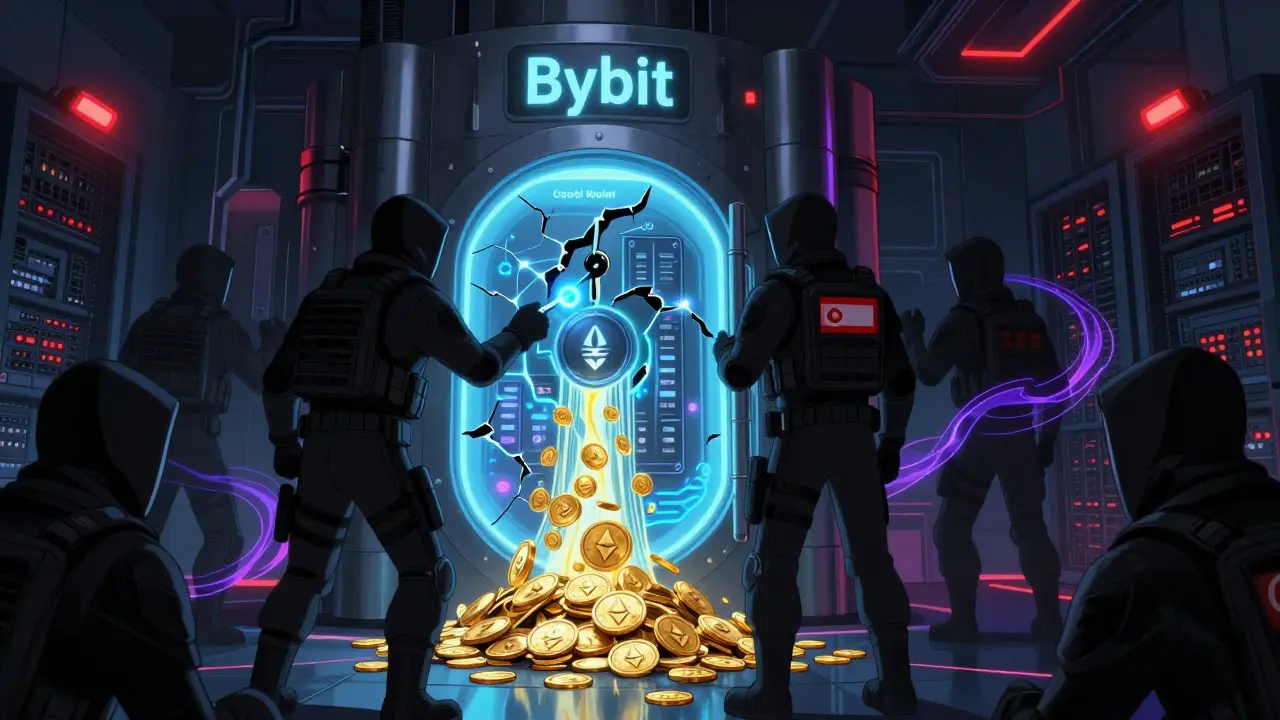
The biggest crypto heist in history didn’t happen in a dark web forum. It didn’t start with a phishing email or a leaked password. On February 21, 2025, a team of state-backed hackers from North Korea broke into Bybit, one of the world’s top cryptocurrency exchanges, and walked away with $1.5 billion in Ethereum. That’s more than the entire GDP of some small countries. And they didn’t just steal it - they made sure no one could track it back to them.
How They Broke Into a "Secure" Wallet
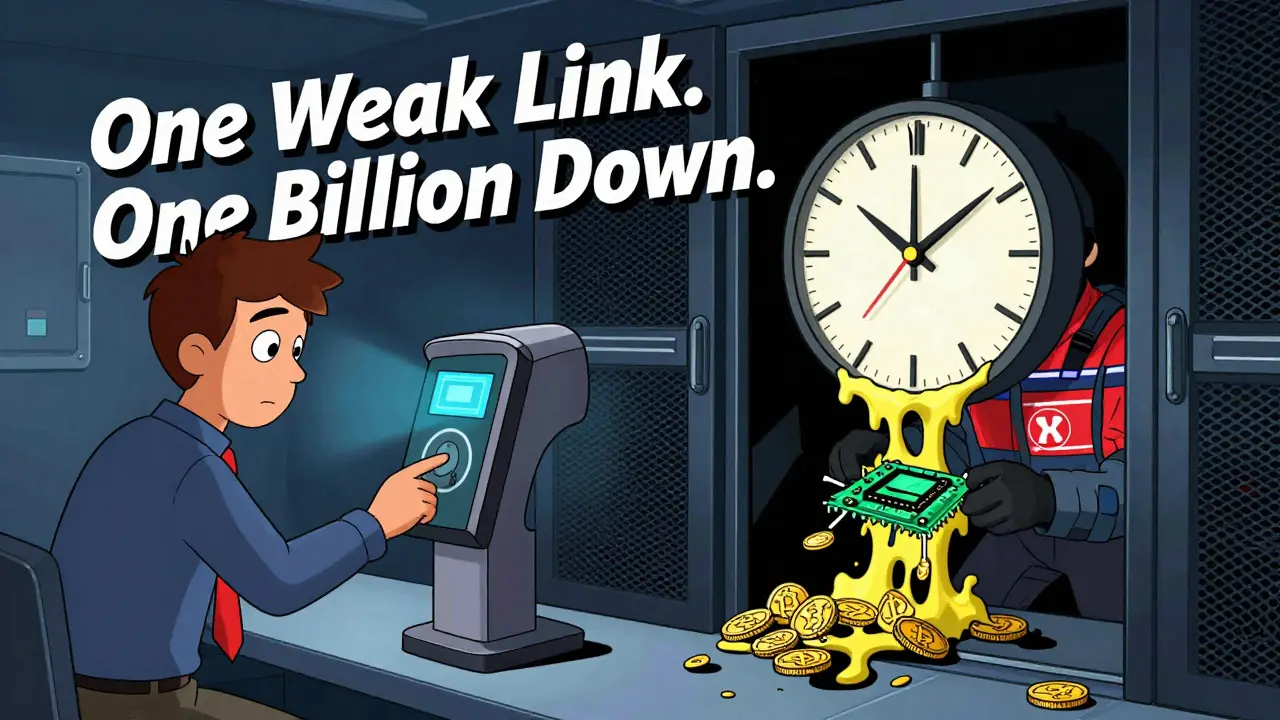
Cold wallets are supposed to be unhackable. They’re offline. Air-gapped. No internet connection. No remote access. That’s why exchanges like Bybit used them to store the bulk of their users’ funds. But the hackers didn’t need to break in from the outside. They got inside - through the people who were supposed to be guarding it. According to blockchain analytics firm TRM Labs, the attack wasn’t a brute-force hack. It wasn’t a glitch in the code. It was a compromise of the private keys - the digital passwords that control access to the funds. How? The FBI believes it was either a supply chain attack, an insider leak, or a flaw in the multi-signature system that was supposed to require multiple approvals before any transfer could happen. Multi-signature wallets usually need 3 out of 5 keys to move money. That’s a safety net. But if one of those key-holders was compromised - maybe through blackmail, bribery, or malware - the whole system crumbles. The hackers didn’t need to crack encryption. They just needed one weak link.Meet TraderTraitor: North Korea’s Crypto Hit Squad
This wasn’t some random group of hackers. It was TraderTraitor is a specialized cyber unit operating under North Korea’s Reconnaissance General Bureau (RGB), specifically the 3rd Bureau, which handles cyber operations and foreign intelligence. This group has been active since at least 2022, and they’ve evolved from simple scams into precision operations. Earlier North Korean hacking teams used phishing emails and malware to steal small amounts of crypto. TraderTraitor changed the game. They started targeting software providers, cloud services, and development platforms. In 2024, they were linked to the JumpCloud breach - a supply chain attack that gave them access to thousands of corporate systems. By 2025, they were ready to hit a major exchange head-on. The FBI named this operation "TraderTraitor" to distinguish it from other North Korean groups like the Lazarus Group. That’s unusual. Most cyberattacks get lumped together. This one got its own label because it was different - faster, smarter, and more destructive.The Money Trail: From Ethereum to Bitcoin
The stolen funds weren’t left in Ethereum. Within hours, the hackers began converting them into other blockchains - Binance Smart Chain, Solana, even Polygon. Why? To confuse trackers. Every time they moved funds across a different network, it added another layer of complexity. But the real move? They converted almost all of it into Bitcoin. Bitcoin is harder to trace. It’s the global currency of choice for illicit actors. And unlike Ethereum, where transactions are public and permanent, Bitcoin’s anonymity tools - like CoinJoin and OTC desks - make it nearly impossible to follow the money after it’s been washed. TRM Labs tagged every address involved in the heist as "Bybit Exploiter Feb 2025" and shared the list with exchanges, node operators, and blockchain firms. They even built a real-time tracker. But the hackers were already one step ahead. Most of the Bitcoin remains frozen - not because they couldn’t move it, but because they’re waiting. Waiting for the heat to die down. Waiting for a buyer who won’t ask questions.
Why This Matters Beyond Bybit
This wasn’t just a theft. It was a strategic strike. North Korea doesn’t have oil, gas, or tech exports. What it does have is hackers. In 2024, the country stole $800 million in crypto across 47 separate attacks. The ByBit heist alone was nearly double that. A UN report confirmed that about half of North Korea’s foreign currency income comes from cybercrime. And that money? It’s funding missiles, nuclear warheads, and ballistic submarines. This isn’t about lost profits. It’s about global security. If a nation-state can steal $1.5 billion from one exchange, what’s stopping them from hitting others? Exchanges are now on notice. The days of assuming "cold storage = safe" are over. The assumption that private keys are secure? That’s gone too.What Changed After the Hack
The response was swift. The FBI didn’t just issue a warning - they released the exact wallet addresses involved and asked every crypto company to block them. That’s rare. Most governments wait months to react. This was an emergency. Exchanges started upgrading their systems. Some added biometric approvals for key access. Others began rotating keys every 72 hours. A few even started using hardware security modules (HSMs) that require physical presence to authorize transactions - no remote access allowed. But the real shift? The industry stopped pretending it could outsmart state actors. Before, companies thought they just needed better firewalls. Now they know: if North Korea wants your money, they’ll find a way. The only defense is layered, human-focused security - not just tech.