

Imagine buying a stock that not only pays you dividends but also gives you a seat at the board table. You get to vote on who gets hired, how much money is spent, and which new products are built. Now imagine doing that without lawyers, paperwork, or a central headquarters. That is exactly what holding governance tokens offers you in the world of decentralized finance (DeFi).
Governance tokens are more than just tradable assets; they are digital keys to power within blockchain protocols. They allow holders to shape the future of platforms like Uniswap, Aave, and MakerDAO. But why should you care? Is it just about speculation, or is there real utility here? Let’s break down the actual benefits, the mechanics of how they work, and the risks you need to watch out for in 2026.
What Are Governance Tokens?
To understand the benefits, you first need to know what you’re holding. A governance token is a cryptocurrency tied to a specific smart contract that grants the owner voting powers over on-chain decisions. Unlike utility tokens, which might just give you access to a service, or security tokens, which represent traditional financial instruments, governance tokens confer decision-making authority.
Think of them as "voting chips." The more chips you have, the heavier your vote weighs. This concept emerged around 2019-2020 with projects like MakerDAO’s MKR token, becoming the operational backbone for Decentralized Autonomous Organizations (DAOs). Today, major protocols use these tokens to ensure that no single entity-like a CEO or a venture capital firm-holds all the cards. Instead, control is distributed among the users who actually rely on the platform.
How do governance tokens differ from regular cryptocurrencies?
Regular cryptocurrencies like Bitcoin or Ethereum primarily serve as stores of value or mediums of exchange. Governance tokens, such as UNI or AAVE, are designed specifically to grant voting rights and influence over the protocol's development, treasury allocation, and fee structures within their native ecosystems.
The Core Benefits of Holding Governance Tokens
Why do people hold these tokens beyond hoping their price goes up? The value proposition centers on three main pillars: democratic influence, economic incentives, and community alignment.
- Direct Influence on Protocol Direction: Holders can vote on critical matters ranging from protocol upgrades and fee structures to treasury allocation and token issuance policies. For example, Uniswap token holders voted to allocate $160 million from its treasury to a Community Growth Fund, directly impacting where resources go.
- Economic Incentives and Staking Rewards: Many protocols reward holders for participating. You can stake your governance tokens to secure the network or signal your voting preferences, earning additional rewards in return. Some platforms also distribute a portion of their trading fees back to token holders.
- Alignment of Interests: When users own a piece of the platform, they are incentivized to help it succeed. This creates a positive feedback loop where the community works together to improve the product, knowing that a better protocol leads to higher token value and better services for everyone.
This democratization of decision-making prevents any one entity from gaining too much control. It ensures that projects are funded by those who actually use and benefit from them, rather than being dictated by distant executives.
How Voting Actually Works
You might wonder, "Do I really have to write code to vote?" Fortunately, no. Most major protocols like Uniswap and Aave provide web-based governance dashboards that simplify the process. Here is how it typically flows:
- Proposal Submission: Anyone with a minimum threshold of tokens can submit a proposal. This could be anything from changing transaction fees to partnering with a new project.
- Voting Period: Token holders review the proposal and cast their votes. The weight of your vote usually corresponds directly to your token holdings. However, some protocols implement time-locked voting, requiring you to lock your tokens for a certain period to participate, which encourages long-term commitment.
- Execution: If the proposal passes, it is often executed automatically by smart contracts, ensuring transparency and removing human error or bias.
The entire process leaves a transparent and auditable record on the blockchain. You can verify every vote and outcome yourself, which builds trust in the system.
| Feature | Centralized Model (Traditional Corp) | Governance Token Model (DAO/DeFi) |
|---|---|---|
| Decision Makers | Board of Directors & C-Suite | Token Holders (Community) |
| Transparency | Private internal meetings | Public on-chain records |
| Incentive Alignment | Shareholder profit focus | User and protocol success focus |
| Speed of Change | Slow, bureaucratic | Agile, rapid iteration |
Financial Upside: Beyond Just Voting
While voting is the headline feature, the financial benefits are often what keep holders engaged. Governance tokens enable several revenue-generating strategies:
Liquidity Provision: You can pair your governance tokens with stablecoins or other assets on decentralized exchanges to earn trading fees. This is a common strategy for active participants who want to support the ecosystem while generating yield.
Staking Yields: Protocols often incentivize staking to prevent short-term speculation and encourage long-term holding. By locking up your tokens, you contribute to the stability of the network and receive rewards, which can sometimes outperform traditional savings accounts.
Market Trading: Since governance tokens are tradeable on major exchanges, you benefit from market dynamics. As a protocol grows and attracts more users, demand for its governance token often rises, potentially increasing its value. However, this comes with volatility, so it’s crucial to distinguish between investing based on fundamentals versus pure speculation.
The Risks: Plutocracy and Low Turnout
It’s not all sunshine and rainbows. There are significant challenges with the current governance token model that you need to be aware of.
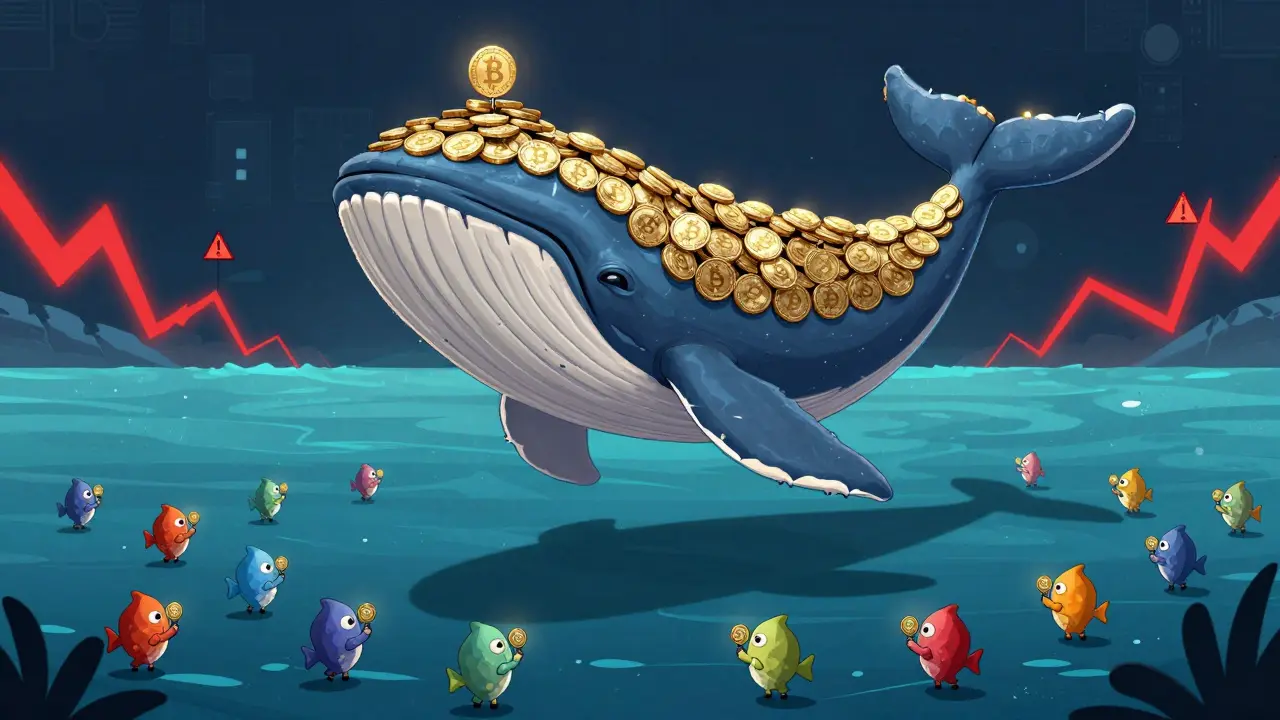
Plutocracy Risk: The principle of "more tokens = more voting weight" means that large holders (often called "whales") can dominate decisions. This can lead to outcomes that favor big players over small retail investors, undermining the ideal of true decentralization.
Low Voter Turnout: Engagement is a persistent issue. Many DAOs experience participation rates below 5% of eligible voters. This apathy can result in governance being dominated by a small, unrepresentative minority. If you don’t vote, someone else will decide for you-and they might not have your best interests at heart.
Regulatory Uncertainty: The legal landscape is still evolving. In 2025, regulators like the SEC indicated that tokens marketed for profit or tied to central management might be considered securities. This creates compliance risks for both projects and holders, potentially affecting liquidity and usability in certain jurisdictions.

Real-World Examples: UNI, AAVE, and MKR
To see these concepts in action, let’s look at three major governance tokens:
- Uniswap (UNI): Launched in September 2020, UNI is the governance token for the largest decentralized exchange. Holders vote on fee switches, treasury allocations, and protocol upgrades. Its massive user base makes it a prime example of community-driven growth.
- Aave (AAVE): Introduced in December 2020, AAVE governs the lending protocol. Notably, it uses a safety module where stakers put up collateral to protect the protocol, earning rewards in return. This ties financial risk directly to governance power.
- MakerDAO (MKR): One of the earliest implementations (launched 2017), MKR holders manage the DAI stablecoin system. They vote on risk parameters, collateral types, and emergency responses, demonstrating how governance handles complex financial systems.
How to Get Started with Governance Tokens
If you’re interested in joining this space, here is a practical checklist to get started safely:
- Research the Protocol: Don’t just buy the token. Read the whitepaper, understand the team, and check if the project has an active community. Look for regular updates and transparent communication.
- Set Up a Wallet: You’ll need a non-custodial wallet like MetaMask or Ledger to hold your tokens and interact with governance interfaces. Never share your private keys.
- Start Small: Begin with a small amount to learn the voting process. Familiarize yourself with the dashboard, proposal timelines, and gas fees required to submit votes.
- Engage Actively: Join the project’s Discord or Telegram channels. Read proposals before voting. Consider delegating your vote to trusted experts if you don’t have the time to research every detail.
- Diversify: Don’t put all your eggs in one basket. Spread your investments across multiple protocols to mitigate risk.
The Future of Governance Tokens
As we move through 2026, the landscape continues to evolve. We are seeing innovations in token utility, such as integration with loyalty programs and reputation-based weighting mechanisms. These advancements aim to address plutocracy concerns by giving voice to active contributors, not just wealthy holders.
Additionally, there is growing interest in bridging DeFi with traditional finance. Governance tokens may soon play a role in hybrid models that combine the efficiency of blockchain with the regulatory clarity of traditional institutions. While challenges remain, the core idea of community-owned software is here to stay.
Can I lose my governance tokens?
Yes, like any cryptocurrency, governance tokens can lose value due to market fluctuations. Additionally, if you stake them in a protocol that suffers a hack or insolvency, your staked tokens could be at risk. Always do your own research and never invest more than you can afford to lose.
Do I need a lot of tokens to make a difference?
Not necessarily. While larger holders have more voting weight, many protocols allow delegation. You can delegate your voting power to experienced community members who align with your views, amplifying your influence without needing to hold millions of dollars in tokens.
Are governance tokens taxable?
Tax laws vary by country. In many jurisdictions, receiving governance tokens as rewards or selling them for profit triggers tax events. Consult with a local tax professional to understand your obligations regarding capital gains and income tax.