
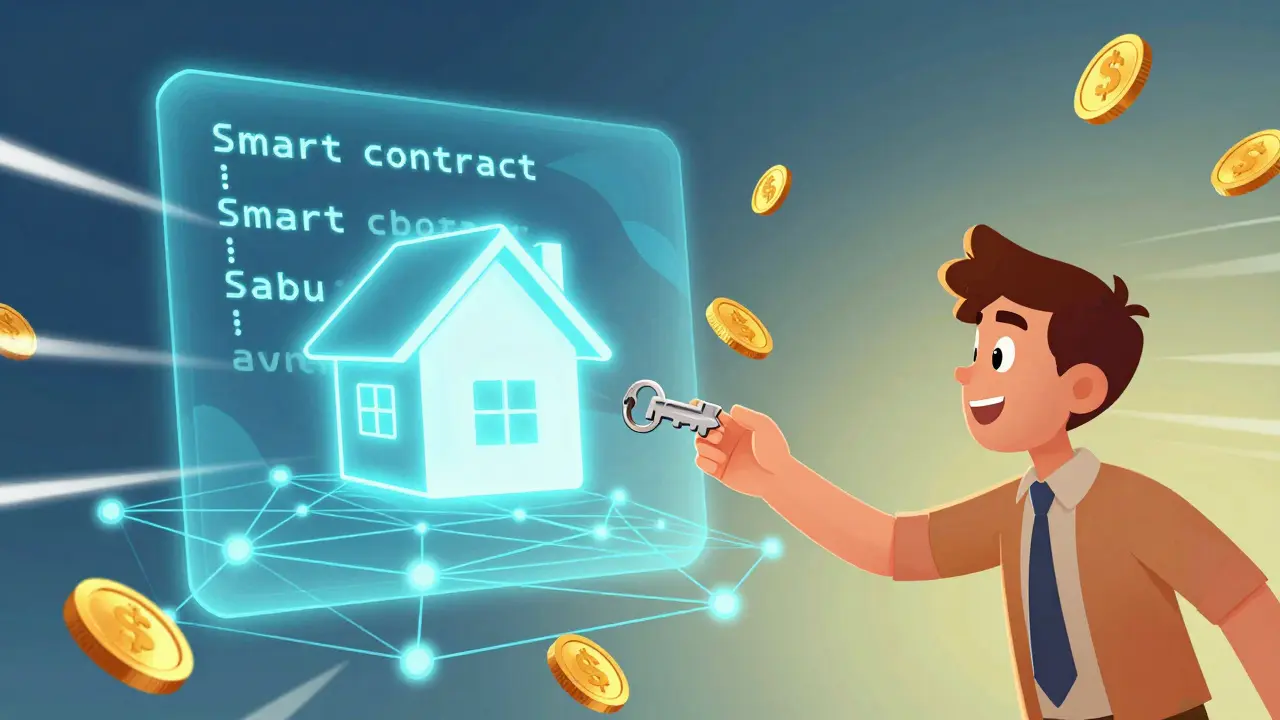
Smart contracts are self-executing agreements written in code and stored on a blockchain. They run automatically when conditions are met-no middleman needed. Sounds perfect, right? But the reality is more complicated. While they cut costs and speed up deals, they also come with serious risks you can’t ignore. This isn’t hype. It’s real tech with real trade-offs.
How Smart Contracts Actually Work
A smart contract is just code. It lives on a blockchain like Ethereum, Solana, or Polygon. When you set it up, you define rules: If A happens, then B executes. For example, if a buyer sends $10,000 to a seller’s wallet, the contract automatically transfers ownership of a digital asset. No lawyer. No bank. No waiting. The code runs on every node in the network. That means it’s not stored in one place. It’s copied everywhere. If one node tries to cheat, the others reject it. That’s why smart contracts are trusted-they’re tamper-proof. Once deployed, they can’t be changed. That’s a strength. And a weakness.Benefits: Why Smart Contracts Are a Game-Changer
Autonomy is the biggest win. You don’t need a broker to verify a property sale, an insurer to process a claim, or a bank to clear a payment. The code does it. In real estate, a smart contract can check land registry records, confirm payment, and transfer title-all in minutes. Traditional processes take weeks. This cuts costs by up to 70% in some cases. Transparency is built in. Every step of the contract is recorded on the blockchain. Anyone can see it. No hidden clauses. No altered terms. That builds trust between strangers. A farmer in Kenya and a buyer in Germany can trade crops without ever meeting. The contract enforces the deal fairly. Speed and efficiency come from automation. Insurance claims that used to take 30 days now settle in hours. Supply chain payments trigger automatically when goods are scanned at a port. No manual approvals. No paperwork delays. Reliability comes from decentralization. Since the contract runs on hundreds or thousands of computers, it doesn’t crash if one server goes down. It’s like having 1,000 backup copies of your contract-every single one identical.Limitations: The Hidden Flaws
But here’s where it breaks down. Coding errors are expensive-and permanent. A single line of bad code can cost millions. In 2016, the DAO hack exploited a漏洞 in a smart contract and stole $60 million. The fix? The entire Ethereum network had to hard-fork. That’s not how real contracts work. In the real world, you negotiate. You fix mistakes. With smart contracts, if you mess up, you’re stuck. They need outside data. What if your contract pays out when the temperature drops below freezing? The blockchain doesn’t know the weather. That’s where oracles come in-third-party services that feed real-world data into the contract. But now you’ve added a new point of failure. If the oracle is hacked or gives wrong data, the contract executes the wrong action. A crop insurance contract could pay out when it shouldn’t-or not pay when it should. Legal gray zones are everywhere. Who’s responsible if a smart contract fails? The developer? The user? The blockchain platform? Courts don’t have clear rules yet. If you’re sued over a smart contract, there’s no judge who’s trained to read Solidity code. Regulatory bodies in the U.S., EU, and Asia are still figuring out how to classify these things. Are they contracts? Software? Financial instruments? No one agrees. They can’t handle ambiguity. Real contracts use words like “reasonable effort,” “good faith,” or “material breach.” Smart contracts don’t understand nuance. If a shipment is delayed by a storm, a human might delay payment. A smart contract? It just triggers the penalty clause. No mercy. No context. High upfront cost. Writing secure smart contracts requires top-tier developers. Auditing them costs $50,000 to $200,000. Small businesses can’t afford that. Only big companies or well-funded startups can play. That limits adoption to a narrow slice of the market.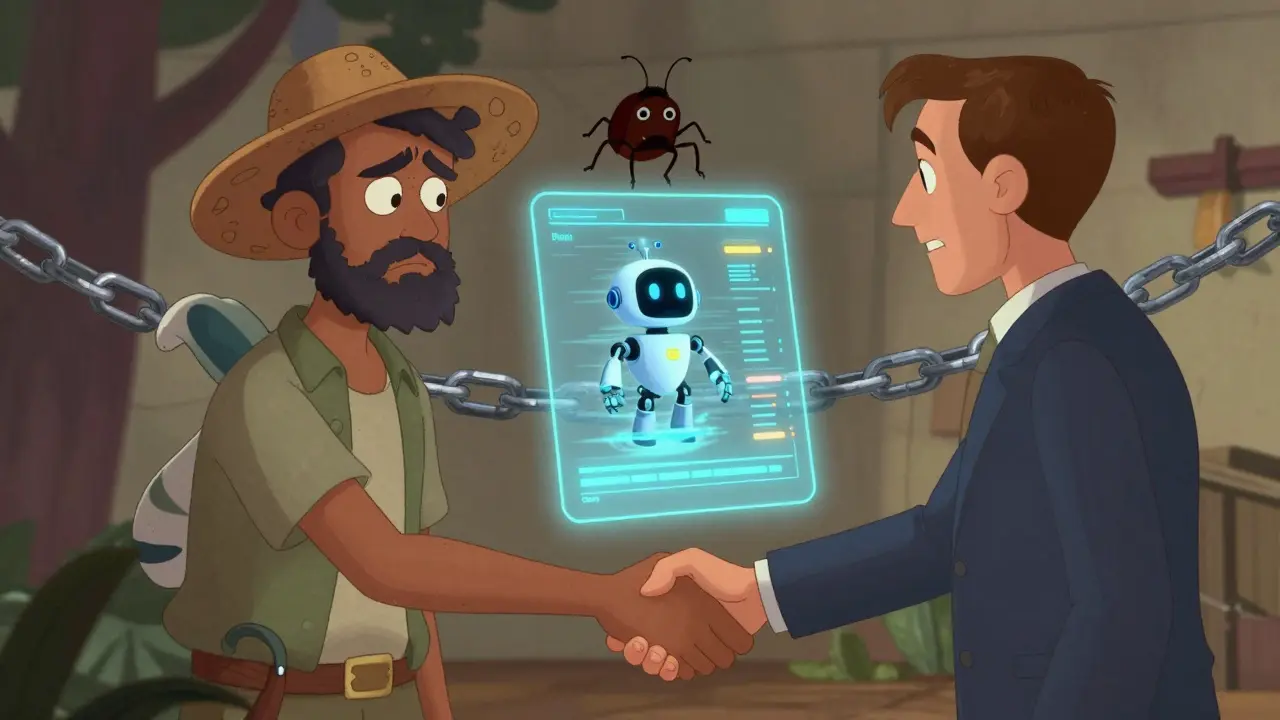
Integration Isn’t as Clean as You Think
People say smart contracts remove intermediaries. But they don’t. They just shift them. You still need lawyers to translate business terms into code. You still need auditors to check for bugs. You still need developers to maintain the system. You’re not eliminating people-you’re changing their roles. And if your contract needs to talk to legacy systems like SAP or Oracle databases? Good luck. Most blockchain networks can’t connect directly. You need bridges, APIs, gateways-all extra layers that add complexity and risk.What About AI? Can It Fix This?
Some companies are experimenting with AI to help write and audit smart contracts. Machine learning models can scan code for known vulnerabilities faster than humans. They can predict how a contract might behave under different conditions. That helps. But AI can’t replace human judgment. It can’t understand intent. It can’t negotiate. And if the AI is trained on bad data, it might miss critical flaws-or create new ones. Right now, AI is a tool, not a solution. It reduces errors, but it doesn’t eliminate them.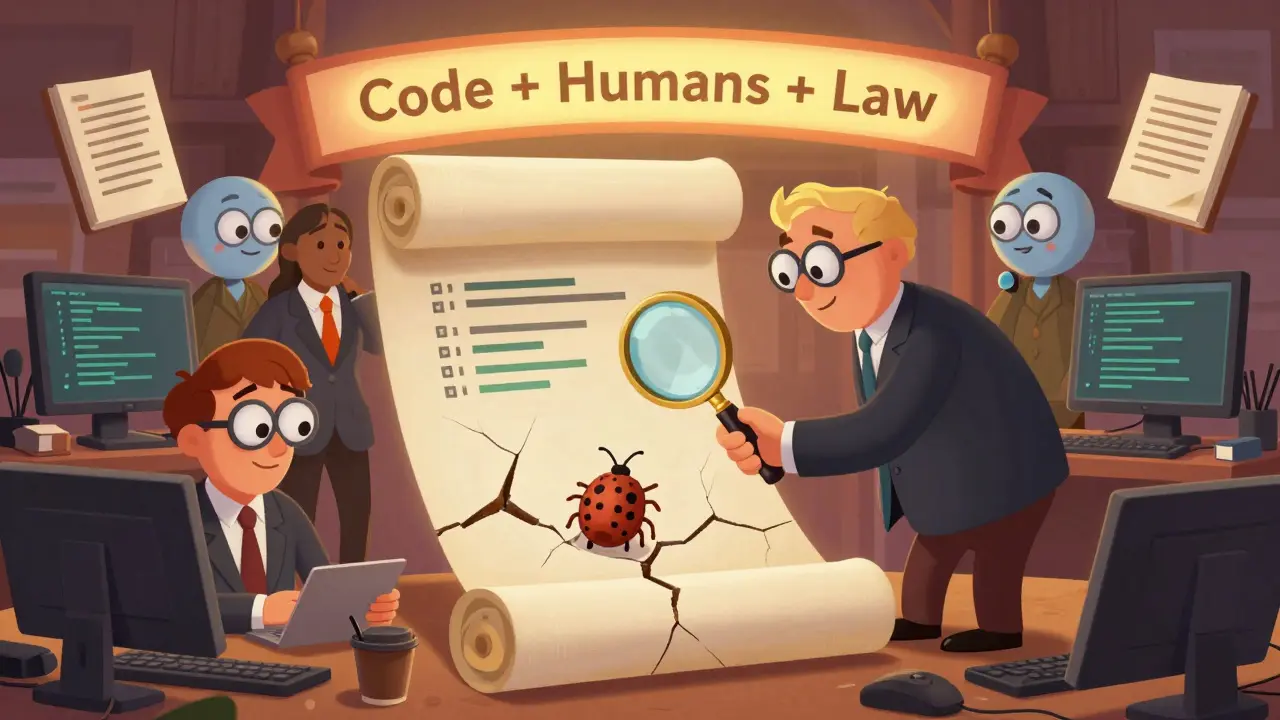
Who Should Use Smart Contracts?
Not everyone. But some use cases are already working.- DeFi lending platforms like Aave and Compound use smart contracts to automate loans and interest payments. They’ve handled billions in transactions with minimal human oversight.
- Supply chain tracking for pharmaceuticals uses smart contracts to verify drug authenticity at each shipping point.
- Digital identity verification allows users to prove they’re over 18 without revealing their full ID-just a cryptographic proof.
- Complex legal agreements (wills, mergers, real estate deeds with contingencies)
- Contracts requiring human discretion (employment, tenant agreements)
- Systems where data sources are unreliable or untrusted
The Bottom Line
Smart contracts aren’t magic. They’re tools. Powerful tools-with sharp edges. They save time, money, and reduce fraud. But they’re brittle. They can’t adapt. They can’t forgive. And they’re not legally foolproof. If you’re considering using them, start small. Test on a private blockchain first. Hire auditors. Understand the legal risks. Don’t assume automation equals perfection. The future of contracts isn’t just code. It’s code + humans + law. The best systems will blend all three.Can smart contracts be changed after deployment?
No, not directly. Once a smart contract is deployed on a blockchain, its code is immutable. You can’t edit it. The only way to "update" it is to deploy a new version and migrate users to it. Some platforms allow for upgradeable contract patterns using proxy contracts, but these add complexity and introduce new security risks. The core principle of blockchain-immutability-means changes are designed to be extremely difficult, not impossible.
Are smart contracts legally binding?
In many jurisdictions, smart contracts can be legally binding if they meet standard contract requirements: offer, acceptance, consideration, and mutual intent. However, enforcement is unclear. Courts don’t yet have consistent standards for interpreting code as law. If a dispute arises, parties may still need to go to court to prove what the contract was meant to do. The code may execute automatically, but legal recourse often depends on human interpretation.
What’s an oracle in blockchain?
An oracle is a bridge between a smart contract and the outside world. Smart contracts can’t access real-time data like stock prices, weather, or flight statuses on their own. Oracles fetch that data from external sources (like APIs) and feed it into the blockchain. Popular oracles include Chainlink and Band Protocol. But oracles are a weak point-if they’re hacked or provide wrong data, the smart contract executes based on false information.
Can smart contracts be hacked?
Yes. Smart contracts are software, and software has bugs. Common vulnerabilities include reentrancy attacks, integer overflows, and poor access control. The DAO hack in 2016 and the Poly Network breach in 2021 are examples of major exploits. Even well-audited contracts can have hidden flaws. That’s why independent code audits are critical before deployment. No contract is 100% safe.
Do smart contracts eliminate the need for lawyers?
Not really. Lawyers are still needed to define the legal terms that get turned into code. They help ensure the contract reflects real-world intent and complies with local laws. Without legal input, the code might execute perfectly-but still violate regulations or fail to protect rights. Smart contracts shift the lawyer’s role from drafting to advising and auditing.
Are smart contracts faster than traditional contracts?
Yes, but only under ideal conditions. Once deployed and triggered, execution is near-instantaneous. But blockchain networks can get congested. On Ethereum, transaction fees spike during high demand, and confirmations can take minutes or even hours. In comparison, a traditional contract signed via email or fax might be processed in seconds. Speed isn’t guaranteed-it depends on the blockchain’s capacity and network load.
What industries benefit most from smart contracts?
Finance (DeFi), supply chain, insurance, real estate, and digital identity are the top adopters. DeFi uses them for lending and trading without banks. Insurance uses them for automated claims (e.g., flight delay payouts). Real estate uses them for title transfers. These industries benefit because their processes are rule-based, repetitive, and involve clear digital assets or data points.
Can smart contracts work offline?
No. Smart contracts require a live blockchain network to execute. They rely on consensus among network nodes to validate transactions and update state. Without internet access and network connectivity, the contract cannot run or be triggered. They are not standalone applications.
Emma Sherwood
December 17, 2025 AT 05:32Smart contracts are cool until you realize they’re just glorified vending machines for law. No empathy, no mercy, no room for a storm delaying a shipment. I’ve seen farms lose millions because an oracle fed bad weather data. We’re automating justice? That’s not progress, that’s dystopia with a blockchain logo.
And don’t get me started on the ‘no middlemen’ myth. You still need lawyers to write the code, auditors to check it, and devs to fix it when it breaks. We’re just shifting the power to tech bros with fancy degrees and zero accountability.
The real win? DeFi. But even that’s built on sand. When the market crashes, the contracts don’t care if you lost your job. They just liquidate. No human ever said, ‘I’m sorry, your house is gone because the price dropped 3%.’
Florence Maail
December 18, 2025 AT 00:55They’re watching you through the contract. Every transaction. Every transfer. The government, Big Tech, the Fed-they’re all feeding data into the oracles. Soon your smart contract will deny you a loan because your grocery habits ‘suggest financial instability.’ 😈
They say it’s ‘immutable.’ Yeah, right. Like the Constitution was immutable before they started amending it. This is just the next step in surveillance capitalism. You think you’re in control? You’re just a data point in a machine that doesn’t care if you’re broke, sick, or grieving.
Chevy Guy
December 18, 2025 AT 14:27so u saying code is perfect now lmao
if ur smart contract breaks u just cry and move on
lol
also who audits the auditors
also also why is everything on ethereum
also also also why are we all still using fiat
just sayin
Amy Copeland
December 19, 2025 AT 14:40Oh wow, you actually think this is revolutionary? I mean, come on. You’re praising automation like it’s a TED Talk and not a liability-laden dumpster fire. The fact that you didn’t mention the 2022 LUNA collapse, where smart contracts triggered cascading liquidations that wiped out $40 billion in under 72 hours, tells me you’ve been reading crypto blogs, not actual legal journals.
And ‘transparency’? Please. The blockchain is a public ledger, yes-but only if you know how to read hex. Most people can’t even open a PDF without crashing their laptop. You think a farmer in Kenya understands Solidity? No. He just trusts the app. That’s not transparency. That’s exploitation dressed in Web3 glitter.
Cheyenne Cotter
December 19, 2025 AT 18:42Look, I’ve been in this space since 2017, and I’ve audited over 80 contracts. The biggest issue isn’t the code-it’s the people who think they can just copy-paste a template from GitHub and call it a day. I once saw a DeFi protocol that used an outdated OpenZeppelin library with a known reentrancy bug. They deployed it. Lost $12 million in two hours. The devs were undergrads. No lawyers. No insurance. Just ‘trust the code.’
And the oracles? Oh god. Chainlink is good, but even they’ve had outages. What happens when your crop insurance contract pays out because a weather API returned ‘-5°C’ when it was actually -2°C? The farmer gets paid, but the insurer goes bankrupt. And who pays for that? The users. Again. Always the users.
And don’t get me started on gas fees. You think a small business in rural Ohio can afford $200 in transaction fees every time they trigger a contract? No. So they use a centralized sidechain. Which defeats the whole point. We’re stuck in a loop: decentralization is the goal, but scalability forces centralization. The irony is thick enough to spread on toast.
AI helps? Sure. But AI trained on bad data just makes bad decisions faster. I’ve seen models flag safe contracts as ‘high risk’ because they used a variable name that matched a known exploit pattern. Literally, the variable was named ‘safeAmount.’ The AI didn’t understand context. It just saw ‘safe’ and ‘amount’ and thought ‘fraud.’
And yes, lawyers are still needed. But now they have to learn to read code. And devs have to learn to read legalese. And neither group likes the other. So we’re stuck with miscommunication, misinterpretation, and lawsuits over whether ‘reasonable effort’ means ‘try your best’ or ‘do the bare minimum.’
The future isn’t code + humans + law. It’s code + humans + law + a whole lot of therapy for everyone involved.
George Cheetham
December 21, 2025 AT 18:24There’s something deeply human about the idea of a contract-a promise between people, upheld by mutual trust. Smart contracts strip that away. They reduce relationships to logic gates. But we’re not machines. We’re flawed, forgiving, adaptable beings. A contract that can’t bend when the world bends is not a contract-it’s a trap.
Maybe the real innovation isn’t in the code, but in how we design systems that let humans remain in the loop. Not as middlemen, but as guardians. Not as enforcers, but as interpreters. The code executes. But the conscience? That still needs to be human.
Let’s not confuse efficiency with wisdom.
Sue Bumgarner
December 22, 2025 AT 13:23Why are we letting foreign code run our economy? This is a national security threat. China and Russia are already building their own blockchain systems. We’re giving away our financial sovereignty to some hacker in Ukraine who wrote a contract in his basement while eating ramen. And you call this progress? This is how empires fall. With a click. With a ‘deploy’ button. Wake up, people.
Kayla Murphy
December 23, 2025 AT 01:29I just want to say-this post was so well written. It’s refreshing to see someone actually break down the real trade-offs instead of just shilling crypto. I’ve been trying to use smart contracts for my small Etsy business, and the cost of auditing was insane. But I’m still trying. Because the potential is real. We just need to be smarter about how we use it. Keep sharing this kind of stuff. We need more voices like yours.
Craig Nikonov
December 24, 2025 AT 09:56Smart contracts are the digital equivalent of a shotgun wedding. You force two parties into a union with zero room for divorce, no counseling, and the priest is a bot that doesn’t understand sarcasm. And if the bride shows up late? The contract auto-cancels the whole thing. No ‘sorry, traffic.’ Just ‘transaction reverted.’
Also, oracles are the weakest link. Like a guard dog that’s trained to bark at squirrels but ignores the burglar. Chainlink? More like ChainLinkin’-connecting you to disaster.
Donna Goines
December 24, 2025 AT 11:02They’re coming for your data. Every time you sign a smart contract, you’re giving up a piece of your identity. The blockchain doesn’t forget. Ever. And one day, your ‘past’ will be used to deny you healthcare, housing, or even a job. They’re building a permanent digital scarlet letter. And you’re clapping because it’s ‘efficient.’
Remember when we thought the internet would make us free? Now we’re just data cows on a blockchain pasture. And the farmer? He’s not even human.
Greg Knapp
December 25, 2025 AT 05:26why do people keep saying smart contracts are secure
they're just code
code breaks
people die
why is this hard
also i lost my crypto
it was in a contract
now i have nothing
thanks code
Shruti Sinha
December 26, 2025 AT 07:48While the technical aspects are well-documented, the cultural implications are rarely addressed. In many non-Western societies, contracts are relational, not transactional. A smart contract assumes universal compliance with Western legal norms, ignoring local customs, informal dispute resolution, and communal accountability. This isn’t just a technological gap-it’s a colonial imposition disguised as innovation.
Sally Valdez
December 27, 2025 AT 20:35Oh please. You think blockchain is the future? What about the fact that the entire Ethereum network uses more electricity than Argentina? And you call that ‘green tech’? We’re trading one corrupt system for another that’s even more opaque. And don’t even get me started on NFTs. You paid $50,000 for a JPEG? Congrats. You’re the new tulip bulb guy.
Sammy Tam
December 28, 2025 AT 20:40Biggest insight here? The shift isn’t from human to machine-it’s from *reactive* to *proactive* systems. In traditional contracts, you sue after the damage. With smart contracts, you can code in safeguards before the damage even happens. Like a failsafe that freezes payments if a shipment is delayed beyond 72 hours-until a human reviews it. That’s the sweet spot: automation with a human override. Not ‘no humans,’ but ‘humans at the right time.’
And yeah, auditors are expensive. But so is a $60 million hack. We’re not paying for code. We’re paying for peace of mind.
Jonny Cena
December 29, 2025 AT 17:35This is one of the clearest breakdowns I’ve read. I’ve been trying to explain this to my cousin who thinks smart contracts are ‘free money.’ He’s not wrong-they can be. But they’re also a minefield. I told him: ‘If you wouldn’t sign a paper contract without a lawyer, don’t deploy a code contract without one.’ It’s the same principle. Just with more zeros and fewer handshakes.
Start small. Test. Audit. Then scale. Don’t be the guy who lost his life savings because he copied a GitHub repo and hit ‘deploy.’ We’ve all been there. Or know someone who was.
Mark Cook
December 29, 2025 AT 19:09smart contracts are just crypto’s way of saying ‘trust me bro’
but now with more lines of code 😎
Emma Sherwood
December 31, 2025 AT 06:18Replying to @JonnyCena: You’re right about the human override. That’s exactly what’s missing in most DeFi protocols. The ‘emergency pause’ button should be mandatory. Not optional. Not ‘community vote.’ Just a simple, auditable, time-locked pause-like a circuit breaker in the stock market. We do it for finance. Why not for code?
And @CheyenneCotter-your point about auditing costs? That’s the real bottleneck. What if we created a decentralized, open-source audit pool? Like a Wikipedia for contract security. Volunteers, bounty hunters, even AI-assisted reviews. Lower cost. Higher transparency. Maybe even a reputation system for auditors.
It’s not perfect. But it’s better than $200k per contract.