
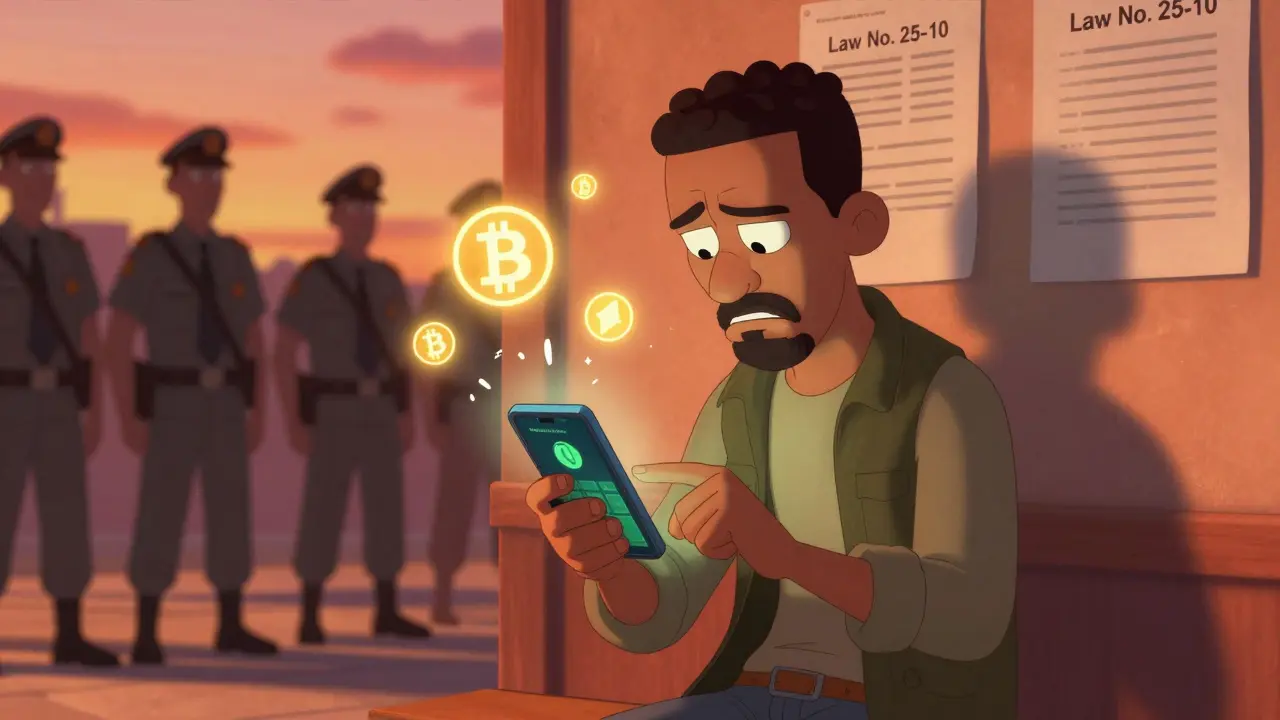
Algeria didn’t just discourage cryptocurrency-it made it illegal to even own it. By 2025, the country had turned a vague 2018 restriction into one of the world’s harshest crypto bans, criminalizing everything from buying Bitcoin to simply holding it in a digital wallet.
The 2018 Financial Law: A Weak Start
In 2018, Algeria passed its first formal rule against cryptocurrency under the Financial Law. It said virtual currencies couldn’t be used for payments, purchases, or investments. But the law didn’t say what happened if you broke it. No fines. No jail time. No clear agency in charge. That left a big gray zone. For years, Algerians kept using crypto anyway. High inflation, strict capital controls, and a weak local currency pushed people toward Bitcoin and Ethereum as a way to protect their savings. Many bought crypto through peer-to-peer platforms or foreign exchanges. Some even mined it using home computers. Authorities didn’t crack down hard. The law existed on paper, but enforcement was rare. People assumed it was more of a warning than a rule.The 2025 Thunderbolt: Law No. 25-10
Everything changed on July 24, 2025. Algeria published Law No. 25-10 in its Official Journal. This wasn’t an update-it was a total rewrite of the rules. The government didn’t just ban trading anymore. It banned everything. Under this new law, the following are now criminal offenses:- Buying, selling, or trading any cryptocurrency
- Possessing crypto in any wallet, even if you never traded it
- Using crypto to pay for goods or services
- Mining Bitcoin or other coins
- Creating new tokens or launching a blockchain project
- Advertising crypto, even on social media
- Running or promoting a crypto exchange
- Sharing educational content about blockchain or crypto investing
Punishments Are Severe-and Universal
The penalties are designed to scare people away. Anyone caught violating the law faces:- Prison time: 2 months to 1 year
- Fines: 200,000 to 1,000,000 Algerian dinars ($1,540-$7,700 USD)

Why Did Algeria Go So Far?
The government says it’s protecting the Algerian Dinar. They argue that crypto undermines national monetary control and could destabilize the economy. They also point to money laundering risks and energy waste from mining. But the real story is deeper. Algeria’s economy relies heavily on oil and gas exports. The state controls nearly every major financial flow. Crypto threatens that control. When people can send money across borders without going through banks or the central government, it weakens the state’s grip. The Bank of Algeria, the Banking Commission, and judicial authorities now work together to hunt down crypto users. They monitor bank transfers for suspicious activity, track online ads promoting crypto, and even scan social media for posts about Bitcoin. Enforcement isn’t theoretical anymore-it’s active.How This Compares to the Rest of the World
While Algeria shuts down crypto, most other countries are trying to regulate it. The European Union passed MiCA, a detailed rulebook for crypto exchanges and tokens. The United States has multiple agencies working on clear guidelines. Even countries like the UAE and Bahrain have built crypto-friendly zones with licenses and tax incentives. Algeria stands alone. It’s not just rejecting crypto-it’s trying to erase it from public consciousness. Even discussing crypto investment strategies online could land you in court.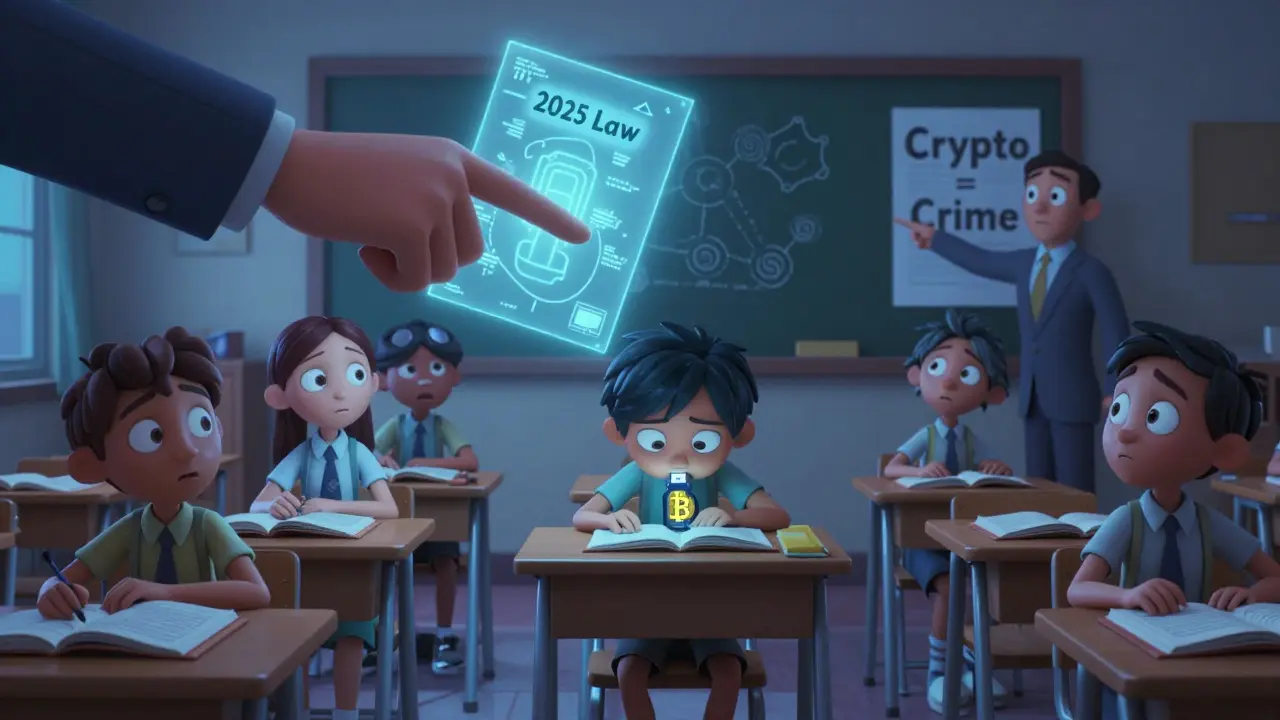
What This Means for Algerians Today
The crypto community in Algeria has been shattered. Before 2025, there were tens of thousands of users. Now, they’ve gone silent. Wallets are being wiped. Exchanges have shut down. Social media groups have been deleted or made private. Some people are still using crypto through underground networks-using cash trades, offshore wallets, or proxy services. But the risk is enormous. If caught, they could lose their freedom. Even students learning blockchain at university are being warned: don’t mention crypto in projects. Don’t write about it in papers. Don’t ask questions in class. The fear of legal consequences has turned education into a minefield.Is This Sustainable?
The law is extreme. But enforcing it is nearly impossible. Crypto is digital. It doesn’t need banks. It doesn’t need borders. You can’t ban a technology with a single law if people still want to use it. Global adoption of digital assets keeps growing. Institutions are investing billions. Countries are competing to become crypto hubs. Algeria’s ban may look strong today, but in five years, it could look like a relic-a country that chose control over connection. For now, Algerians have no legal path to crypto. No exchanges. No wallets. No education. No freedom. The 2018 law was a warning. The 2025 law is a prison sentence-for the whole country’s digital future.Is cryptocurrency completely illegal in Algeria?
Yes. Since July 24, 2025, Algeria’s Law No. 25-10 makes all cryptocurrency activities illegal-including buying, selling, mining, possessing, or even promoting crypto. Simply holding Bitcoin or Ethereum in a wallet is a criminal offense.
What happens if you get caught with crypto in Algeria?
You can face prison time from two months to one year and fines between 200,000 and 1,000,000 Algerian dinars ($1,540-$7,700 USD). The law treats everyone the same-whether you own $10 or $10,000 in crypto.
Did Algeria ban crypto in 2018 or 2025?
The 2018 Financial Law first restricted crypto use, but it had no clear penalties or enforcement. The full, criminal ban came with Law No. 25-10, published on July 24, 2025. That’s when possession, trading, and even advertising crypto became punishable by jail.
Can you still mine cryptocurrency in Algeria?
No. Mining is explicitly banned under Law No. 25-10. Using any computer or hardware to validate blockchain transactions is considered a criminal act. Authorities monitor electricity usage and online activity to detect mining operations.
Are there any legal ways to use crypto in Algeria?
No. There are no legal exemptions. Even educational content about blockchain or crypto investment is now risky. The law targets not just users, but anyone who promotes, discusses, or shares information about cryptocurrency.
Why is Algeria’s crypto ban so strict compared to other countries?
Algeria’s economy is tightly controlled by the state, with the Algerian Dinar as the only legal tender. The government sees crypto as a threat to monetary sovereignty, financial stability, and its ability to track capital flows. Unlike countries that regulate crypto, Algeria chose total elimination to maintain control.
Is the ban enforced effectively?
Enforcement is active and expanding. The Bank of Algeria, judicial authorities, and security agencies now coordinate to monitor bank transactions, social media, and online activity for crypto-related behavior. Prosecutions are increasing, and penalties are being applied consistently since mid-2025.
Can you still buy crypto on international exchanges from Algeria?
Technically, yes-but it’s illegal. Accessing foreign exchanges like Binance or Coinbase from Algeria violates Law No. 25-10. If detected, you could face criminal charges, even if the exchange is based outside the country. Many Algerians use VPNs, but that doesn’t remove legal risk.
What’s the difference between Algeria’s 2018 law and the 2025 law?
The 2018 law only prohibited using crypto as payment or for investment, with no penalties. The 2025 law criminalizes every possible interaction with crypto-including possession, mining, advertising, and even sharing information about it. It turned a vague warning into a full-blown criminal code.
Will Algeria ever lift the crypto ban?
It’s unlikely in the near future. The 2025 law was designed to be permanent, with no built-in flexibility. Lifting it would require a complete legislative reversal. Given the government’s stance on monetary control, any change would likely require a major economic or political shift.
Robert Mills
January 28, 2026 AT 18:26josh gander
January 29, 2026 AT 05:55Akhil Mathew
January 29, 2026 AT 16:59Sunil Srivastva
January 31, 2026 AT 04:49Devyn Ranere-Carleton
January 31, 2026 AT 16:37Kevin Thomas
February 1, 2026 AT 22:42Pamela Mainama
February 3, 2026 AT 17:51Rachel Stone
February 5, 2026 AT 04:08Nickole Fennell
February 5, 2026 AT 12:02Gurpreet Singh
February 6, 2026 AT 13:07Christopher Michael
February 7, 2026 AT 03:15Rico Romano
February 8, 2026 AT 19:52Jack Petty
February 8, 2026 AT 23:28Tressie Trezza
February 9, 2026 AT 10:24Gustavo Gonzalez
February 11, 2026 AT 01:55mary irons
February 12, 2026 AT 21:27Gary Gately
February 14, 2026 AT 16:16