

Getting free crypto through an airdrop sounds like luck. But in 2026, it’s not about luck anymore-it’s about eligibility. Projects don’t hand out tokens to just anyone. They use smart, on-chain tracking to find users who’ve truly engaged with their ecosystem. If you’re missing out on airdrops, it’s probably not because you’re late. It’s because you didn’t meet the hidden rules.
How Airdrop Eligibility Actually Works
Airdrop eligibility isn’t decided on the day you hear about it. It’s locked in weeks or even months earlier through something called a snapshot. This is when a blockchain project takes a frozen picture of wallet activity on a specific date. Everything you did before that moment-swaps, stakes, votes, even just holding a token-gets recorded. After the snapshot, they decide who gets tokens. You can’t go back and fix it. If you didn’t act before the snapshot, you’re out. Most people think they need to sign up or join a Discord to qualify. That’s only part of it. The real qualification happens on-chain. Your wallet’s behavior matters more than your social media posts. Projects don’t care if you retweeted 10 times. They care if you staked $500 in their protocol, swapped tokens on their DEX, or voted in a DAO proposal. Those actions leave a permanent, verifiable trail.Three Types of Airdrop Eligibility
Not all airdrops are the same. There are three main types, each with different rules:- Standard (Raffle) Airdrops: These are the easiest. You sign up with your wallet address, and you’re entered into a lottery. No tasks. No holding. Just registration. But here’s the catch: if 50,000 people sign up and only 5,000 get tokens, you’re rolling dice. These are common for new projects trying to build hype fast.
- Bounty Airdrops: These require work. You might need to join their Telegram, follow them on X (Twitter), invite three friends, or write a thread about their project. Some even ask for code contributions or bug reports. The catch? You’re doing free marketing. And if you miss one step-like not tagging the right handle-you get disqualified. Projects use these to spread awareness without paying ads.
- Holder (Exclusive) Airdrops: These are the quiet winners. If you held a project’s main token for 60+ days before the snapshot, you automatically qualify. No signing up. No tasks. Just patience. This rewards loyalty. Projects like Uniswap and Ethereum Name Service (ENS) used this model. Users who bought early, held through the crash, and didn’t panic-sell got rewarded with thousands in new tokens.
Wallet Choice Isn’t Optional
You can’t get an airdrop if your tokens are sitting on Binance, Coinbase, or Kraken. Those are custodial wallets. The project can’t see your individual address-they only see the exchange’s wallet. So even if you held $10,000 in their token, you won’t qualify. You need a non-custodial wallet: MetaMask, Trust Wallet, or Best Wallet. These let you control your private keys and show up on-chain as your own address. And here’s a pro tip: use a dedicated airdrop wallet. Don’t put your life savings in it. Keep your main funds separate. This keeps your big holdings safe if a scammer tries to trick you into signing a malicious transaction. Also, make sure your wallet supports the right blockchain. An Ethereum-based airdrop? You need an ERC-20 compatible wallet. A Solana airdrop? You need SPL token support. If your wallet doesn’t support it, you won’t receive the tokens-even if you’re eligible.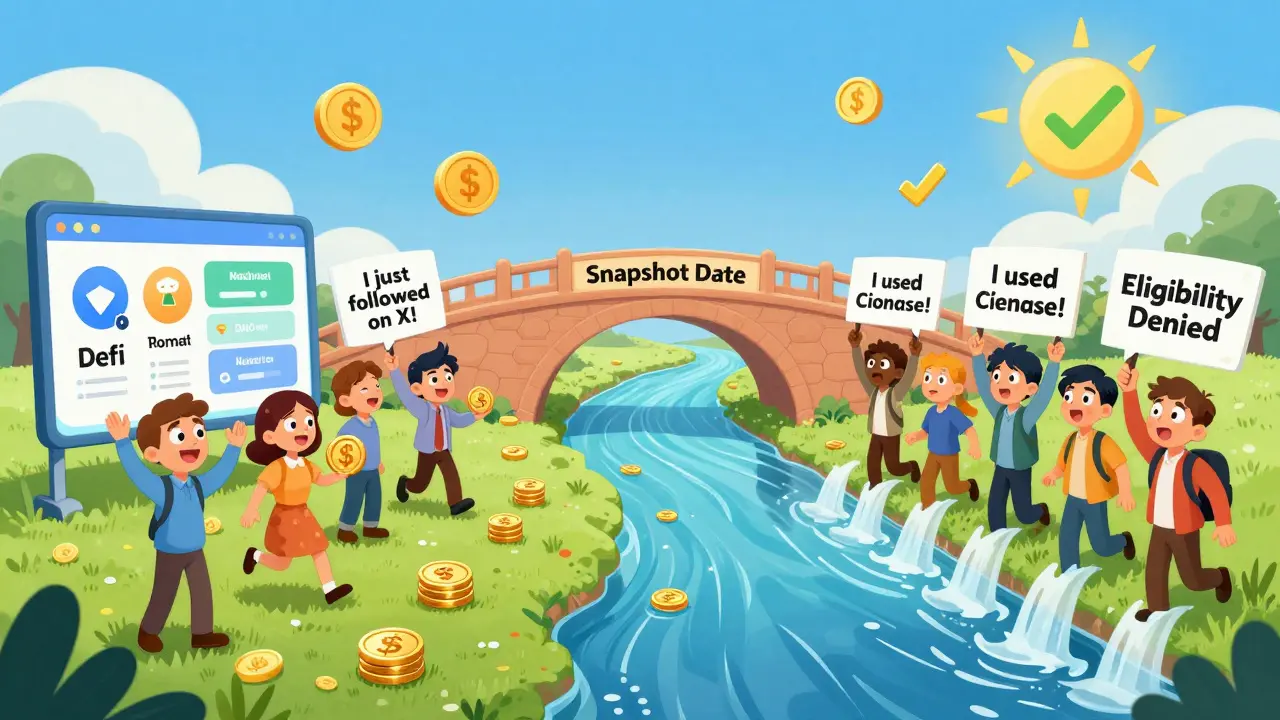
Ecosystem Activity Is the New Gold Standard
In 2026, projects don’t just look at token holdings. They look at how deep you are in their ecosystem. Did you just hold their token? Or did you:- Swap their token for another on their DEX?
- Lend it in their lending protocol?
- Provide liquidity to their pool?
- Voted on a governance proposal?
- Used their NFT marketplace or gaming app?
Verification and Claiming: Don’t Miss the Window
Even if you qualify, you might not get your tokens. Many airdrops have a claim period. You’ll get an email or notification saying: “Claim your tokens between March 1-15.” If you miss it? The tokens go back into the project’s treasury. No second chances. Some projects also require manual verification. If you did a bounty task, they might check your X post, verify your referral link, or confirm your transaction history. This can take weeks. Don’t assume you’re in until you see the tokens in your wallet.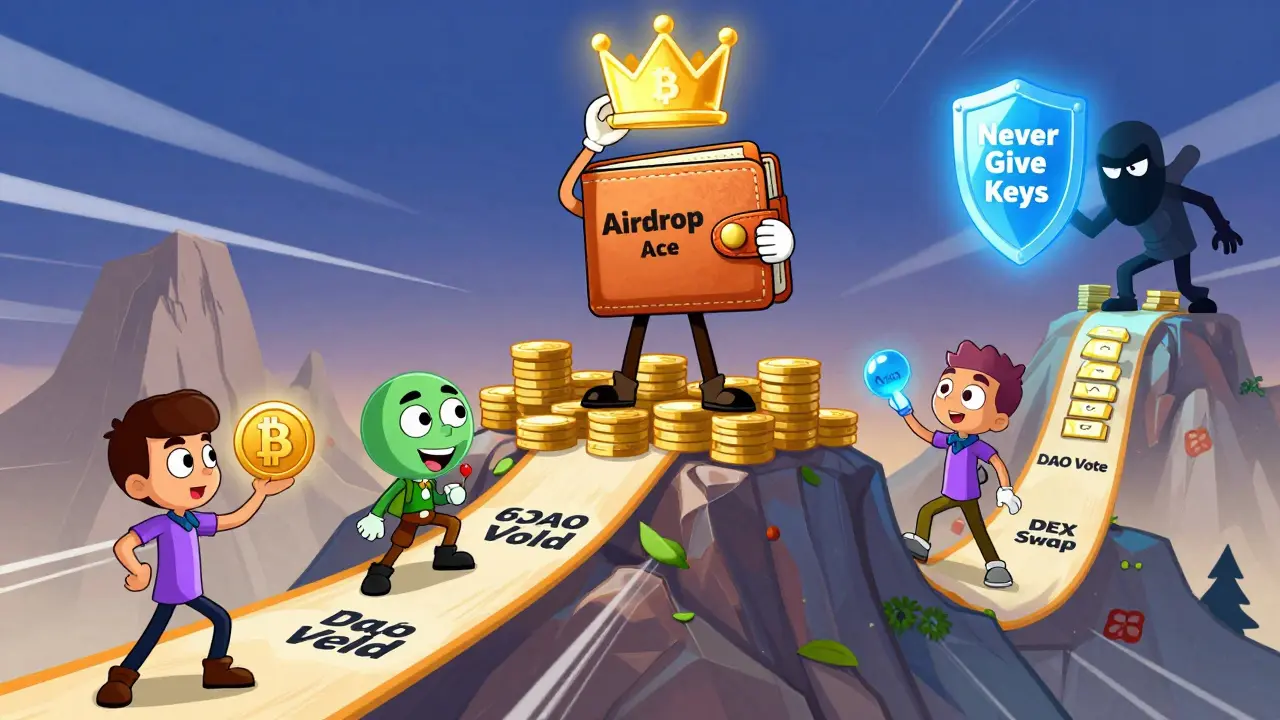
How to Find Legit Airdrops (And Avoid Scams)
Scams are everywhere. Fake airdrops asking for your seed phrase are common. Real airdrops never ask for:- Your private key
- Your seed phrase
- Your password
- Any payment to “unlock” tokens
Why Most People Fail at Airdrops
Most users fail because they treat airdrops like a lottery ticket. They wait for a tweet. They sign up last minute. They use their main wallet. They skip the small tasks. They don’t track snapshots. The winners? They’re the ones who:- Use a dedicated wallet for all airdrops
- Hold at least one token from every promising project they try
- Swap, stake, or vote on every new DeFi app they discover
- Check snapshot dates before they even announce the airdrop
- Ignore hype and focus on long-term ecosystem use
Final Reality Check
Not every airdrop is worth it. Some tokens are worthless. Some require you to pay $20 in gas fees to qualify for $5 in tokens. Some take 3 hours of social media work for $10. Calculate the cost: time, gas, risk. If the reward doesn’t justify it, walk away. The biggest airdrops in 2025-2026 went to users who didn’t chase them-they built with them. If you’re active in DeFi, hold tokens, and use wallets right, you’ll qualify. Not because you followed a guide. But because you acted like a real user.Do I need to pay to claim an airdrop?
No. Legitimate airdrops never ask you to pay to claim tokens. If a site asks for a fee, a crypto deposit, or gas money to "unlock" your reward, it’s a scam. You might pay network gas fees to claim tokens (like Ethereum transaction fees), but that’s normal and goes to miners-not the project.
Can I use my exchange wallet for airdrops?
No. Most projects exclude centralized exchange wallets (like Binance or Coinbase) because they can’t see individual user addresses. You need a non-custodial wallet like MetaMask or Trust Wallet to qualify. Even if you hold the token on an exchange, you won’t get the airdrop.
What happens if I miss the snapshot date?
You won’t qualify. The snapshot is the final cut-off. Everything you do after that date doesn’t count. Some projects announce the snapshot date in advance, but many don’t. That’s why smart users stay active across multiple protocols-so they’re covered even if they don’t know about the airdrop yet.
Are airdrops taxable?
In most countries, including New Zealand, receiving airdropped tokens is considered taxable income at the time you receive them. The value is based on the market price when the tokens hit your wallet. Keep records of snapshot dates and token values. Tax rules vary by region, so check your local regulations.
How do I know if an airdrop is real?
Check the official website and verified social media accounts (look for blue checks). Never click links from DMs or unverified Discord servers. Look for clear eligibility rules. If the project doesn’t explain how you qualify, it’s likely a scam. Also, real airdrops won’t ask for your seed phrase or private key.
Can I qualify for multiple airdrops at once?
Yes. Many users qualify for 5-10 airdrops per year by using different protocols. The key is to spread your activity across projects. Hold one token from each, swap on their DEX, vote in their DAO. You don’t need to invest heavily-just be active. Projects track on-chain behavior, so your wallet can qualify for multiple campaigns simultaneously.
Richard Cooper
February 26, 2026 AT 13:03Tanvi Atal
February 26, 2026 AT 13:58Sony Sebastian
February 27, 2026 AT 09:45Cathy Sunshine
February 28, 2026 AT 20:38Dee Resin
March 1, 2026 AT 21:09Brian Lemke
March 2, 2026 AT 16:07Megan Lavery
March 4, 2026 AT 07:06Reggie Fifty
March 6, 2026 AT 04:34Kristi Emens
March 6, 2026 AT 20:37Deborah Robinson
March 8, 2026 AT 07:23Michelle Mitchell
March 8, 2026 AT 20:12Kaitlyn Clark
March 9, 2026 AT 19:41Shannon Black
March 10, 2026 AT 20:26