
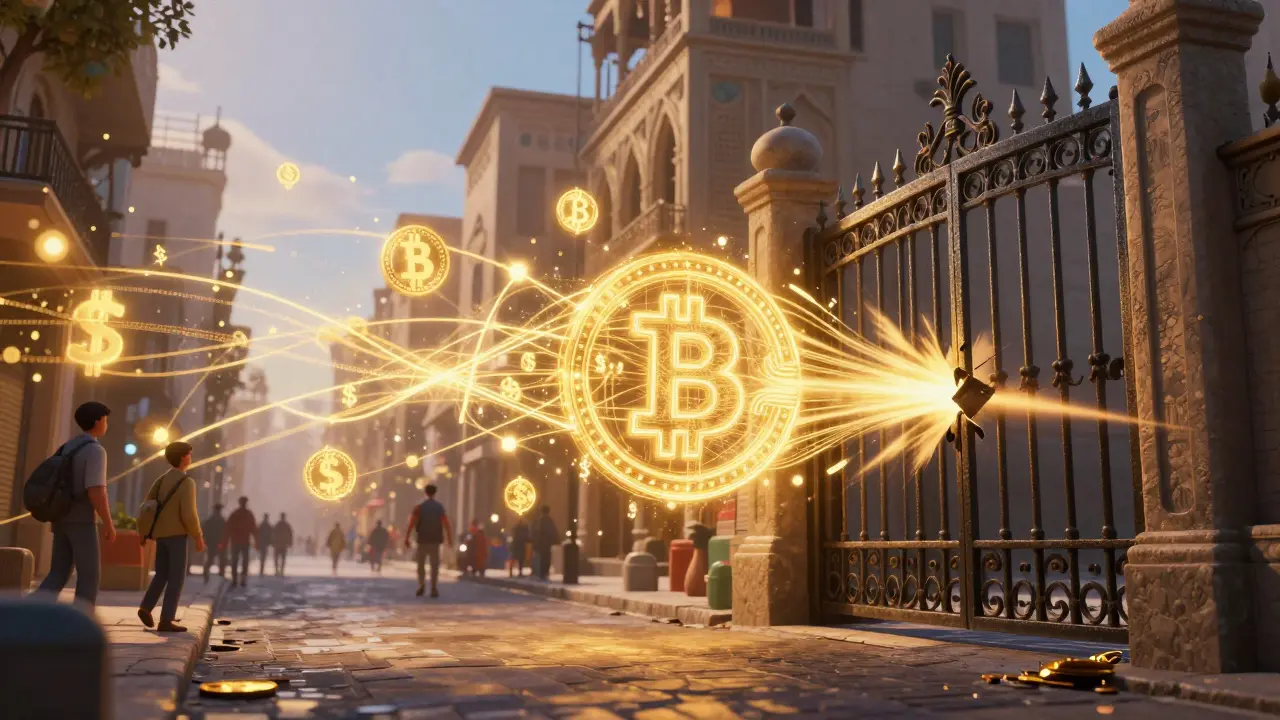
Imagine going from being one of the fastest-growing crypto hubs in the world to having your digital wallet become a criminal offense in less than a year. That is exactly what happened in Afghanistan. After the 2021 political shift, the country saw a massive spike in digital asset adoption, only for the new government to slam the door shut in August 2022. The Afghanistan crypto prohibition wasn't just a policy change; it was a total reversal of financial freedom for millions of people trapped in an economic collapse.
The Sudden Pivot from Adoption to Ban
In 2021, Afghanistan was a surprising star in the global crypto scene. While the world watched the political turmoil, locals were turning to digital assets to survive. By the end of that year, the country ranked 20th out of 154 nations for global adoption. Why? Because the traditional banking system had essentially evaporated. With foreign reserves frozen and international sanctions biting hard, people didn't use Bitcoin because they were speculators-they used it because they had no other way to move money.
Then came August 2022. The Taliban government issued an official decree halting all cryptocurrency activities. This wasn't a nuanced regulatory framework with taxes and licenses; it was a blanket ban on trading, mining, and usage. The government declared these assets Haram, a term in Islamic law meaning forbidden. They argued that since cryptocurrencies aren't backed by gold or physical assets, they are essentially a form of speculative gambling, which is strictly prohibited under their interpretation of Sharia law.
Enforcement and the Legal Reality
If you are caught trading crypto in Afghanistan today, you aren't looking at a fine-you're looking at potential arrest. The legal status of digital assets is crystal clear: they are illegal. The authorities have systematically suspended all known exchanges and periodically conduct crackdowns on miners and traders. However, the government faces a massive practical problem: you can't easily arrest a decentralized network.
Despite the threat of prison, the sheer necessity of survival has pushed the market underground. The ban effectively killed the visible industry-monthly transaction values plummeted to around $80,000 by late 2022-but it didn't kill the demand. Instead, it shifted the activity into peer-to-peer (P2P) networks that operate far from the eyes of the religious police.
| Country | Ban Status | Primary Reason Given | Current Trend |
|---|---|---|---|
| Afghanistan | Full Prohibition | Religious grounds (Haram) | Strict enforcement / P2P survival |
| China | Full Prohibition | Financial stability & Control | Mining ban / Underground trading |
| Iraq | Prohibited | Consumer protection | Informal markets persist |
| Morocco | Lifted (2024) | Previously financial risk | Moving toward regulation |
A Lifeline for Women and the Marginalized
One of the most heartbreaking aspects of the current regime is the erasure of women from public and financial life. For Afghan women, Bitcoin is a decentralized digital currency that operates without a central authority more than just an investment; it is a survival tool. Because women are often denied the identification documents needed to open bank accounts-or are simply banned from working-crypto provides a way to receive funds from abroad and save money privately.
Activists like Roya Mahboob and the Digital Citizen Fund have worked to bring financial literacy to women via underground channels. In an environment where women have no legal right to a salary or a business, owning a private key to a wallet represents the only form of financial autonomy they have left. By collaborating with groups like the Human Rights Foundation, these initiatives use the borderless nature of blockchain to bypass the Taliban's restrictions on gender and employment.
The Economics of Desperation
To understand why people risk arrest to trade USDT, which is a stablecoin pegged to the US Dollar to avoid volatility, you have to look at the poverty statistics. In 2022, the United Nations warned that roughly 97% of the population was falling below the poverty line. When you live in a country where food exists but you have no currency to buy it, and the banks are frozen, the "speculative nature" of crypto becomes irrelevant. You use whatever works.
The irony is that the Taliban's ban puts them in a tiny minority. According to data from Binance, Afghanistan is one of only nine countries worldwide that still maintain a total ban on Bitcoin. While most of the world is moving toward integrating digital assets into the legal system, Afghanistan is doubling down on a policy that ignores the economic reality of its people. Even with limited internet access-only about 8.6 million people out of 40 million can get online-the demand for P2P transfers remains relentless.
The Future of the Ban: Can it Actually Work?
Can a government actually "ban" a decentralized protocol? History suggests otherwise. The Taliban has the power to arrest individuals and shut down offices, but they cannot shut down the internet entirely without crippling what remains of their own administrative capabilities. The resilience of the underground market shows that economic necessity will always trump regulatory decrees.
As long as the traditional banking system remains collapsed and foreign aid is restricted, the incentive to use cryptocurrencies for remittances and savings will outweigh the fear of the law. The government's attempt to frame crypto as "haram" may satisfy religious optics, but it does nothing to solve the hunger and financial isolation of the citizenry. Most experts believe that as the world moves further toward digital finance, Afghanistan's strict isolation will become increasingly unsustainable.
Why did the Taliban ban cryptocurrency?
The ban was implemented in August 2022 primarily on religious grounds. The authorities declared cryptocurrencies "haram" (forbidden) under Sharia law, arguing that because digital assets aren't backed by physical assets like gold, they are a form of speculative gambling.
Is it still possible to use crypto in Afghanistan?
Yes, but it is illegal and dangerous. Most activity has moved to underground peer-to-peer (P2P) networks. Users avoid centralized exchanges and instead trade directly with other individuals to avoid government detection.
How does the ban affect Afghan women specifically?
Women face extreme restrictions on employment and banking. Cryptocurrency has become a vital tool for them to receive remittances and maintain financial independence without needing the government-issued IDs or permissions that are currently denied to them.
Which cryptocurrencies are most common in Afghanistan's black market?
Bitcoin and USDT (Tether) are the most widely used. USDT is particularly popular because it is a stablecoin, meaning its value doesn't swing wildly, making it more practical for sending money to families for basic needs.
What are the penalties for trading crypto under the current regime?
The government conducts periodic crackdowns that can lead to the arrest of traders and miners. Because the activity is framed as a violation of religious and state law, penalties are severe and can include indefinite detention.
Jimmy vasquez
April 29, 2026 AT 21:19It's pretty wild how USDT becomes a literal lifesaver in these scenarios. For anyone wondering, stablecoins are basically the only way to avoid the brutal volatility of Bitcoin when you're just trying to buy bread and milk.
The P2P aspect is the only thing keeping a lot of these families afloat right now.
Rain Richardsson
May 1, 2026 AT 02:53Truly a lifeline for those women.
Sri Astuti
May 2, 2026 AT 23:57Honestly, the naive belief that a simple app can solve a systemic geopolitical collapse is just laughable 🙄 and it's so typical of these Western-centric narratives to pretend that a few P2P transfers can dismantle a regime that controls every single physical aspect of a person's life, while ignoring the fact that most people there don't even have a stable electricity connection to keep a cold wallet charged, let alone the technical literacy to navigate the seed phrase complexities without getting scammed by the very 'underground' networks they're relying on 🙄
VIVEK SINGH
May 4, 2026 AT 19:07Oh sure, because calling something 'haram' is such a revolutionary way to control a mathematical protocol. Groundbreaking stuff. I'm sure the blockchain is shaking in its boots knowing it doesn't have a gold bar attached to it. Absolute geniuses at work here.
Elle Kharitou
May 6, 2026 AT 07:07This really highlights the beautiful intersection of human resilience and technological evolution, doesn't it? ✨ It's heart-wrenching yet inspiring to see how the decentralized nature of blockchain provides a silent sanctuary for women to reclaim their autonomy and financial dignity in a world that wants to erase them completely 🌸. We must continue to advocate for these digital corridors of hope because when the physical doors are locked, the digital ones must stay open to ensure that no one is left behind in the shadow of oppression 🌍💖.
Livvy Cooper
May 6, 2026 AT 17:46I don't see why everyone is so hyped. It's just fake money. If the government says it's bad, it's probably bad. People just like to act like they're rebels for using an app.
Wayne Gillis
May 6, 2026 AT 19:38Damn, that's heavy. 😱 Hope those women are staying safe! Just imagine the stress of hiding a phone with a wallet on it 📱💦
Jan Conrad
May 8, 2026 AT 04:14The mention of the Digital Citizen Fund is interesting. I wonder how they actually manage the onboarding process in a region where hardware is scarce and internet access is sporadic. The technical hurdle of maintaining a secure private key in a high-risk environment is a massive challenge that usually requires a lot of trust in a middleman, which ironically defeats the purpose of decentralization.
Harvey Alford
May 9, 2026 AT 15:33I can't stop thinking about the fear. Just imagine the panic when the police knock on the door and you have a ledger in your pocket. It's actually terrifying. 😭
Mitali Rajvanshi
May 10, 2026 AT 11:02It's a tough situation, but the P2P survival is a realistic outcome.
Lynne Teperman
May 12, 2026 AT 03:04the juxtaposition of ancient law and futuristic code is wild. total clash of eras right there
Gabby Puche
May 13, 2026 AT 22:48Sending so much love to the brave women using these tools! 💖 Keep fighting the good fight 🌈💪
Rachel S
May 14, 2026 AT 10:01It is absolutely catastrophic that such a primitive justification is being used to strip away the last remnants of financial agency from a starving population! 😱 One must recognize that the volatility of the assets is a secondary concern when the primary concern is literally starvation and the total collapse of the fiat infrastructure! 💸 It is a tragedy of the highest order that the only tools for liberation are deemed illegal by a regime that views digital sovereignty as a threat to its absolute control! ⚡️ This is a textbook case of financial warfare against one's own citizens!