
You want to swap tokens on the Acala Network. You’ve heard it’s a major hub for decentralized finance (DeFi) on Polkadot. But when you search for "Acala Swap," things get confusing. Is it an app? A website? A standalone exchange like Binance?
Here is the reality: there is no single centralized platform called "Acala Swap." Instead, swapping on Acala happens through its native decentralized exchange (DEX) and integrated liquidity pools. It works differently than the exchanges you might be used to. If you try to use a standard web2 login flow, you will hit a wall. You need a wallet that talks to the blockchain.
This review breaks down how Acala’s swap infrastructure actually works, what fees you pay, which wallets connect, and whether it is worth using your time and capital in 2026. We’ll look at the technical backbone, the user experience, and the risks involved with trading the ACA token.
What Exactly Is Acala Swap?
To understand the swap function, you first have to understand the host. Acala Network is a layer-1 smart contract platform built on the Polkadot ecosystem. It was designed to be the financial infrastructure for Web3. Think of it as the banking system for the Polkadot network.
When people talk about "Acala Swap," they are referring to the built-in DEX functionality within the Acala interface. This allows users to trade assets directly from their wallets without going through a middleman company. It supports two main types of swaps:
- Native Token Swaps: Trading between Polkadot parachain assets (like DOT, KSM, or other parachain tokens) using Acala’s specialized liquidity pools.
- EVM-Compatible Swaps: Trading Ethereum-style tokens because Acala runs an Ethereum Virtual Machine (EVM). This means if you know how to use Uniswap or PancakeSwap, the logic here is similar.
The key difference is that Acla is optimized for speed and low cost compared to congested networks like Ethereum Mainnet. It uses Substrate technology under the hood, which makes transactions faster and cheaper, but it requires you to interact with the blockchain directly.
How to Perform a Swap on Acala: Step-by-Step
If you are new to this, the process feels different from clicking "Buy" on Coinbase. Here is the exact workflow you need to follow to move assets on Acala in 2026.
- Get a Compatible Wallet: You cannot use an email address. You need a non-custodial wallet. The most common choices are MetaMask (configured for Acala EVM), SubWallet, or Nova Wallet. These wallets hold your private keys and sign transactions.
- Fund Your Wallet: You need some ACA tokens to pay for gas fees (transaction costs). You can buy ACA on a centralized exchange like Binance or Kraken and withdraw it to your Acala-compatible wallet address.
- Connect to the Interface: Go to the official Acala dashboard. Click "Connect Wallet." Select your wallet provider. This links your browser to your crypto identity.
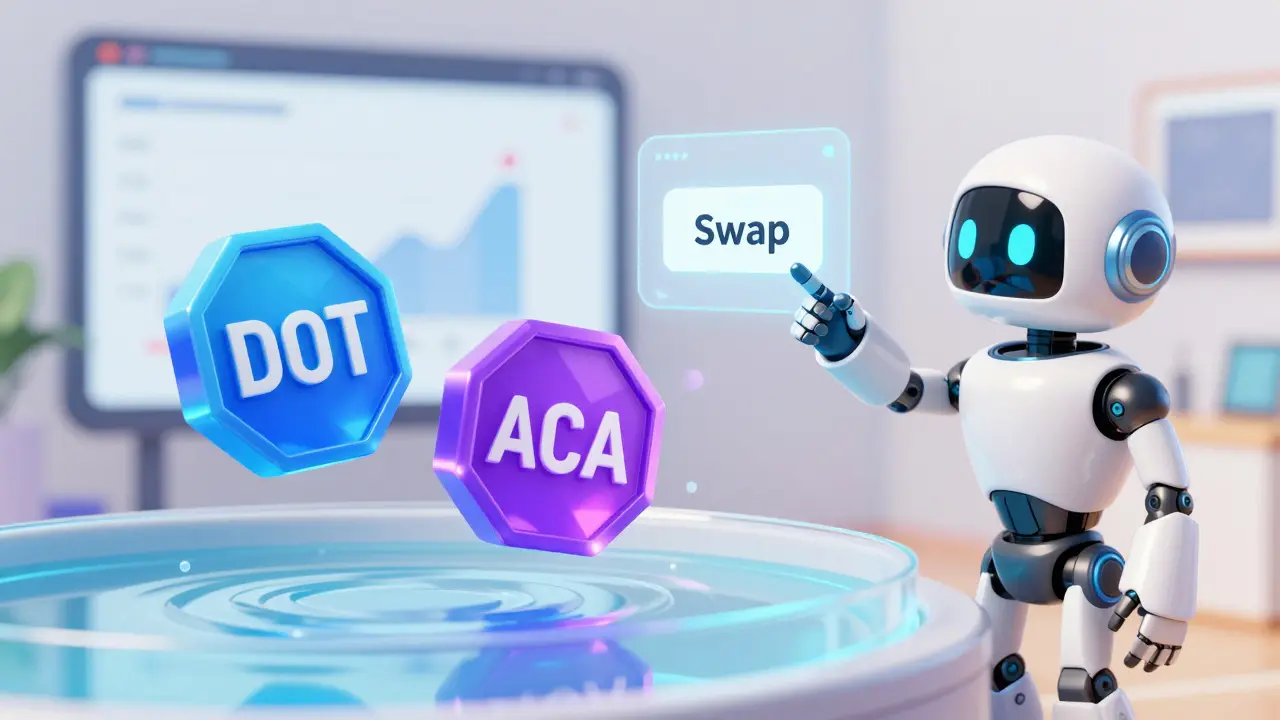
- Select the Pair: Choose the token you want to sell (e.g., DOT) and the token you want to buy (e.g., ACA).
- Set Slippage Tolerance: Because prices change by the second, you set a percentage range (usually 0.5% to 1%) for acceptable price movement during the transaction. If the price moves more than this, the swap fails to protect you.
- Approve and Swap: You may need to click "Approve" first (allowing the Acala router to access your specific token). Then, click "Swap." Confirm the transaction in your wallet popup.
Once confirmed, the blockchain processes the trade. On Acala, this usually takes seconds. You will see the new balance appear in your wallet shortly after.
Fees and Costs: What Will It Cost You?
Cost is a major factor in choosing a swap platform. Acala is known for being cheap, but "cheap" is relative. Let’s break down where your money goes.
| Fee Type | Acala (DEX) | Centralized Exchange (CEX) |
|---|---|---|
| Trading Fee | Typically 0.1% - 0.3% per swap (varies by pool) | 0.1% - 0.5% maker/taker fees |
| Network Gas Fee | Very low (fractions of a cent to a few cents in ACA) | N/A (included in spread/fee) |
| Withdrawal Fee | N/A (assets stay in your wallet) | High (often $5-$20 depending on coin) |
| KYC Requirement | No (Anonymous) | Yes (ID verification required) |
The biggest advantage here is the absence of withdrawal fees. On a centralized exchange, if you want to move your Bitcoin to a personal wallet, you pay a hefty fee. On Acala, the asset never leaves your control; it just changes form. However, you must always keep enough ACA in your wallet to pay for the gas. If you run out of ACA, you cannot make any more transactions until you receive more.
User Experience and Interface Design
Is it easy to use? For a seasoned DeFi user, yes. For a complete beginner, it has a steep learning curve.
The Acala interface is clean and functional. It displays real-time charts, historical price data, and liquidity depth. However, the terminology can be intimidating. Terms like "slippage," "gas limit," and "approval transaction" are standard in DeFi but alien to traditional investors.
One friction point is the connection process. Sometimes, wallets fail to connect due to browser extensions conflicts or incorrect network settings (you must ensure MetaMask is set to the Acala EVM chain, not Ethereum Mainnet). The platform provides clear error messages, but troubleshooting often requires visiting community forums like Discord or Reddit.
Another consideration is mobile accessibility. While the web interface is responsive, many advanced features work best on desktop. Mobile users often rely on dedicated apps like Nova Wallet which integrate the swap functionality directly into the app shell, providing a smoother experience than trying to use a full browser on a phone screen.
Security and Risks: Who Holds Your Keys?
In the world of crypto, security is paramount. With Acala Swap, you are interacting with smart contracts. This brings both freedom and risk.
The Good News: You are self-custodial. No company holds your funds. If the Acala website goes down, your tokens are still safe in your wallet. You are not subject to exchange freezes or bankruptcy risks associated with centralized platforms.
The Bad News: You are responsible for your own security. If you lose your seed phrase (the 12-24 words generated when you created your wallet), your money is gone forever. There is no customer support hotline to call. Additionally, while Acala’s code is audited by reputable firms, smart contract bugs can theoretically exist. Interacting with unverified third-party dApps connected to Acala can also expose you to phishing attacks.
Always double-check the URL. Scammers create fake "Acala Swap" sites that look identical to the real one. Bookmark the official site and never click links from unsolicited emails or social media DMs.
Acala vs. Other Polkadot DEX Options
Acala isn’t the only place to swap on Polkadot. How does it compare to competitors like Hydration or Moonbeam-based DEXs?
Acala’s primary strength is its deep integration with the Polkadot ecosystem and its focus on stablecoins. It pioneered the creation of algorithmic stablecoins (like aUSD) on Polkadot. If you are looking to hedge against volatility or earn yield on stable assets, Acala offers robust lending and borrowing protocols alongside its swap feature.
Other DEXs might offer lower fees for specific niche tokens, but Acala generally provides higher liquidity for major pairs like DOT/ACA and ETH/ACA. Higher liquidity means less slippage, meaning you get a better price when you trade large amounts.
Is Acala Swap Worth It in 2026?
For active traders who value privacy, low fees, and direct control over their assets, Acala Swap is an excellent tool. It removes the gatekeepers and allows for seamless cross-chain trading within the Polkadot universe.
However, if you are a casual investor who buys once a year and wants a simple "buy button" with customer support, Acala might be too complex. In that case, sticking to a regulated centralized exchange might be less stressful, even if it costs more in fees.
The decision comes down to your comfort level with technology. Are you willing to learn how to manage a wallet and read transaction confirmations? If yes, Acala offers a powerful, efficient, and secure way to navigate the decentralized financial landscape.
Do I need KYC to use Acala Swap?
No. Acala is a decentralized protocol. You do not need to provide identification, proof of address, or any personal information. You only need a compatible cryptocurrency wallet.
Which wallet is best for Acala?
The best wallets depend on your preference. MetaMask is great if you are familiar with Ethereum ecosystems. SubWallet and Nova Wallet are native to the Polkadot/Kusama ecosystem and often provide a smoother experience for managing multiple parachain assets.
Can I swap Bitcoin on Acala?
You cannot swap native Bitcoin (BTC) directly on the Acala blockchain. However, you can swap wrapped versions of Bitcoin (like WBTC) if they are supported by the liquidity pools, or bridge BTC into the Polkadot ecosystem via other bridges first.
What happens if my swap fails?
If a swap fails due to slippage or network issues, your original tokens remain in your wallet. You will only lose the small amount of ACA paid for the gas fee of the failed transaction. Always check your slippage tolerance settings before trading volatile assets.
Is Acala Swap available globally?
Yes, as a decentralized protocol, it is accessible anywhere with an internet connection. However, local regulations regarding cryptocurrency usage vary by country. Users should be aware of their local tax obligations and legal restrictions.
Crystal Davis
June 1, 2026 AT 07:36Let’s be real, this guide is painfully obvious for anyone who has actually touched a blockchain in the last three years. The concept of 'Acala Swap' isn't a product, it's a function. People keep asking if there is an app because they are addicted to the hand-holding of centralized exchanges. You don't need a 'swap' button on a website when you have a wallet that connects to the RPC node directly. The friction you feel is not a bug, it's a feature designed to filter out the retail noise that crashes markets. If you can't figure out how to set your MetaMask network ID to 787, you shouldn't be trading ACA. It’s that simple. The article tries to sugarcoat the technical barrier by calling it a 'learning curve,' but really it’s just incompetence on the user end. Most of these 'beginners' would rather pay Binance 0.6% and wait for KYC than learn what slippage tolerance actually does. We are in 2026 and people still think crypto should work like Venmo. Wake up.
Barclay Chantel
June 1, 2026 AT 07:54I find the entire premise of this ecosystem deeply troubling from a moral standpoint. Encouraging anonymous, unregulated swaps without any oversight is essentially facilitating financial chaos. The author presents 'no KYC' as a benefit, which is frankly disgusting. It suggests that privacy is more important than accountability. In my view, platforms like Acala are breeding grounds for illicit activity simply because they refuse to integrate basic identity verification. It is pretentious to claim this is 'freedom' when it really just means escaping responsibility. I prefer systems where every transaction can be traced back to a verified human being. This decentralized nonsense is just an excuse for lazy governance.
Miss Masquer
June 1, 2026 AT 14:50Oh my goodness, I just had to chime in because this topic is so fascinating and I’ve been following the Polkadot ecosystem for quite some time now, haven’t I? It is truly wonderful to see such detailed breakdowns of how things work under the hood, isn’t it? I remember when I first started using Nova Wallet, it felt like learning a completely new language, but once you get the hang of it, it opens up so many doors for cross-chain interactions. The way Acala integrates with the broader Parachain landscape is just magical, don’t you think? I always tell my friends that patience is key here, especially when dealing with gas fees and network congestion, because rushing usually leads to mistakes. It’s also great to see that mobile accessibility is improving, as we all know how frustrating it can be to try and sign transactions on a tiny screen while trying to keep track of multiple asset balances. I hope everyone takes their time to explore the lending protocols too, as they offer such interesting yield opportunities for those willing to do a bit of research.
Joshua Alcover
June 3, 2026 AT 11:16The epistemological framework underlying the Acala Network necessitates a rigorous examination of its ontological status within the broader geopolitical context of digital sovereignty. To assert that one merely 'swaps' tokens is to ignore the profound metaphysical implications of transferring value across disparate ledger architectures without centralized arbiter intervention. The Substrate technology employed herein represents a paradigm shift in computational trust, yet the average user remains blissfully ignorant of the cryptographic proofs validating each state transition. One must question whether the perceived efficiency of EVM-compatible swaps truly outweighs the existential risk posed by smart contract vulnerabilities, which remain inherent in any Turing-complete execution environment. Furthermore, the lack of KYC protocols raises significant concerns regarding national security and the potential for capital flight mechanisms that bypass traditional regulatory frameworks. It is imperative that we scrutinize the ideological underpinnings of such decentralized finance structures before fully embracing them as viable alternatives to established fiat systems.
Diana Morris
June 3, 2026 AT 13:49stop overthinking it just connect your wallet and swap already why is everyone making this so complicated i mean come on its 2026 you should know better by now just buy some ACA pay the gas fee and move on with your life dont let the fear of missing out or whatever hold you back go forth and trade
Dianne Wright
June 4, 2026 AT 07:26i am so tired of reading these same old guides about acala it feels like nobody ever learns anything new and i just want to scream sometimes because the energy here is so draining and negative even though i know i shouldnt care so much about what strangers say online but then i see someone else struggling with meta mask settings and i just feel this overwhelming urge to fix everything for them because clearly no one else will bother to help and it makes me so sad that people are so helpless with basic technology
trisya hazriyana
June 6, 2026 AT 17:52oh look another guide pretending to explain defi like its rocket science when its just clicking buttons lol sure crystal davis knows best obviously but maybe not everyone wants to live in a cave of pure code sometimes you just want to trade dot for acas without writing a thesis on substrate architecture sarcasm aside the liquidity depth point is valid though higher liquidity does mean less slippage which is basically the holy grail for anyone moving serious volume so kudos to acala for keeping the pools deep enough to matter
Debbie Lewis
June 7, 2026 AT 21:48I just checked my portfolio and yeah the fees are pretty low compared to eth mainnet. I use nova wallet mostly cause it feels smoother on mobile. Not gonna lie the interface could be cleaner but it works fine for what i need.
Eric Grosso
June 8, 2026 AT 14:13wait so if i lose my seed phrase is it gone forever like really gone or is there some backup option i missed in the article cause that sounds kinda scary lol
Edith Mair
June 9, 2026 AT 17:18You need to take personal responsibility for your keys. There is no backup. If you lose your seed phrase, your funds are inaccessible. This is not a suggestion; it is a fundamental rule of self-custody. Stop looking for shortcuts and start securing your assets properly. Write down your phrase, store it safely, and never share it. The system does not care about your convenience.
Sam Dashti
June 10, 2026 AT 21:08Hey Eric, yeah Edith is right, it’s a bit of a wild west out there. But hey, that’s the thrill of it, right? Like walking a tightrope without a net. Scary sure, but oh man the view from up there is something else. Just make sure you write that phrase down on paper, not on your phone or computer, because hackers love digital notes. Keep it safe like a secret treasure map.
Joe Clements
June 12, 2026 AT 05:40I totally get why that sounds scary, Eric. It’s a big step to trust yourself with your own money instead of a bank. But once you get used to it, it feels really empowering. Just take it slow and double-check everything. We’re all here to help if you get stuck.
Rosie Morris
June 13, 2026 AT 01:01omg yes sam dashti said it perfectly its like a treasure hunt but for your own money haha i almost lost mine once because i wrote it on a sticky note that fell off my monitor so lesson learned always use proper storage methods folks
lorna erni
June 13, 2026 AT 23:33Let’s all come together and support each other in this journey! Crypto can be intimidating, but we are stronger when we share our experiences. Don’t be afraid to ask questions, and please be kind to those who are just starting out. We all were beginners once. Let’s build a positive community around Acala and Polkadot!