

Imagine buying a coffee or paying tuition with Bitcoin, only to receive a bill from the government worth nearly $9,000. It sounds like a dystopian plot, but this is the reality for anyone treating cryptocurrency as a digital asset that can be used for transactions, though its legal status varies by country as cash in Vietnam. The fine isn't just a suggestion; it is a strict administrative penalty ranging from 150 million to 200 million Vietnamese Dong (VND). For many residents and expats, this creates a confusing landscape where owning crypto might be tolerated, but spending it is strictly prohibited.
If you are navigating the financial waters in Hanoi or Ho Chi Minh City, understanding the difference between holding an asset and using it as payment is critical. This article breaks down exactly why these fines exist, what laws enforce them, and how they impact your daily life in 2026.
The Core Law: Why Crypto Payments Are Banned
To understand the fine, you first need to look at the source of the authority. The primary enforcer here is the State Bank of Vietnam (SBV) is the central bank of Vietnam responsible for monetary policy and regulating the banking sector. In October 2017, the SBV issued a clear statement: using Bitcoin is the first decentralized cryptocurrency, often used as a store of value or speculative asset and other virtual currencies as a means of payment is a prohibited activity. This wasn't a new rule appearing out of nowhere; it was rooted in Decree No. 96/2014/ND-CP is a legal document outlining administrative sanctions in monetary and banking activities in Vietnam.
Specifically, Clause 6, Article 27 of this decree states that issuing, supplying, or using Bitcoin as payment is illegal. The penalty? A fine between 150 million and 200 million VND. To put that in perspective, at current exchange rates, that is roughly $6,500 to $8,900 USD. That is not a slap on the wrist; it is a financial blow designed to deter merchants and individuals from bypassing the traditional banking system.
The logic behind this strict stance comes down to control. Le Truong Tung, president of FTP University, explained to Coin Intelligence that accepting Bitcoin makes the economy "complex and difficult to control." The concerns are threefold:
- Tax Evasion: Because blockchain transactions can be pseudonymous, tracking income for tax purposes becomes harder for the state.
- Illegal Transfers: Cross-border money laundering is easier when funds don't pass through regulated banks.
- Monetary Sovereignty: If people use Bitcoin instead of the Dong, the central bank loses some influence over inflation and economic stability.
Holding vs. Spending: The Legal Gray Area
Here is where things get tricky for the average user. Is owning crypto illegal in Vietnam? Technically, no. The law targets the use of crypto as a payment method, not necessarily the possession of it. However, the line between "holding" and "spending" can blur quickly.
Consider this scenario: You buy a laptop from a friend. You send him USDT (Tether) via a peer-to-peer transfer. He then sells that USDT for VND on an exchange. Have you committed a crime? Legally, yes. You used a virtual currency as a medium of exchange for goods. While enforcement against individual small-scale P2P trades is rare, the legal risk remains. The SBV has clarified that while circulation isn't banned, acting as if it were legal tender is.
This distinction is crucial because it affects how businesses operate. Many tech-savvy startups in District 3, Ho Chi Minh City, might accept crypto for freelance work, but they do so at their own peril. If caught, the company faces the 150-200 million VND fine. Most legitimate businesses stick to traditional channels like MoMo is a popular mobile wallet application in Vietnam used for digital payments and transfers or bank transfers to avoid regulatory heat.

Enforcement Reality: Do They Actually Fine People?
You might wonder, "If the fine is so high, why do I see people trading crypto every day?" The answer lies in the gap between law and enforcement. In July 2017, before the official 2018 ban took full effect, a university announced plans to accept Bitcoin for tuition. The SBV intervened immediately, warning that this violated regulations. The university backed down. This was a high-profile case meant to set an example.
Since then, widespread public records of individuals being fined 200 million VND for simple crypto purchases are scarce. Why? Because proving who spent what in a decentralized network is technically challenging for regulators. However, the threat is real. The General Department of Vietnam Customs reported rapid growth in crypto transaction values, prompting the SBV to coordinate additional penal sanctions. Dr. Tran Ngoc Ca, former Deputy Director of Vietnam's Academy of Finance, noted in 2023 that while the fine is technically enforceable, it has become "increasingly difficult to implement" as usage grows.
But "difficult" doesn't mean "impossible." Enforcement tends to focus on:
- MERCHANTS: Shops or online platforms explicitly advertising crypto acceptance.
- LARGE TRANSACTIONS: High-value movements that trigger anti-money laundering alerts.
- UNLICENSED EXCHANGES: Platforms operating without proper oversight, which often facilitate the "payment" aspect.
Comparison with Neighbors: How Strict Is Vietnam?
To appreciate the severity of Vietnam's stance, compare it to regional neighbors. Thailand introduced a regulatory framework in 2018 that allows cryptocurrency exchanges under strict licensing. Singapore’s Monetary Authority created a licensing regime for digital payment token services in 2017. These countries view crypto as a technological innovation to be managed.
| Country | Status of Crypto as Payment | Regulatory Approach | Penalty for Violation |
|---|---|---|---|
| Vietnam | Prohibited | Ban on use as payment; treated as non-legal tender | 150-200 million VND fine |
| Thailand | Permitted (with license) | Strict licensing for exchanges and service providers | Fines and imprisonment depending on severity |
| Singapore | Permitted (regulated) | Payment Services Act licensing regime | Variable based on compliance failures |
Dr. Nguyen Xuan Thanh, a Harvard Kennedy School alumna, criticized Vietnam's approach in 2018, saying it reflects "traditional central banking concerns about monetary sovereignty" but fails to recognize crypto's potential as technology. Yet, despite the ban, Vietnam ranked 8th globally in crypto adoption according to Chainalysis' 2021 index. This paradox shows that demand outpaces regulation.
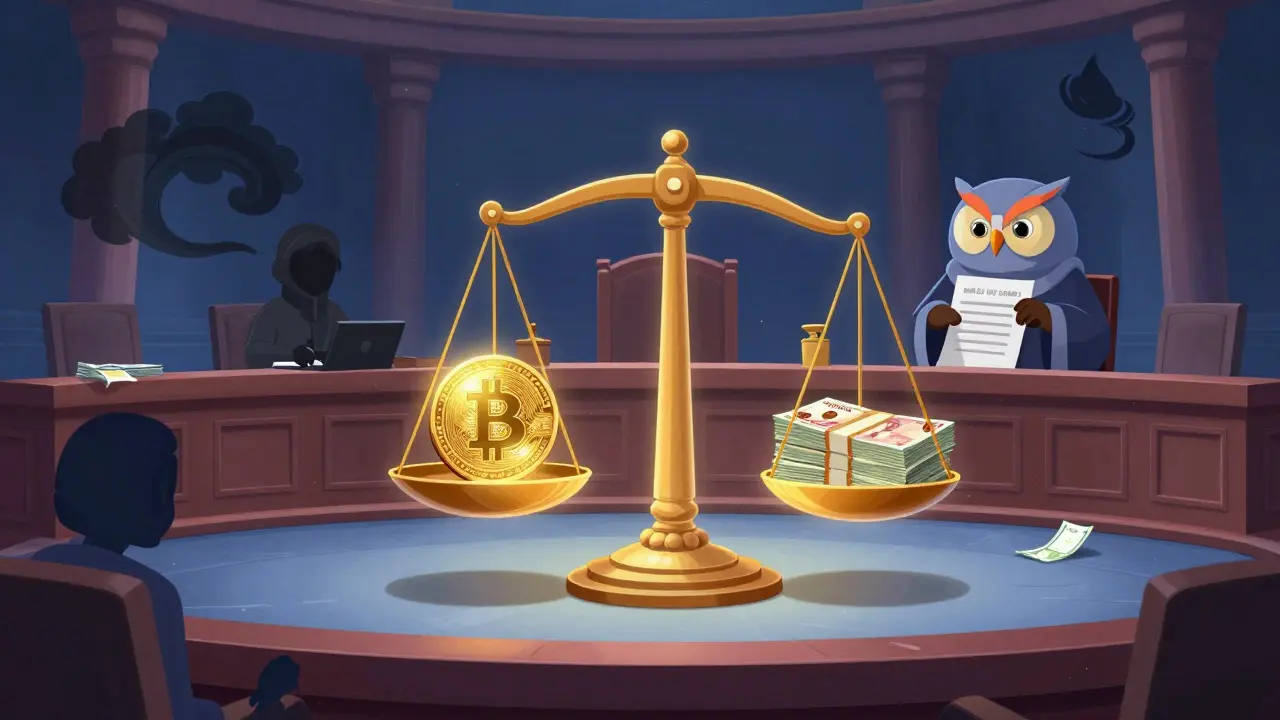
Recent Developments: Is the Ban Changing?
As of 2026, the core prohibition remains. The SBV’s 2022 Monetary Policy Report reiterated that cryptocurrencies are not legal tender. However, there are signs of evolution. The Ministry of Finance released draft circulars on tax management for virtual asset transactions. This suggests the government is starting to treat crypto more like a taxable asset (like stocks or gold) rather than just illegal cash.
This shift is significant. If you are taxed on capital gains from selling Bitcoin, the government implicitly acknowledges you own it. But does this mean you can spend it? Not yet. The 150-200 million VND fine for using it as payment still stands. The goal seems to be funneling users into recognized exchanges where transactions are monitored, rather than allowing wild-west merchant payments.
Practical Advice for Residents and Expats
So, what should you do if you live in Vietnam and hold crypto? Here are practical steps to minimize risk:
- Avoid Merchant Payments: Don’t scan a QR code at a cafe to pay with USDC. Use cash, MoMo, or ZaloPay. Let the merchant handle the fiat side.
- Use Reputable Exchanges: When converting crypto to VND, use platforms that comply with local KYC (Know Your Customer) rules. This reduces the chance of your account being flagged for suspicious activity.
- Keep Records: Maintain clear records of your crypto holdings as investments, not operational cash flow. If questioned, you want to show it’s an asset portfolio, not a checking account.
- Watch for Updates: Regulatory frameworks in emerging markets change fast. Follow announcements from the SBV and reputable legal sources like Vietnam Law Magazine.
The tension between the SBV’s desire for control and the public’s demand for digital finance continues. Until the law changes, the 150-200 million VND fine serves as a stark reminder: in Vietnam, crypto is an investment, not a coin for your pocket.
Is it illegal to own Bitcoin in Vietnam?
Owning Bitcoin is not explicitly illegal in Vietnam. The ban specifically targets the use of Bitcoin and other cryptocurrencies as a means of payment. However, the legal gray area means that while holding is tolerated, any transaction resembling a purchase of goods or services with crypto can trigger penalties.
How much is the fine for using crypto as payment?
The administrative fine ranges from 150 million to 200 million Vietnamese Dong (VND), which is approximately $6,500 to $8,900 USD. This penalty applies to both individuals and entities that issue, supply, or use virtual currencies as payment methods.
Which law enforces the crypto payment ban?
The ban is enforced under Decree No. 96/2014/ND-CP, specifically Clause 6, Article 27. Additionally, Article 4.6 of Decree 101/2012/ND-CP defines lawful means of payment, excluding cryptocurrencies. The State Bank of Vietnam (SBV) oversees enforcement.
Can I use crypto to pay for online services in Vietnam?
Technically, no. Using crypto to pay for any service, whether online or offline, violates the prohibition on using virtual currencies as payment. While enforcement for small personal transactions is rare, the legal risk remains, and merchants face higher scrutiny.
Will Vietnam legalize crypto payments in the future?
As of 2026, there is no immediate plan to fully legalize crypto as payment. However, the government is moving toward recognizing crypto as a taxable asset. This suggests a gradual shift toward regulation rather than total prohibition, but the 150-200 million VND fine for payment use currently remains in effect.
Dave Kjendal
August 13, 2026 AT 12:02people always think they know better than the system. its just control. simple as that.
Kat Bennett
August 13, 2026 AT 23:06I have been following this situation for quite some time and it really does seem like there is a lot of confusion surrounding the actual laws in place, especially since so many people are trading on P2P platforms without realizing that technically speaking they might be walking into legal trouble even if enforcement is currently lax which is both scary and interesting to observe from afar because you never know when the crackdown could happen suddenly.
Candice Cornett
August 15, 2026 AT 18:57its not about tax evasion its about power. governments hate losing control over money. always has always will. the fine is just a scare tactic but it works on the sheep
Lance Jantz
August 16, 2026 AT 08:52Oh, the sheer audacity of the State Bank of Vietnam trying to stifle the beautiful chaos of decentralized finance! It is truly a tragedy of epic proportions when one considers the philosophical implications of monetary sovereignty versus individual liberty. One must ask oneself: who owns your value? The state or you? It is a question that haunts the very soul of modern capitalism, and yet here we are, paying fines for holding digital gold. How quaint!
Phil Babb
August 18, 2026 AT 00:40Listen up folks!! This is huge!!! You need to pay attention to this!!! If you are living in Vietnam you MUST follow the rules!!! Do not risk it!!! The fines are real!!! Stay safe out there!!!
Qolbina Islami
August 18, 2026 AT 01:48This is why America is superior!!! We let people trade freely!!! Vietnam is falling behind!!! Typical socialist nonsense!!! Wake up people!!!
Michael Mostyn
August 19, 2026 AT 11:48The distinction between asset holding and medium of exchange is a fundamental economic principle that many regulators struggle to articulate clearly. In this case, the Vietnamese government appears to be prioritizing monetary stability over technological adoption, which is a conservative but understandable approach given the volatility of cryptocurrency markets. It raises an interesting question about the future of central bank digital currencies (CBDCs) as a potential middle ground.
Nick Darring
August 21, 2026 AT 03:06But wait a minute, let us dig deeper into this whole narrative because it seems like everyone is missing the forest for the trees when it comes to how these regulations actually affect the everyday person who just wants to buy a coffee with their hard-earned Bitcoin without having to worry about some bureaucrat in Hanoi coming after them with a fine that could wipe out their savings account entirely which is pretty ridiculous when you think about it logically.
Rita Dutta
August 21, 2026 AT 03:58honestly the whole concept of fiat currency is a scam anyway. vietnam is just trying to keep the illusion alive. crypto is the future whether they like it or not. the blockchain doesnt lie unlike politicians. its just a matter of time before they cave in. history shows that censorship fails every single time.
Paul Smith
August 22, 2026 AT 02:43Hey guys! 👋 Just wanted to say that while the laws are strict, the community is still strong! 🇻🇳💪 Keep using MoMo for daily stuff and save the crypto for investing! Let's stay smart and safe! 😊✨
Rodmun Tarnowski
August 23, 2026 AT 15:23It is indeed a fascinating development in the global financial landscape! One must remain vigilant and informed! The regulatory environment is constantly evolving! Therefore, it is imperative that individuals stay updated on the latest decrees! Compliance is key to avoiding unnecessary penalties!
Matthew Smith
August 25, 2026 AT 00:05moral responsibility lies with the individual. if you break the law you accept the consequence. simple justice. no excuses needed. the system works if you respect it
Prudence Flemming
August 26, 2026 AT 10:37the hegemony of fiat is crumbling. seigniorage profits are being stripped by inflation. crypto offers a hedge against state failure. the vietnamese ban is a desperate grasp at relevance. decentralization is inevitable
Carl Michaud
August 28, 2026 AT 04:51They are watching you. Every transaction is tracked. The KYC data is already in the database. They don't need to fine you today because they can freeze your assets tomorrow. This is all part of the New World Order agenda to eliminate cash. Wake up sheeple. The surveillance state is complete.
Matt Kay
August 29, 2026 AT 21:41boring article. too much detail. just tell me if i can get fined or not. prob yes. whatever.
Don Fizy
August 31, 2026 AT 21:21Hey there! :) Don't stress too much about it. Just use reputable exchanges like Binance or local ones that comply with KYC. It's all about staying within the lines until things change. You got this! :)
Dominic Greco
September 2, 2026 AT 11:56THEY WANT YOUR MONEY! 💸 The banks are failing! Crypto is the only way out! But watch out for the deep state agents monitoring your wallet! 🕵️♂️ Stay paranoid! Stay free! 🔥
Sean Rowland
September 2, 2026 AT 23:48Let us examine the ontological status of virtual currency in relation to sovereign debt instruments. It is evident that the prohibition is not merely administrative but existential to the current economic paradigm. One might argue that the boundary between legal tender and speculative asset is porous, yet the state insists on a rigid demarcation. This rigidity is inherently flawed.
Sus Sawyer
September 3, 2026 AT 10:01Look buddy, the game is rigged if you play it wrong. Use the tools available. MoMo is king in VN right now. Save the crypto for the long term hold. Dont be a hero and try to pay for pho with BTC unless you want to lose your shirt. Smart moves only.
Aryan MISHRA
September 4, 2026 AT 19:15Fundamental misunderstanding of monetary policy! The SBV is correct! Volatility destroys retail investors! Regulation is necessary! Stop complaining! Follow the rules!
Ryan Robinson
September 5, 2026 AT 21:38i mean its kinda harsh but also makes sense i guess. dont wanna cause trouble. just chill and invest wisely. no big deal really.
Earl Kott65
September 7, 2026 AT 08:13Oh wow, what a surprise! 🙄 Another country banning freedom of choice! Can you believe it? 🤡 I bet the author thinks this is serious news! Let's laugh at the absurdity of it all! 😂📉
Ethan Yuwono
September 7, 2026 AT 14:59it is important to understand the context. the government fears instability. however the people crave innovation. this tension will resolve eventually. patience is required
Jack Delasquez
September 8, 2026 AT 10:44just hodl and wait. the gov will change its mind soon enough. crypto always wins in the end. trust the process. no need to panic about small fines.
Harman Singh
September 10, 2026 AT 02:38why does everyone care so much about vietnam? my life is hard enough without reading about foreign fines. ignore this noise. focus on yourself.